
Marwari Destination Wedding in Mysore: Three Days at Club Mahindra Golden Landmark
A Marwari wedding is loud, long, and run by the family. A destination wedding is the opposite of easy, because everyone you love has to travel to be there. Put the two together and you get three days where nobody goes home at night, nobody leaves early, and the celebration does not stop between functions the way it does in a city wedding.
That is what this one was. A Marwari family from out of state, a resort in Mysore, and about seventy hours of functions that ran straight into each other.
The couple have asked us not to use their names, so we have kept this about the rituals and the days. Everything else here is exactly how it happened.
Why Mysore works for a destination wedding
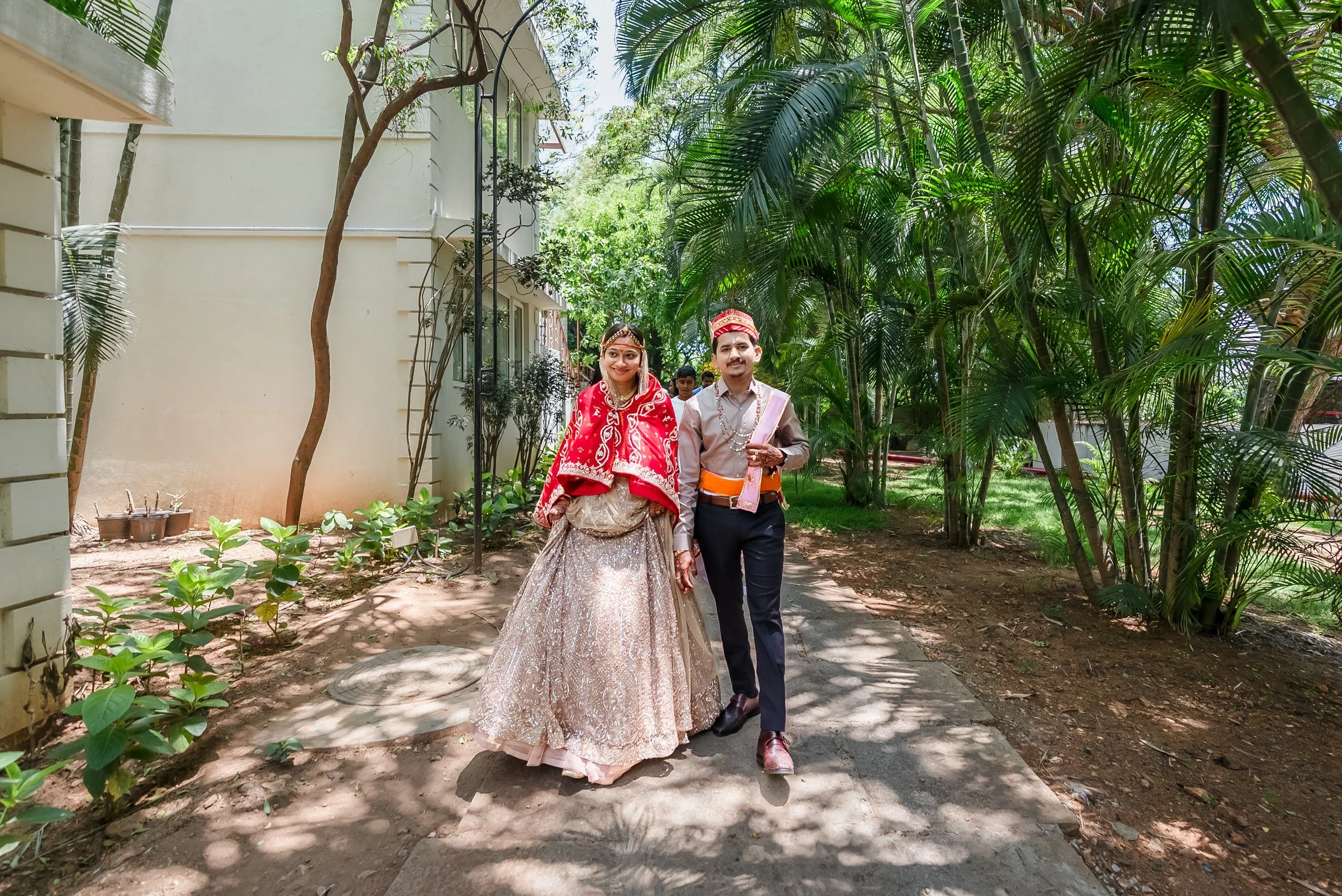
Club Mahindra Golden Landmark sits on KRS Road in Metagalli, around ten minutes from Mysore Palace and a short drive from the zoo and GRS Fantasy Park. It is a resort property with open lawns, a garden, and rooms on site, which is the part that actually matters for a wedding like this.
When the guests sleep where the functions happen, the wedding stops being a series of appointments. People come down for haldi in whatever they slept in, go back up to change for sangeet, and come back down two hours later. The energy carries across functions instead of resetting every time.
Mysore itself is the other reason families pick it. It is a comfortable road trip from Bengaluru, the weather is kind for outdoor lawns, and it is close enough for older relatives to make the journey without it becoming a whole production.
Day one, morning: phoolon ki Holi haldi
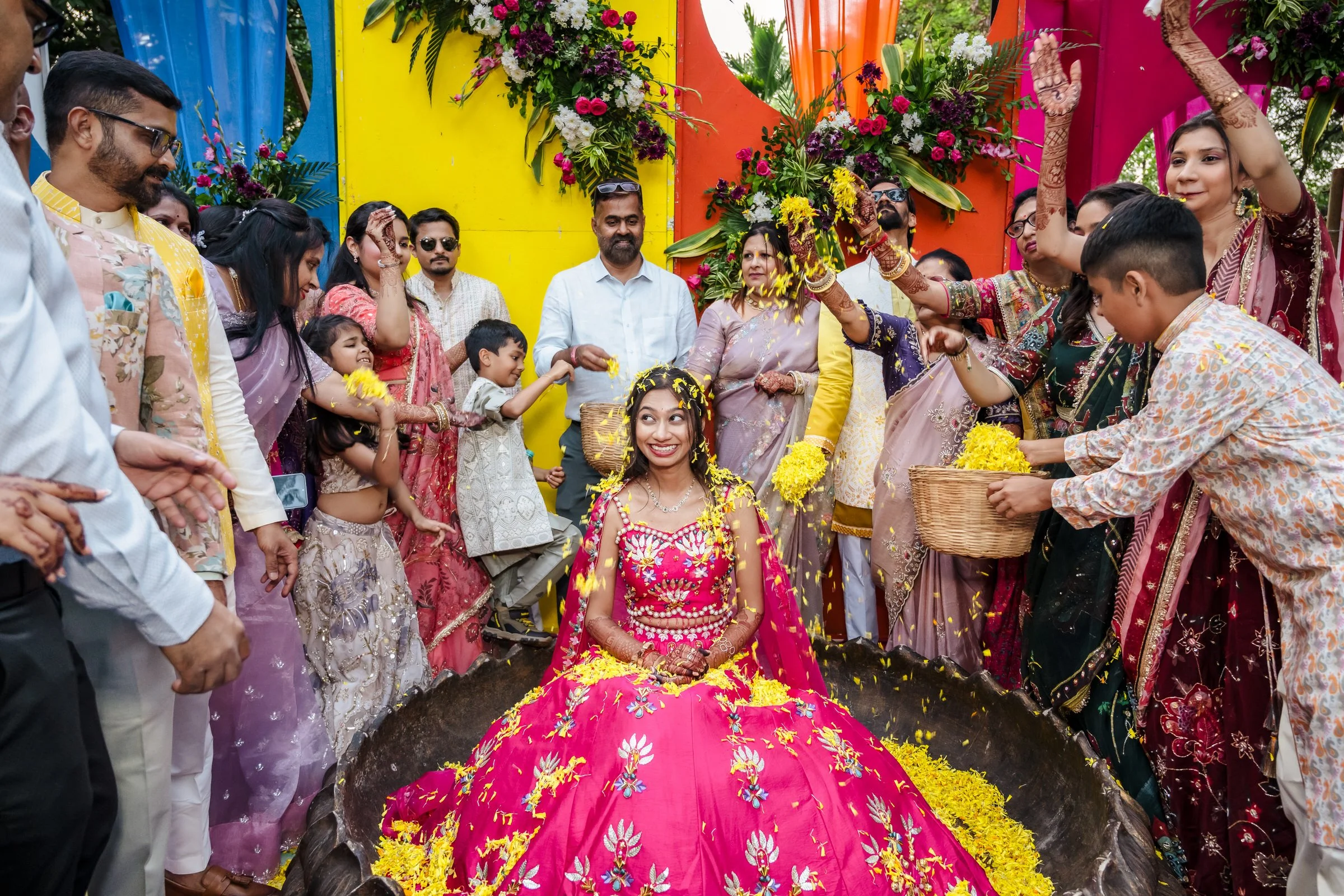
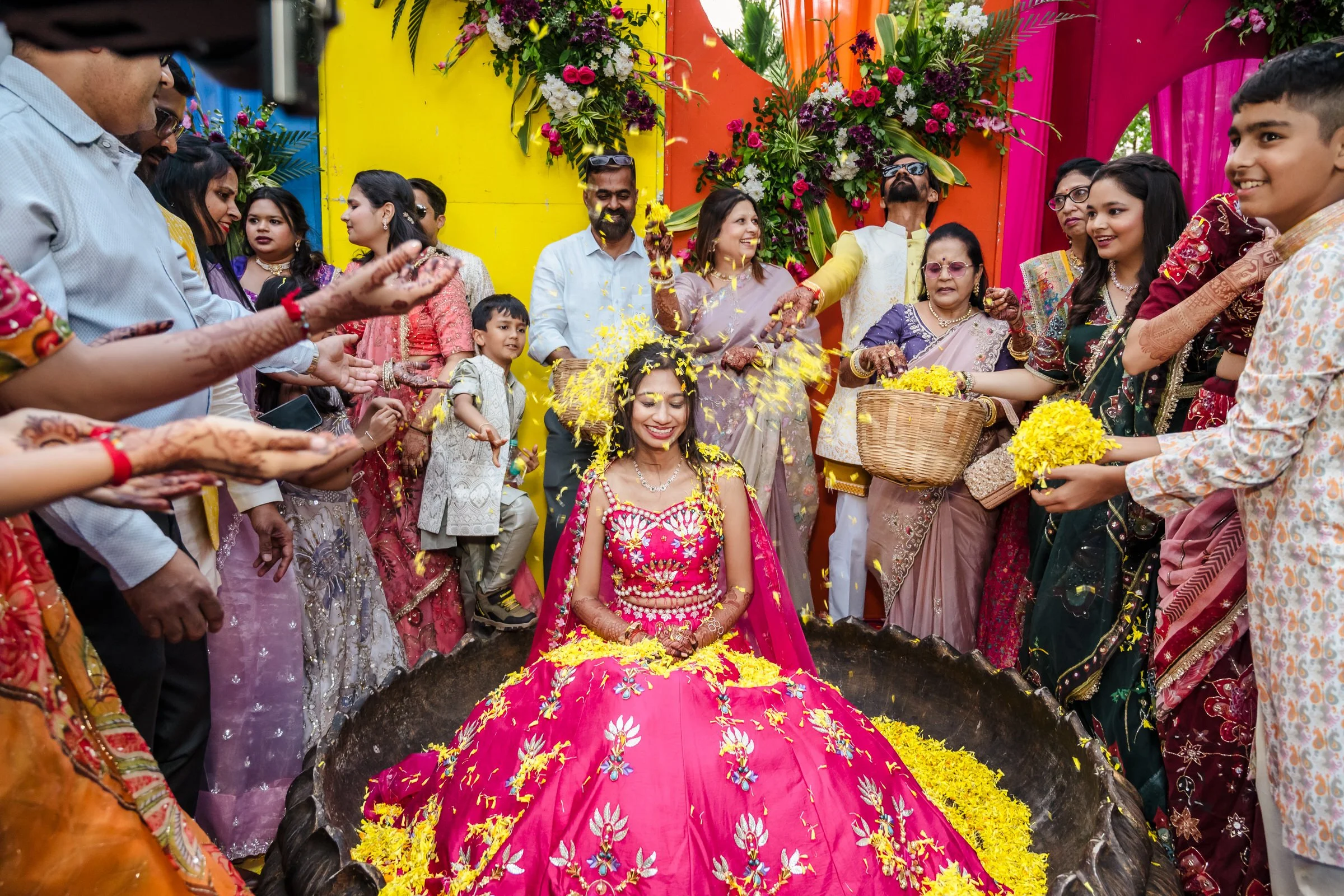
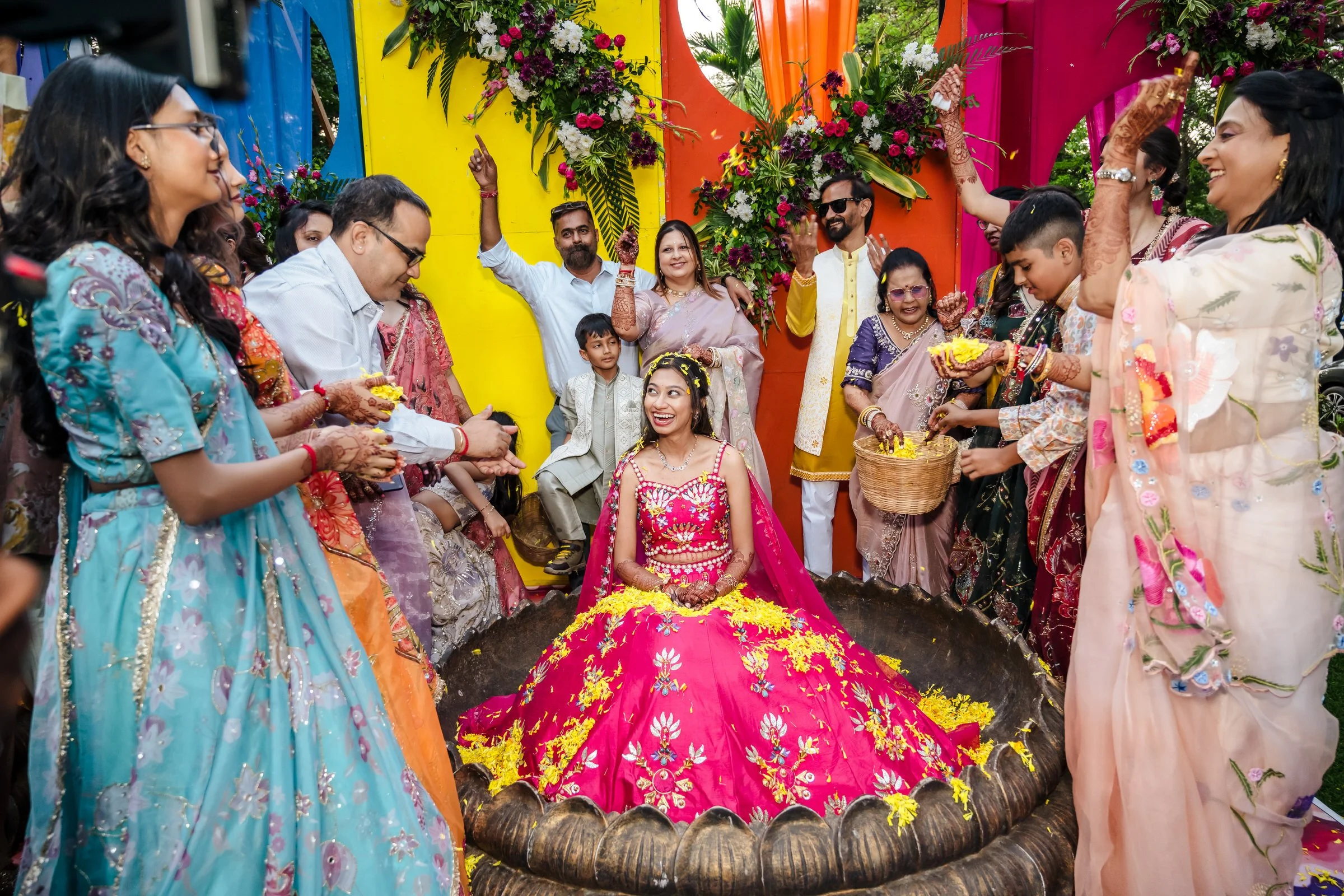
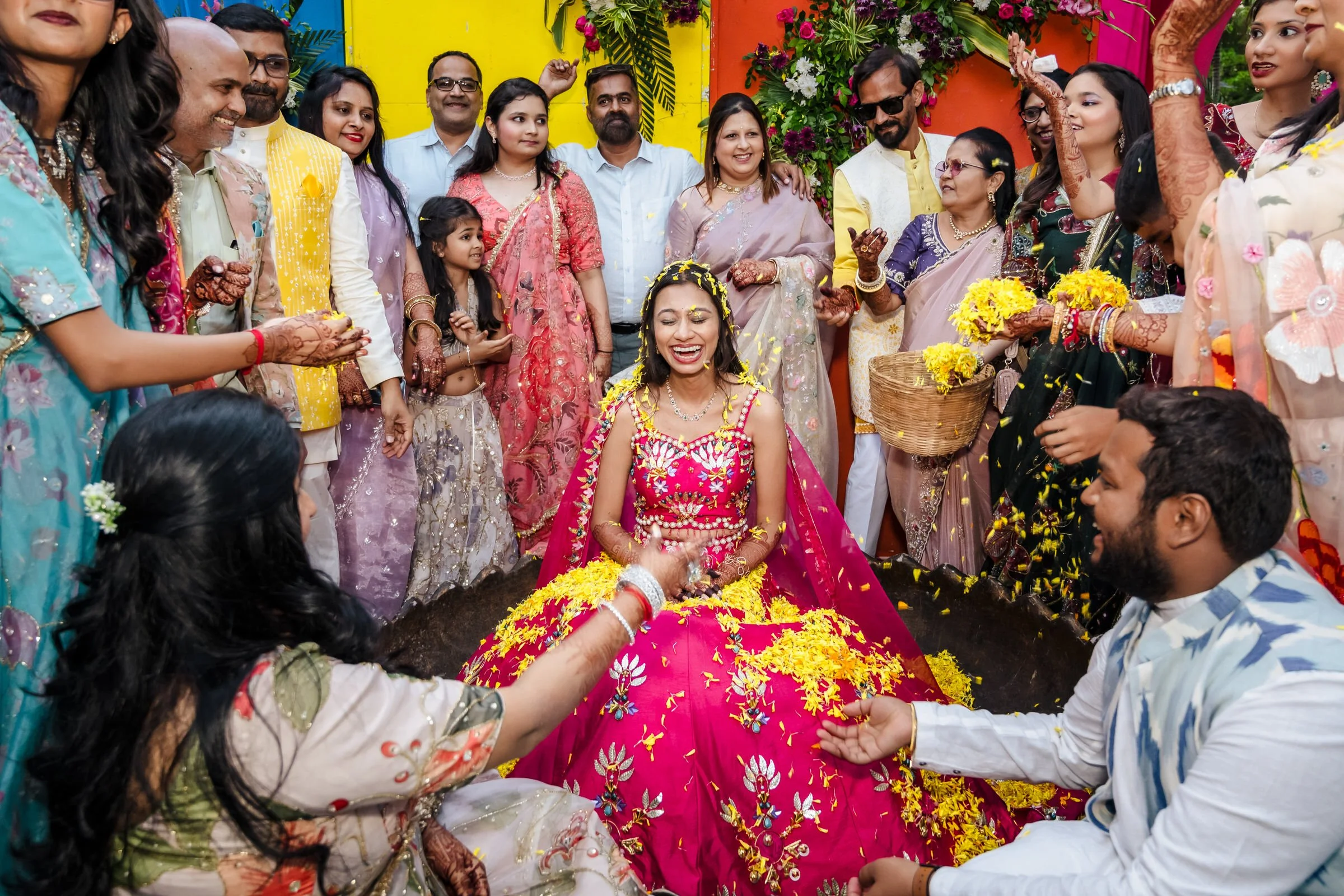
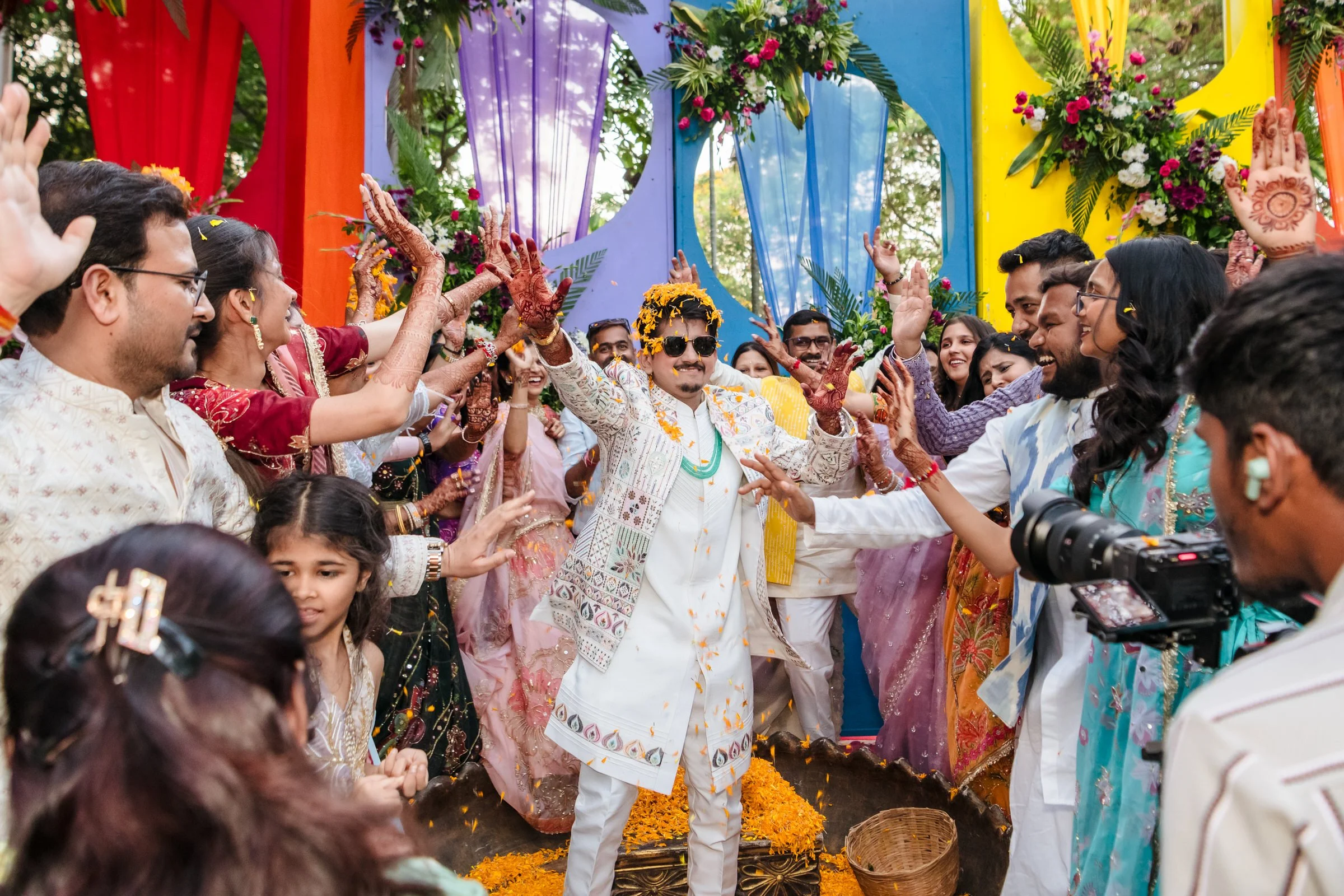
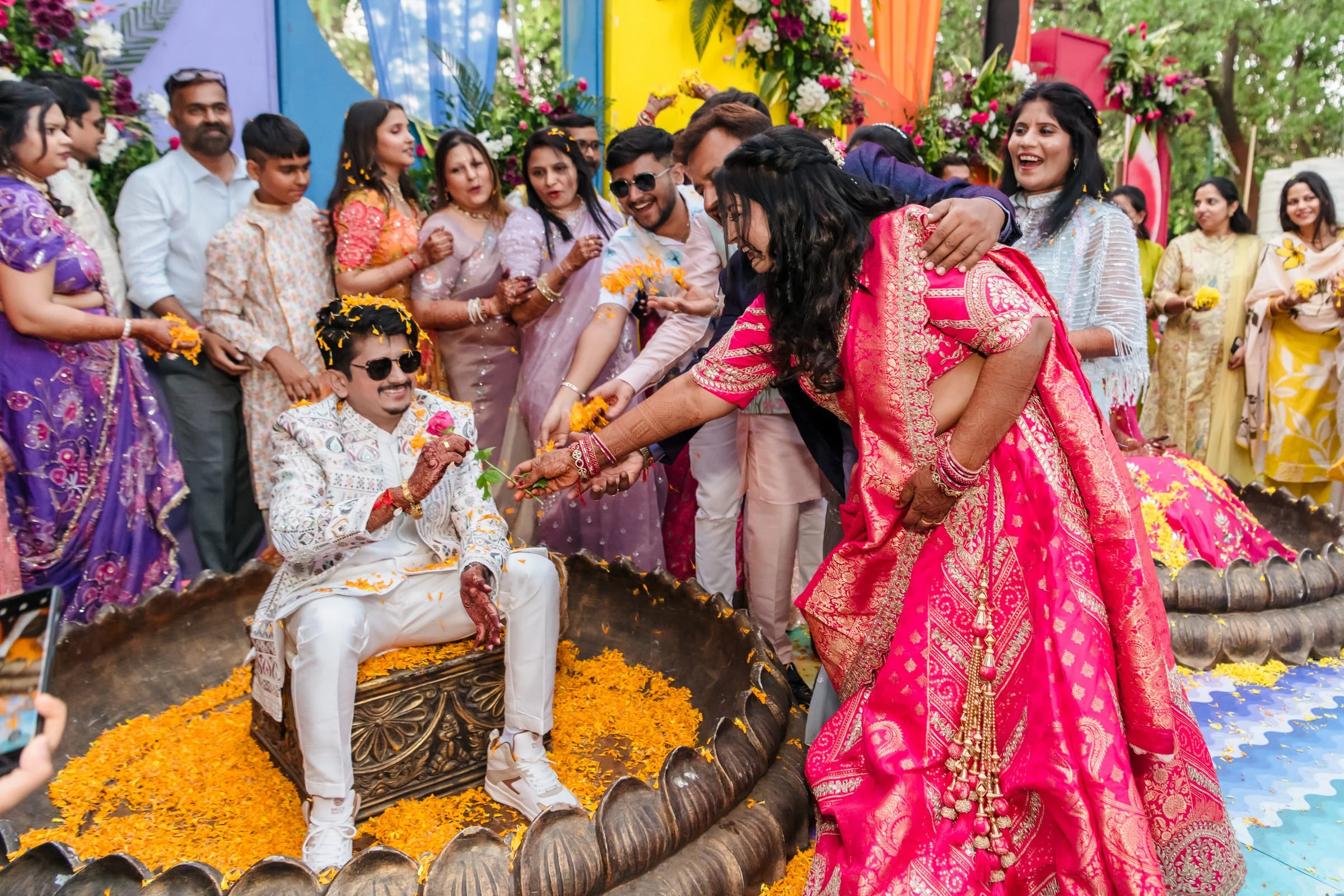
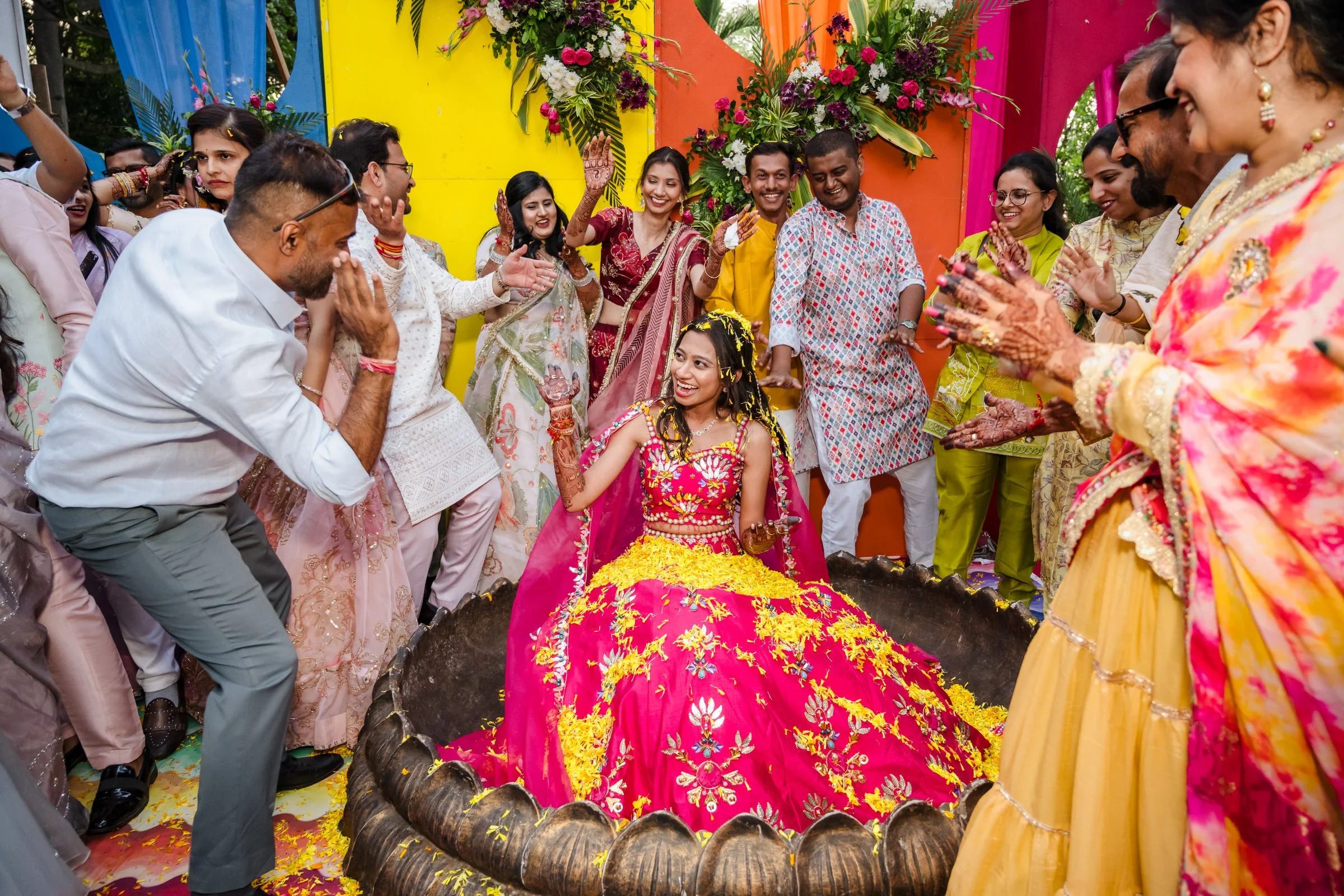
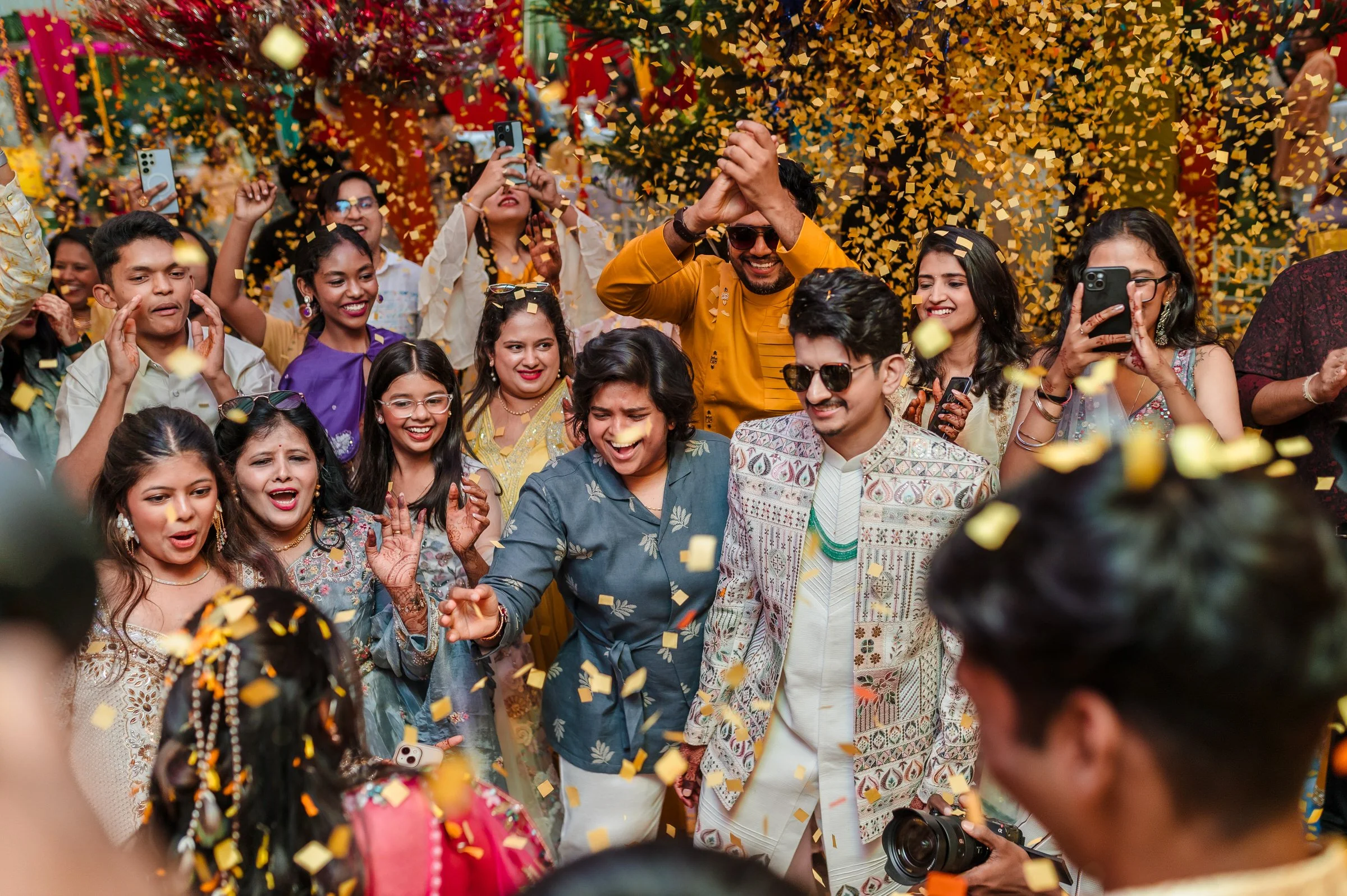
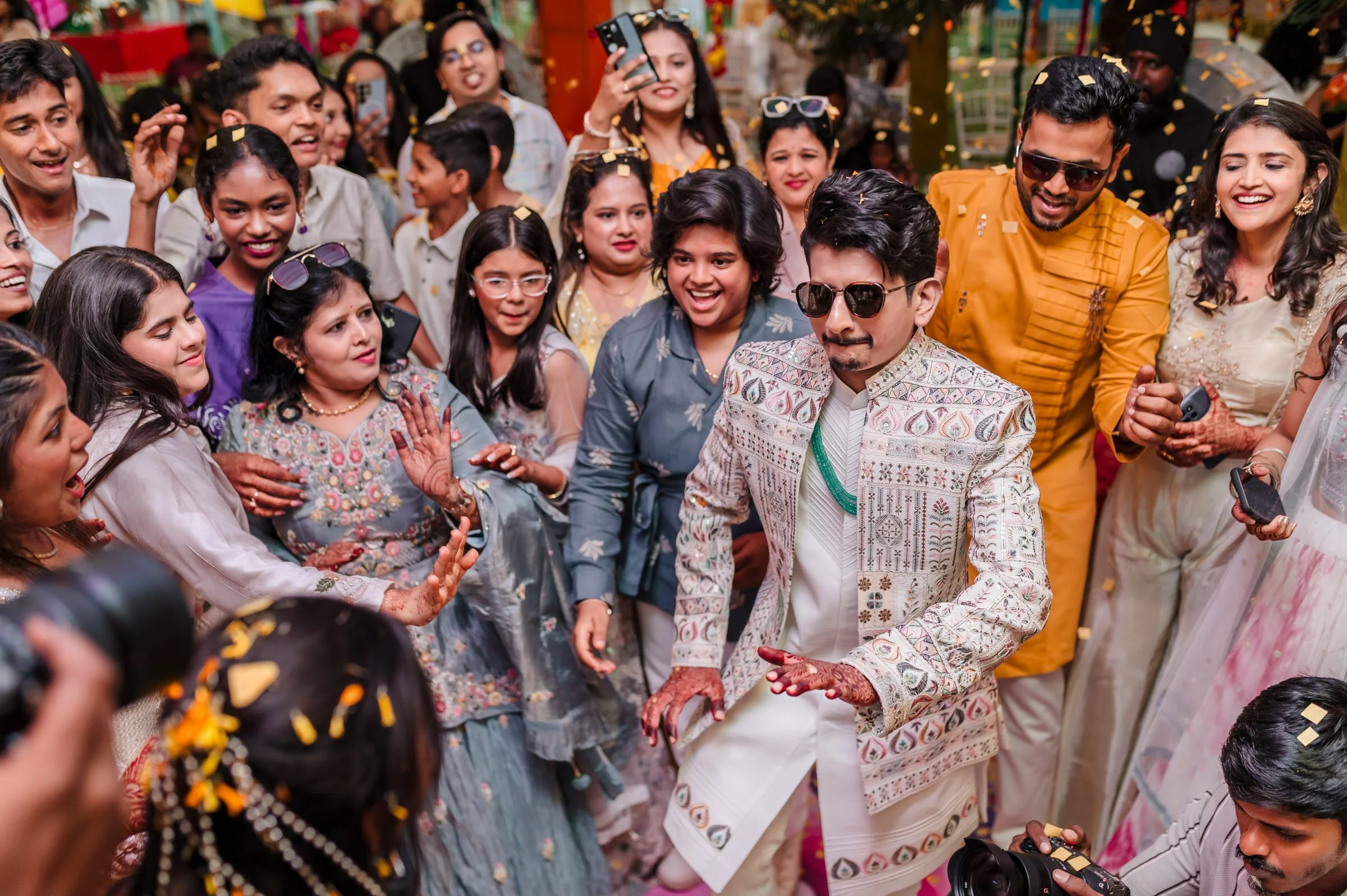
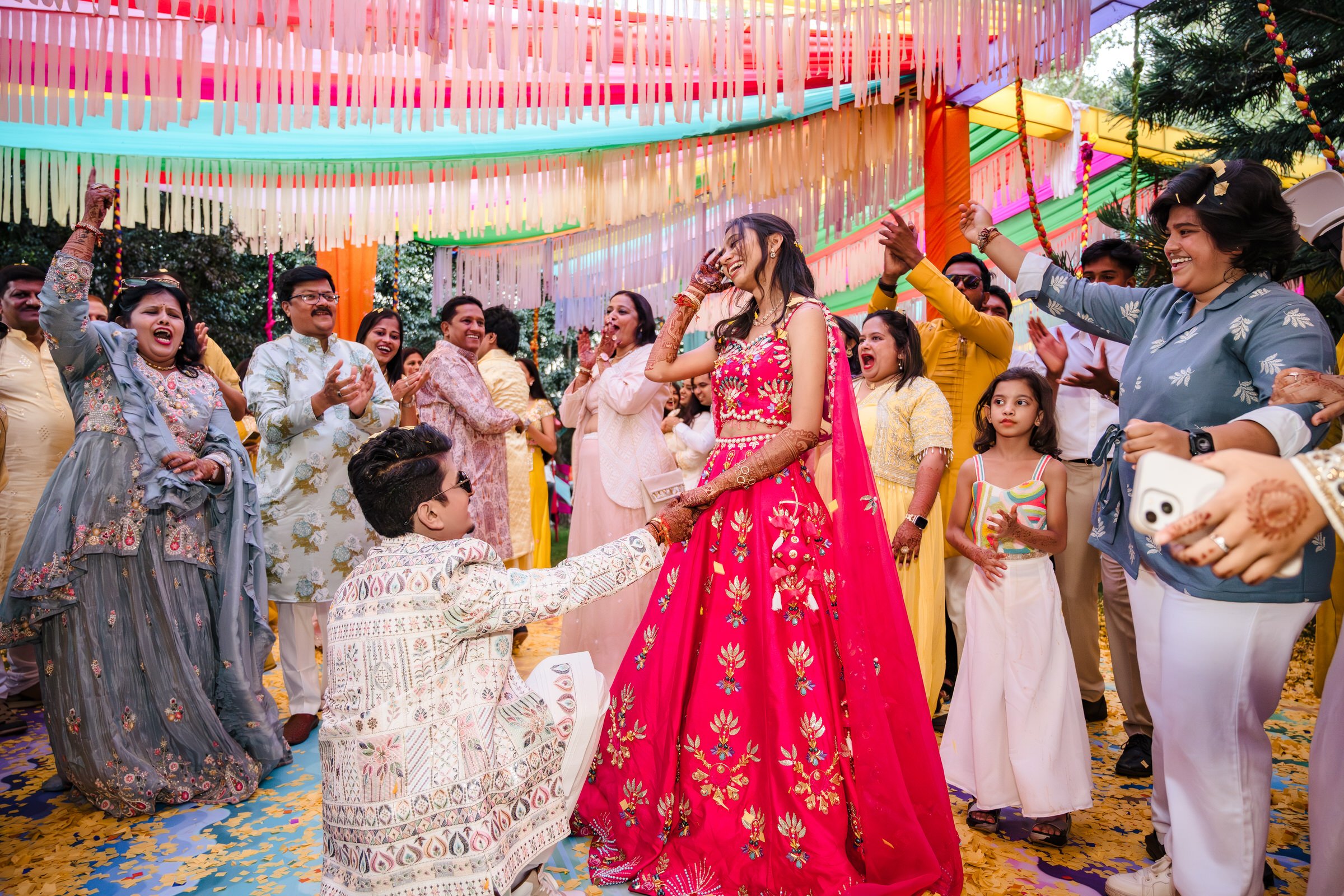
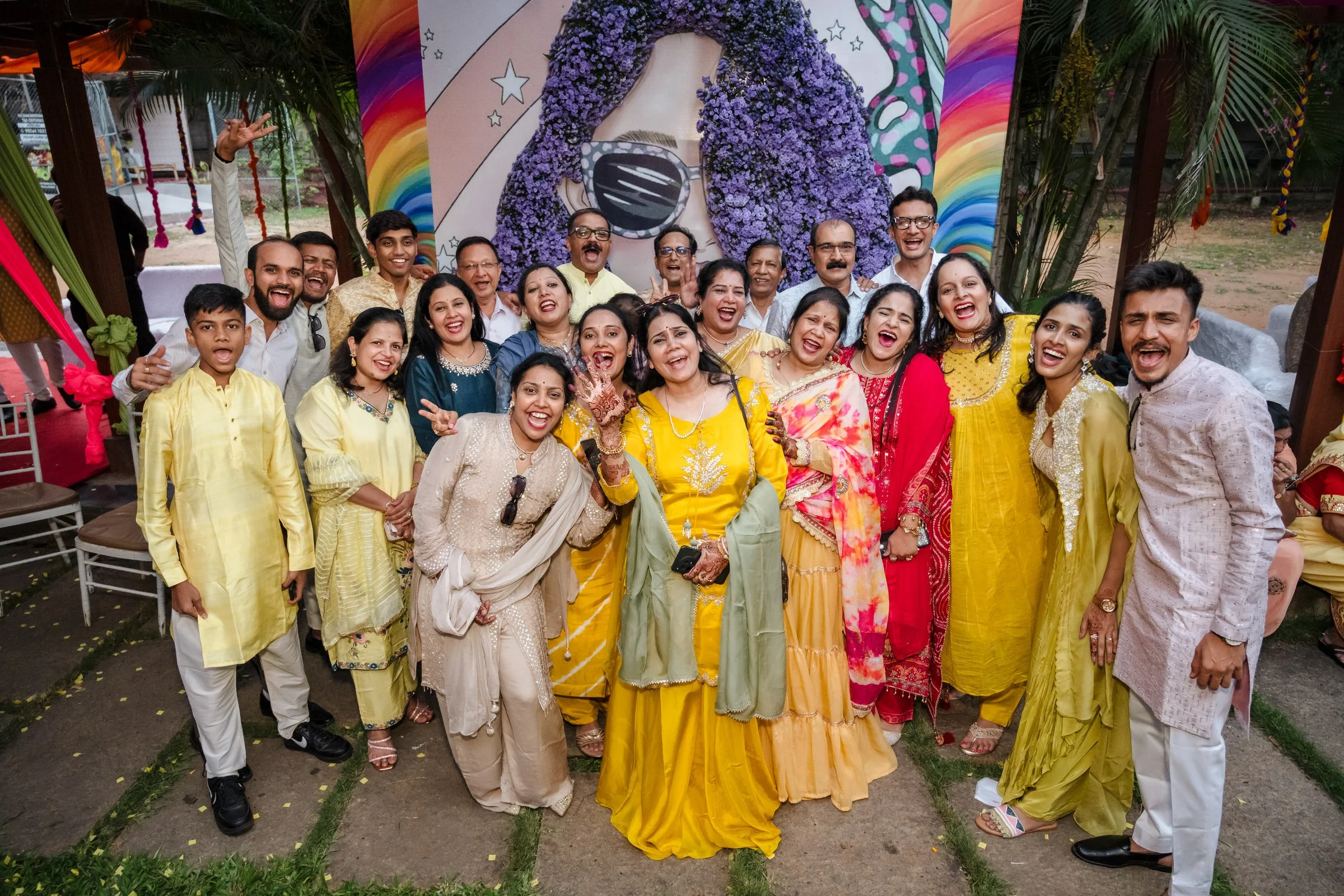
Haldi started the celebrations, and this family did it as a phoolon ki Holi.
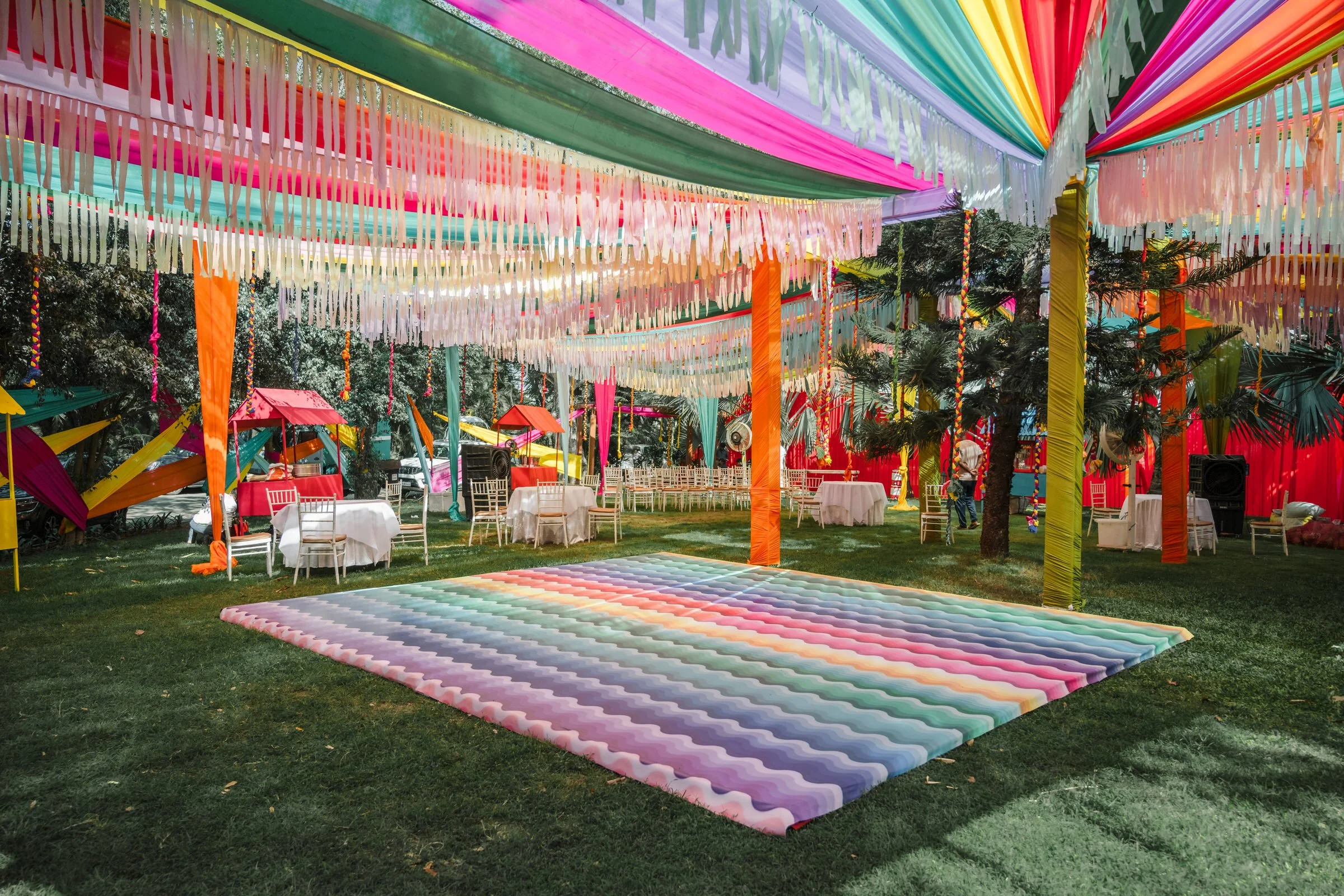
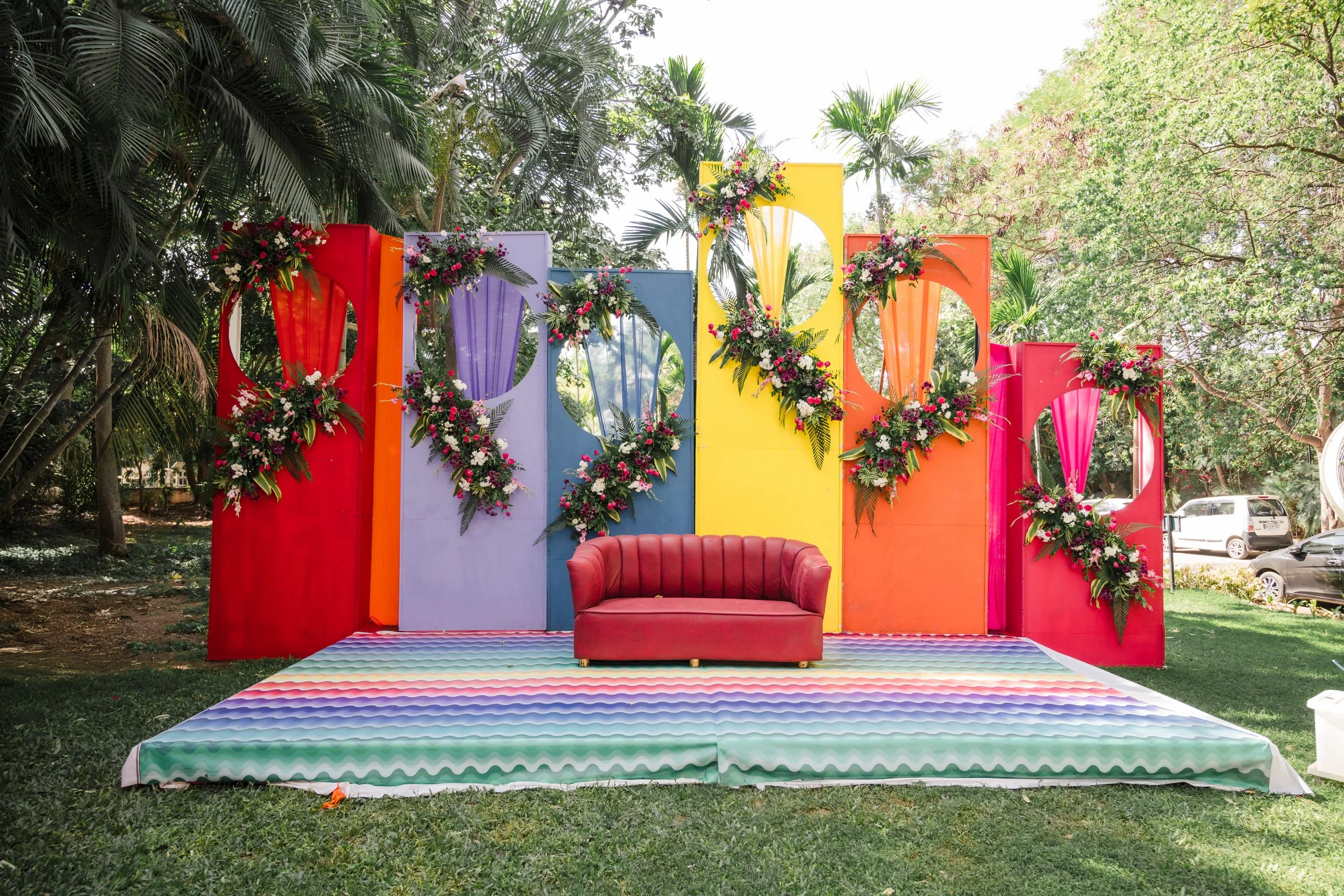
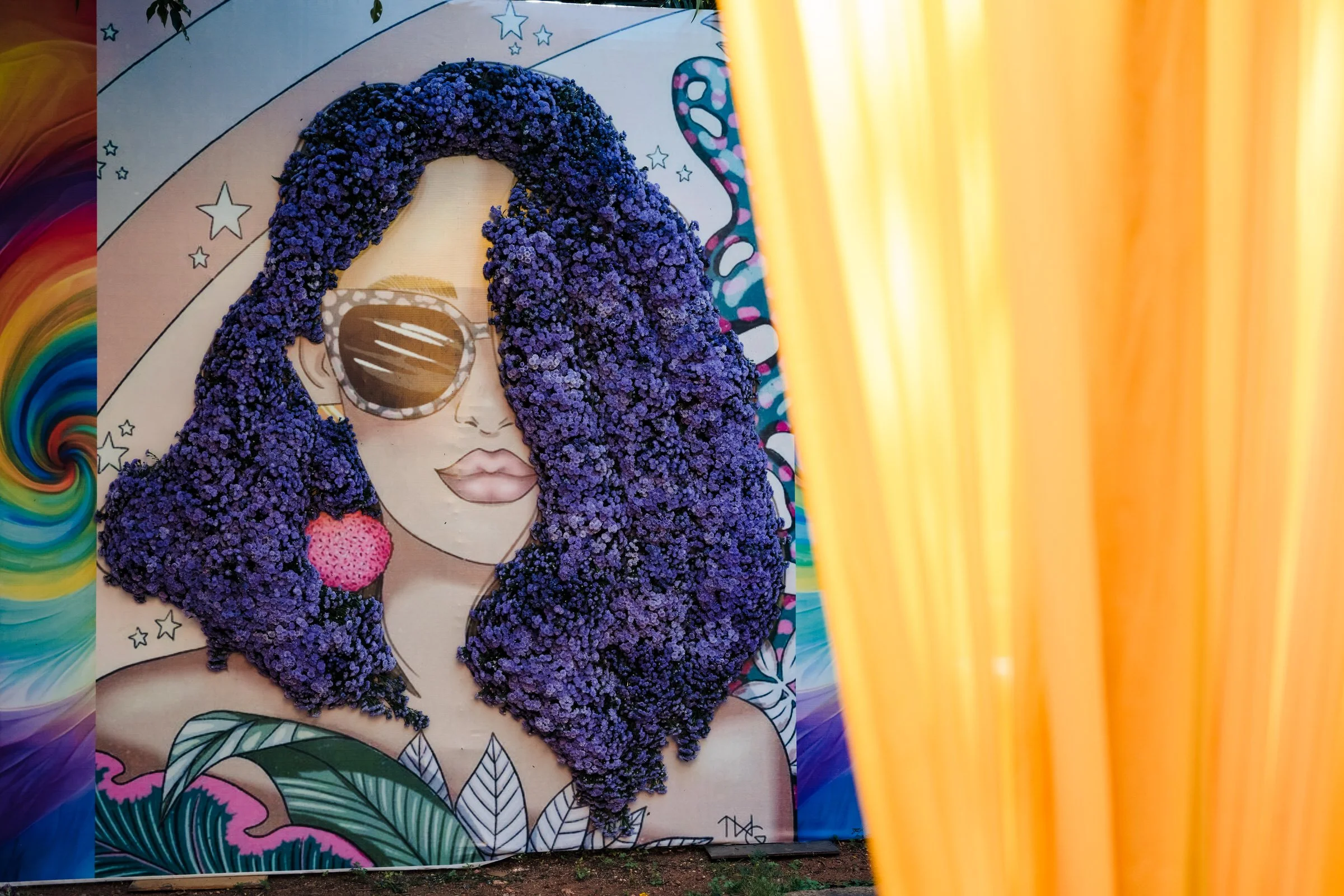
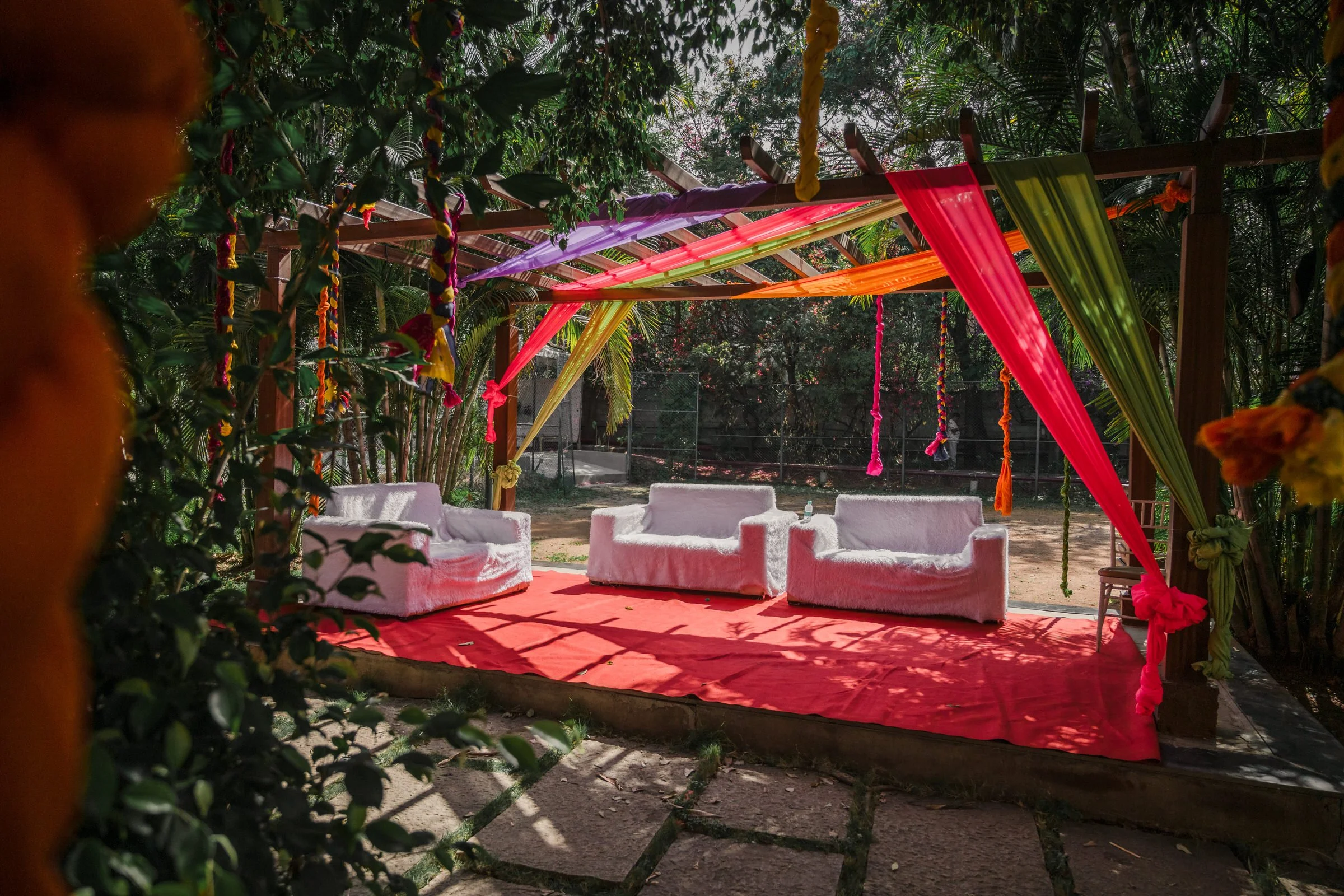
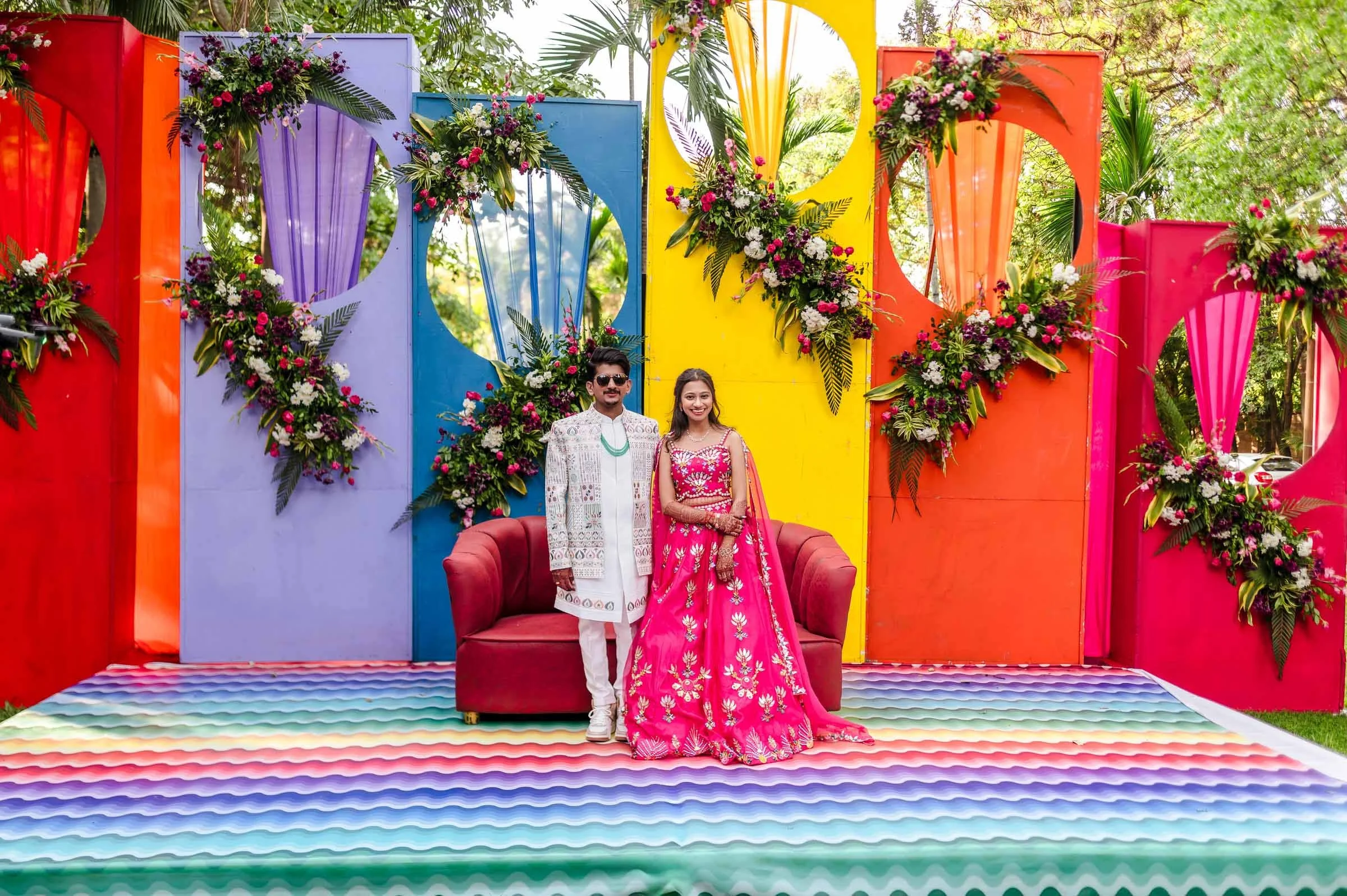
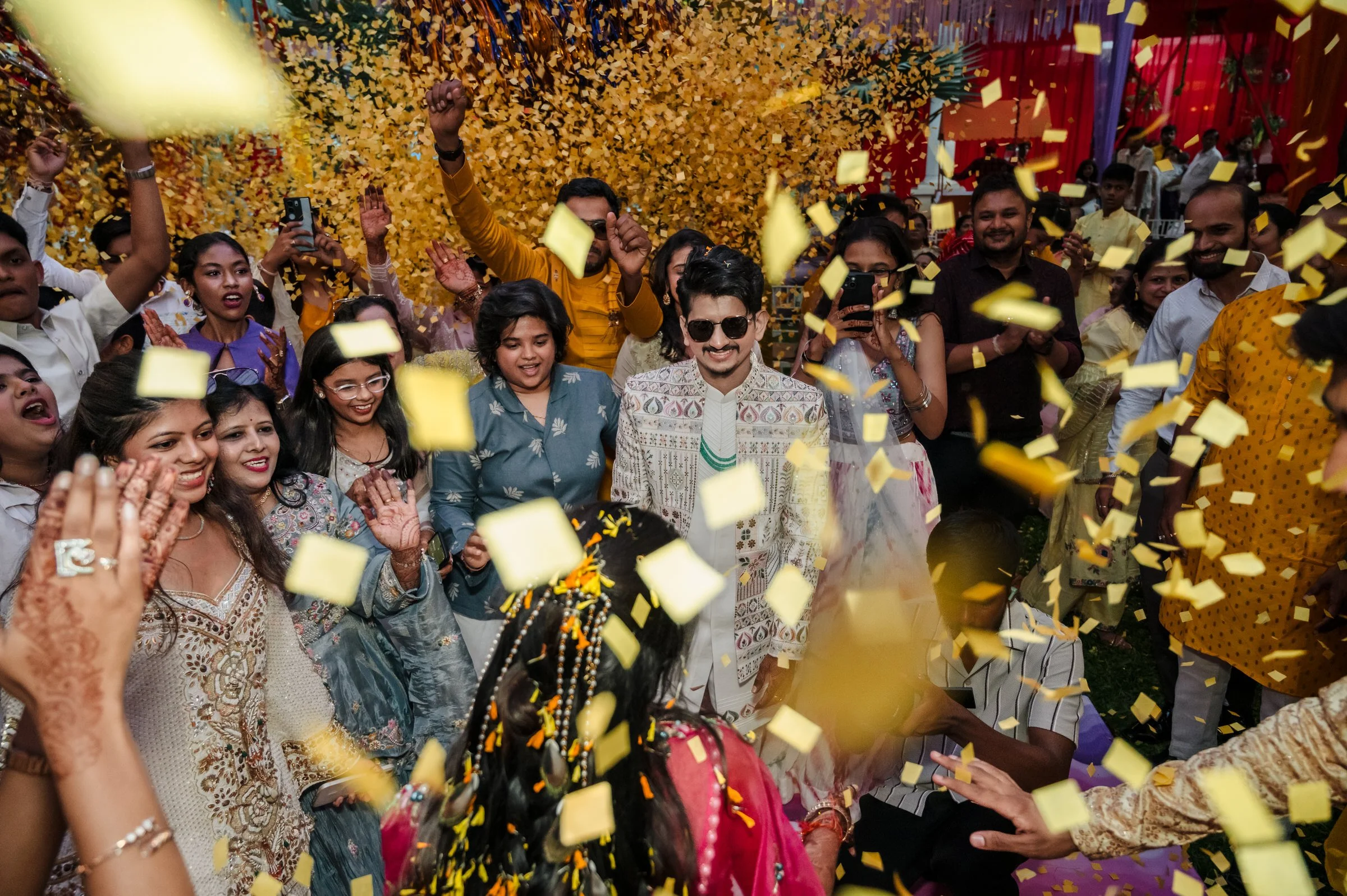
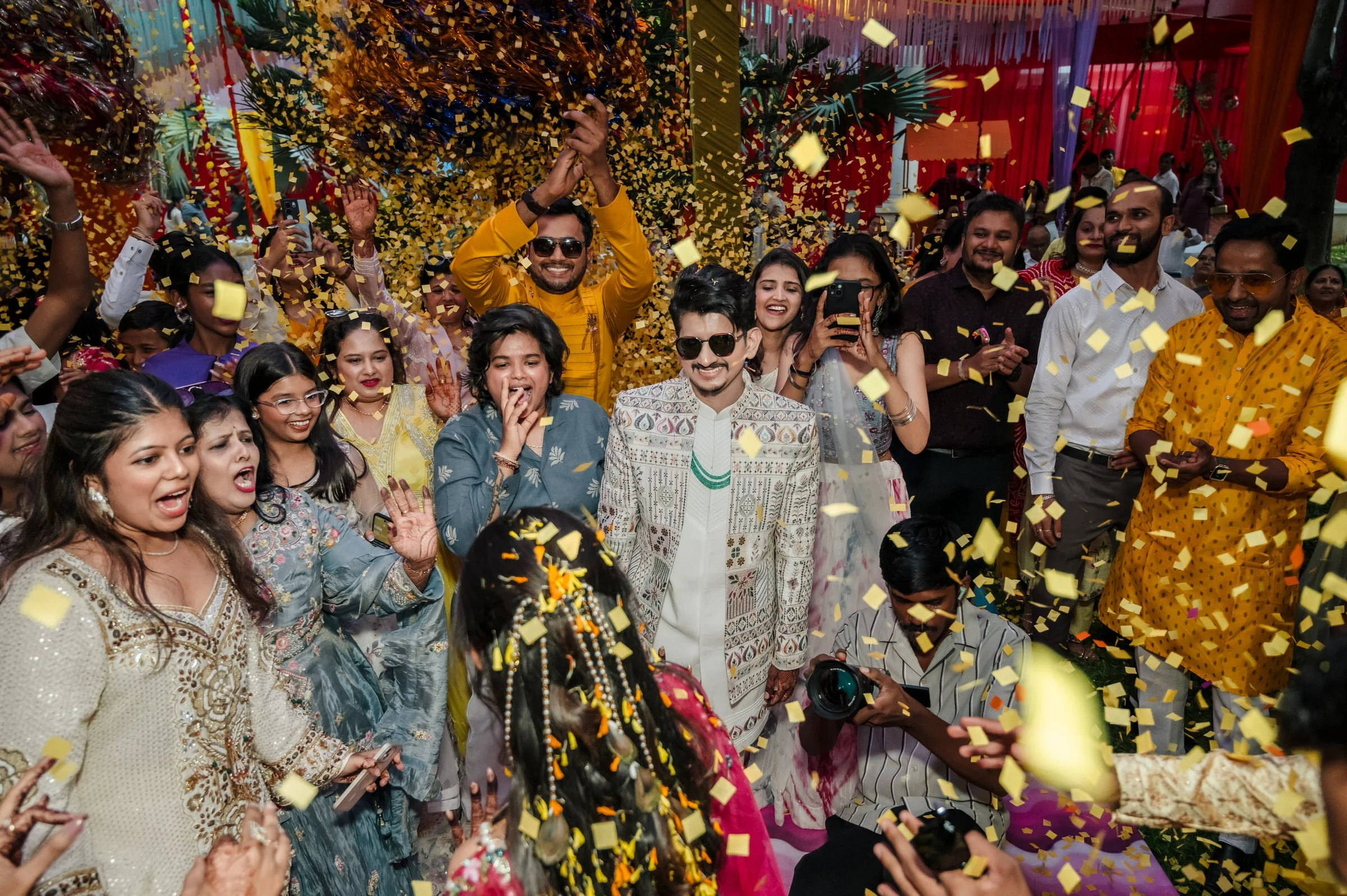
Instead of the usual paste and a few smears on the cheek, the couple were showered with flower petals. Marigold, rose, baskets of it, thrown by the handful, kept going until the ground was covered. The decor matched it. Bright colours, a vibrant setup built for an outdoor lawn in daylight.
Phoolon ki Holi photographs very differently to a standard haldi. Normal haldi gives you close faces and turmeric. Petals in the air give you layers. There is something in front of the camera, something in the middle, and the people throwing it at the back, and the whole frame moves.
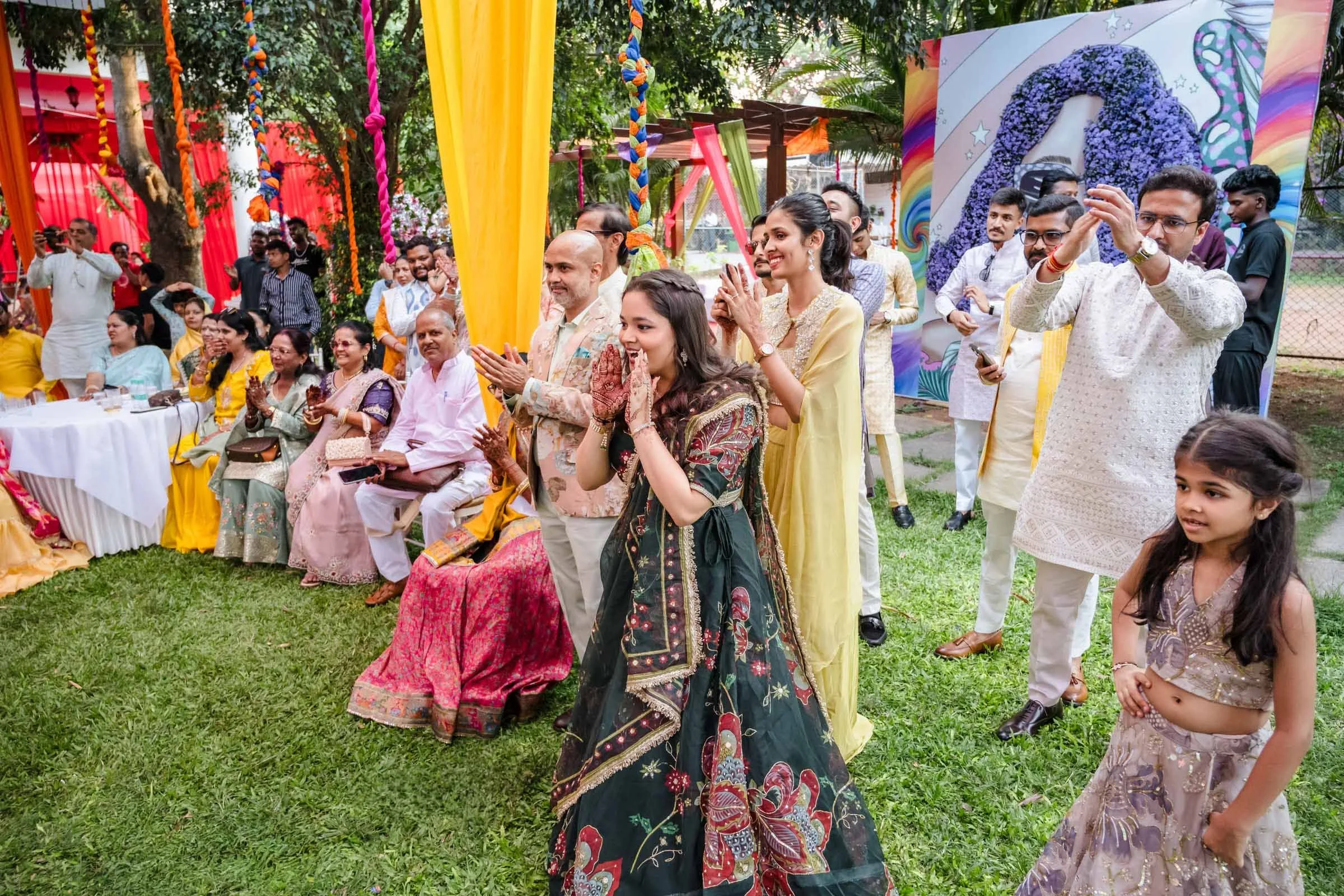
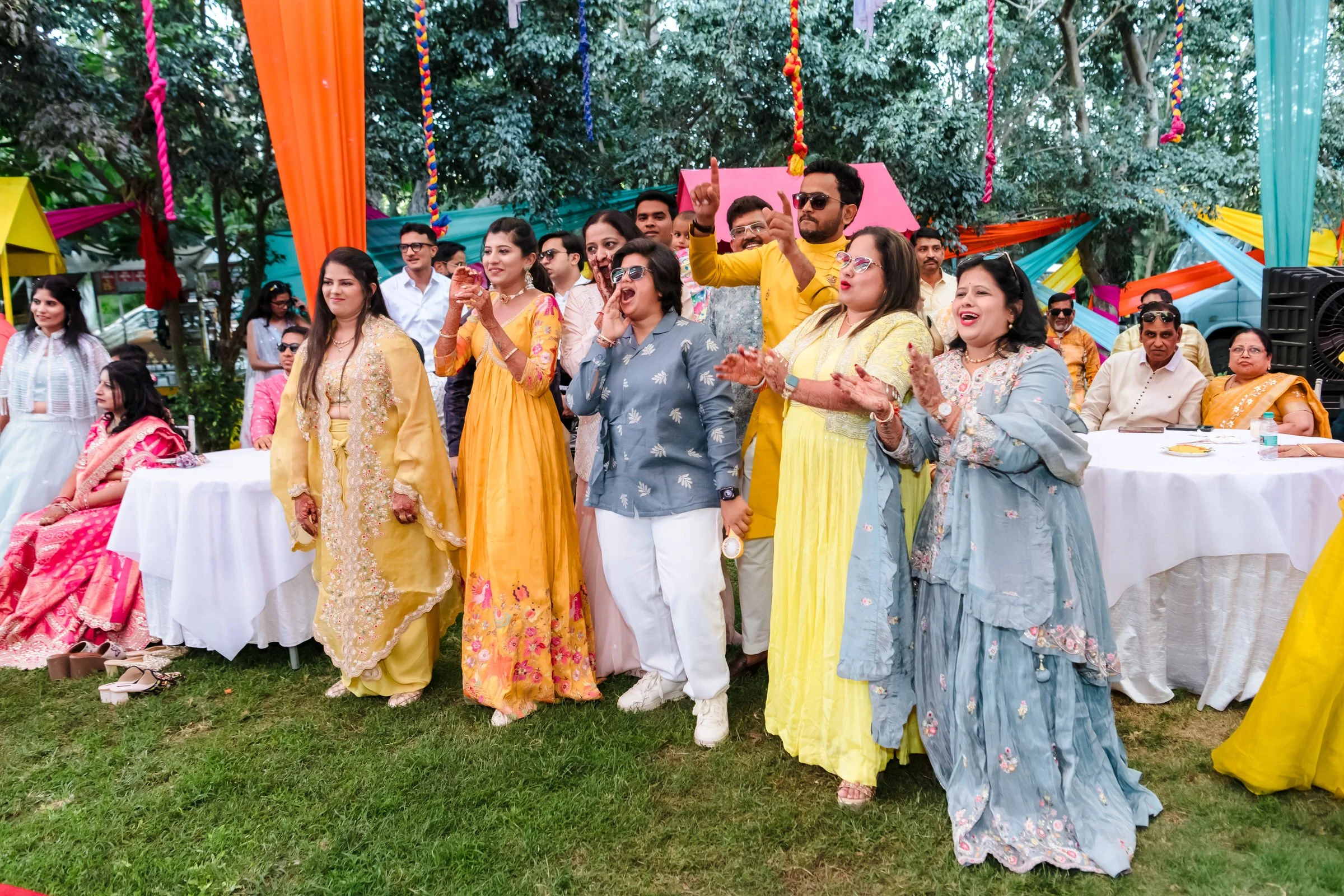
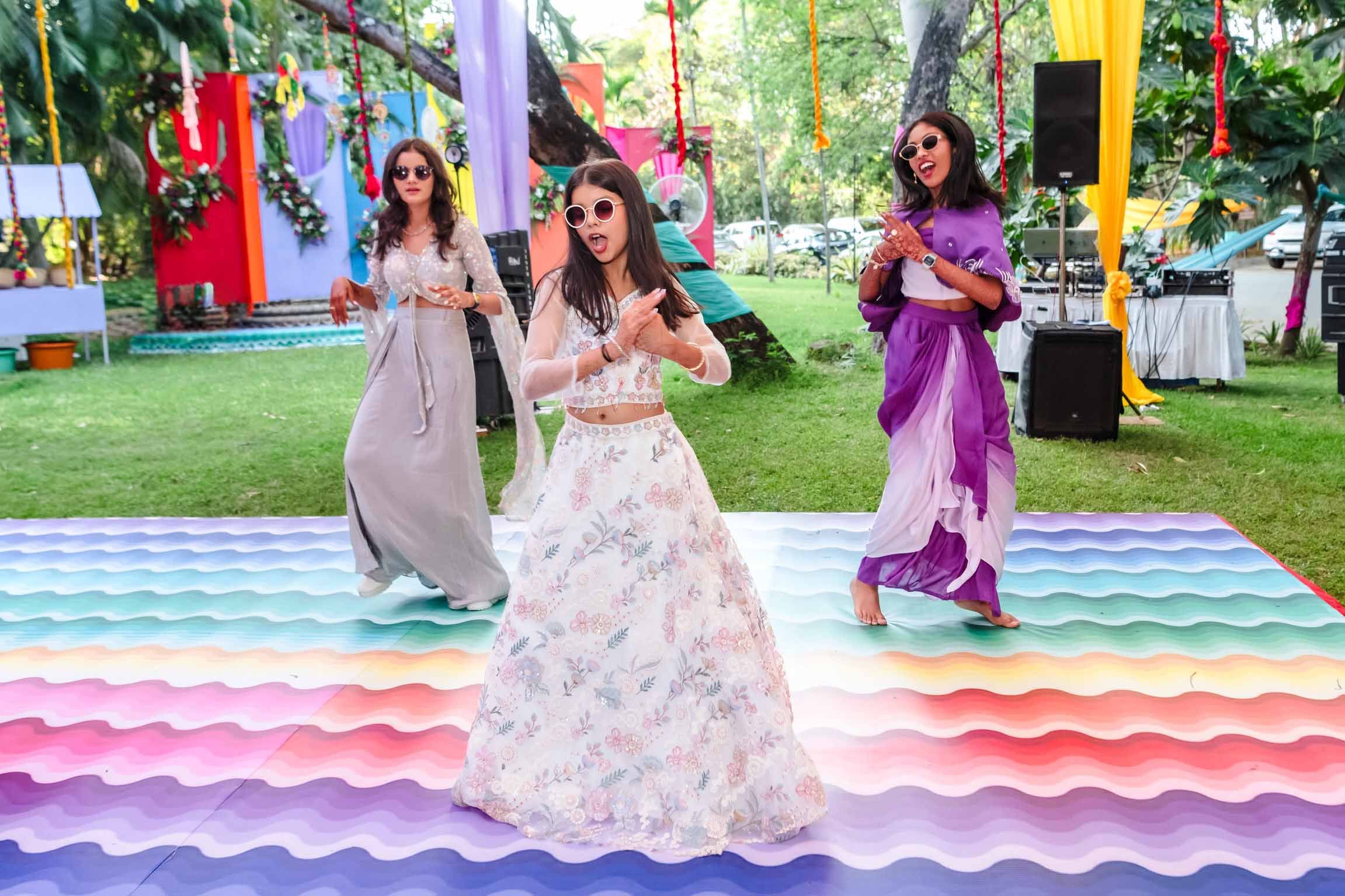
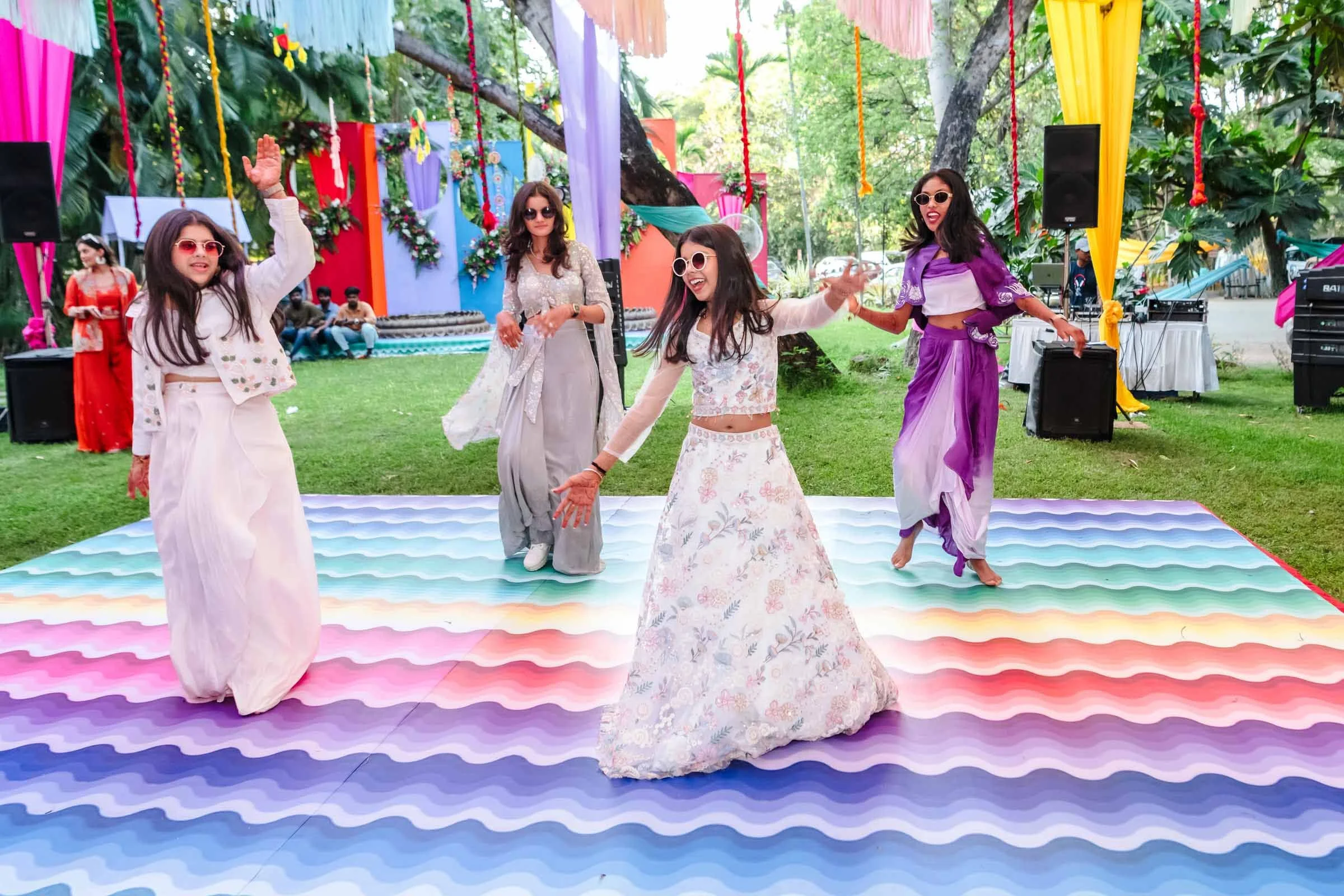
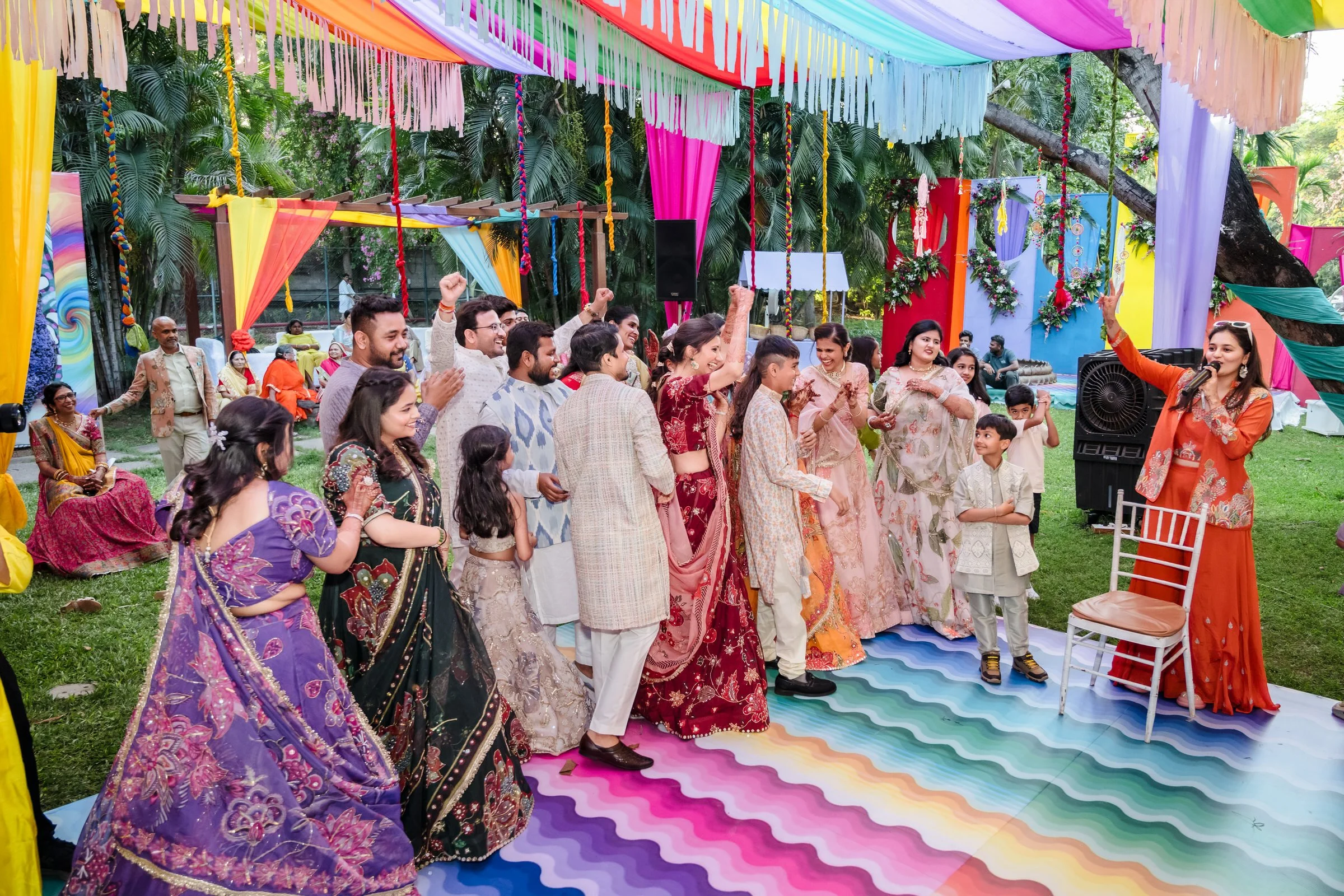
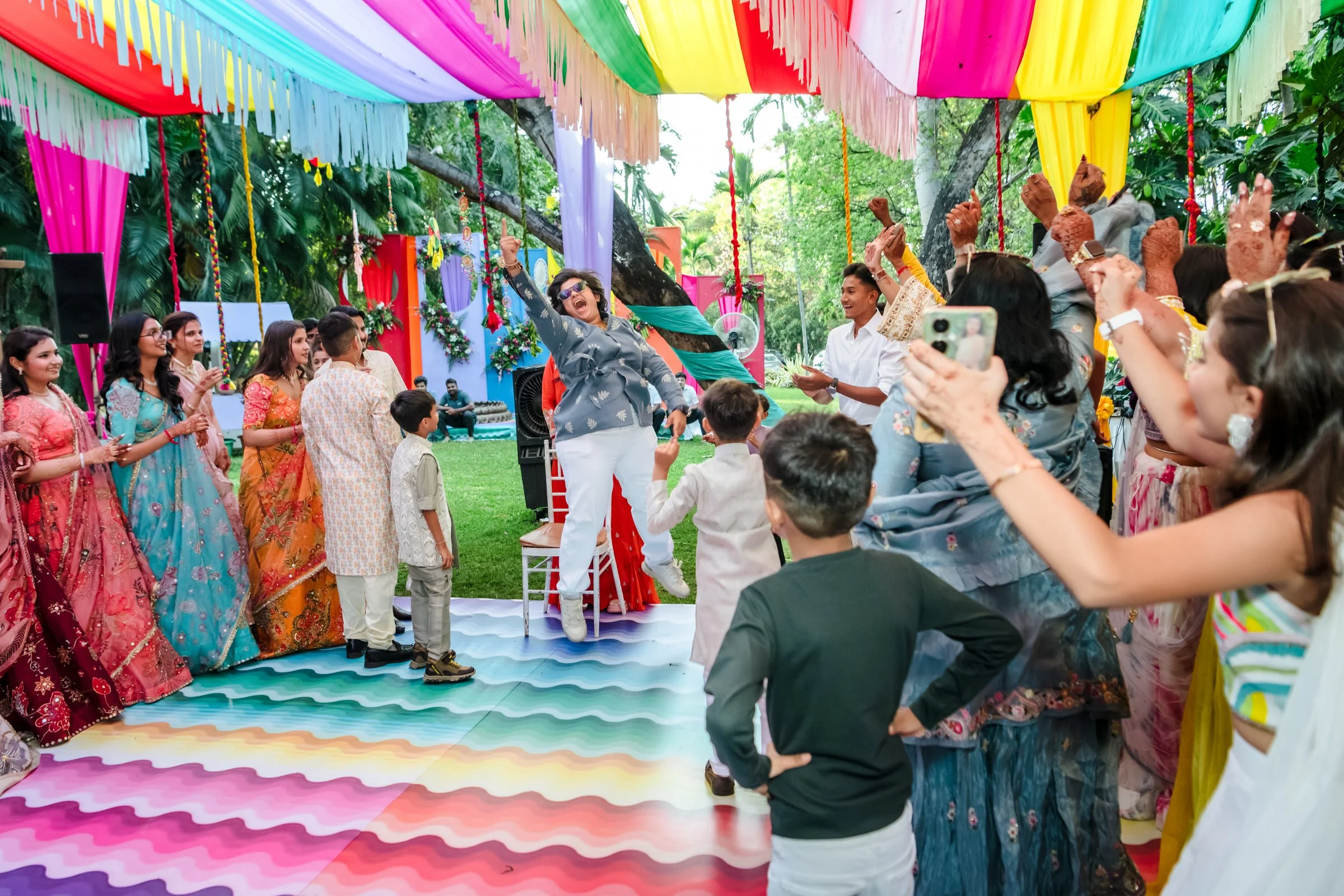
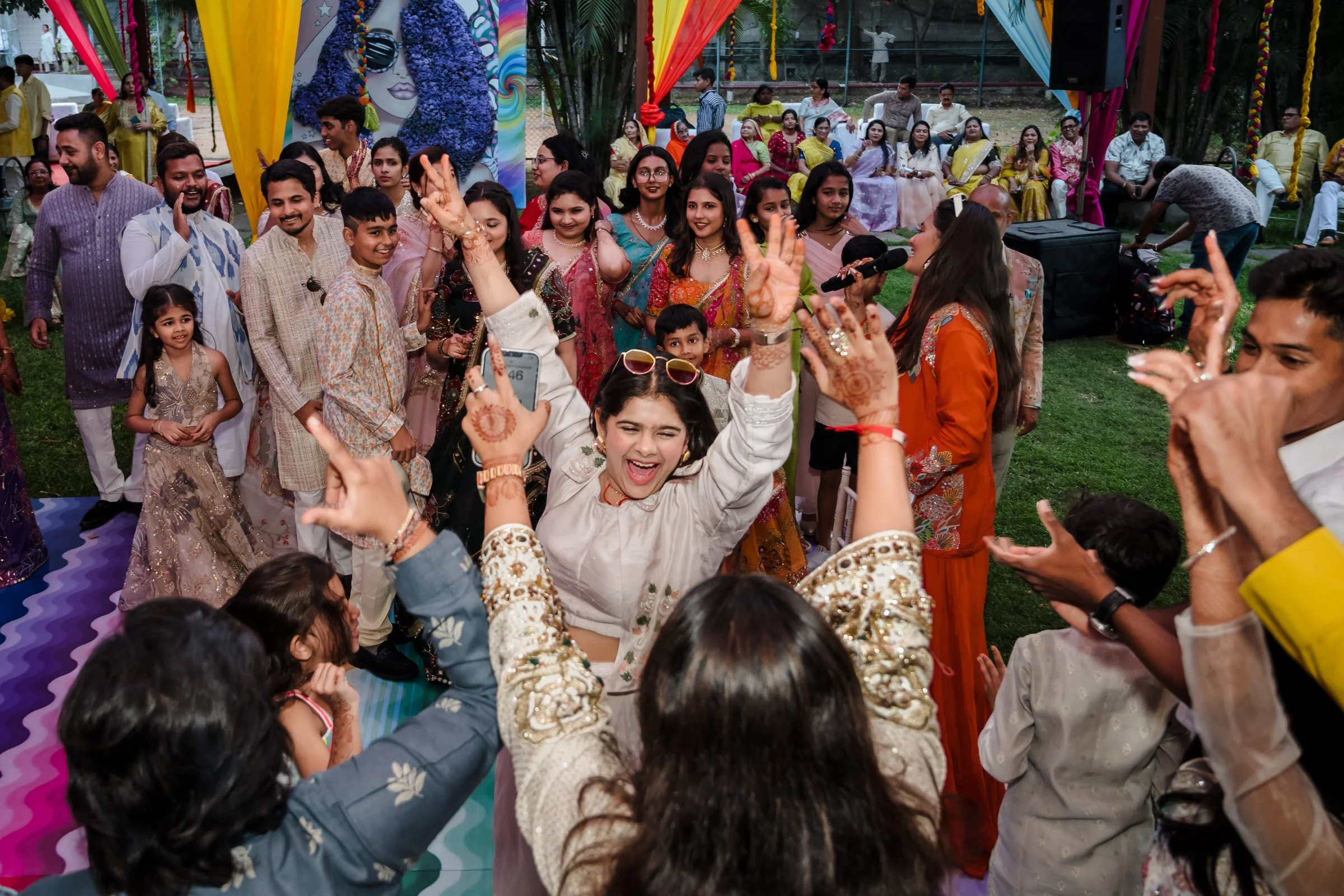
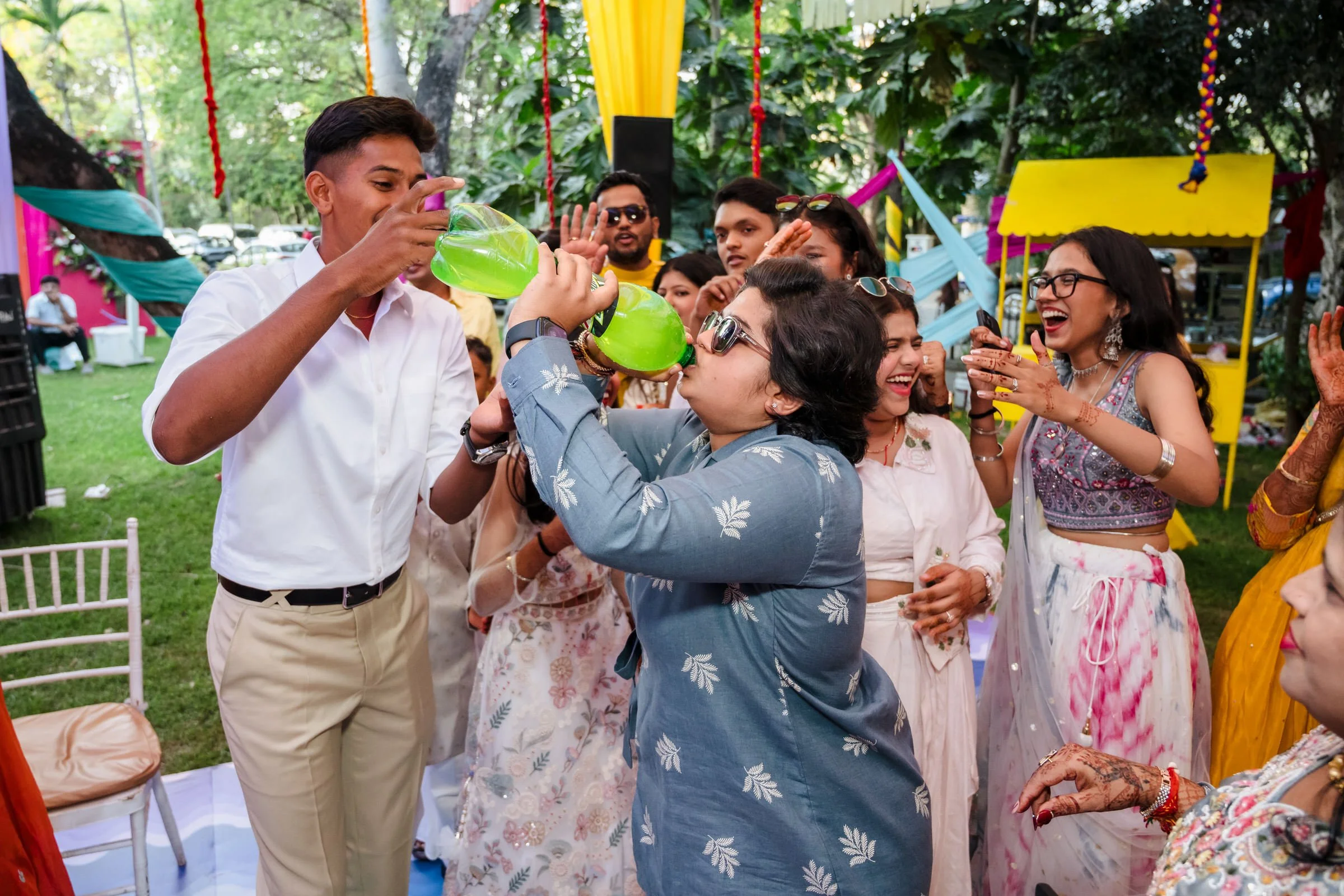
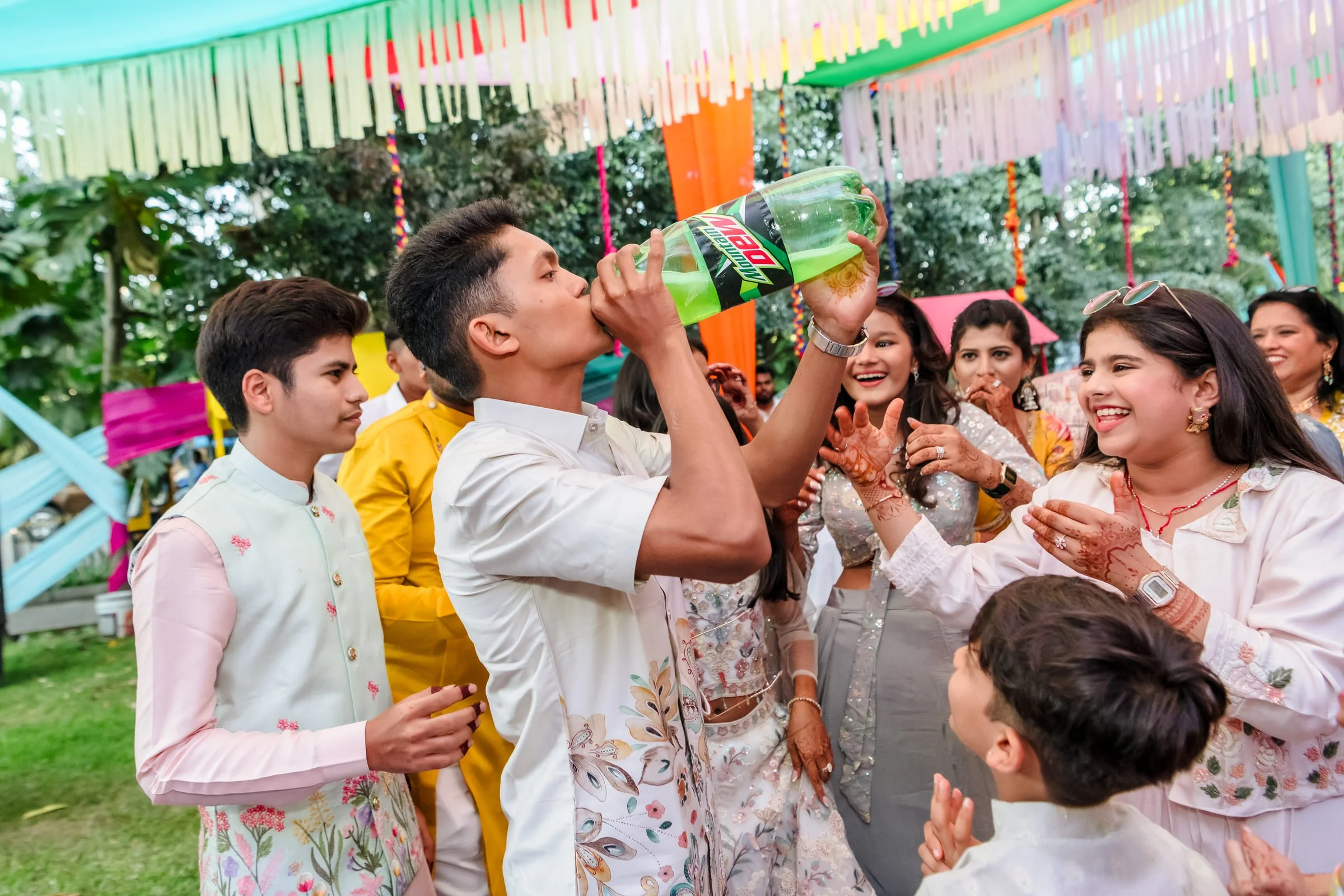
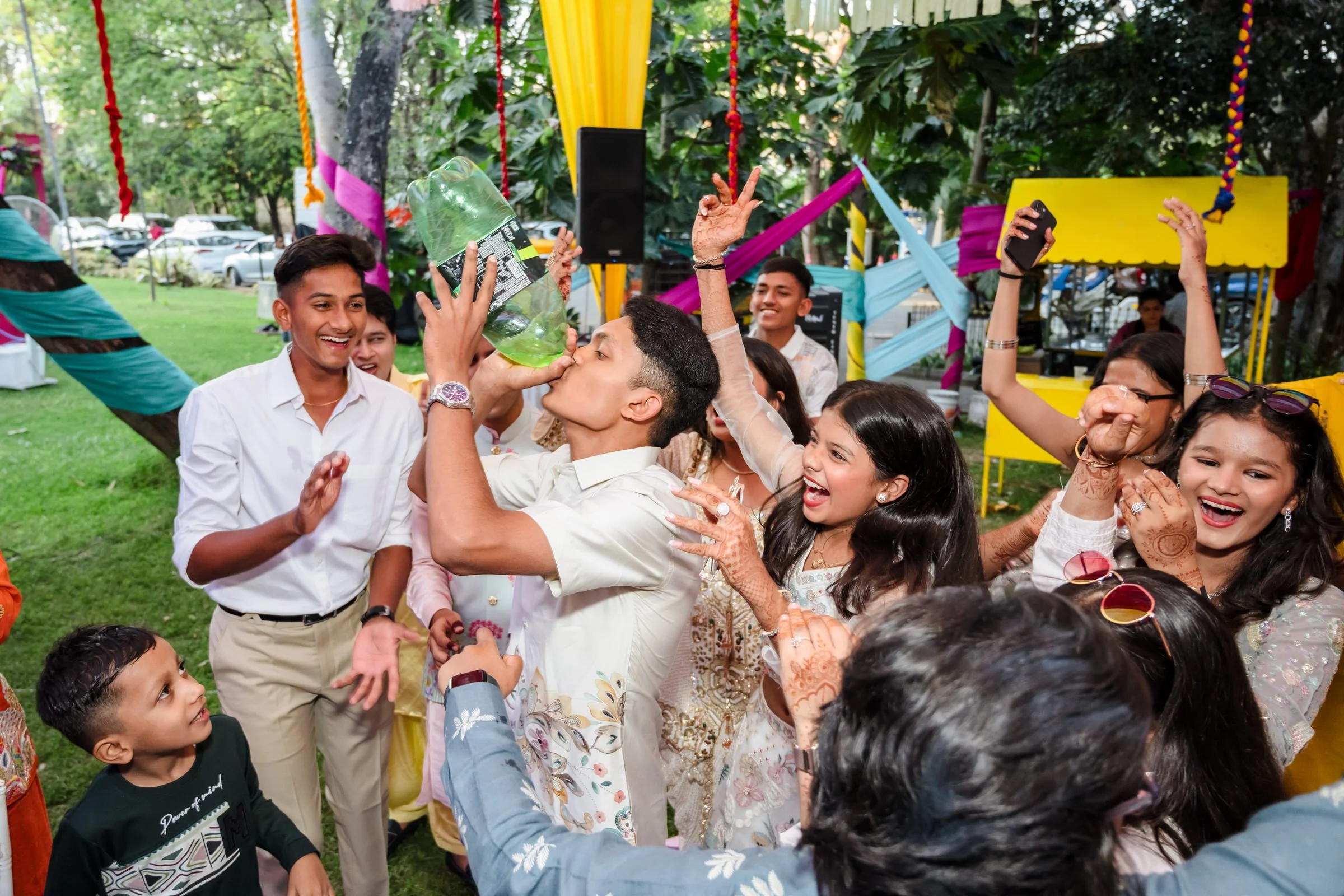
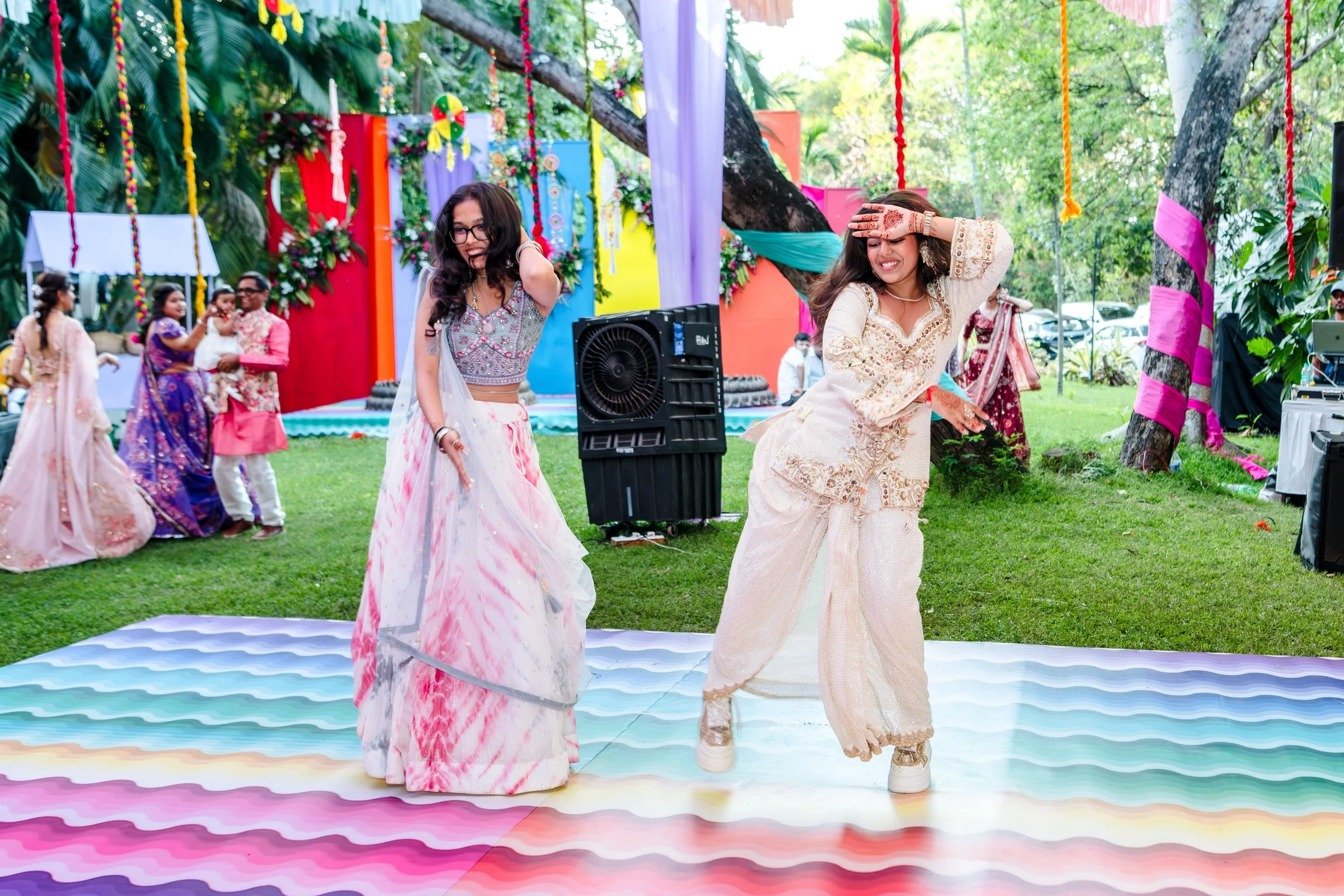
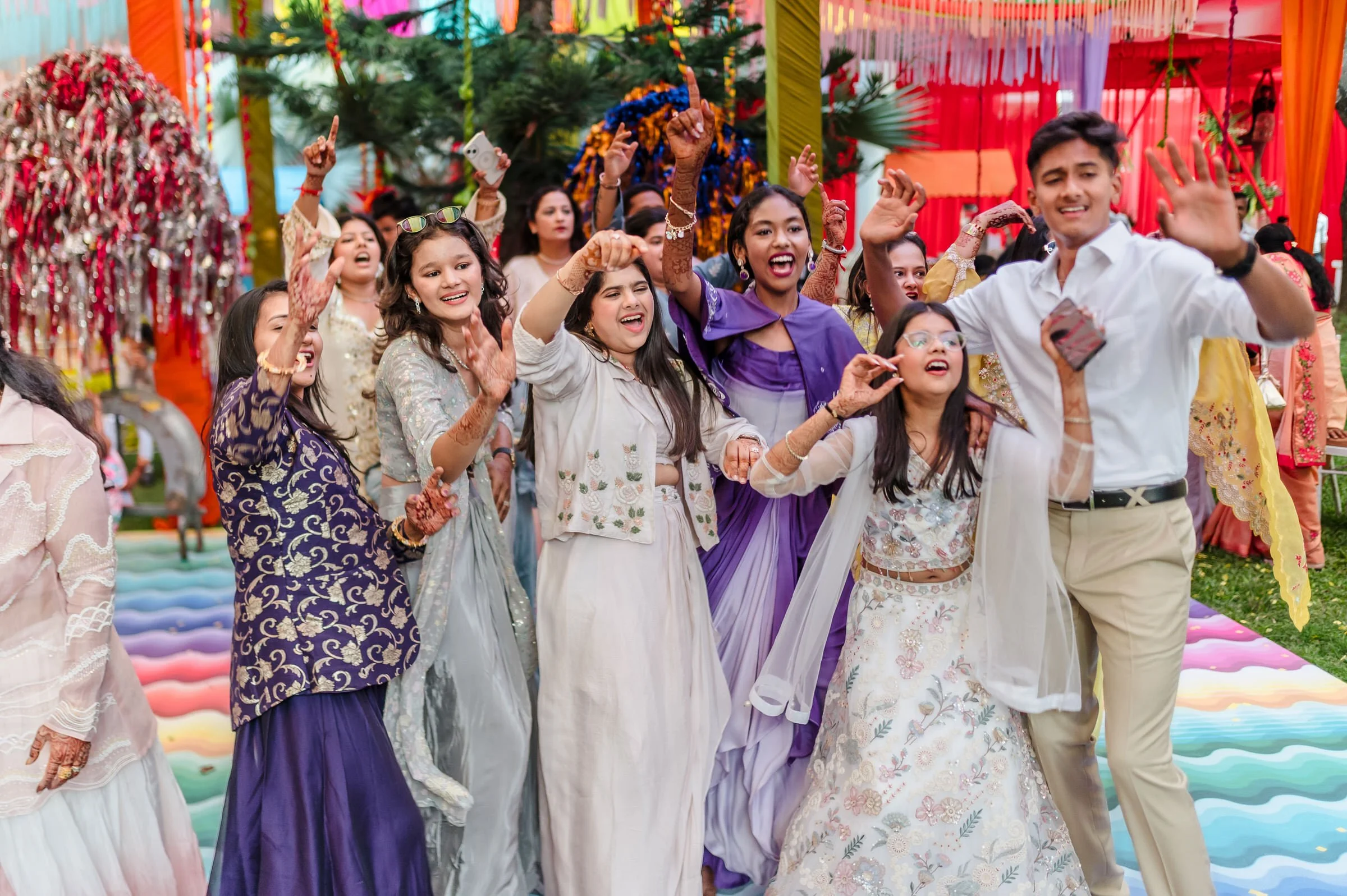
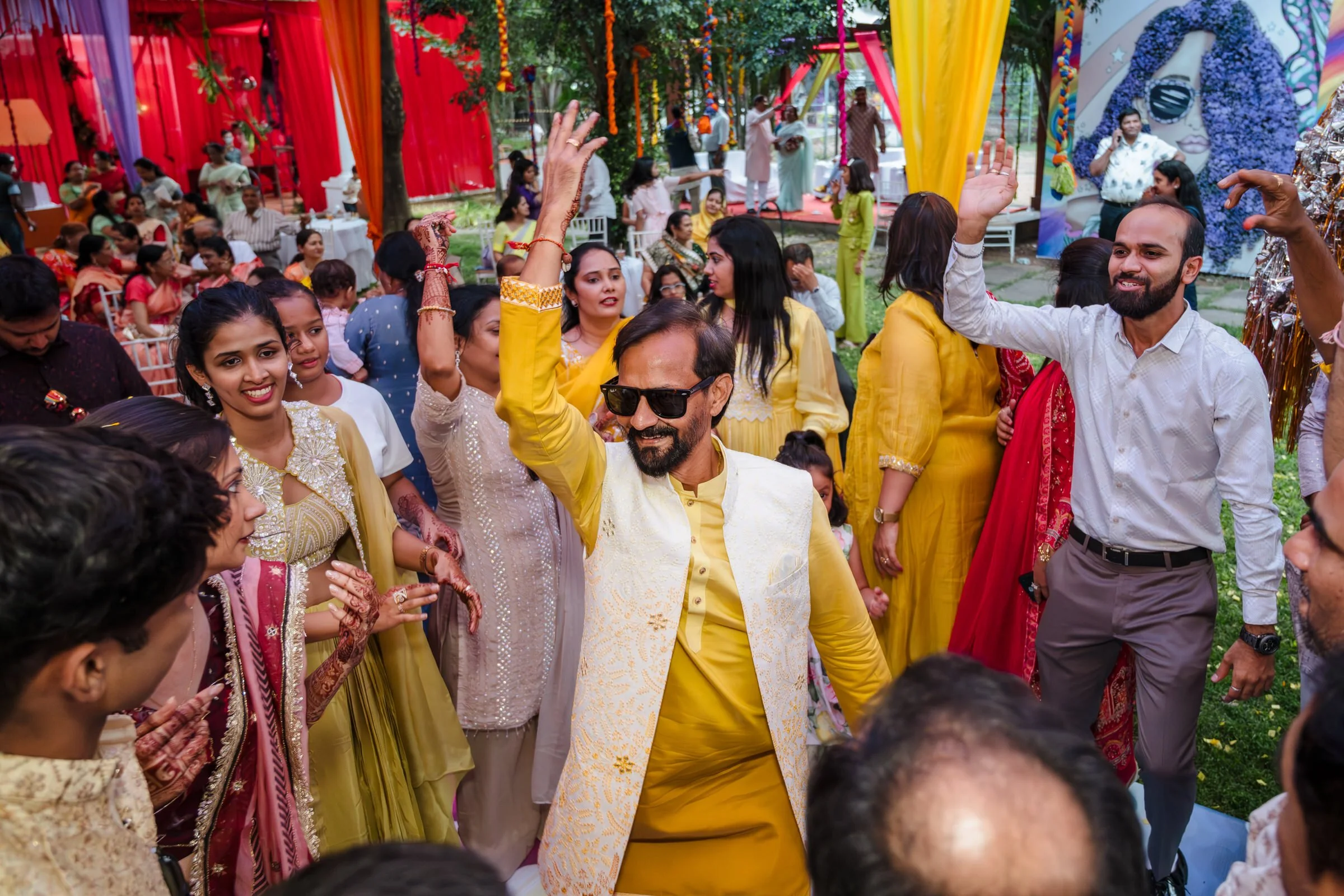
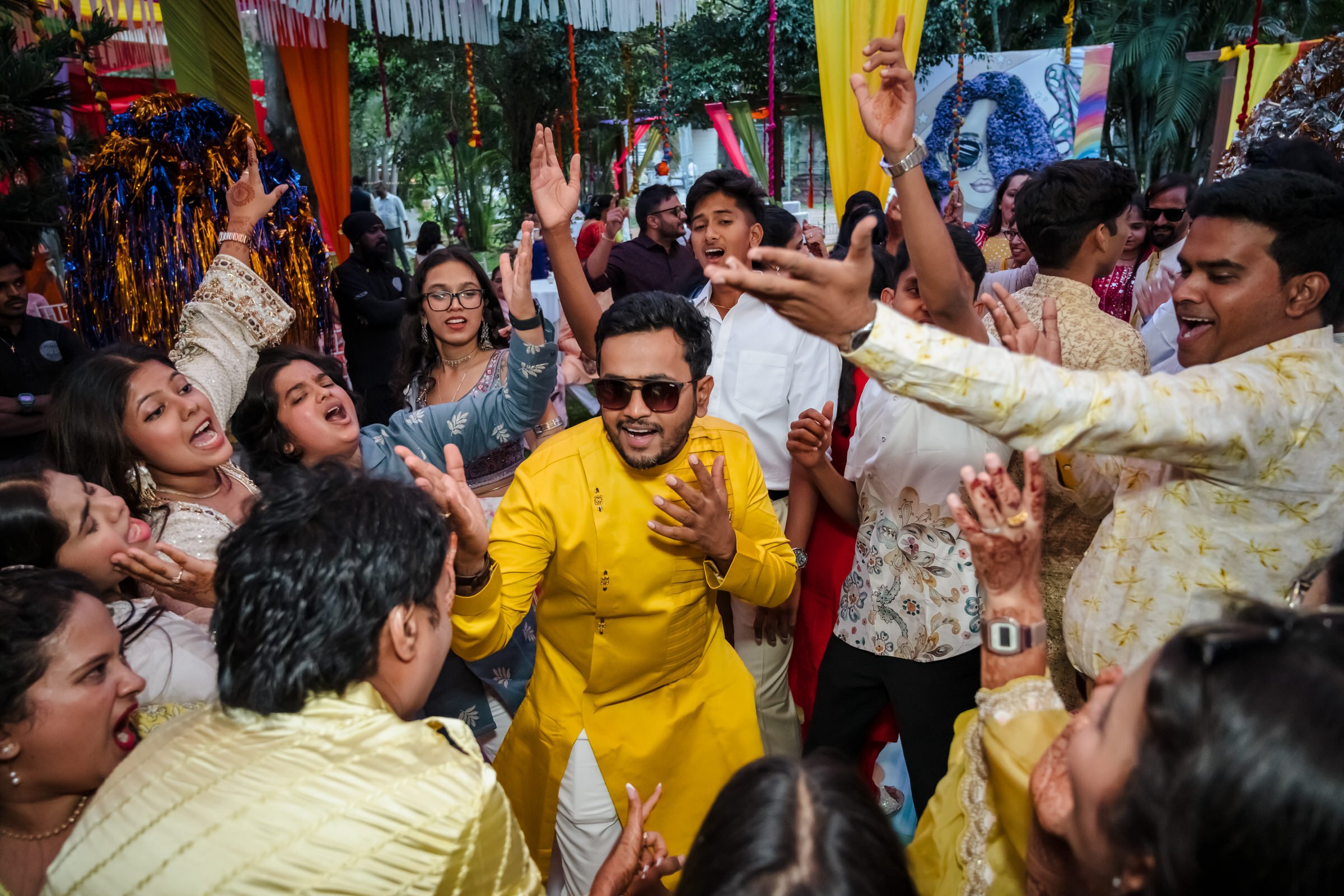
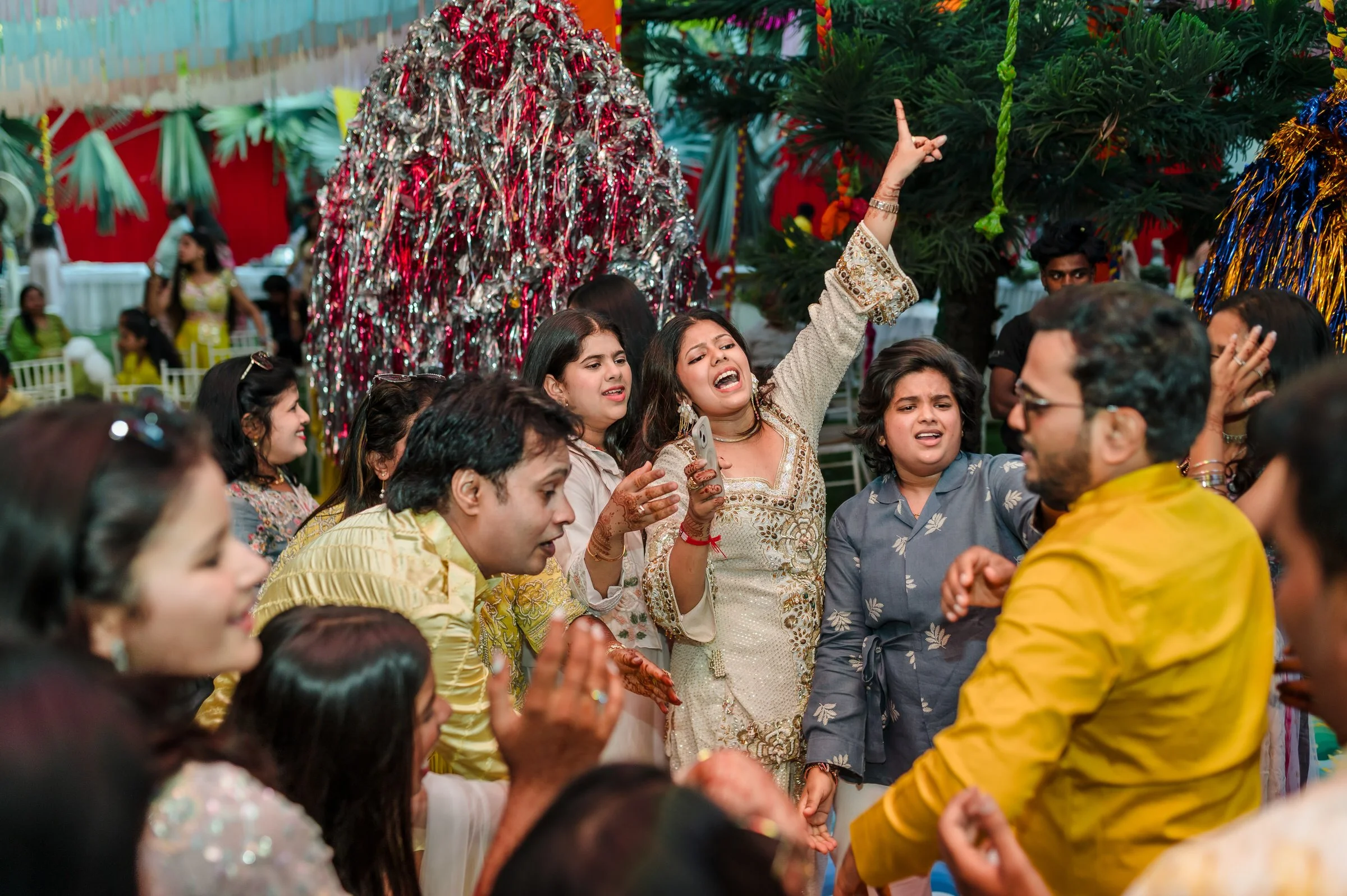
Then the dancing started, and it did not really stop for the next three days. Dance performances right there at the haldi, in daylight, before anyone had even changed for the evening.
If you are planning a Marwari haldi outdoors, one piece of practical advice. Petals need light and open space to look like anything. A covered banquet hall flattens it. A lawn at the right hour does not.
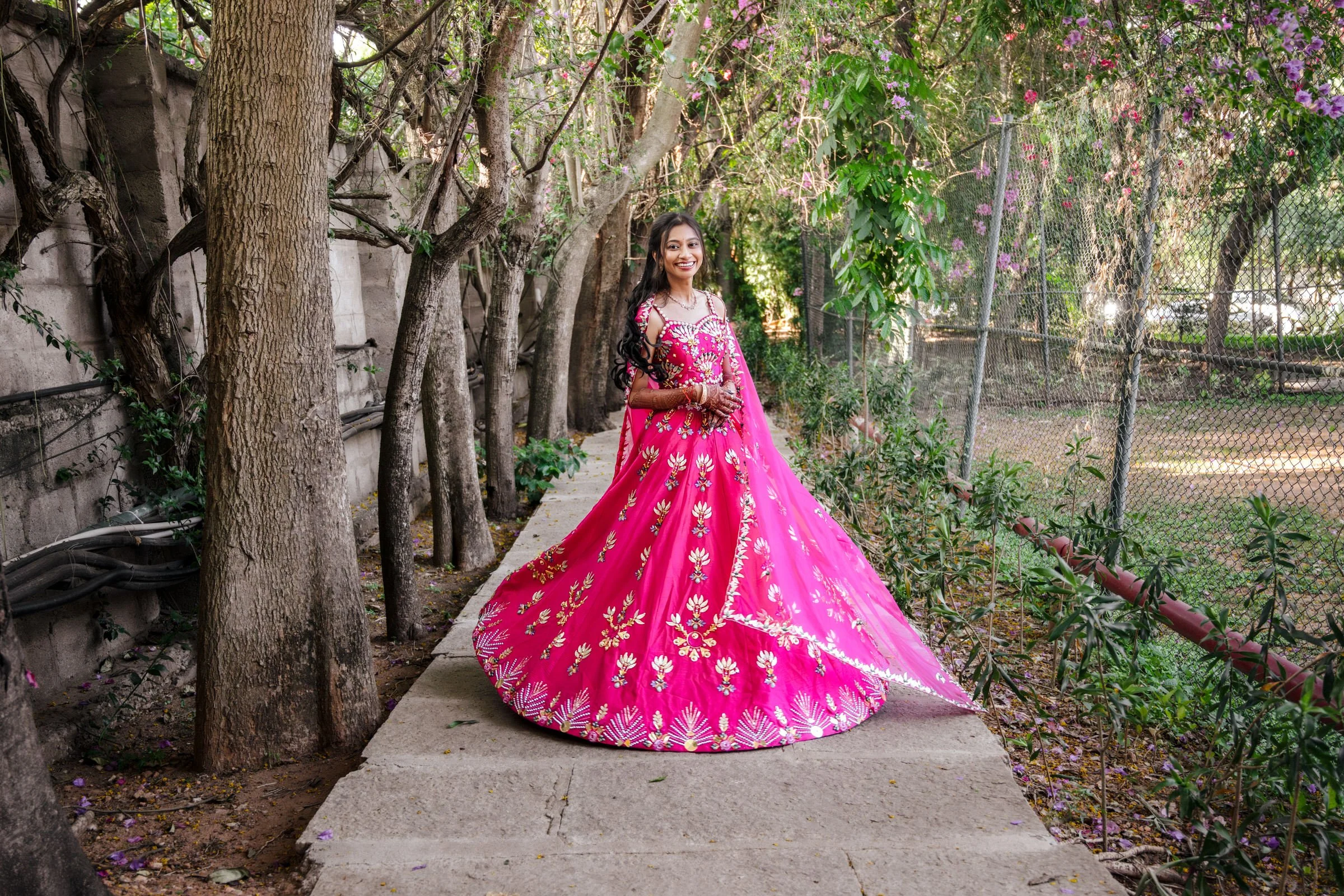
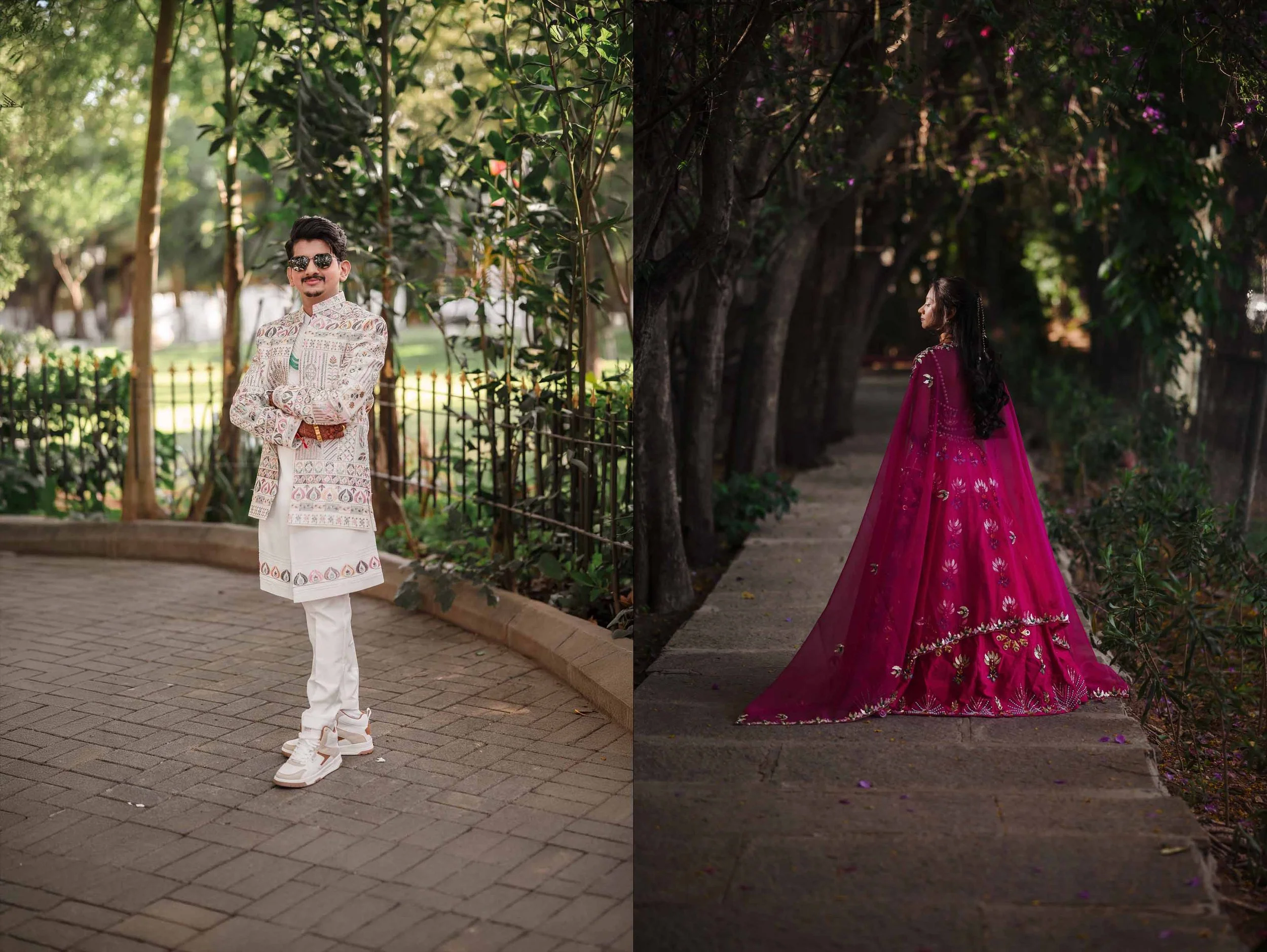
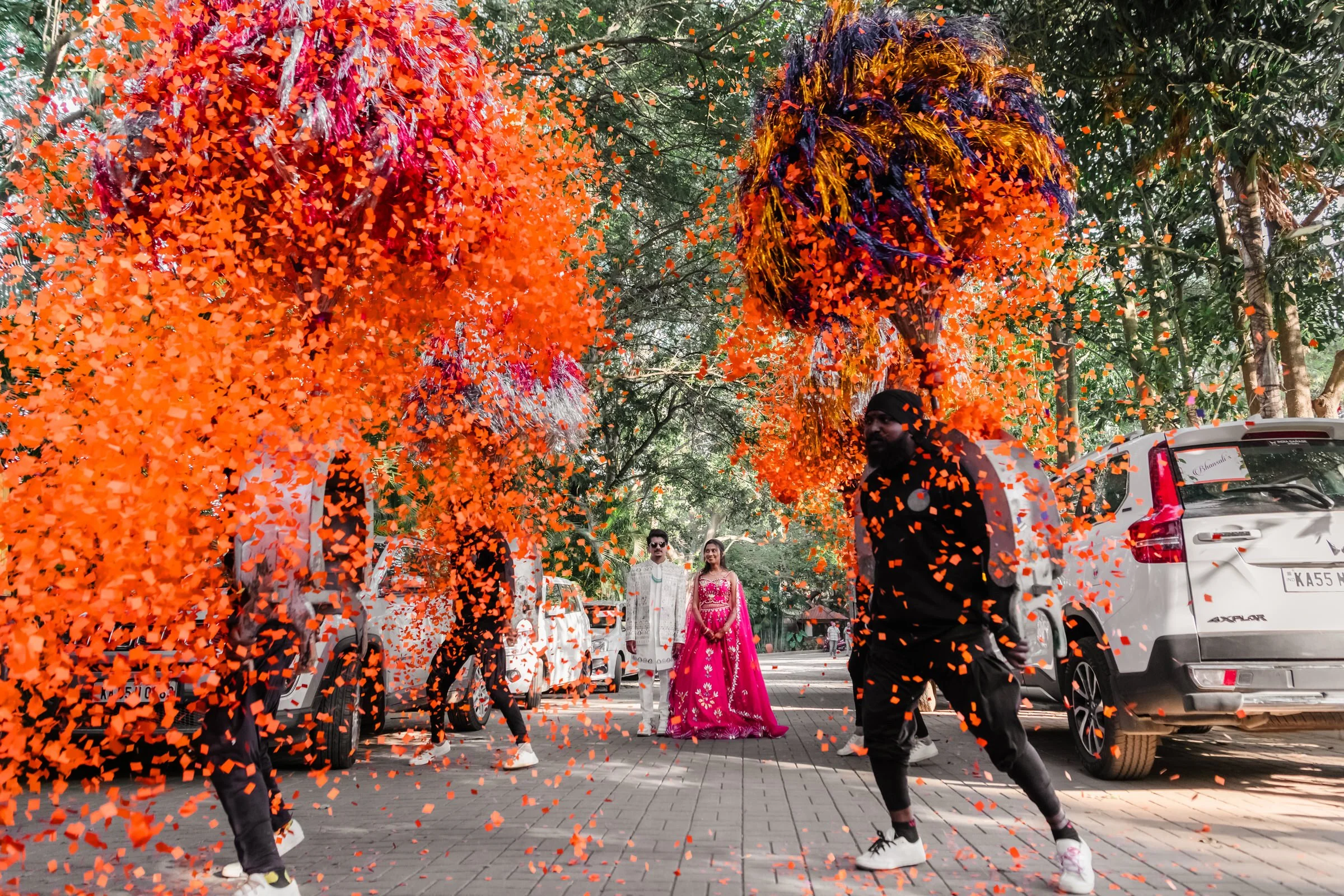
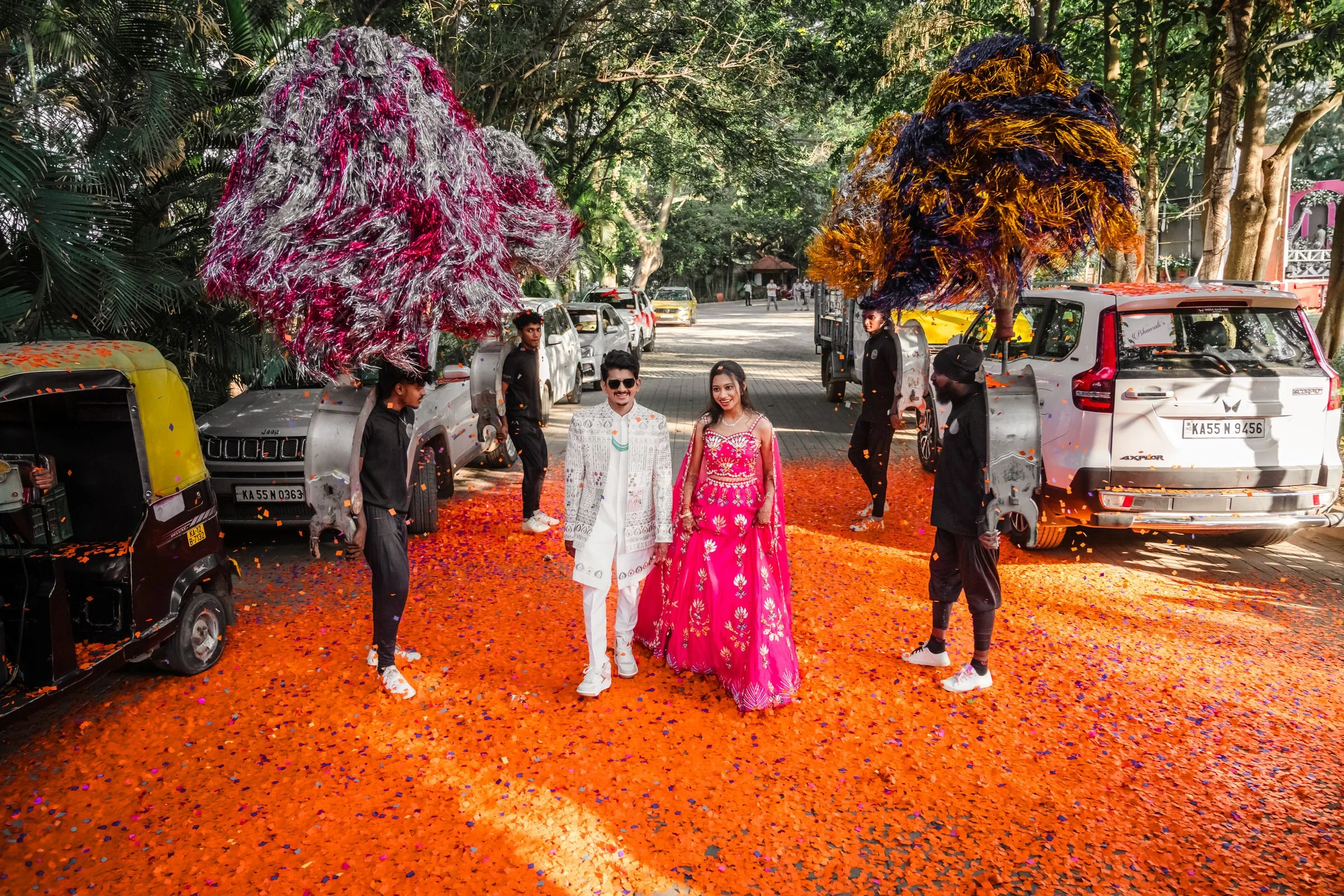
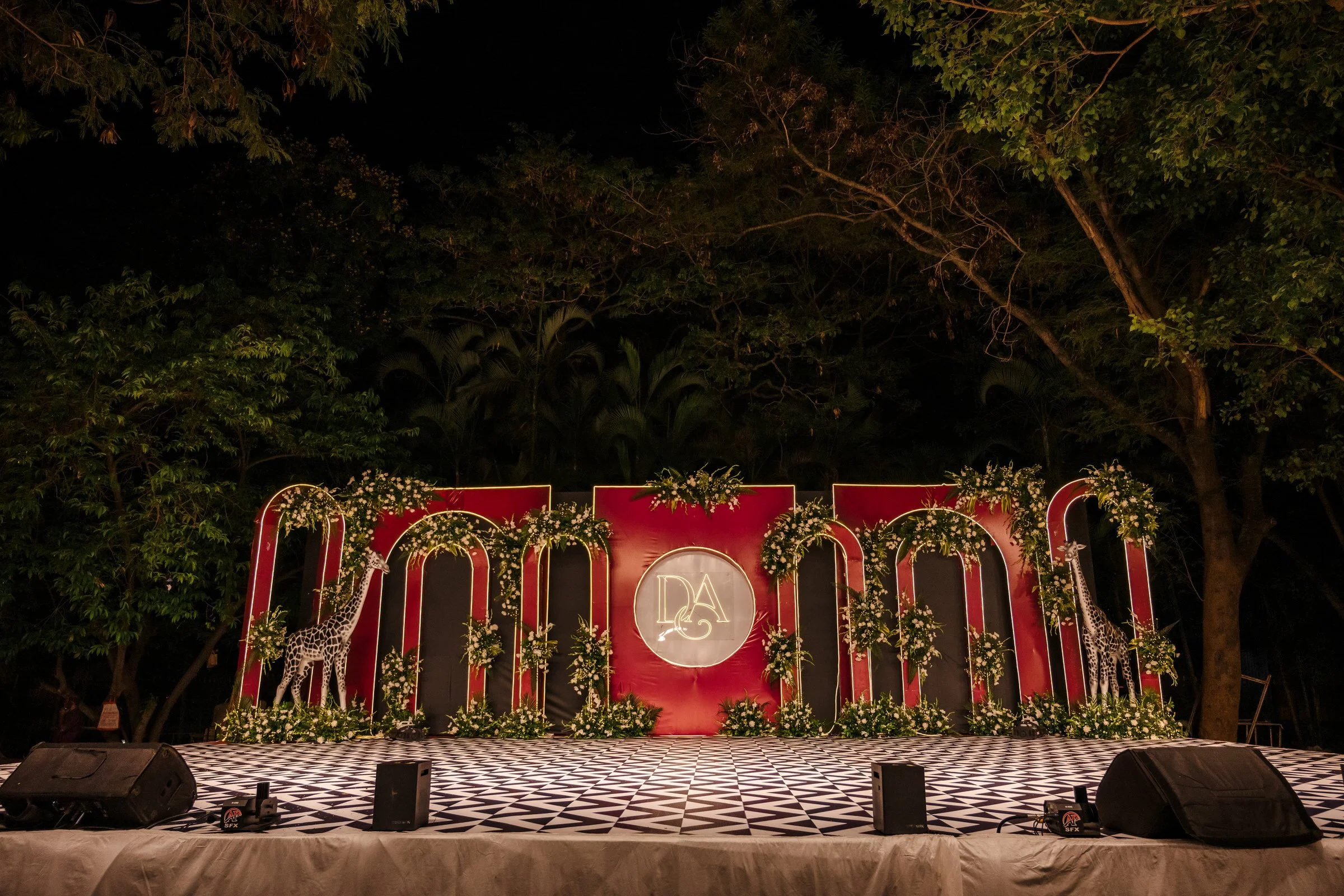
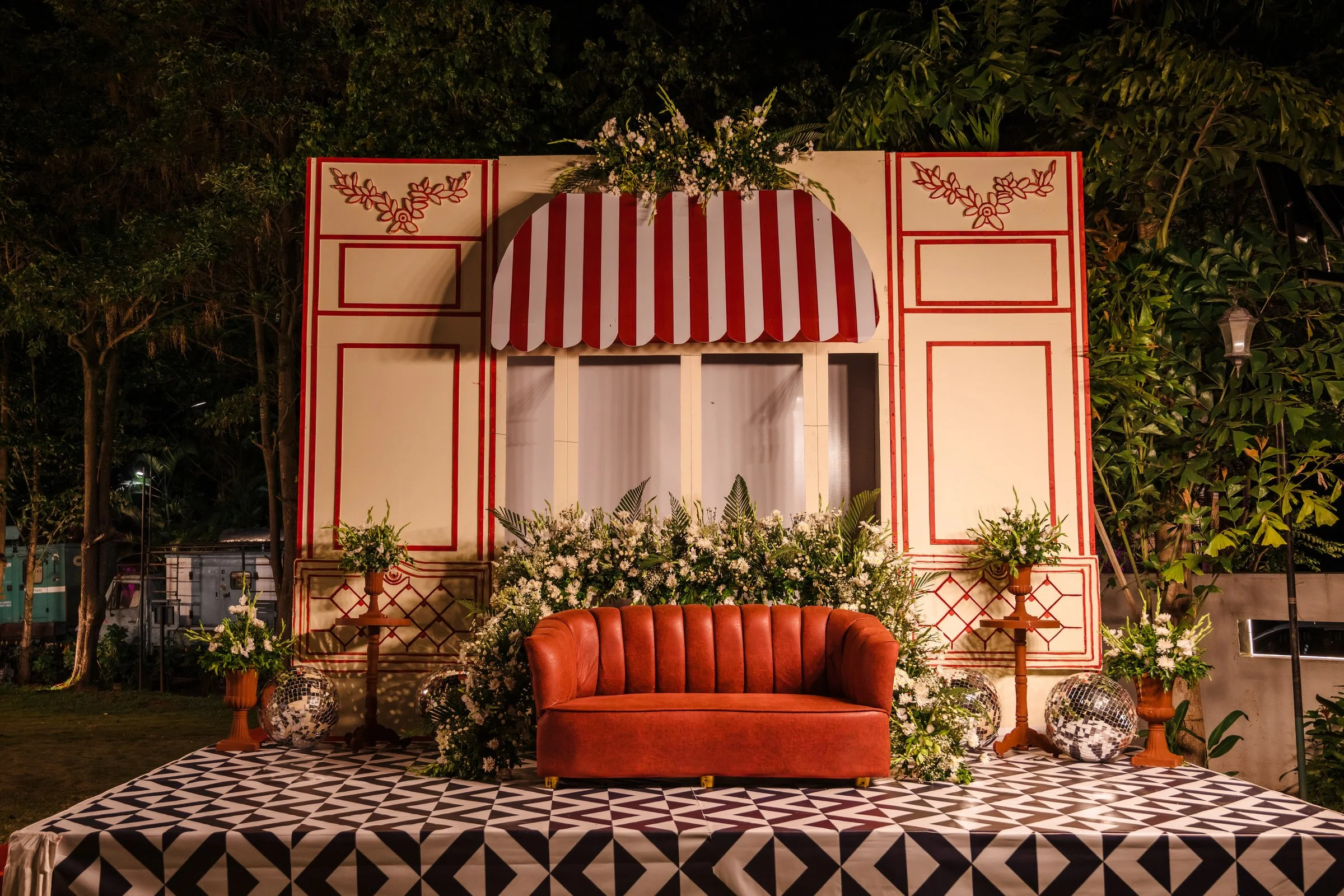
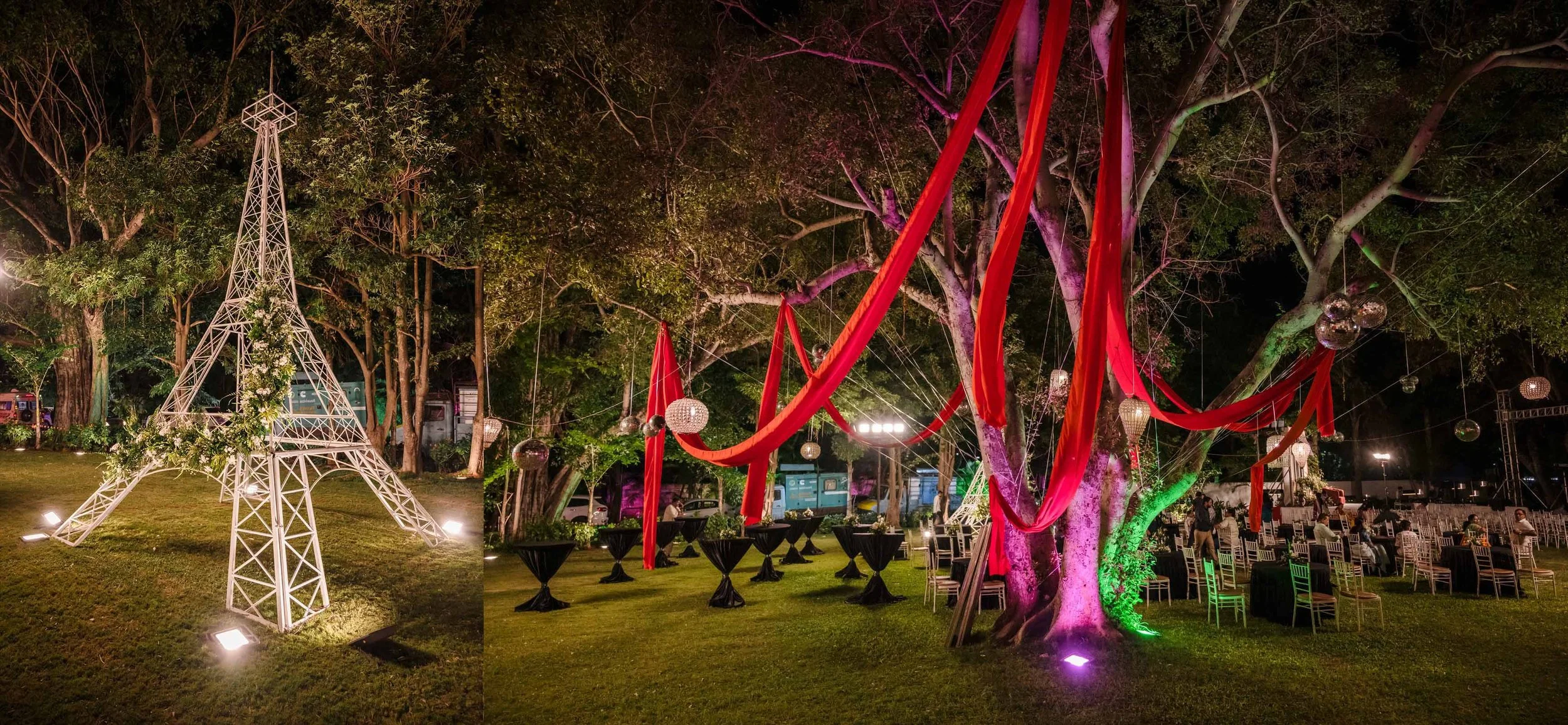
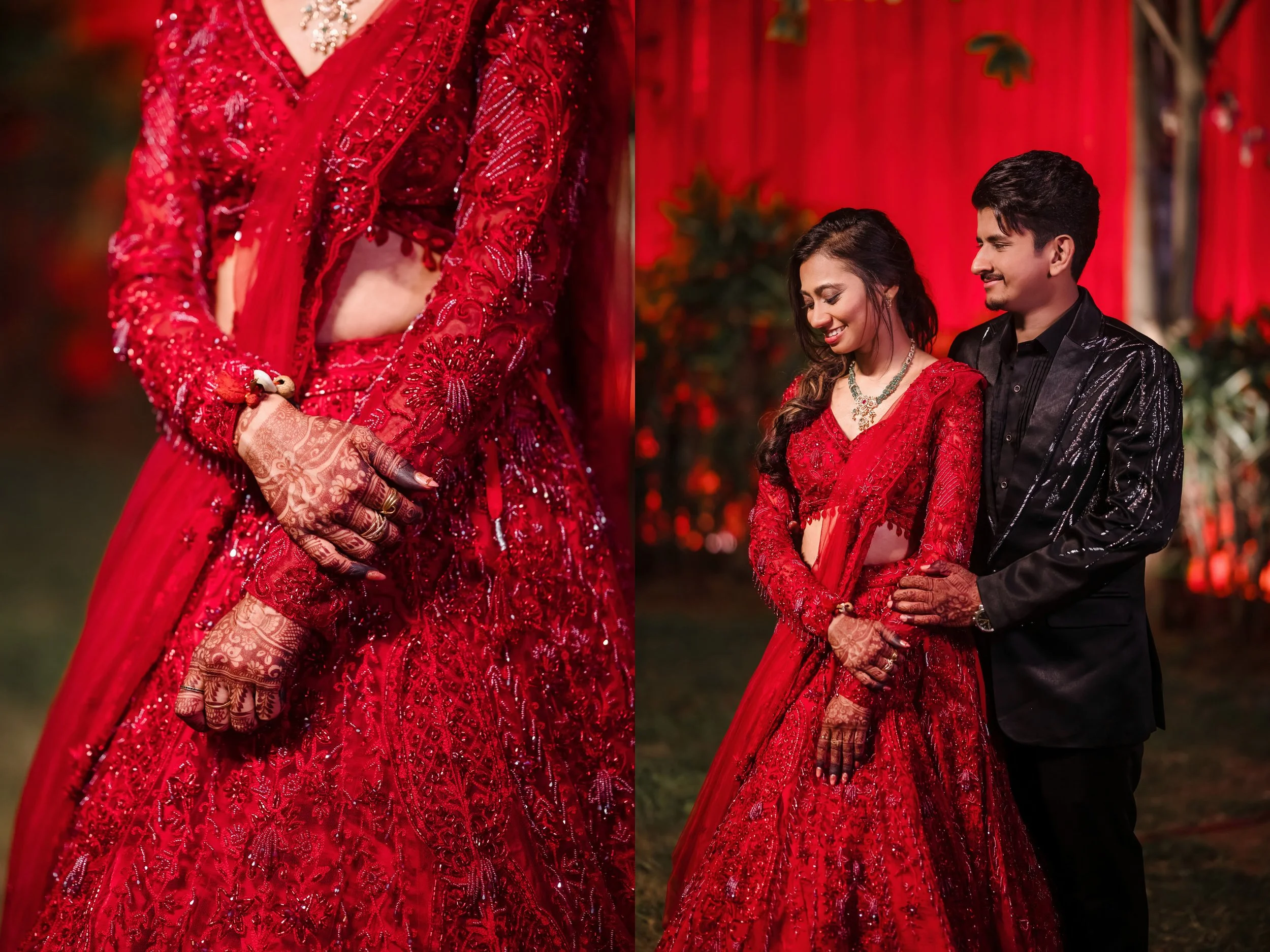
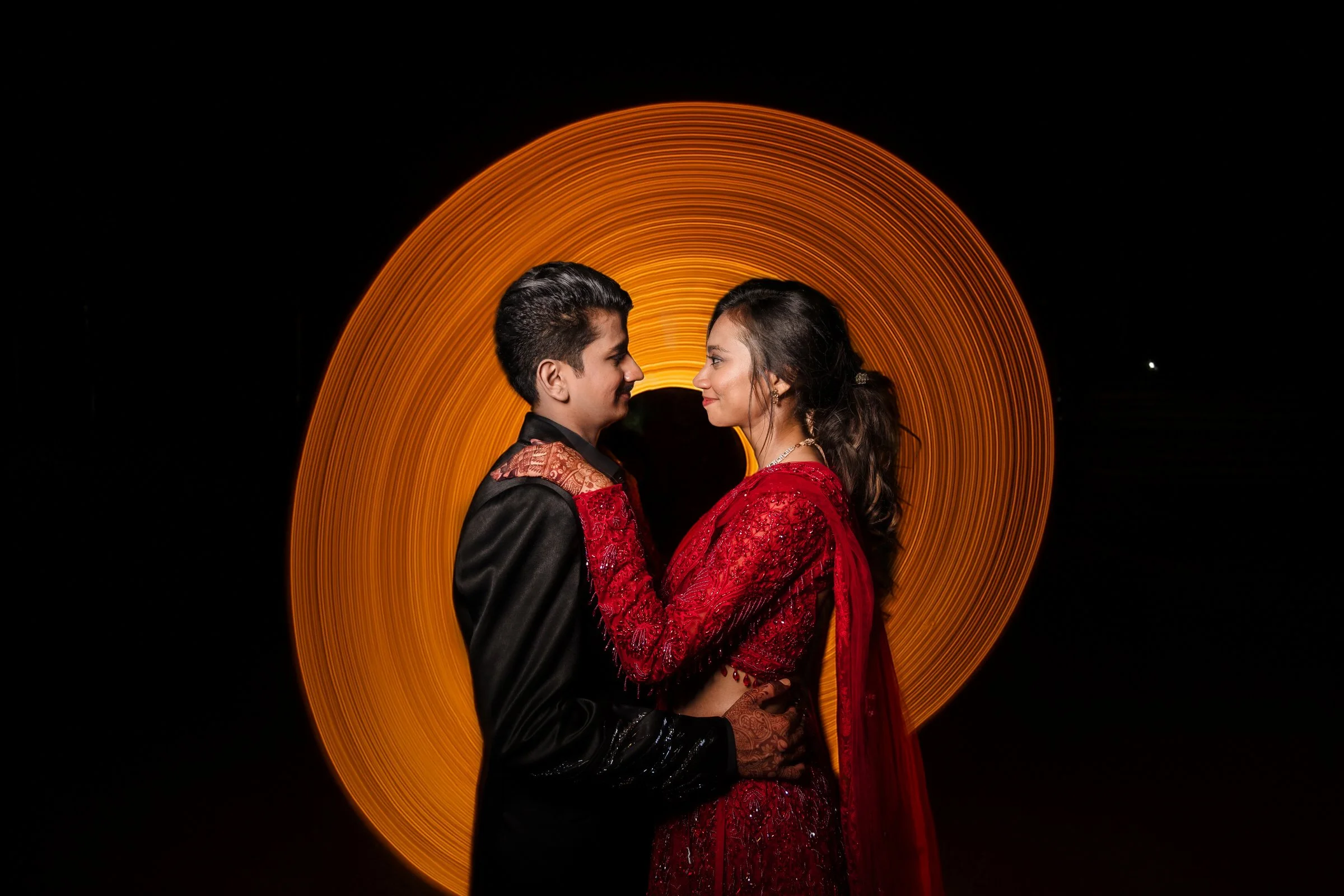
Day one, evening: sangeet, and an entry escorted by angels
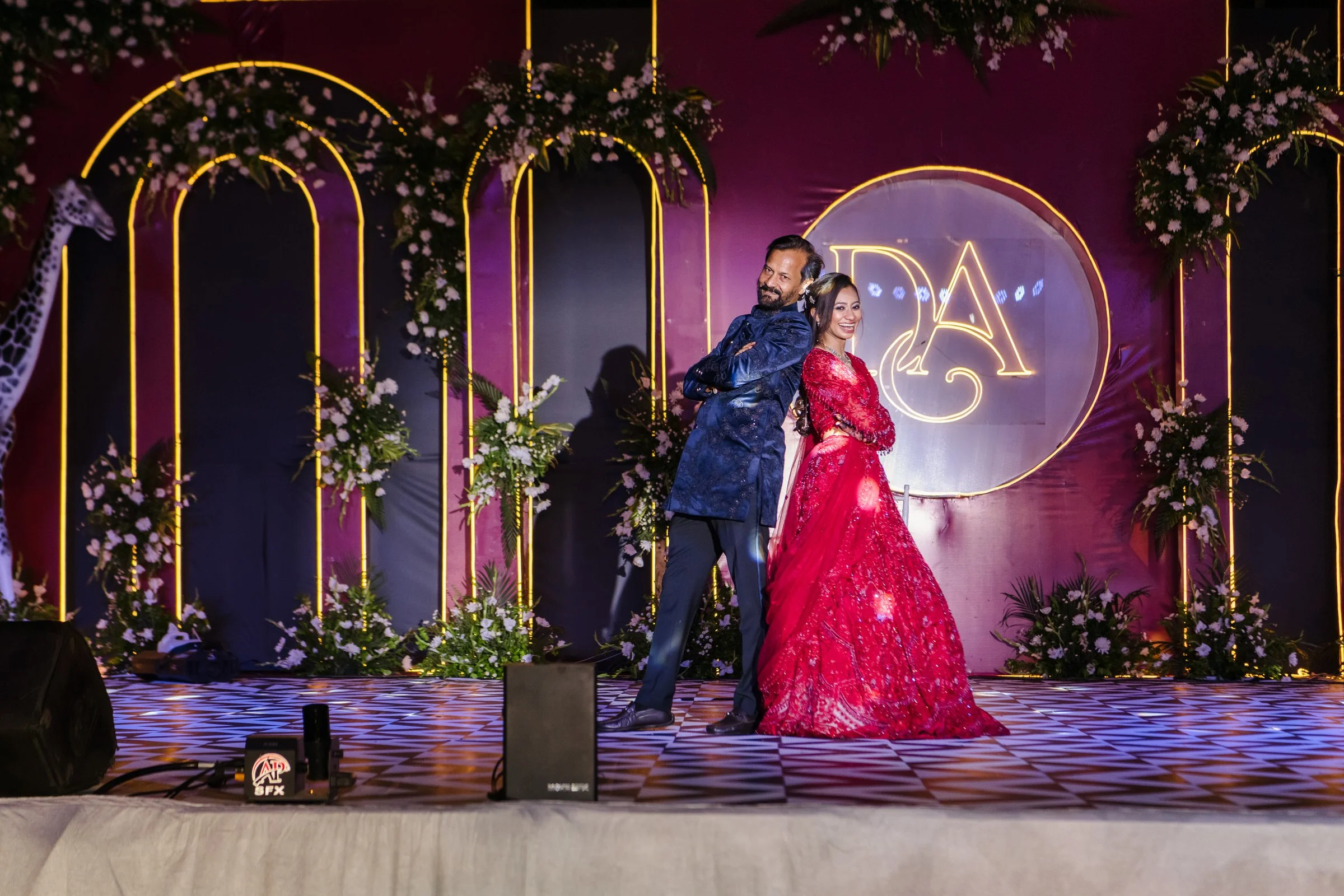
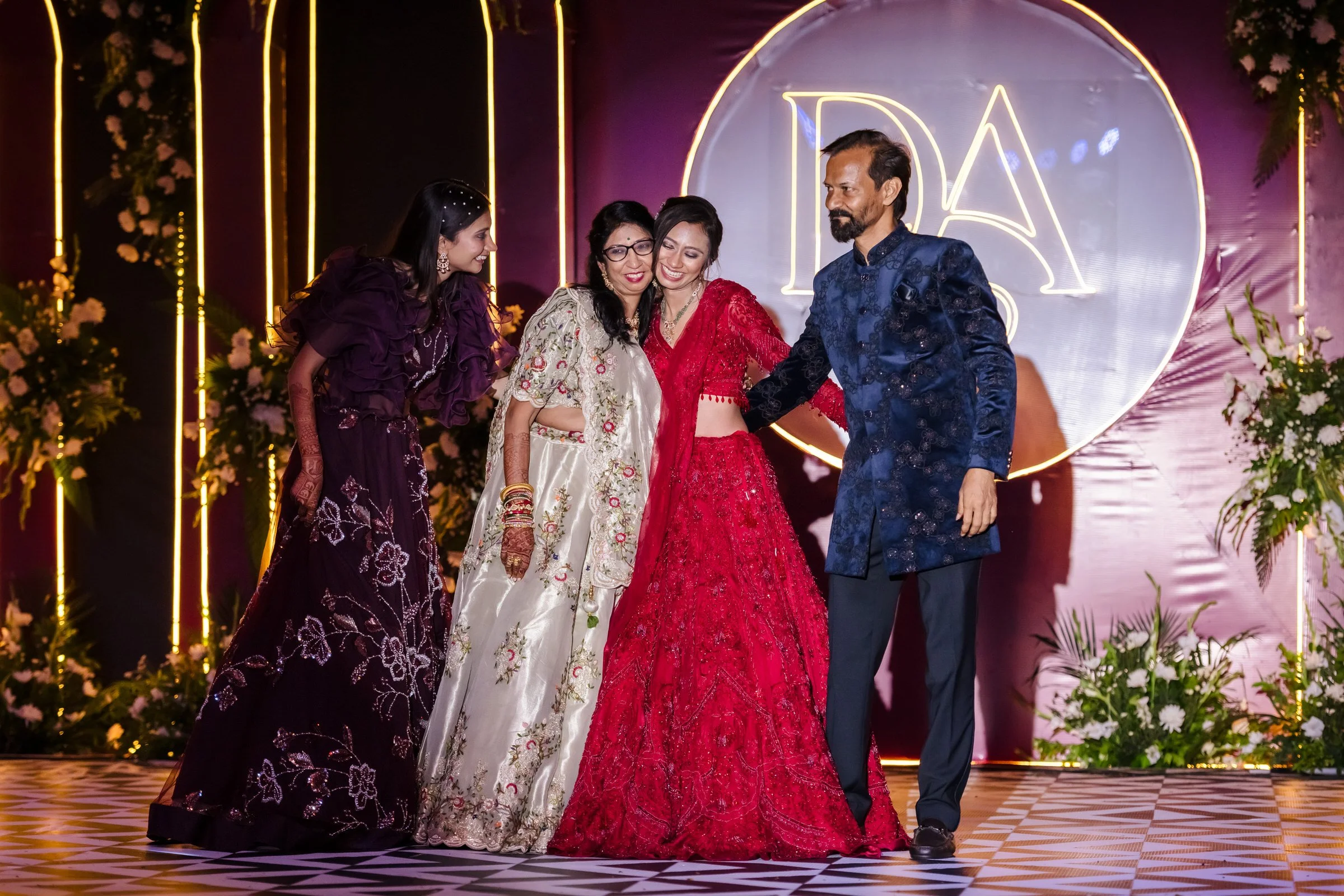
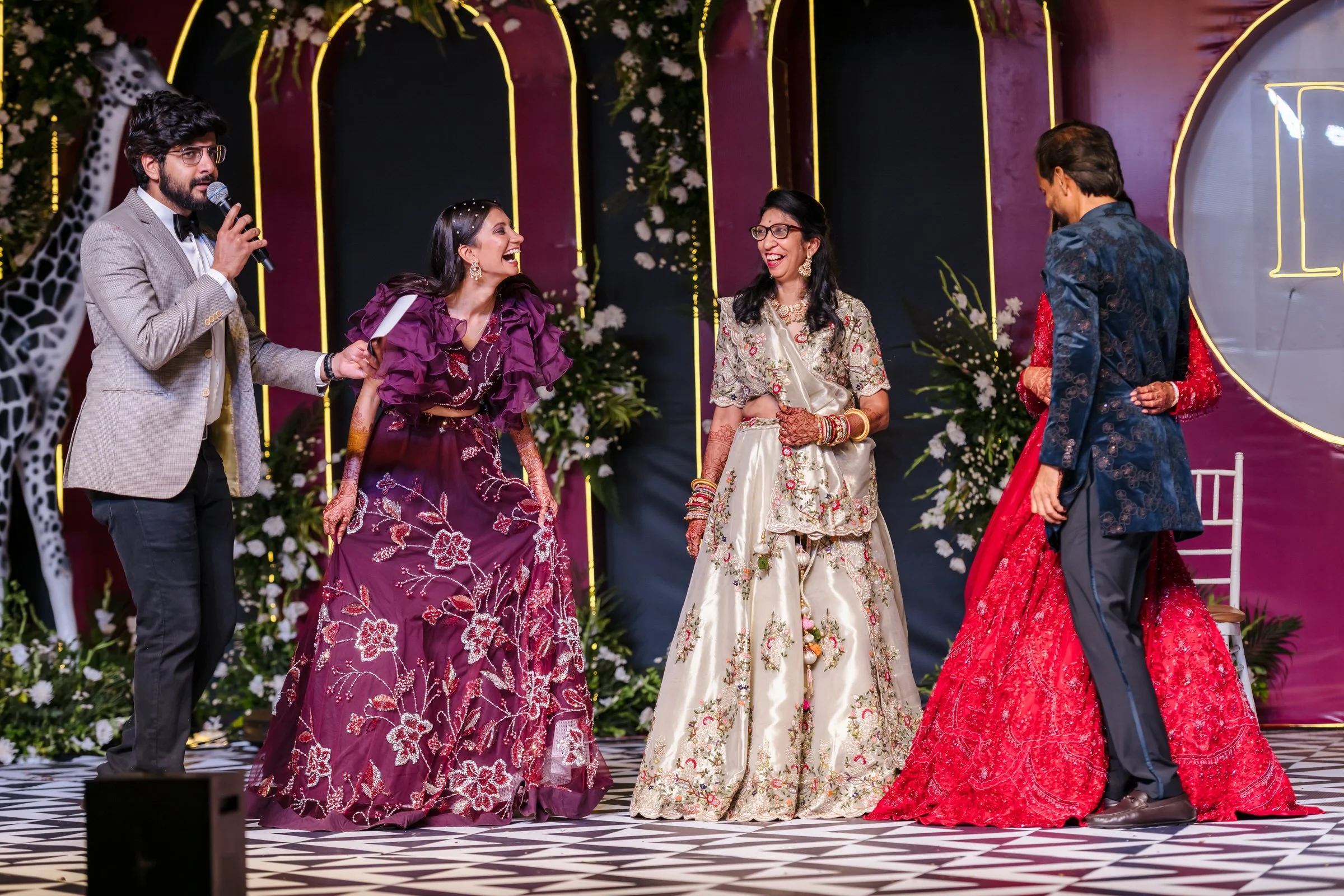
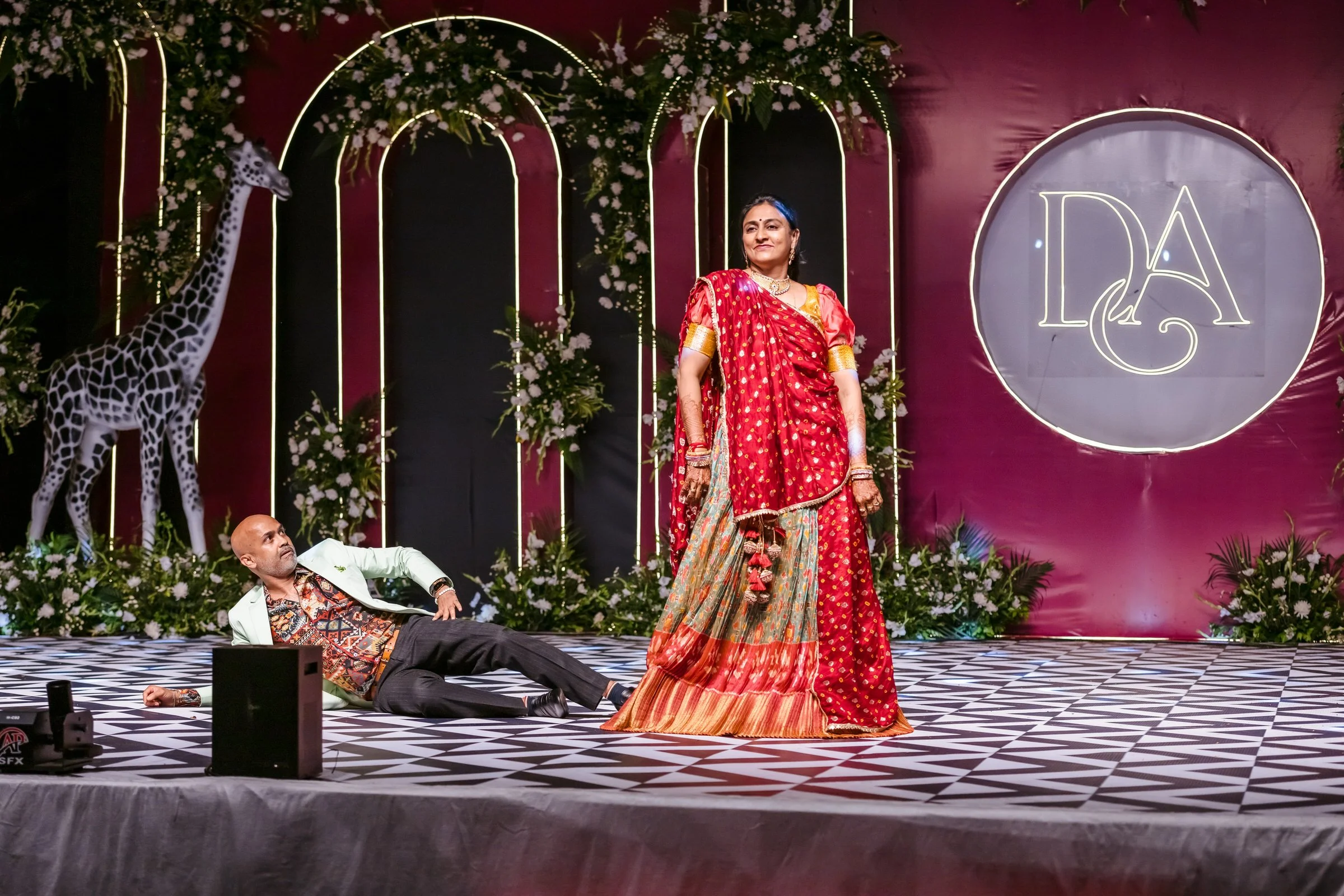
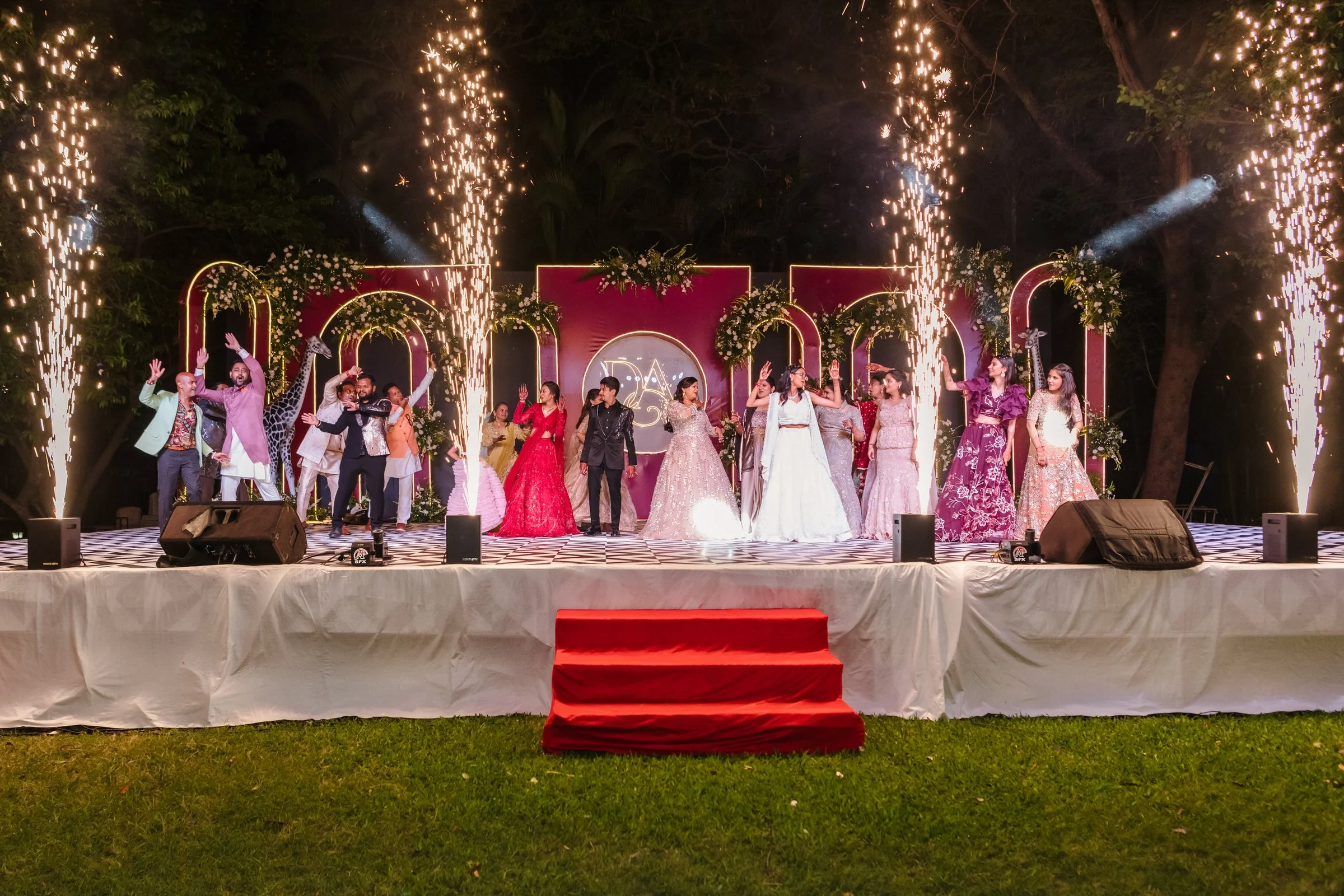
The sangeet was the same evening, and this is where the family really showed up.
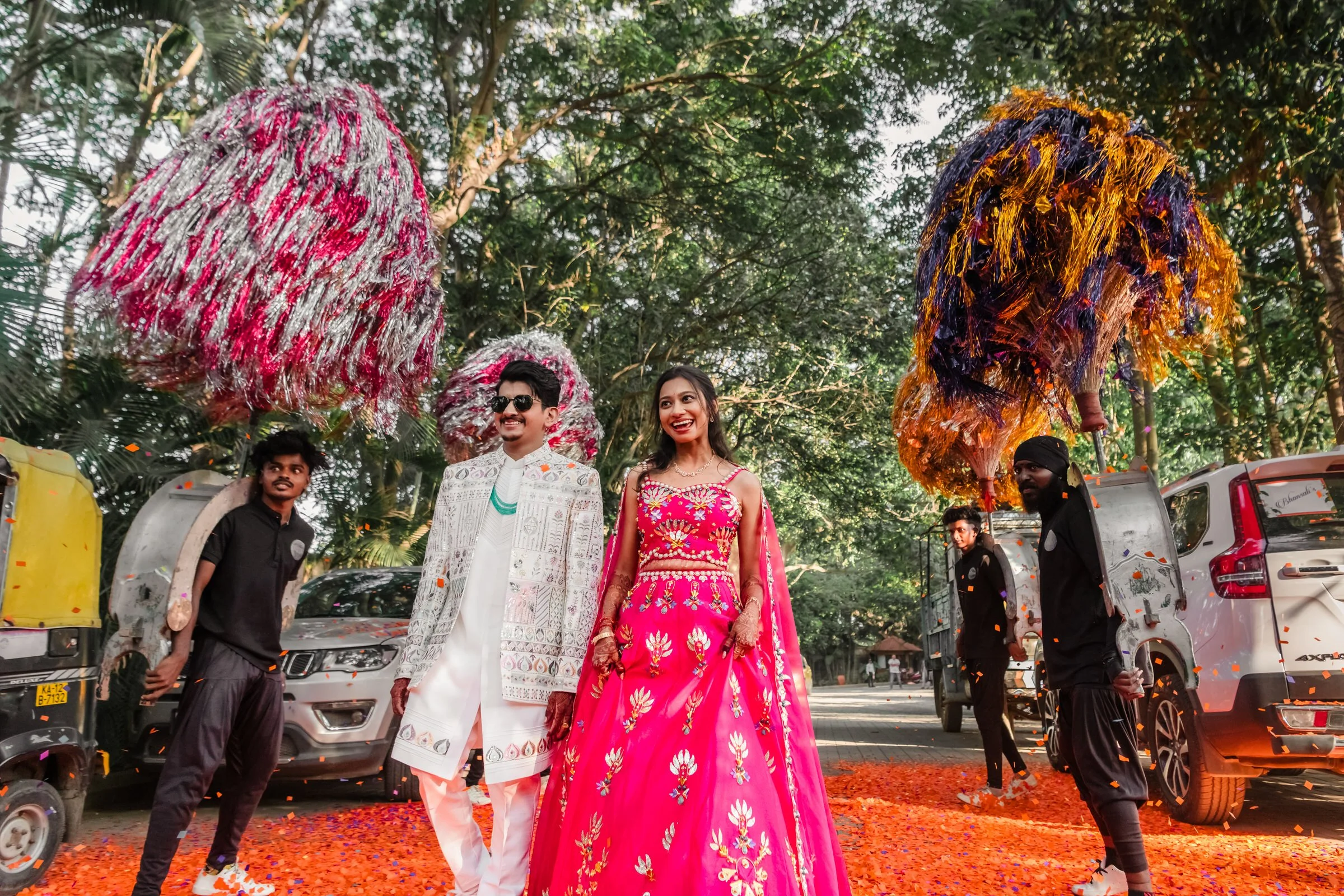
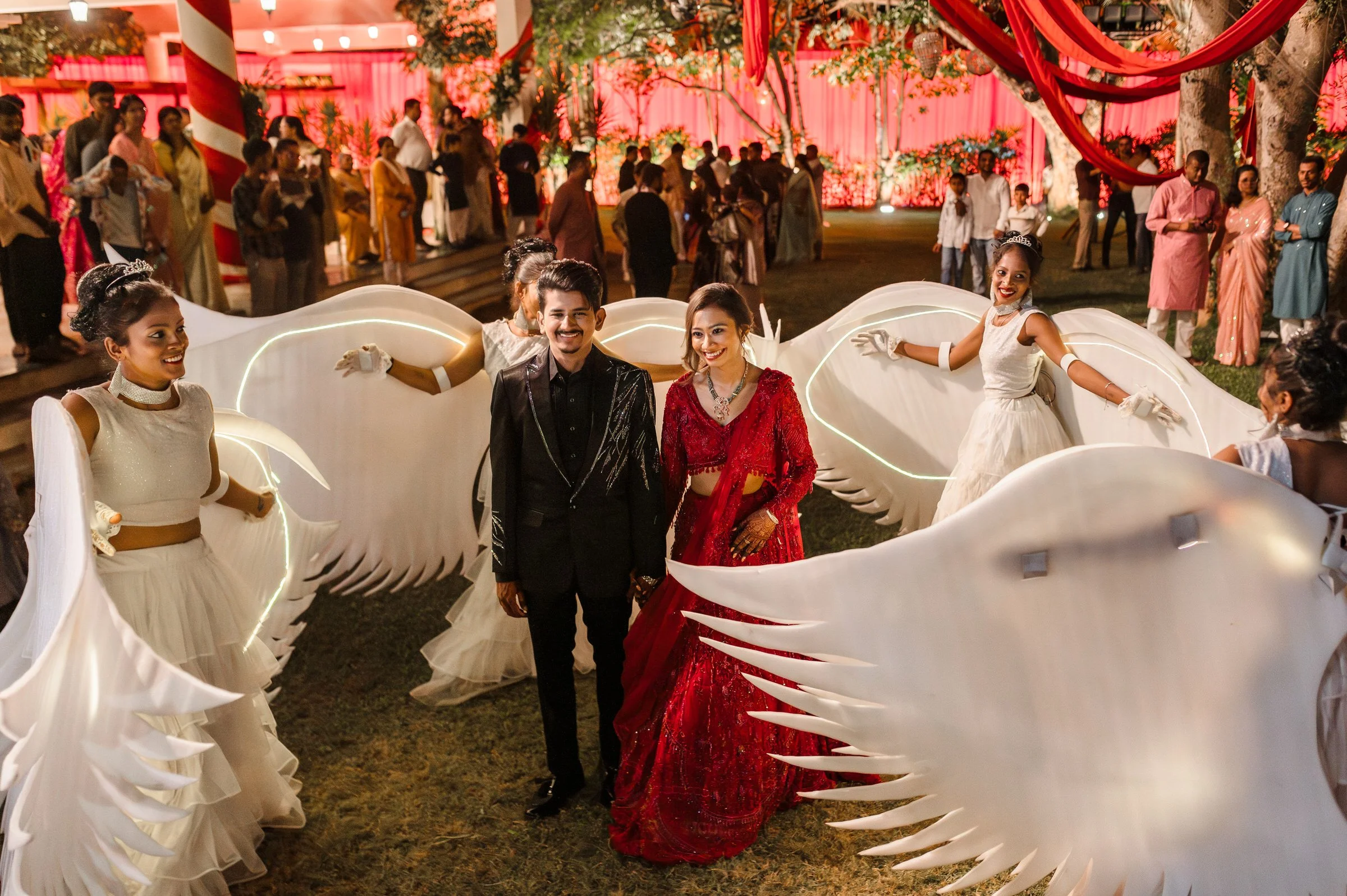
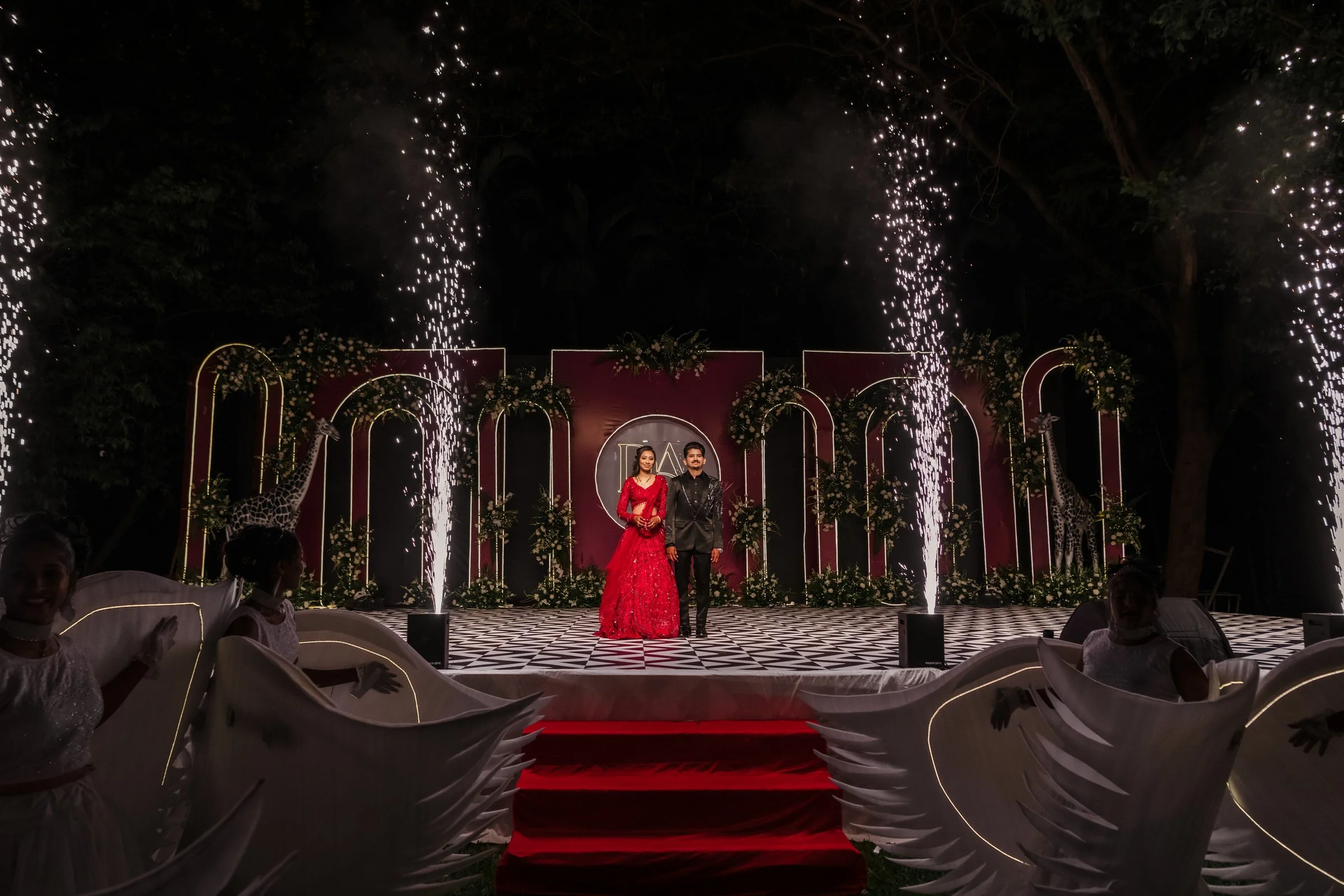
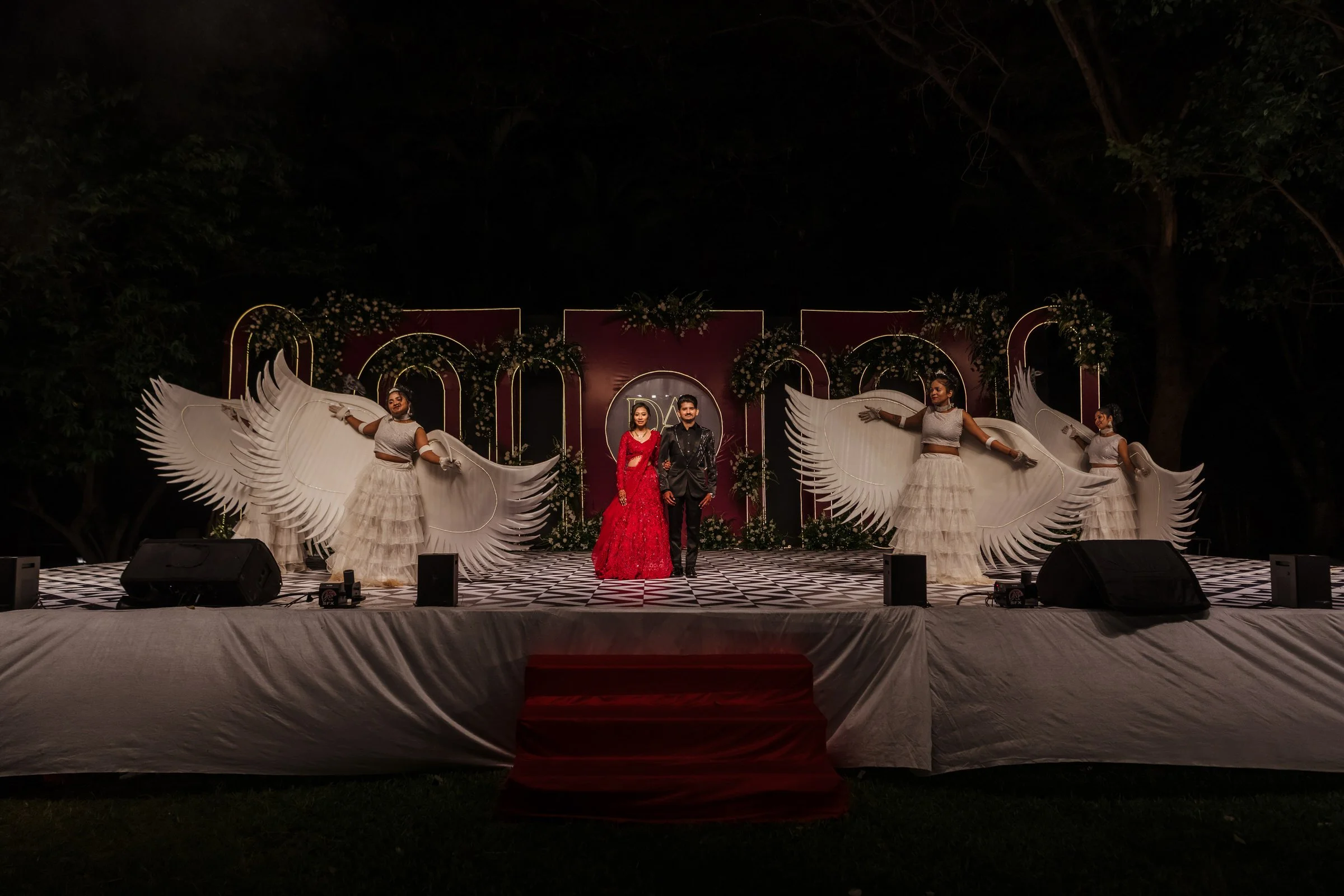
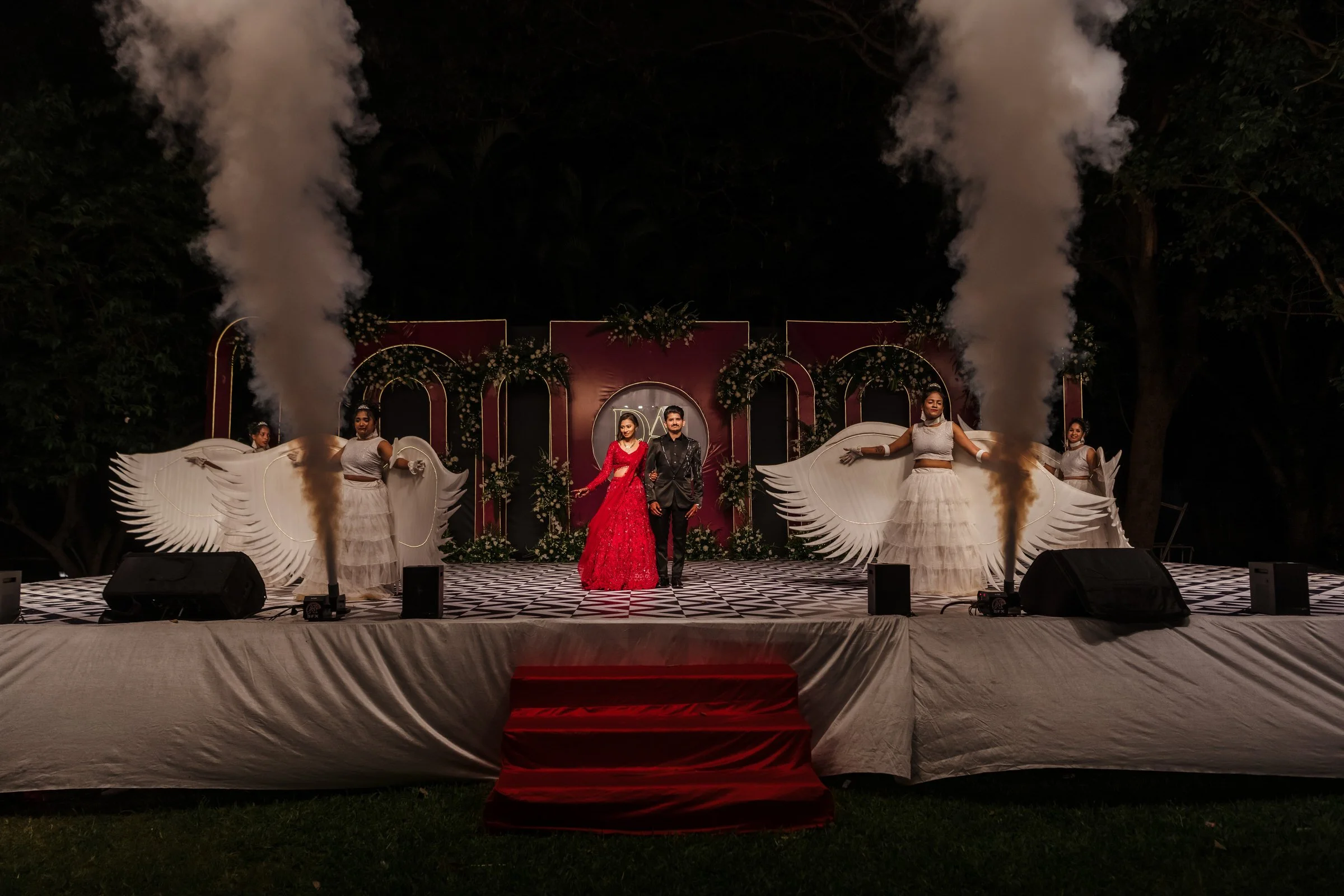
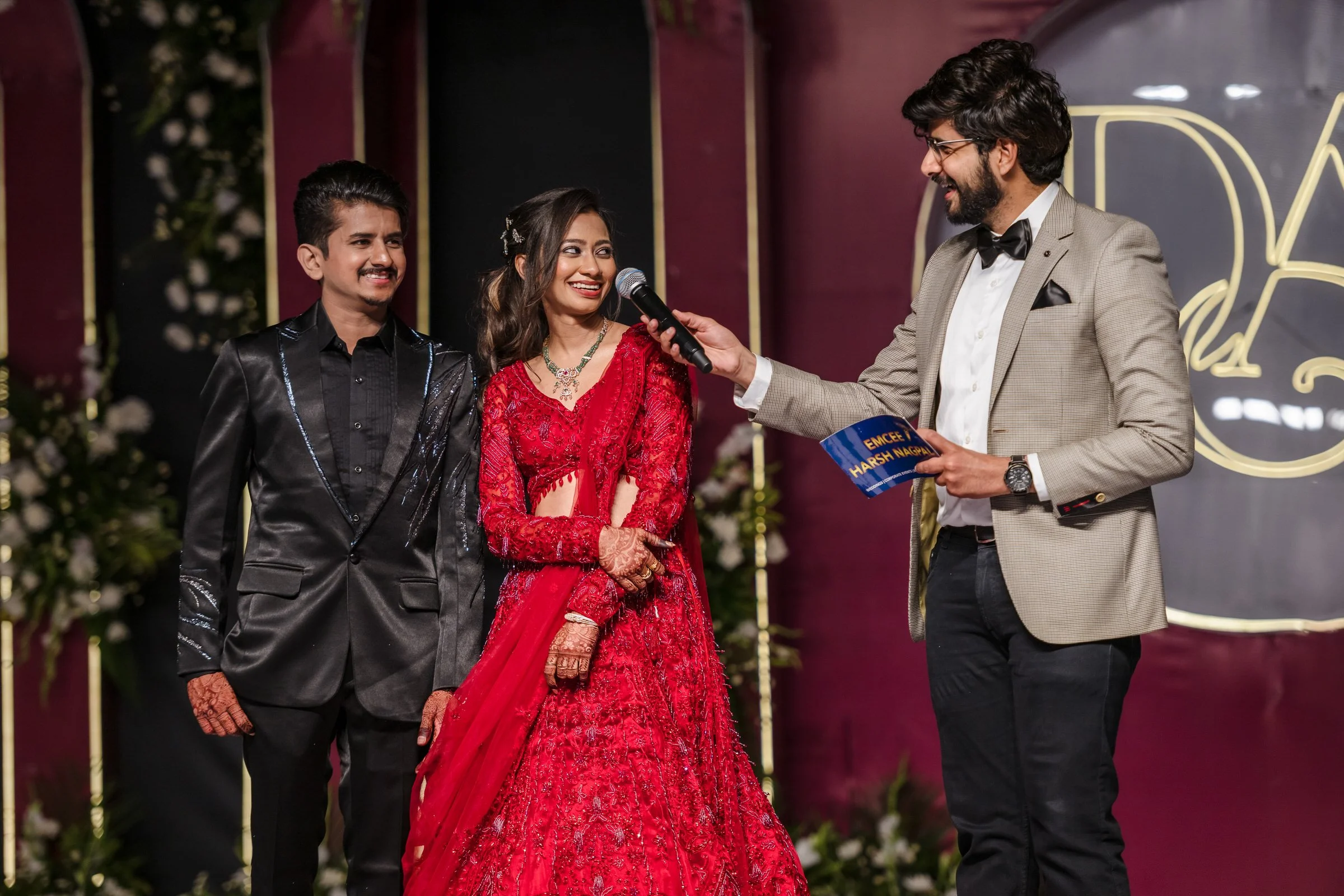
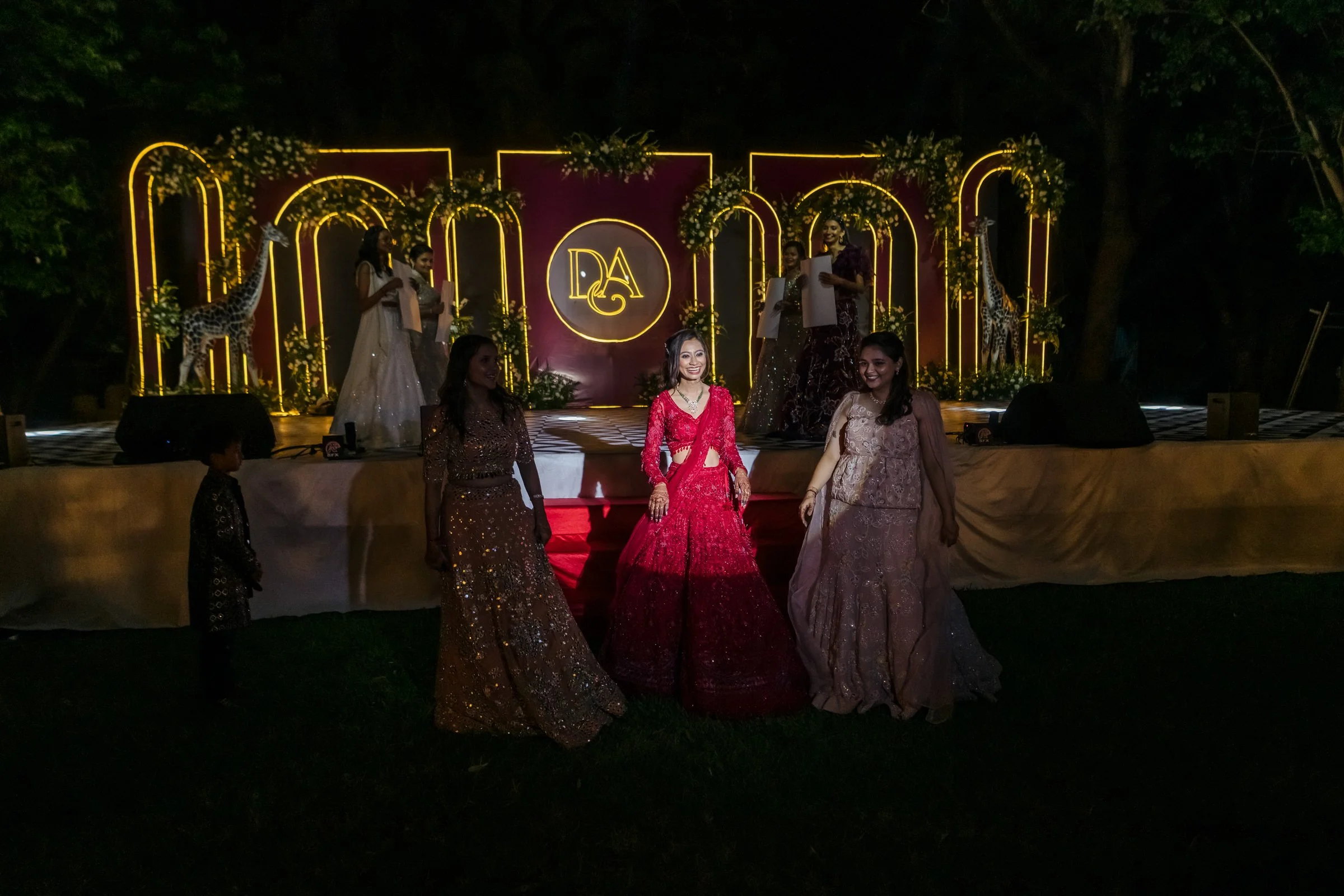
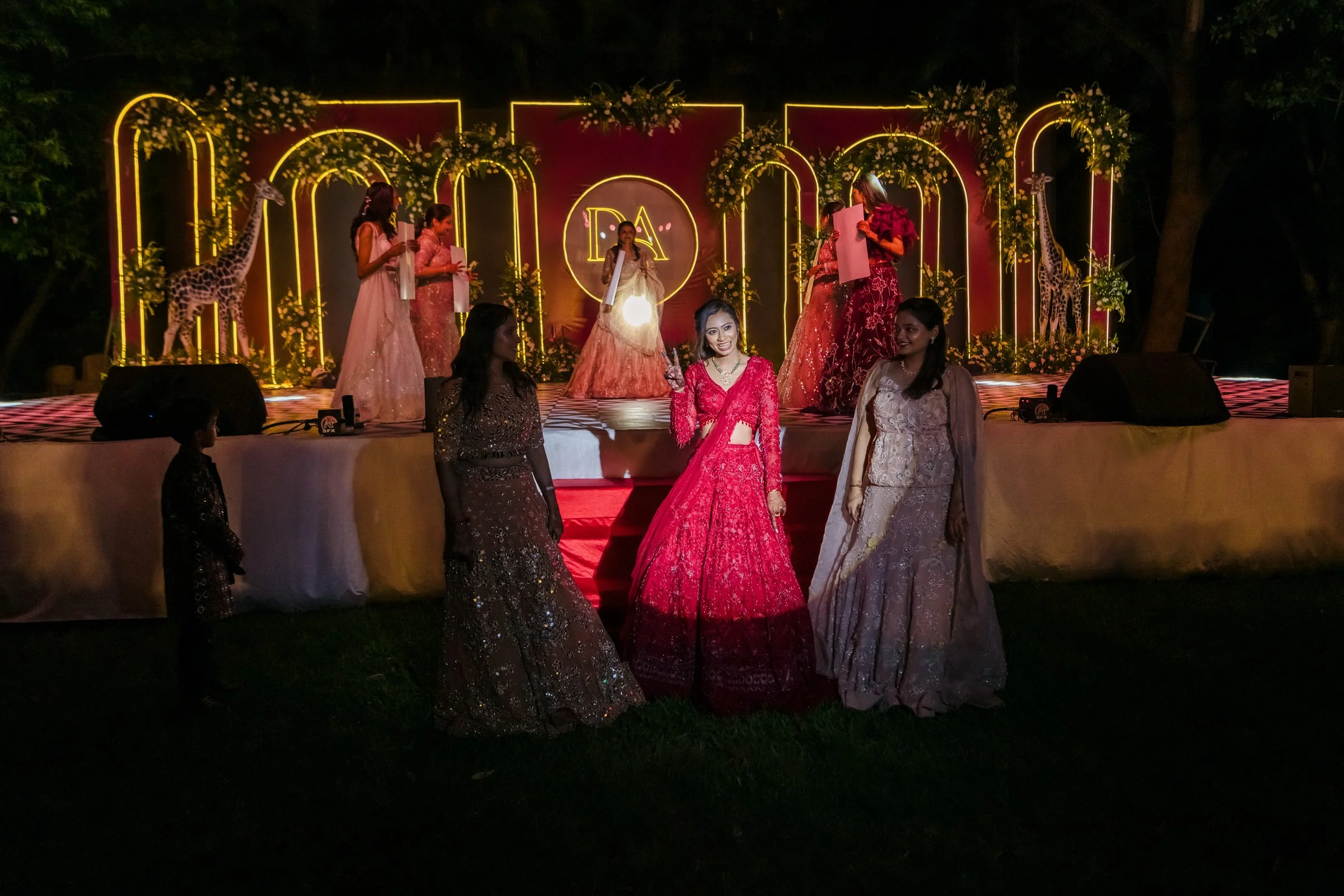
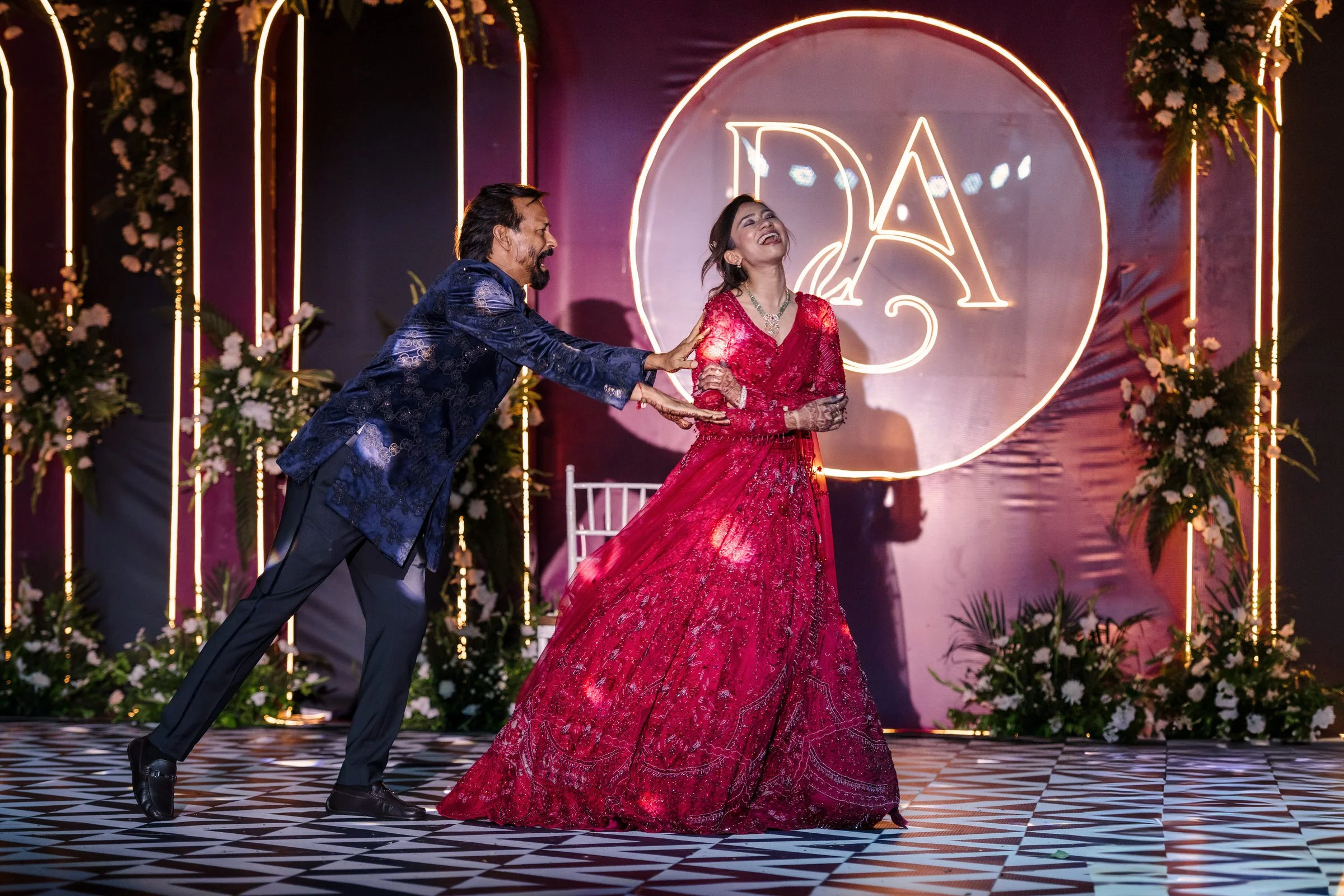
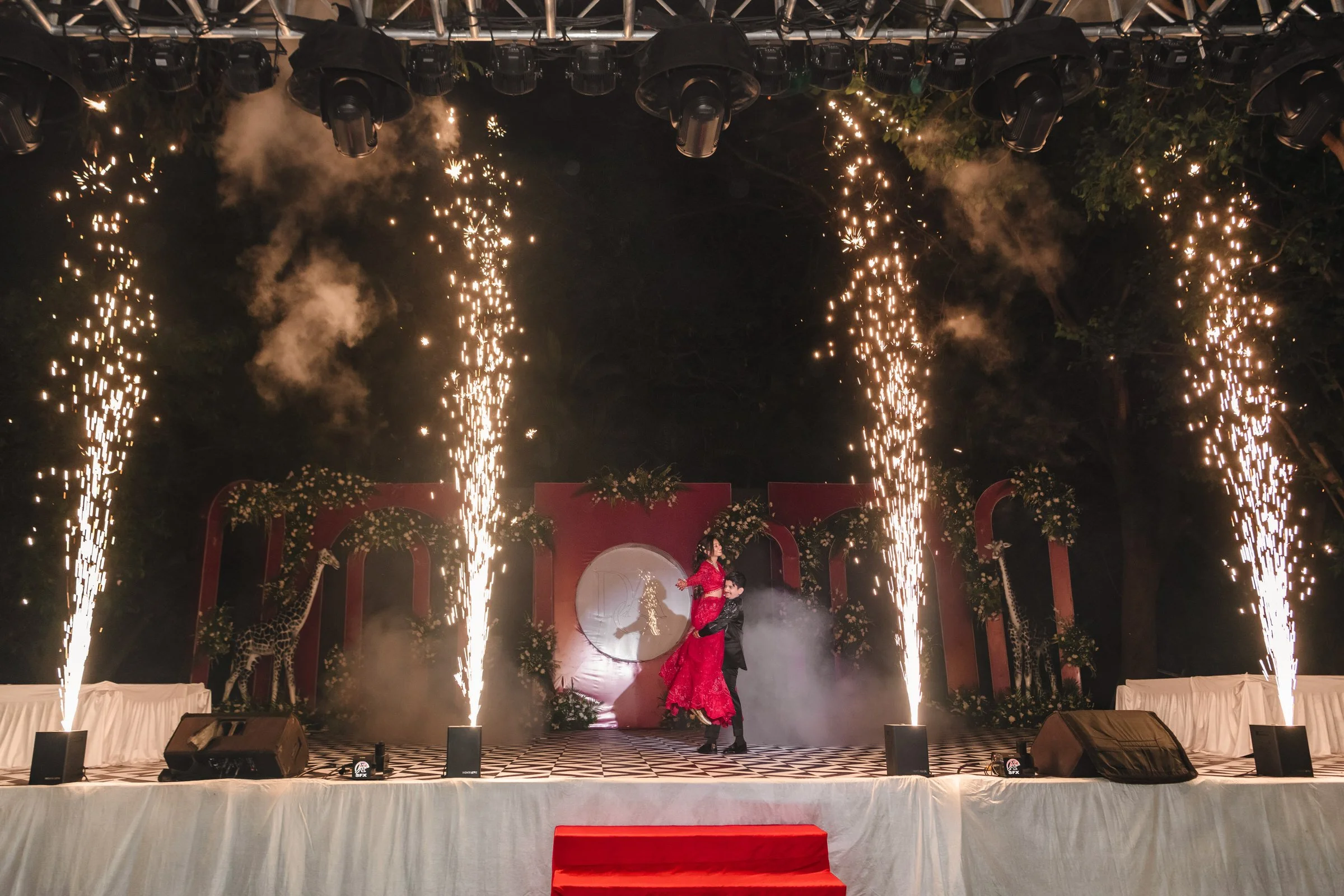
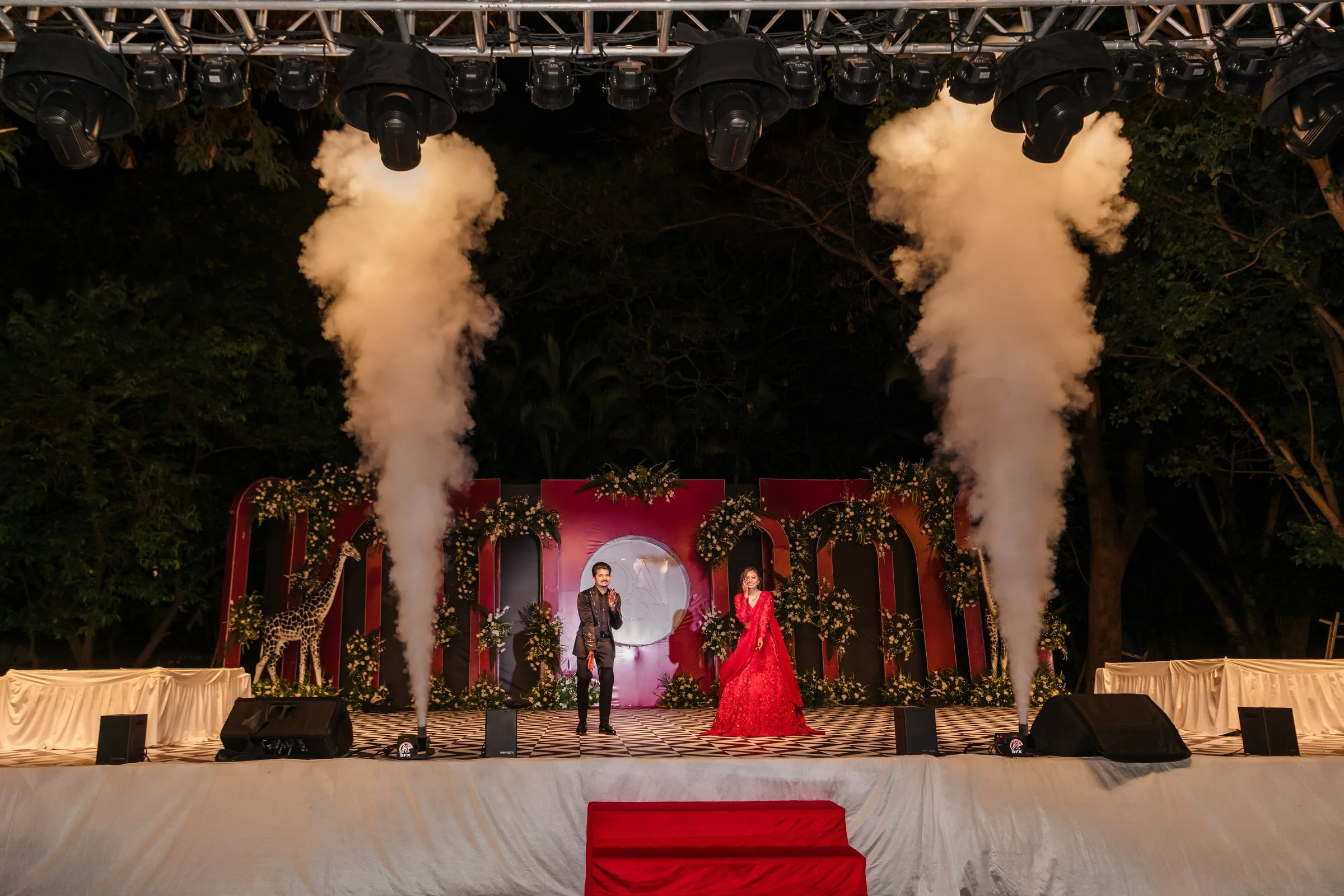
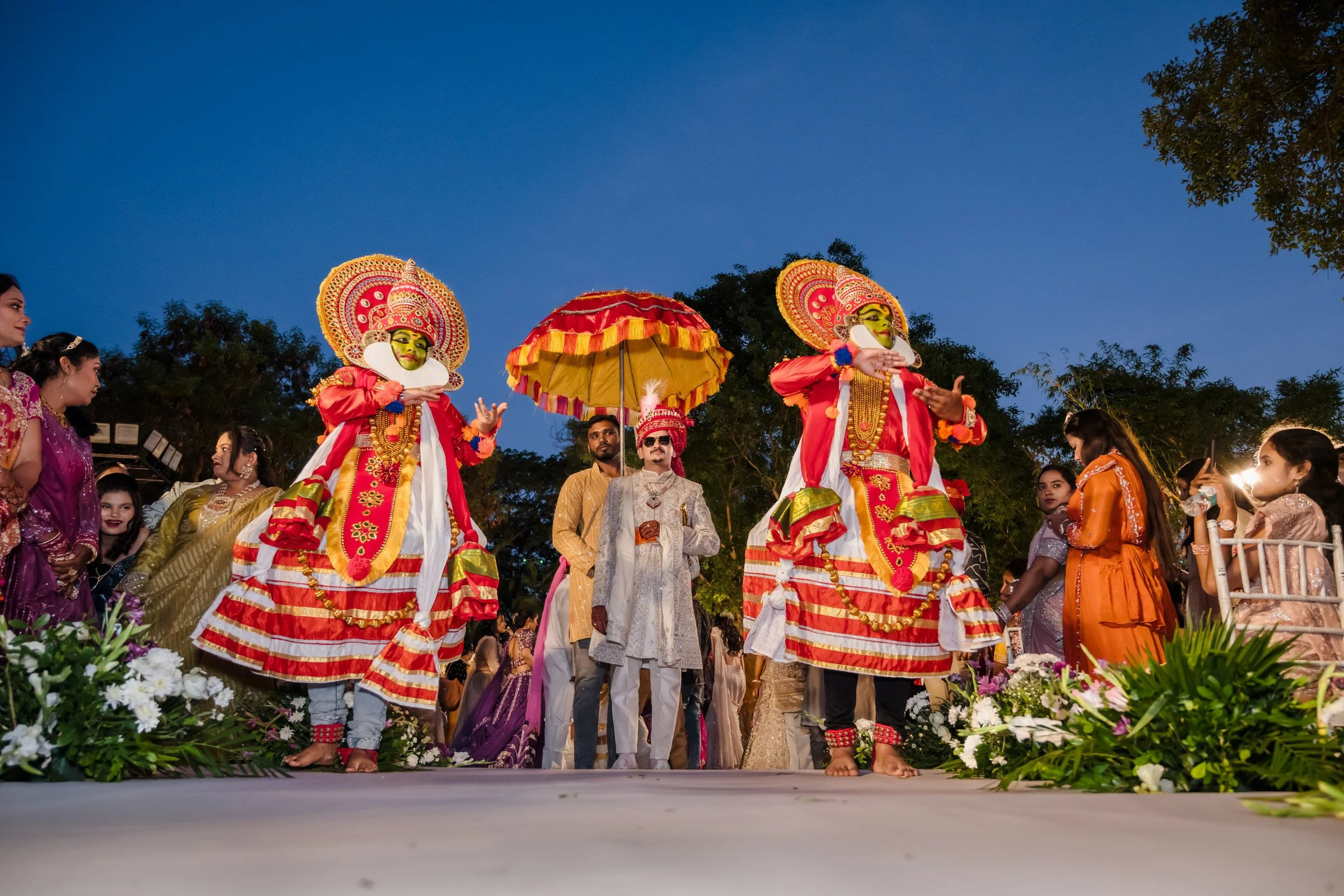
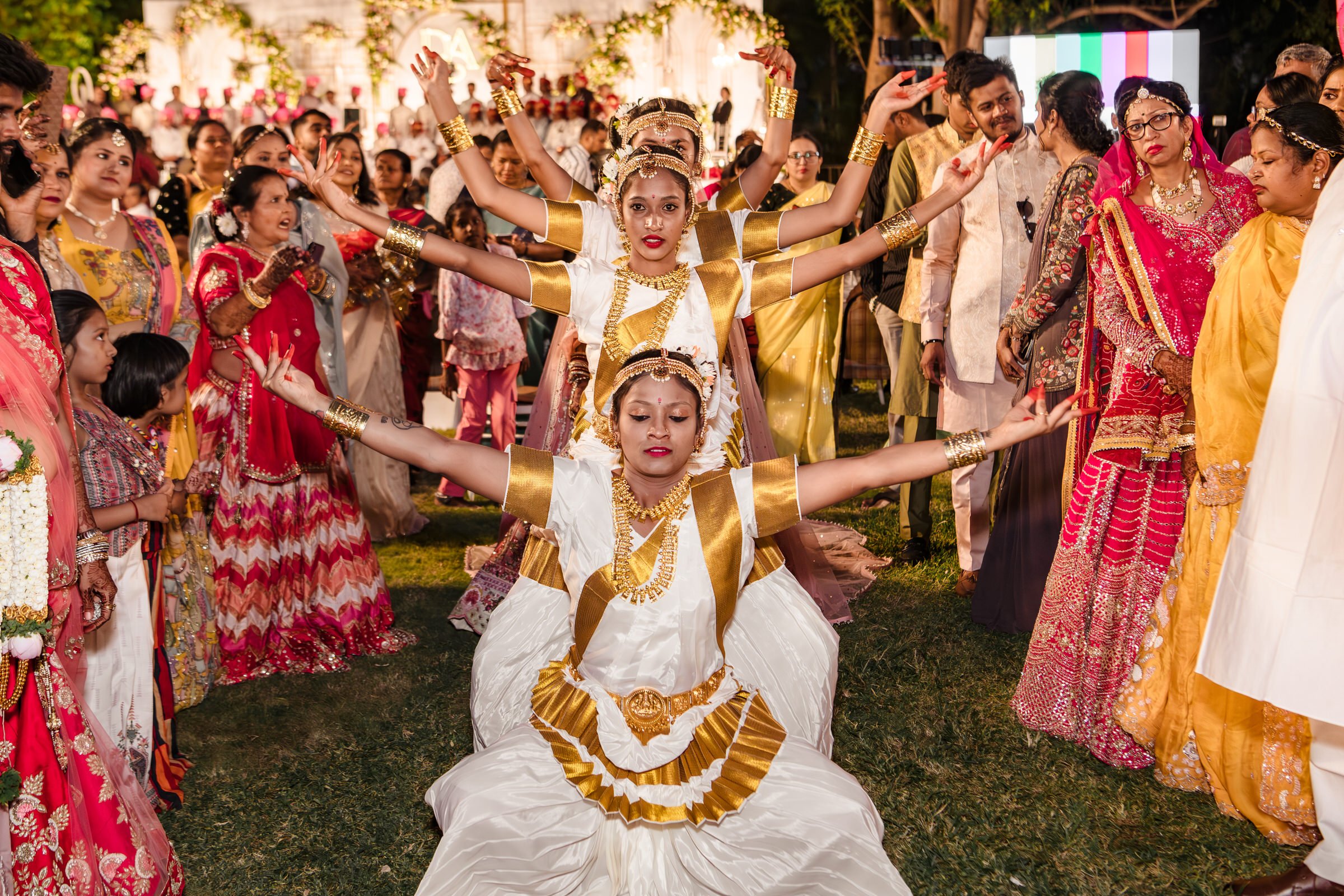
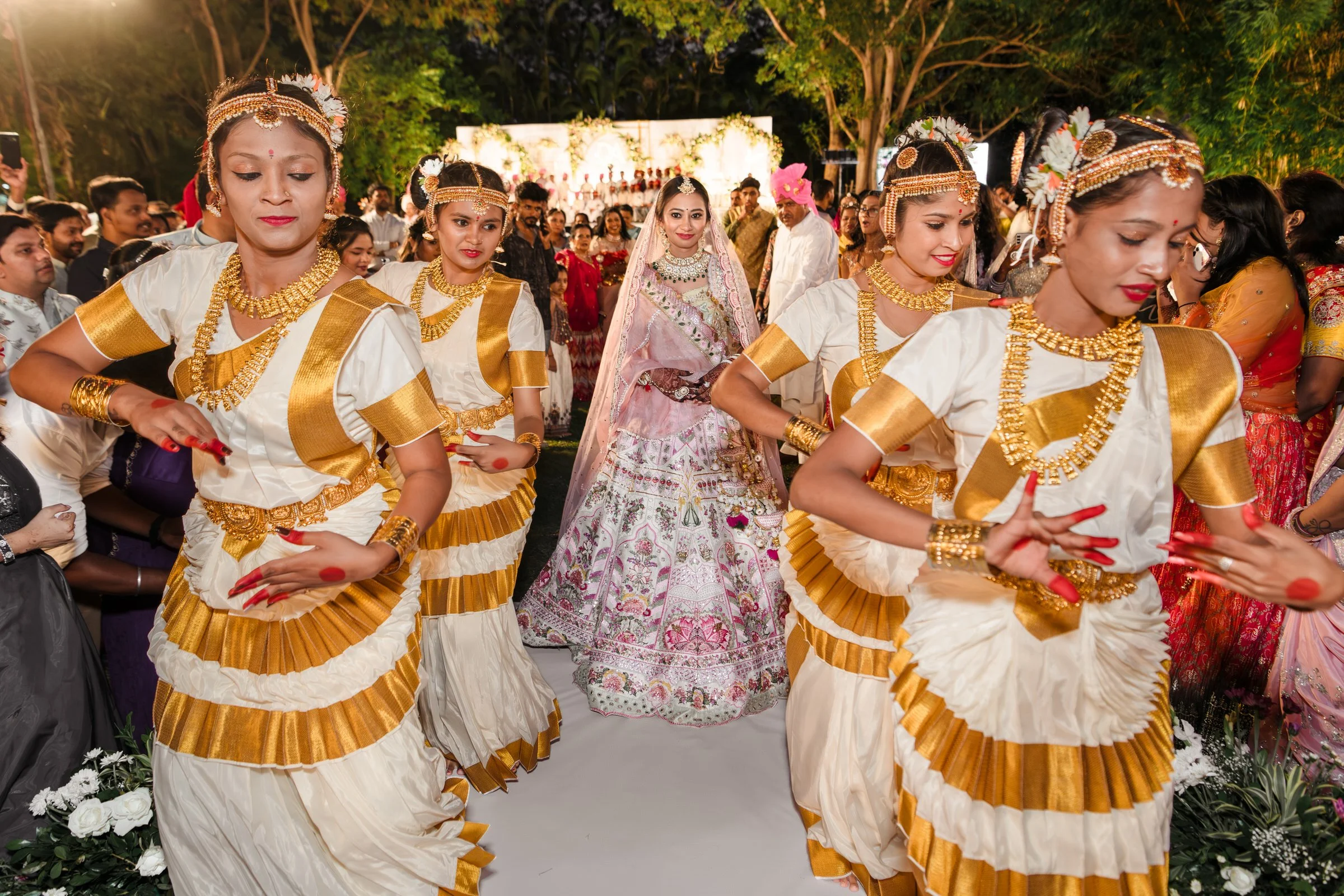
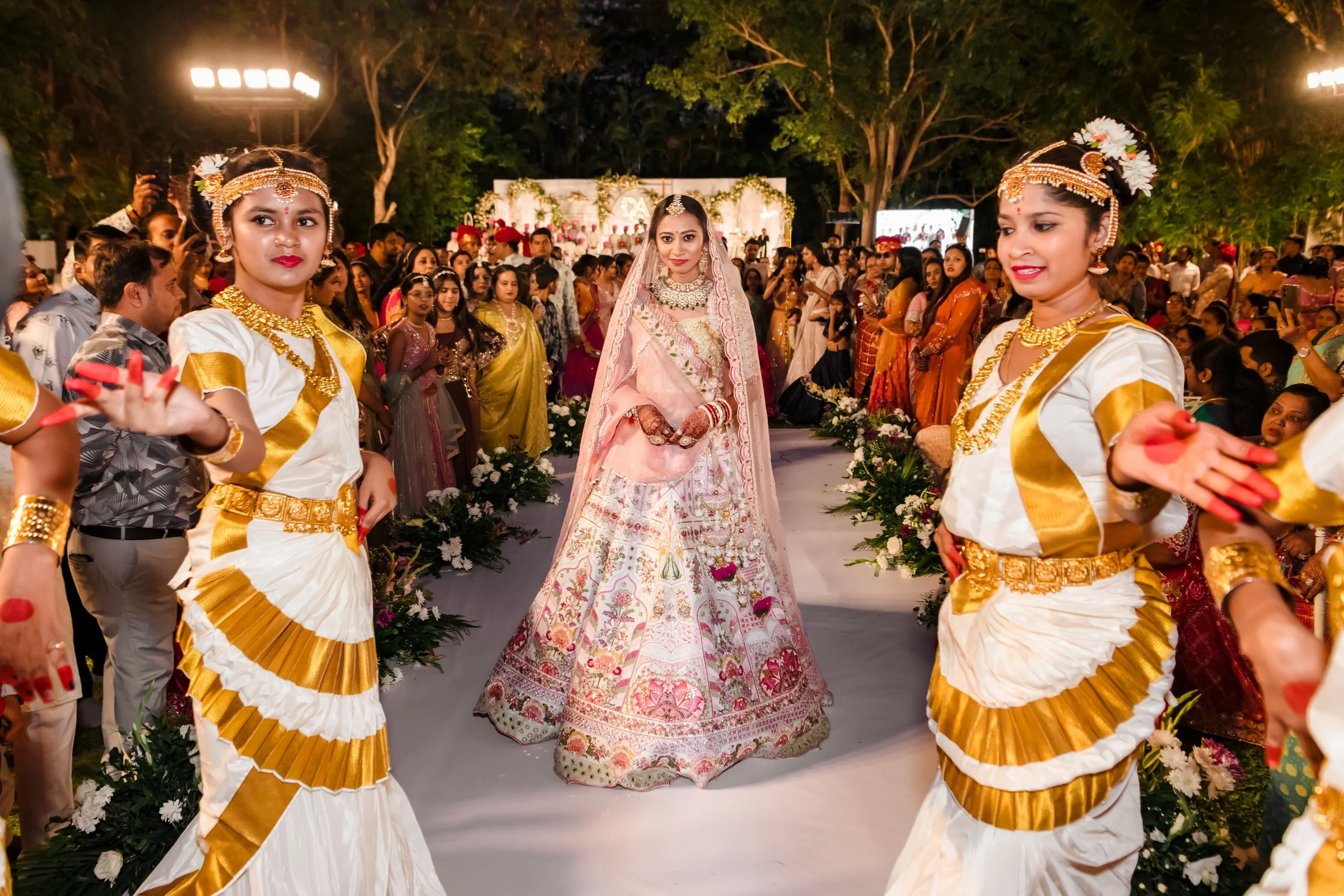
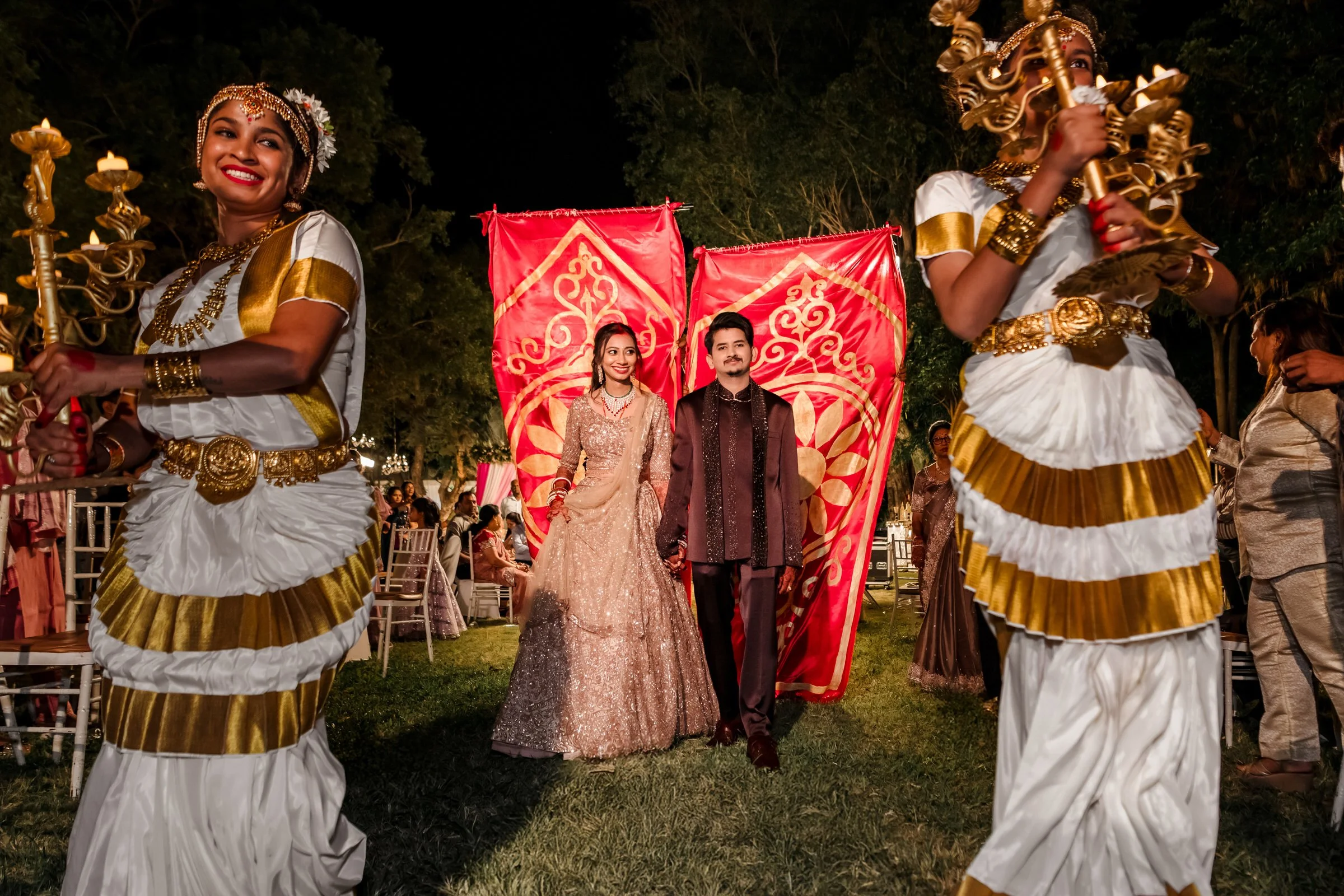
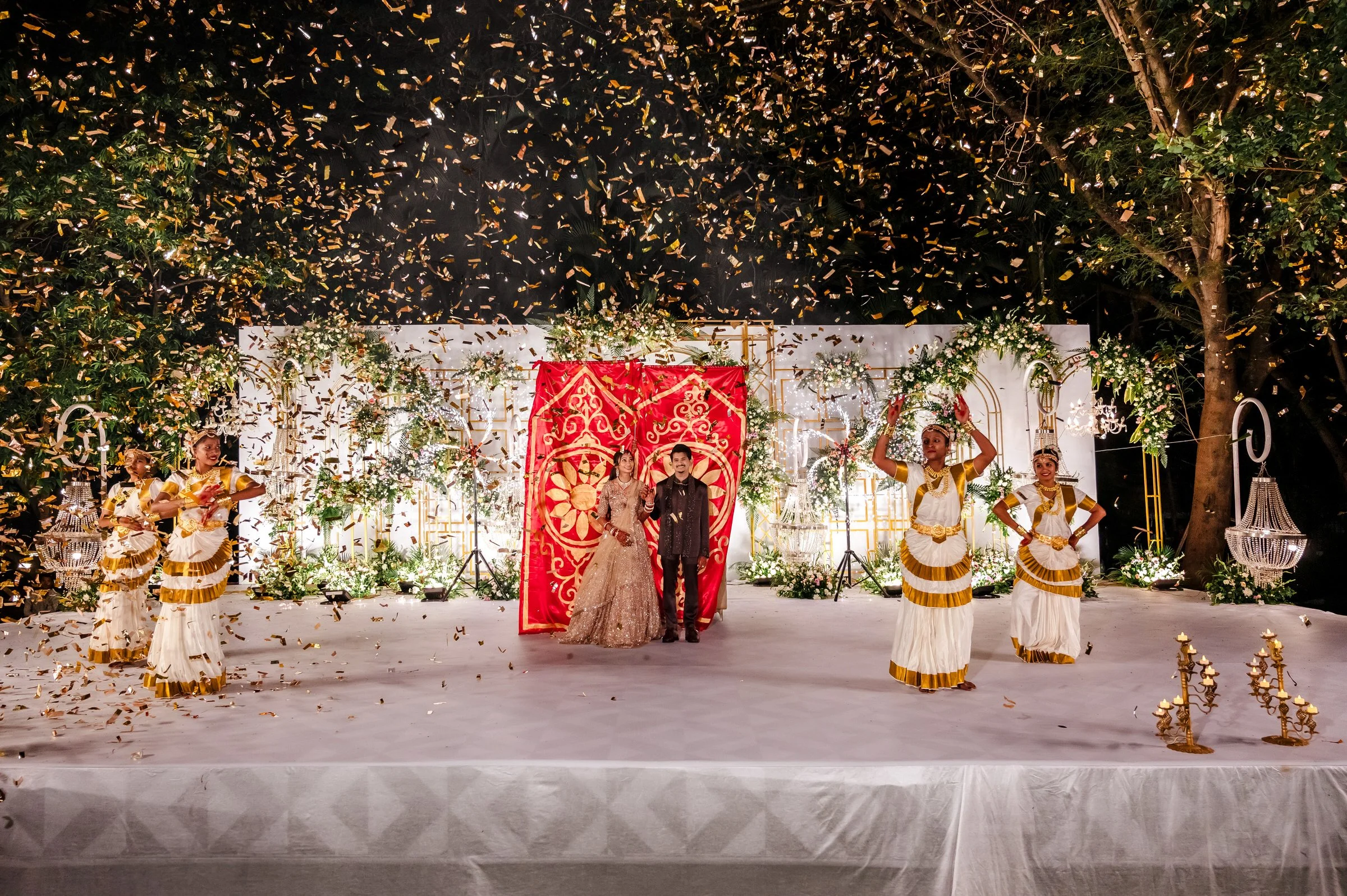
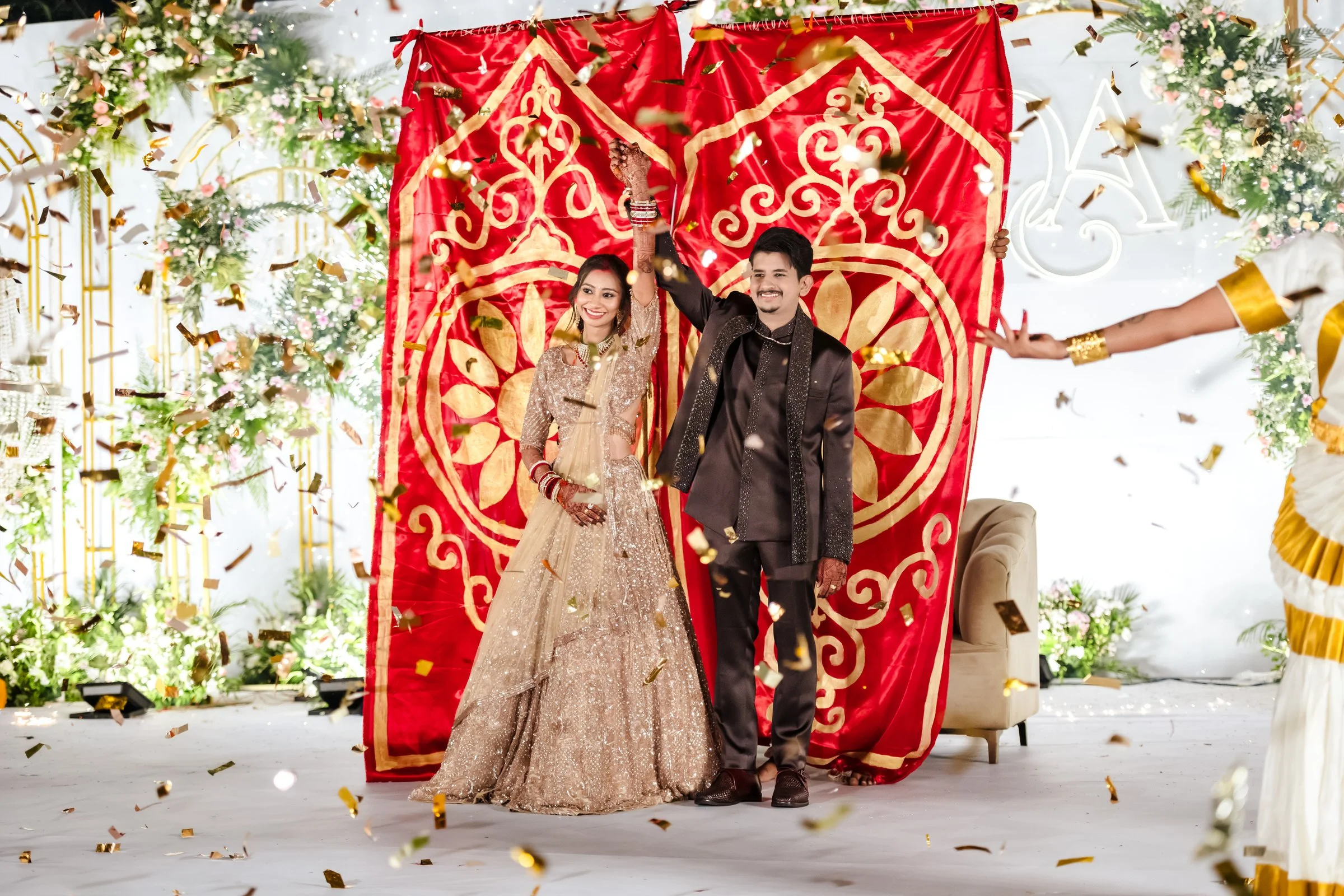
The couple made their entry on an angel theme. Costumed angels escorted them in and walked them up to the stage, and the whole room turned to watch them come through. Grand entries are common at a sangeet now, but most of them are a smoke machine and a song. This one had people in it, moving with the couple, which is the difference between a nice entry and one that the room reacts to.
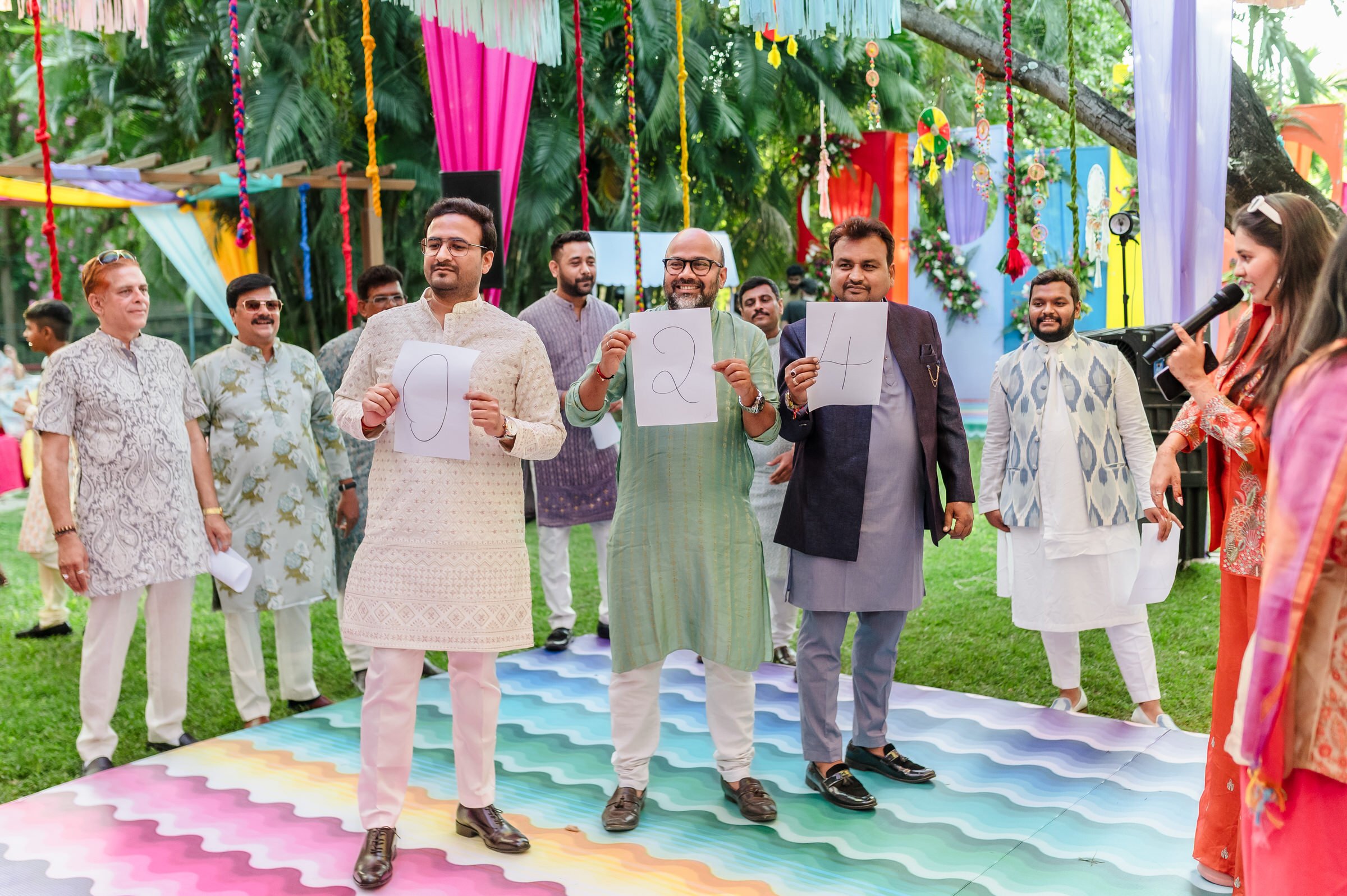
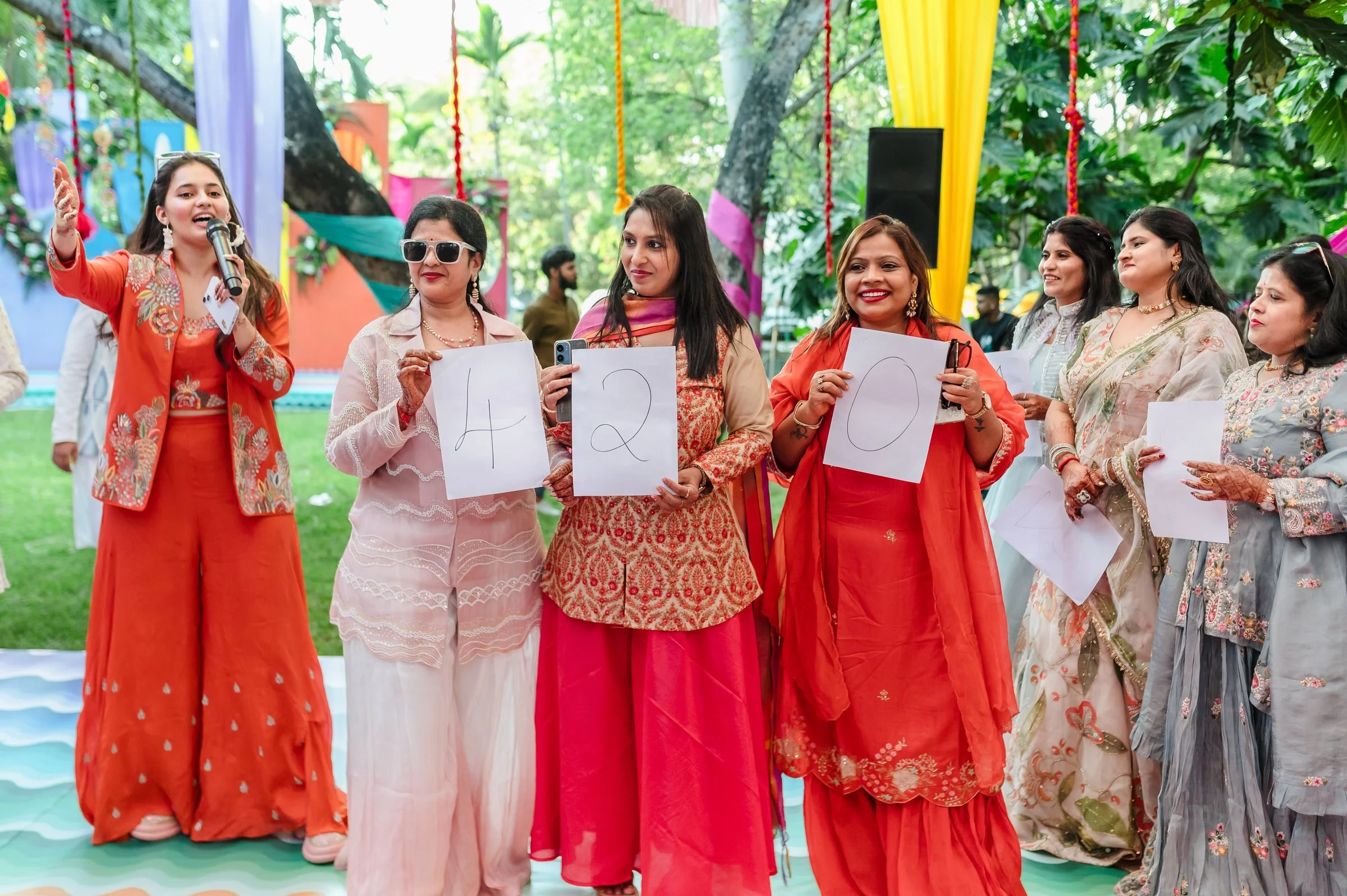
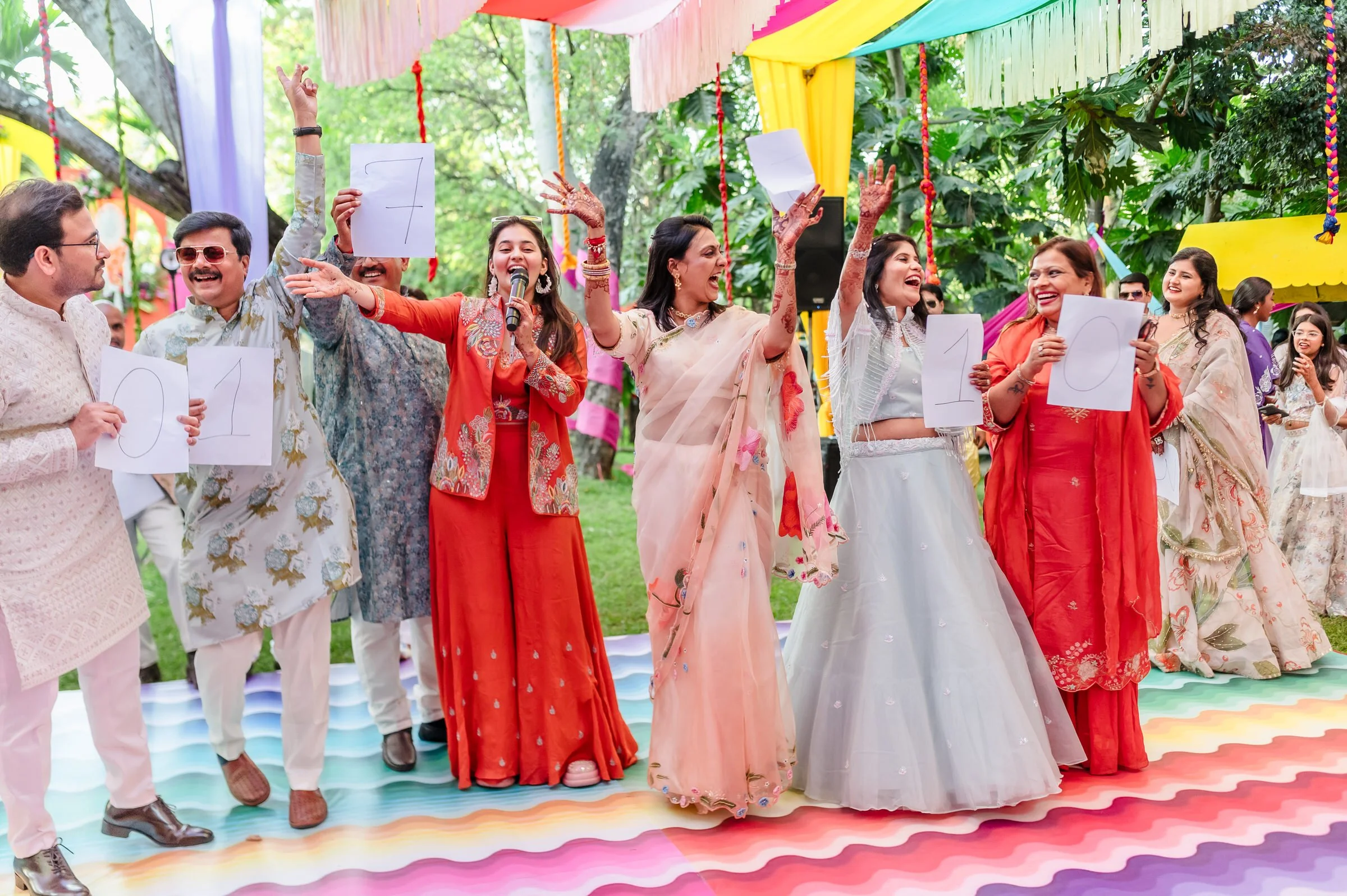
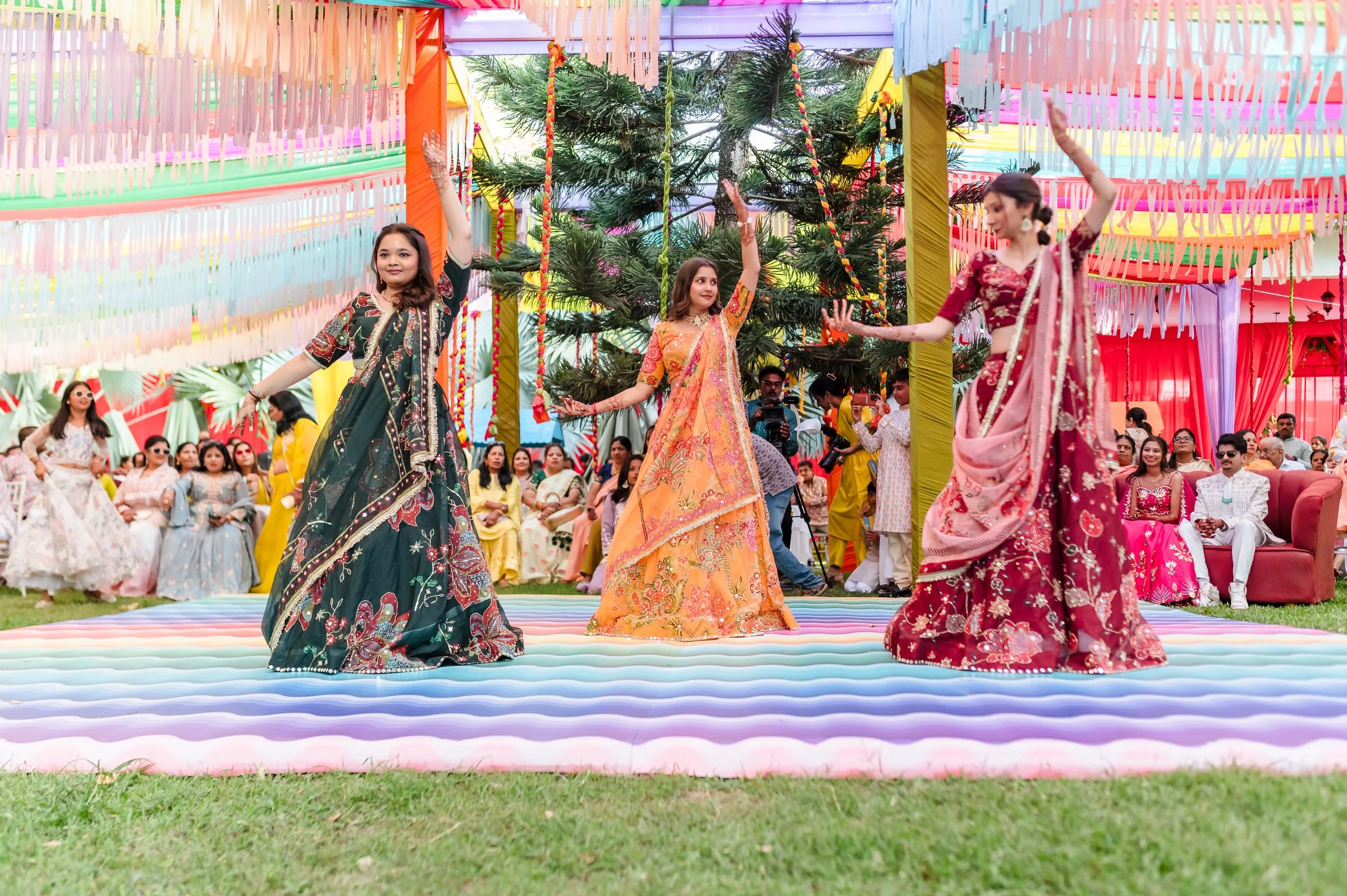
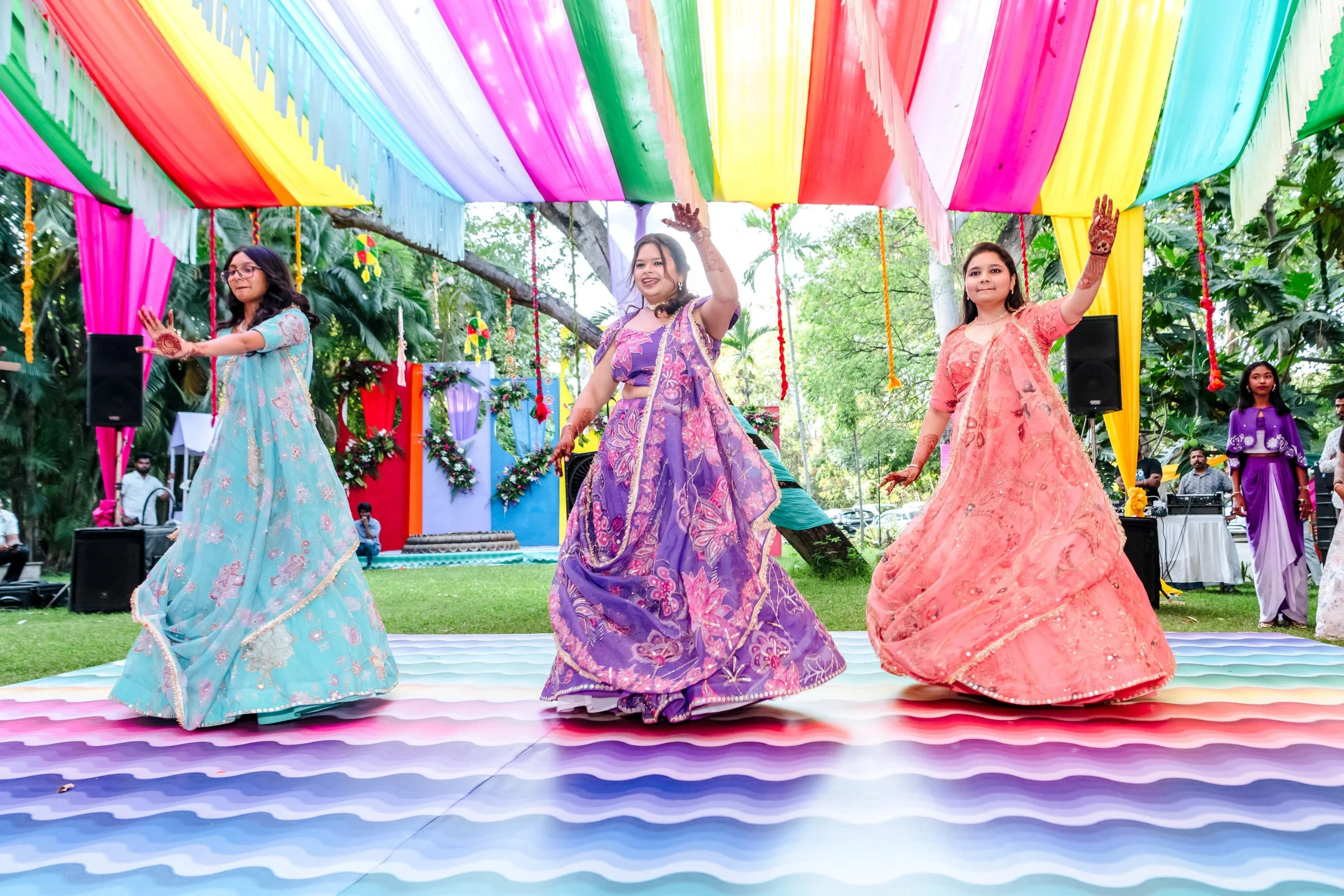
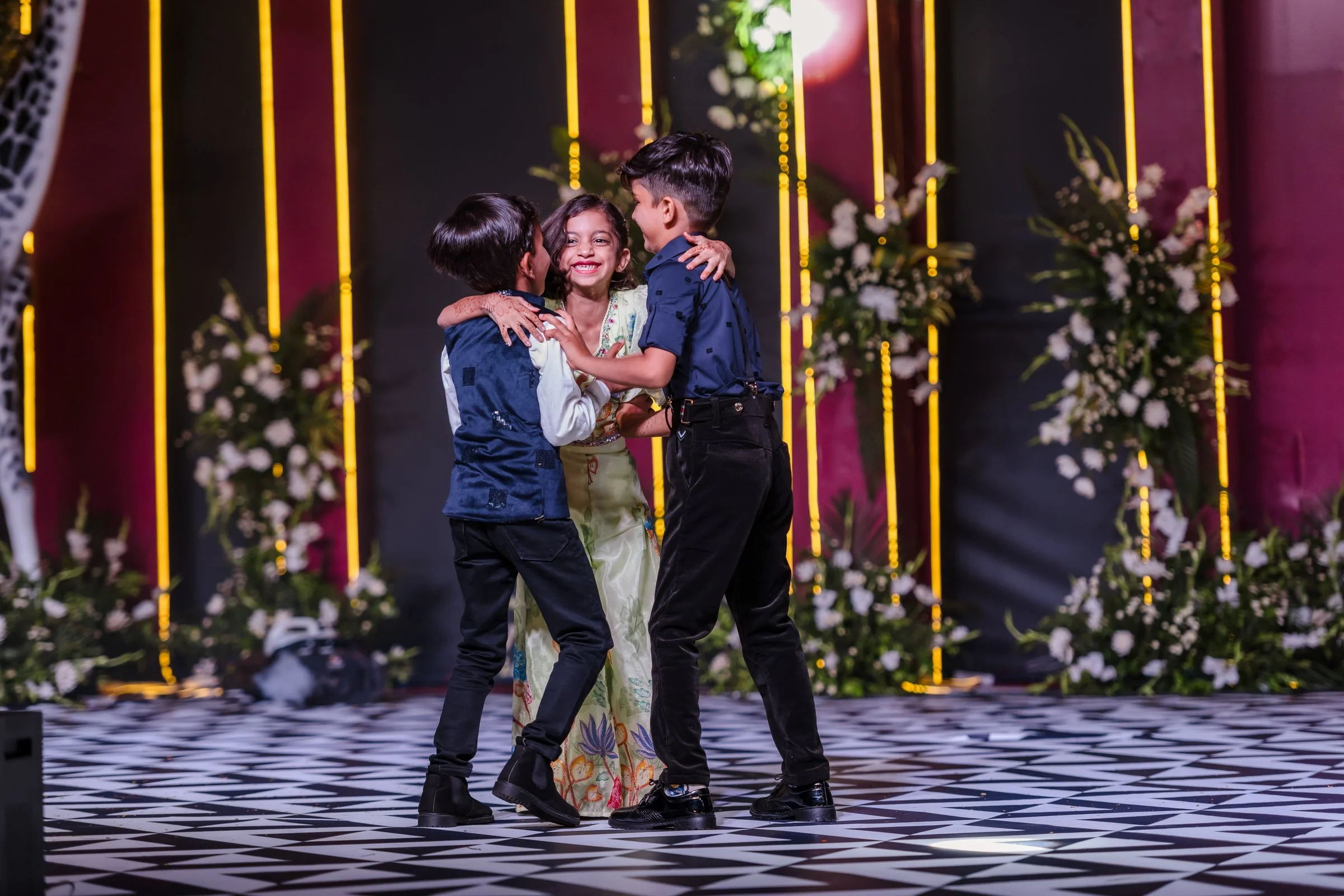
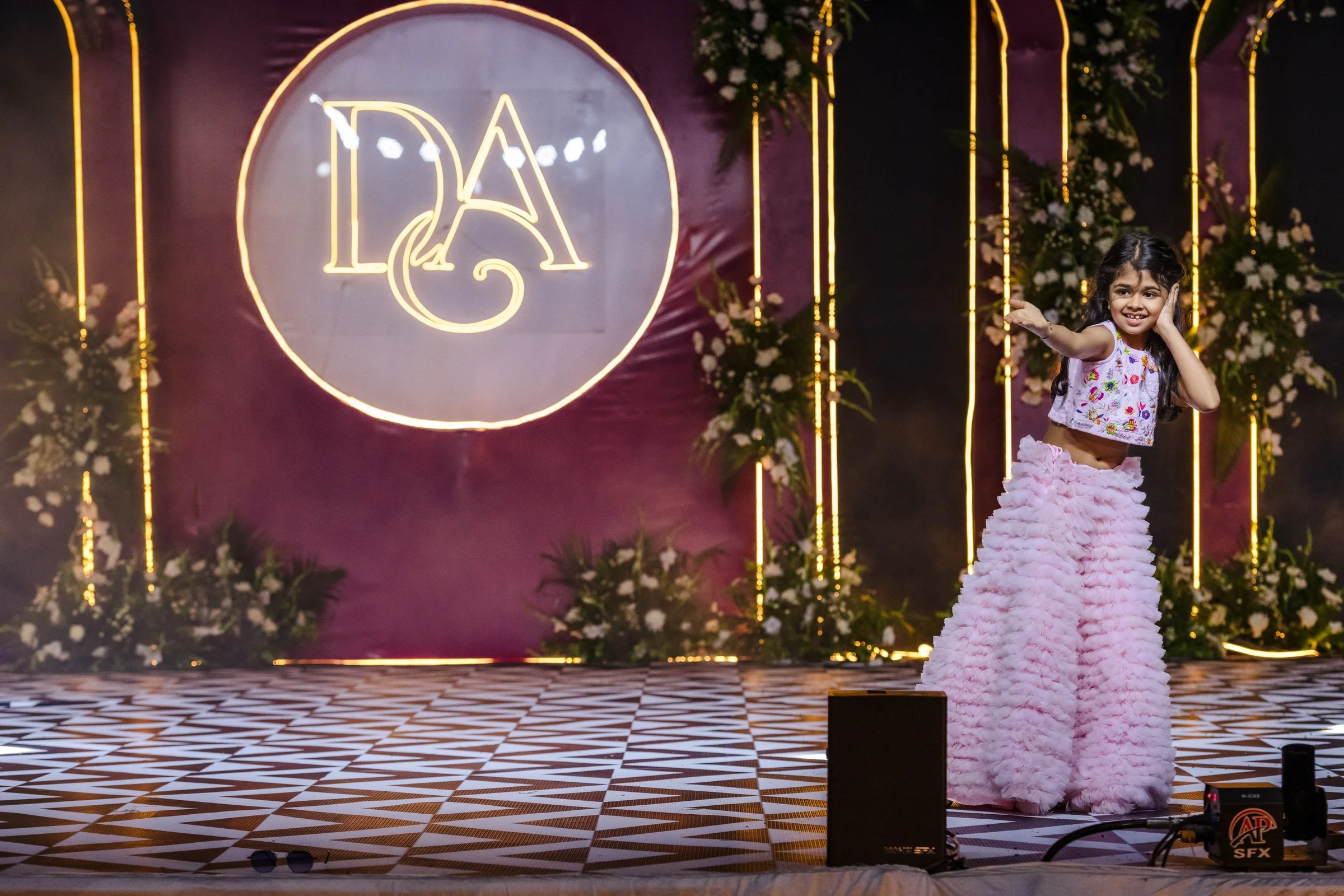
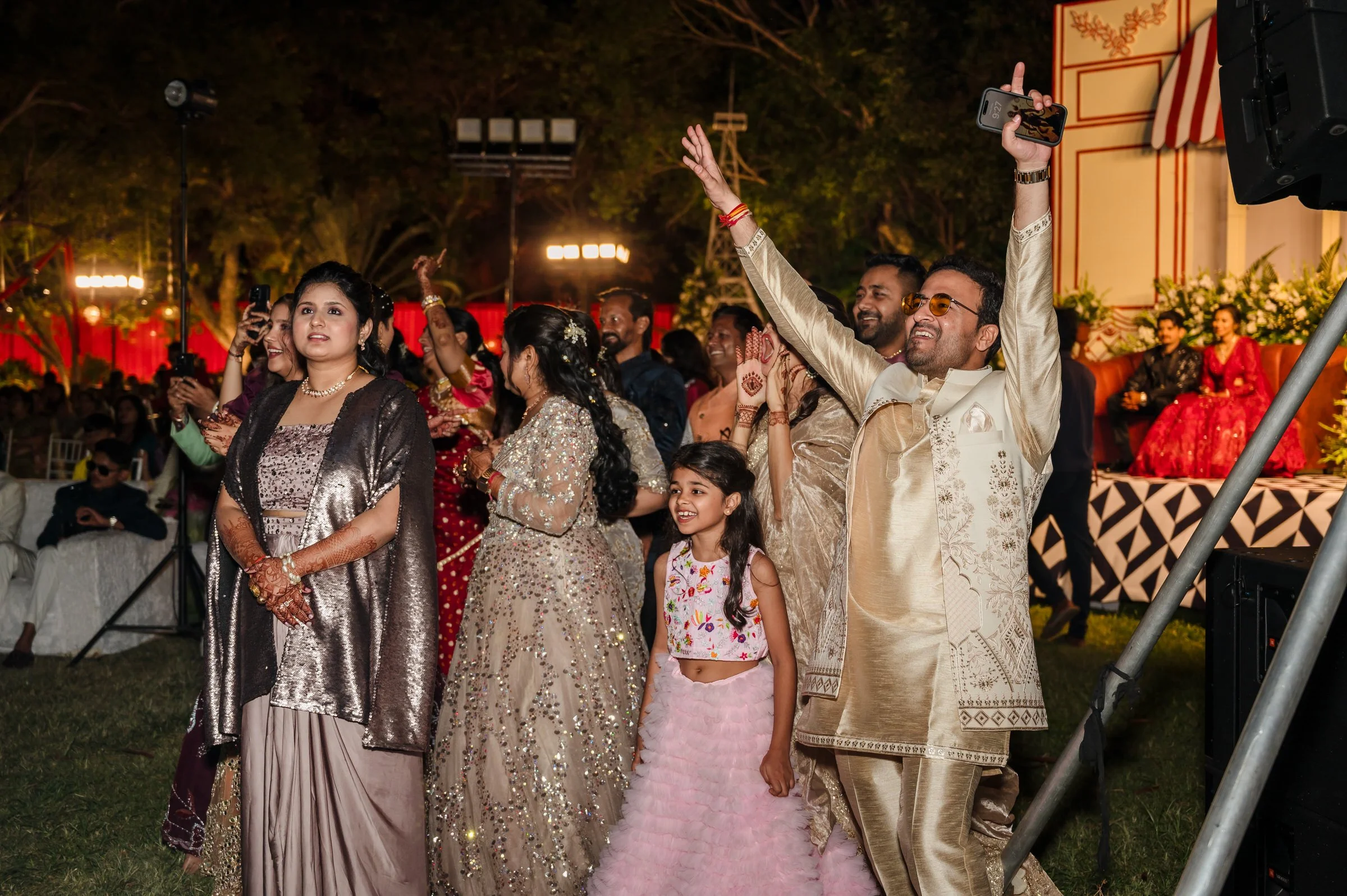
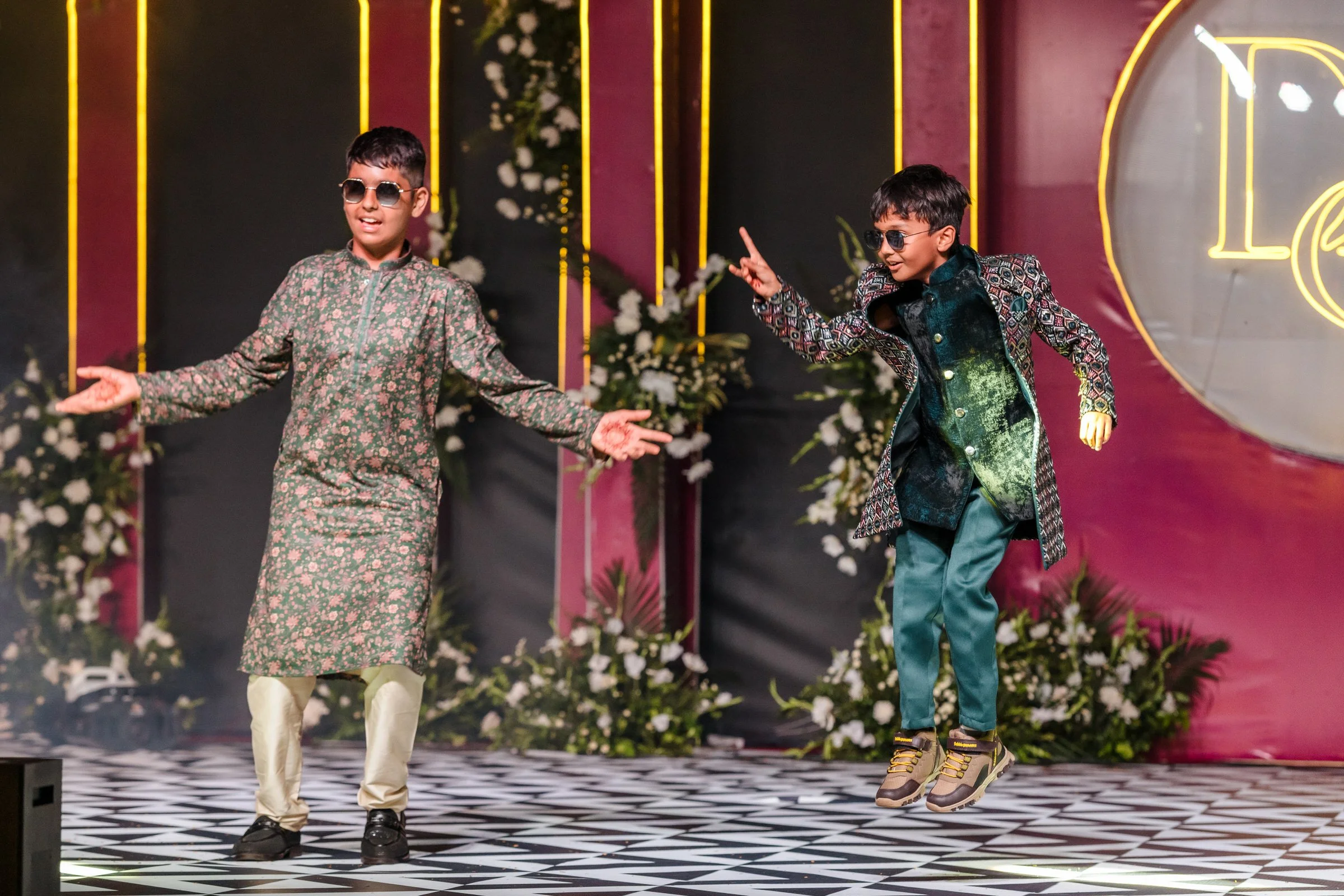
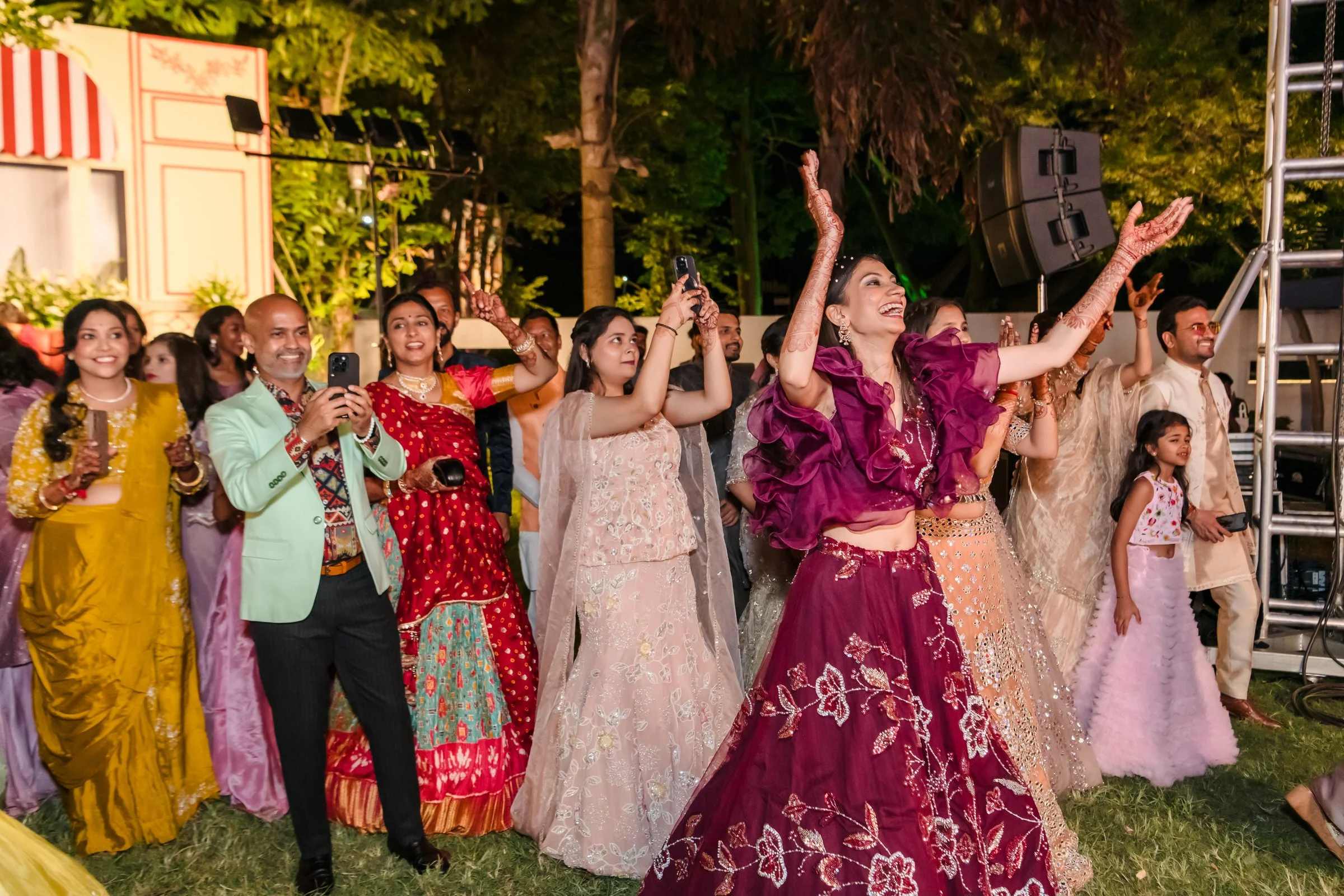
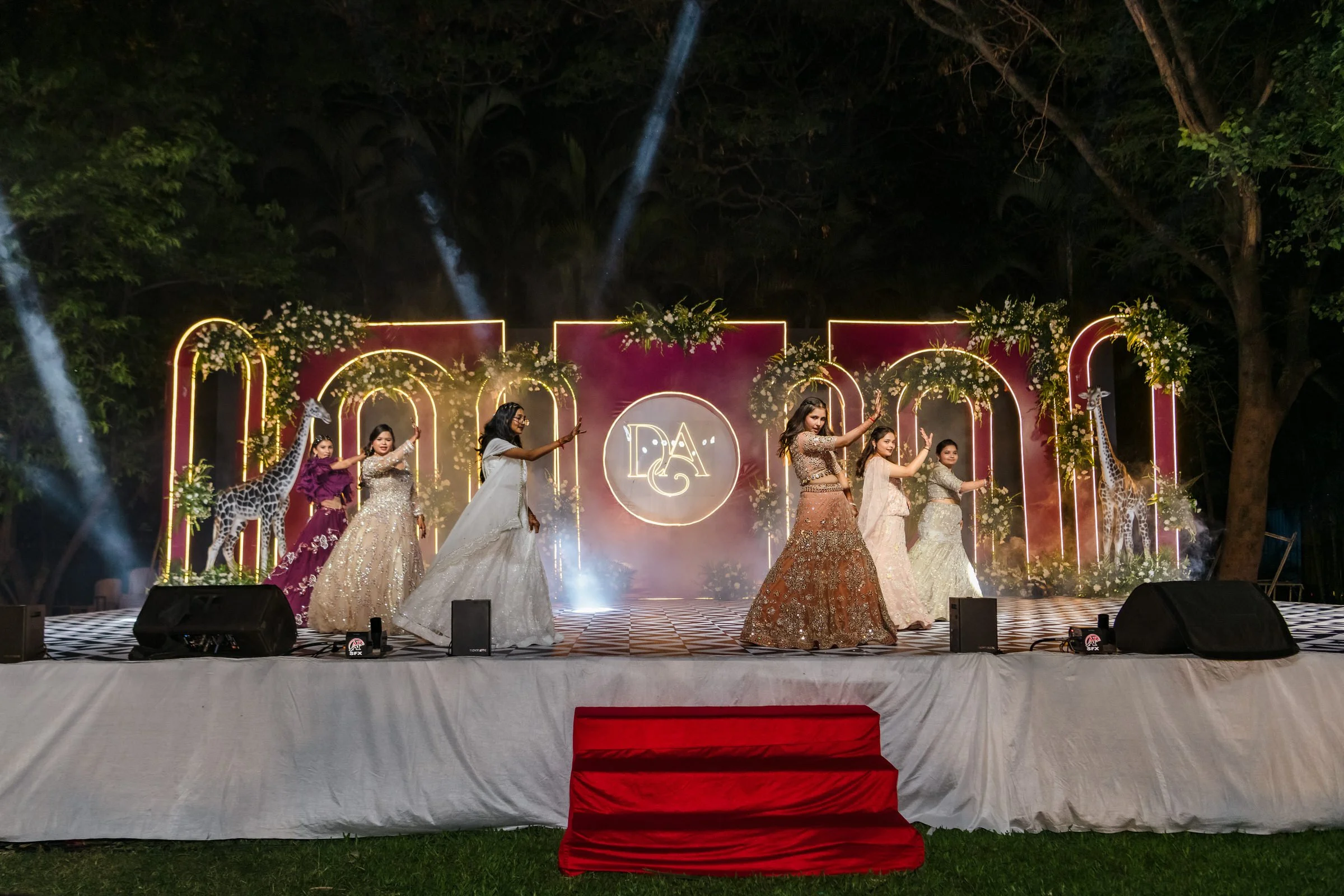
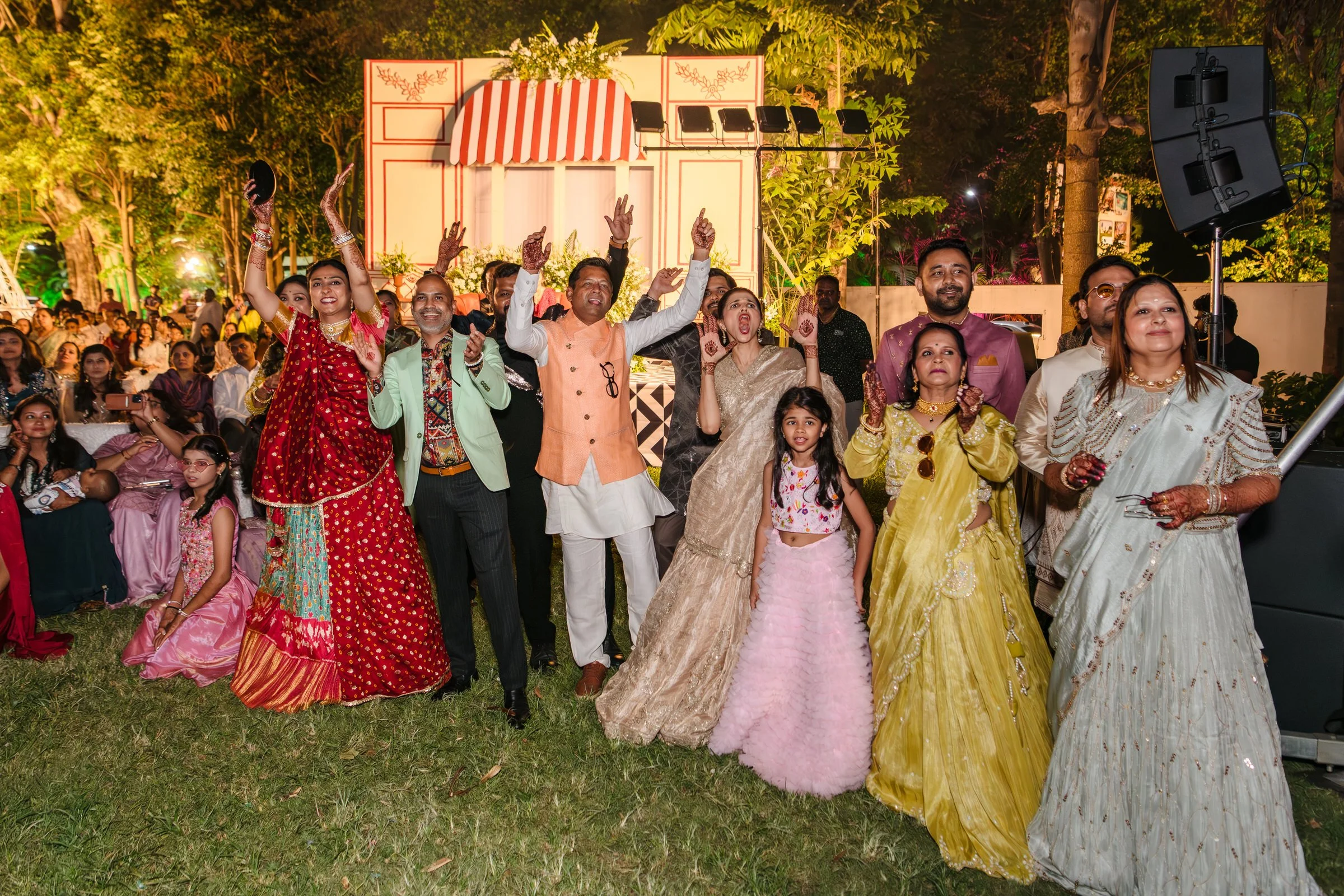
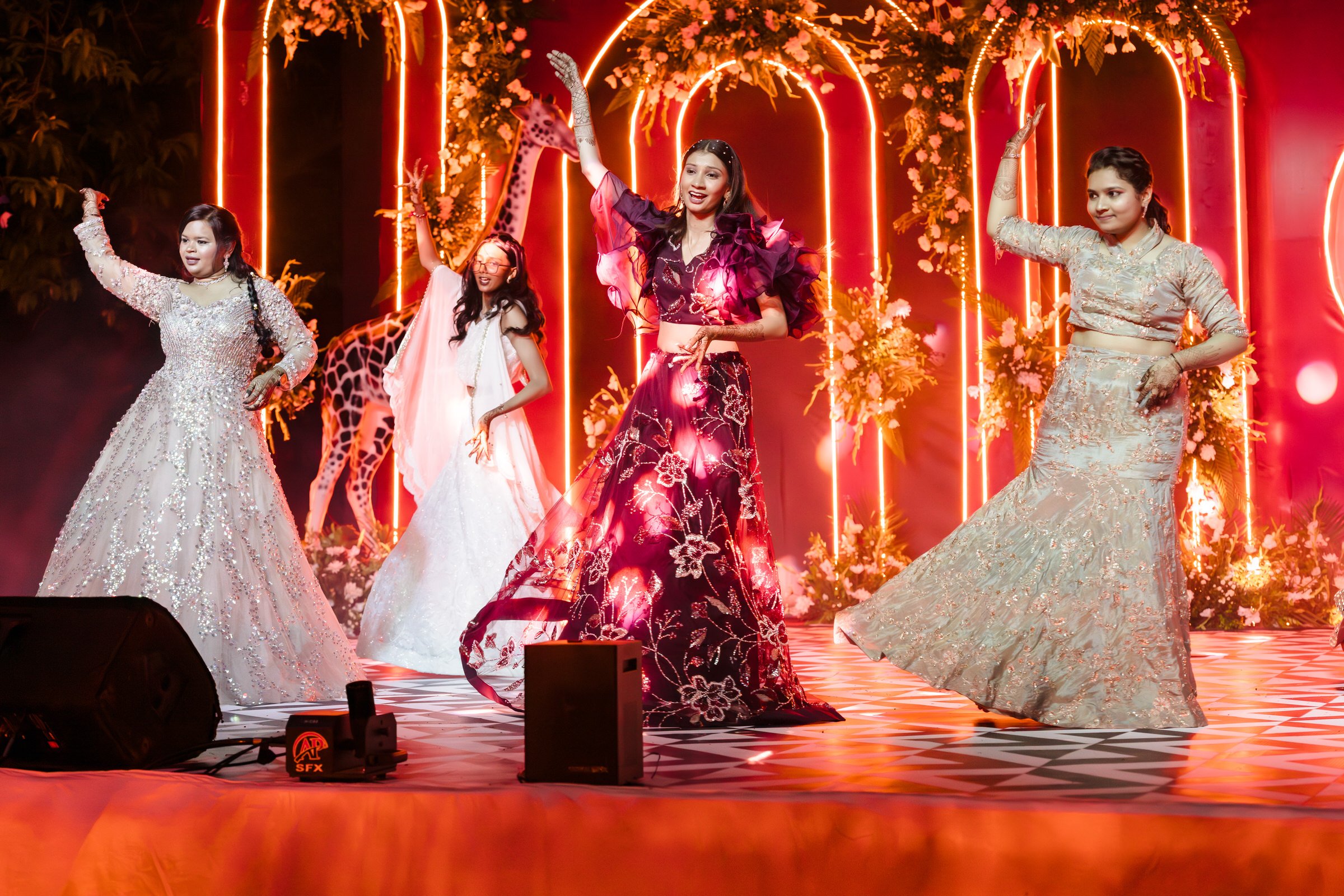
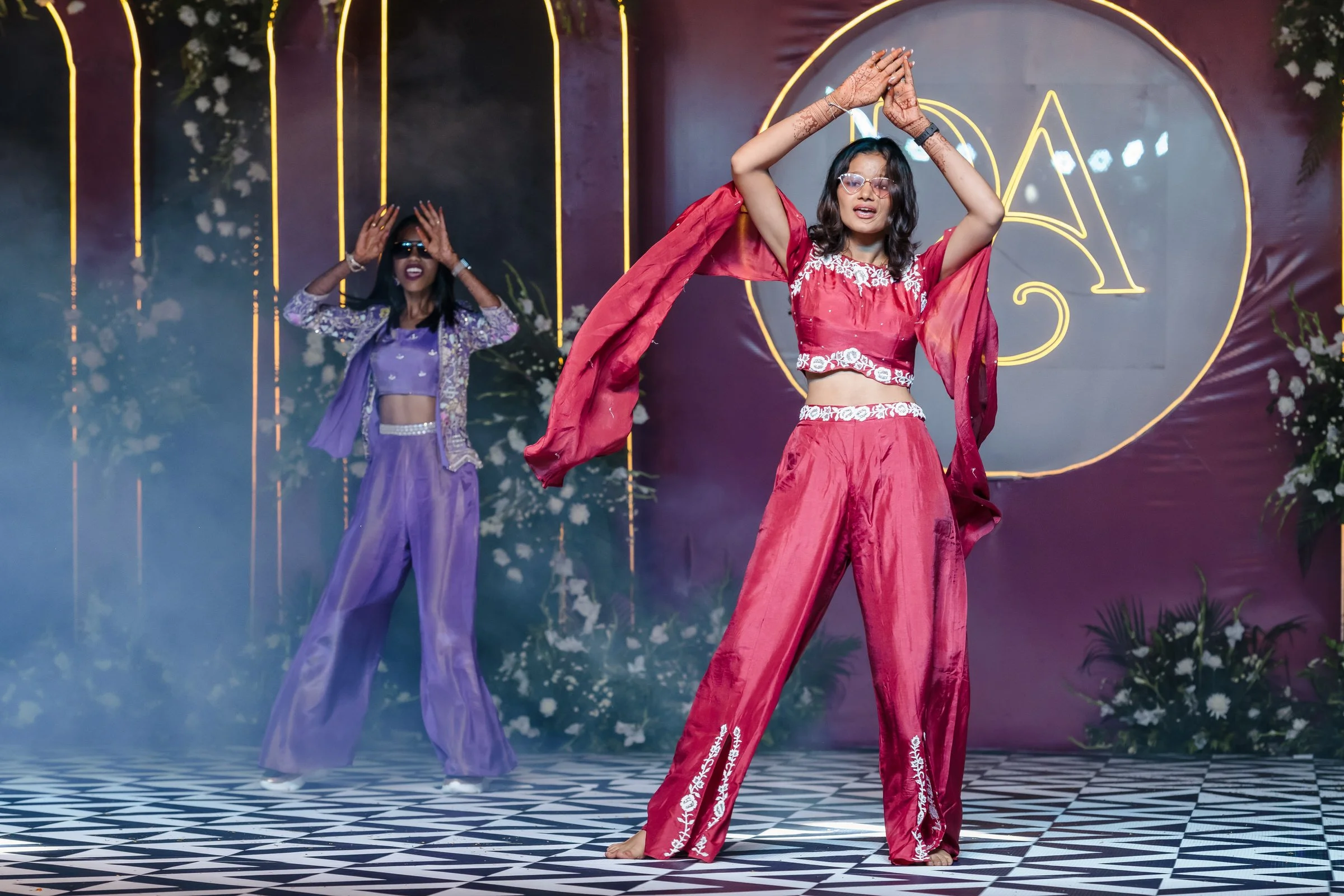
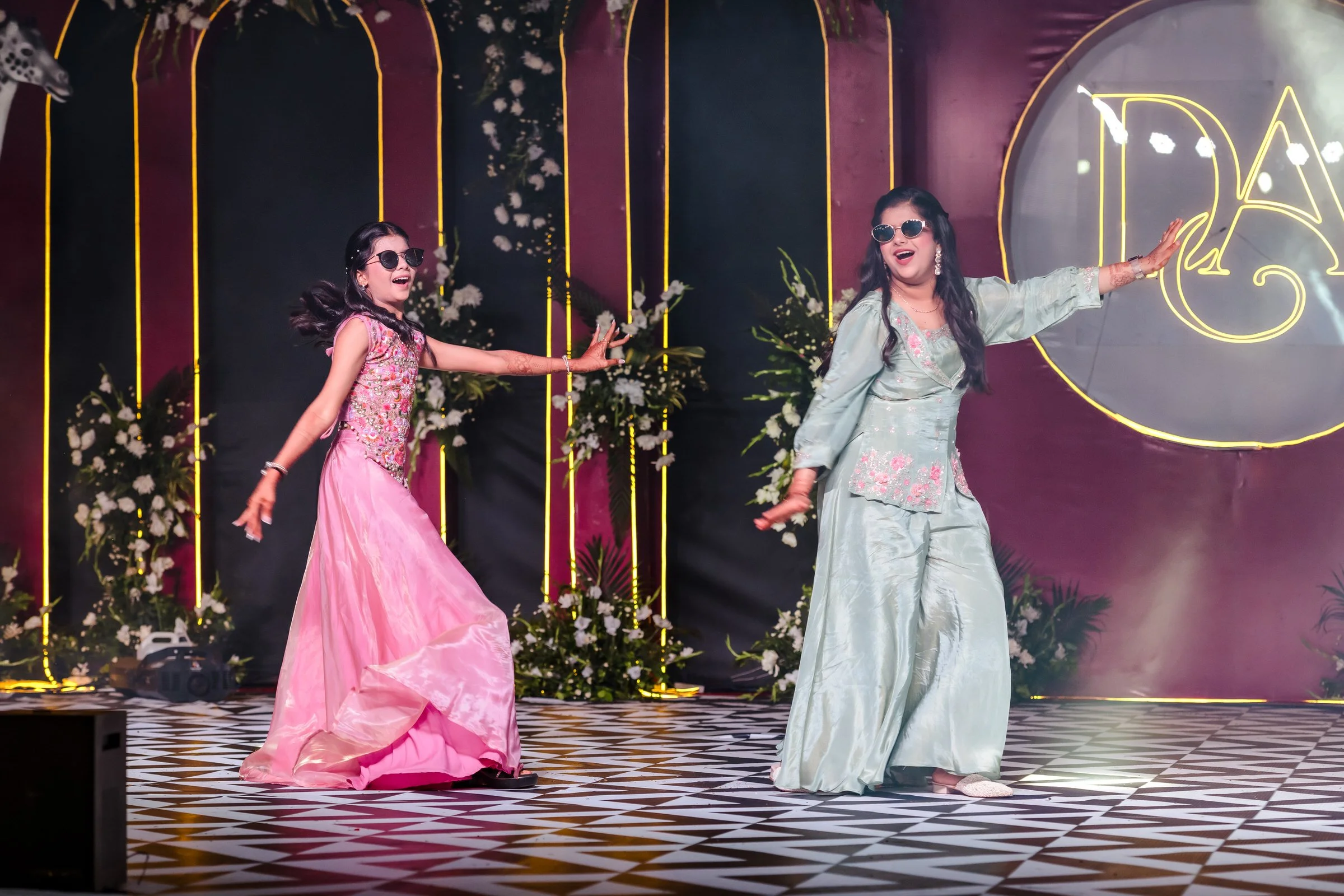
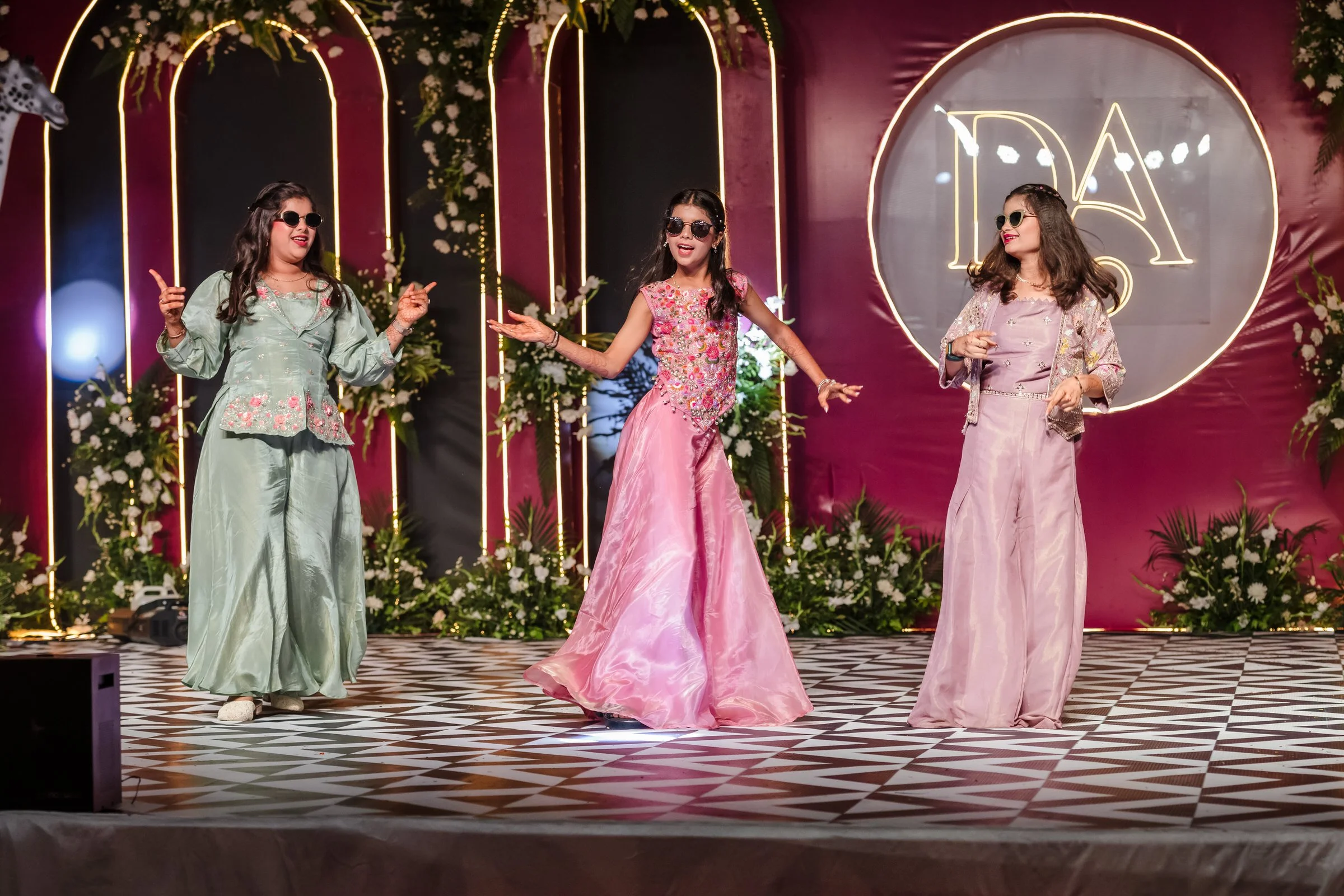
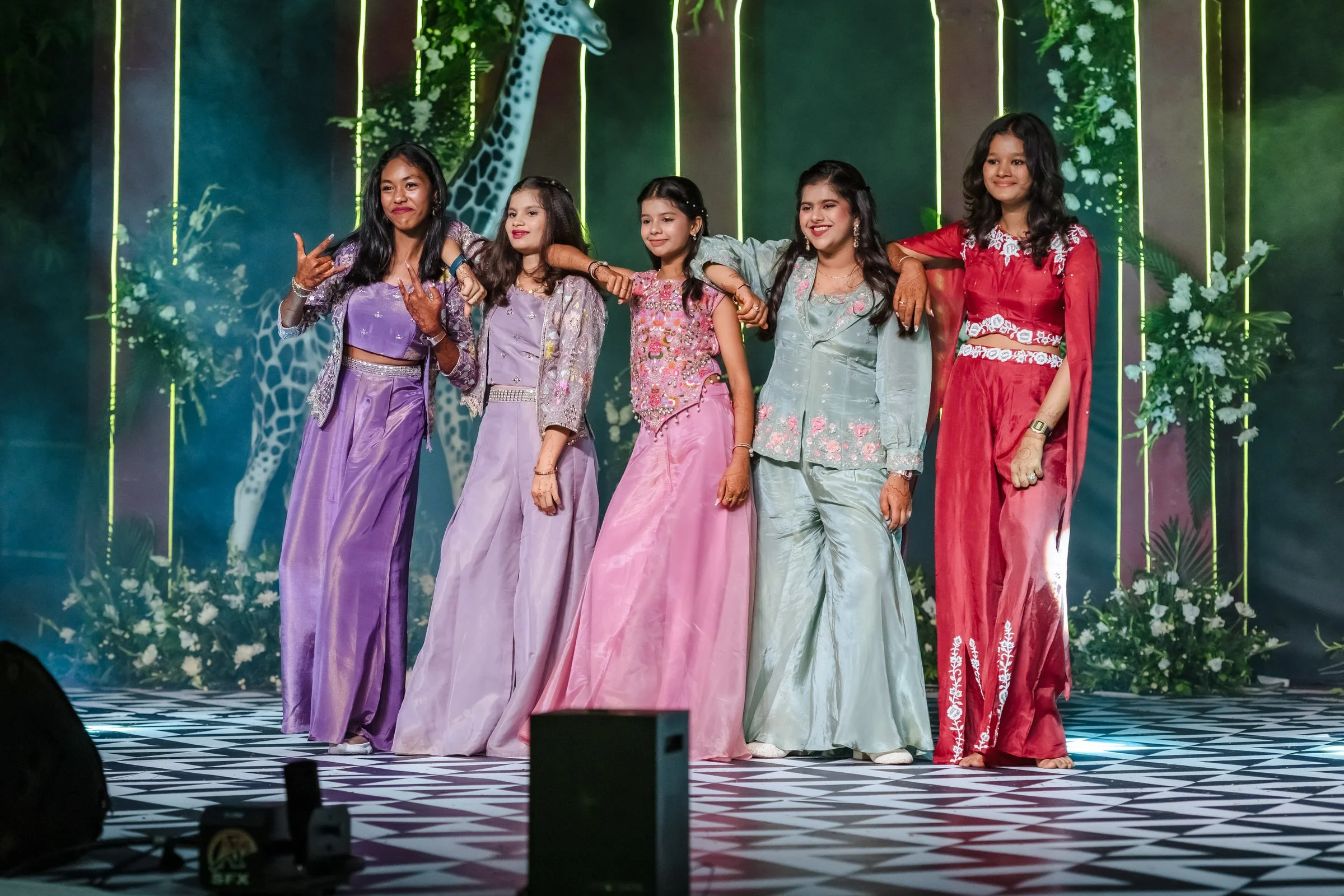
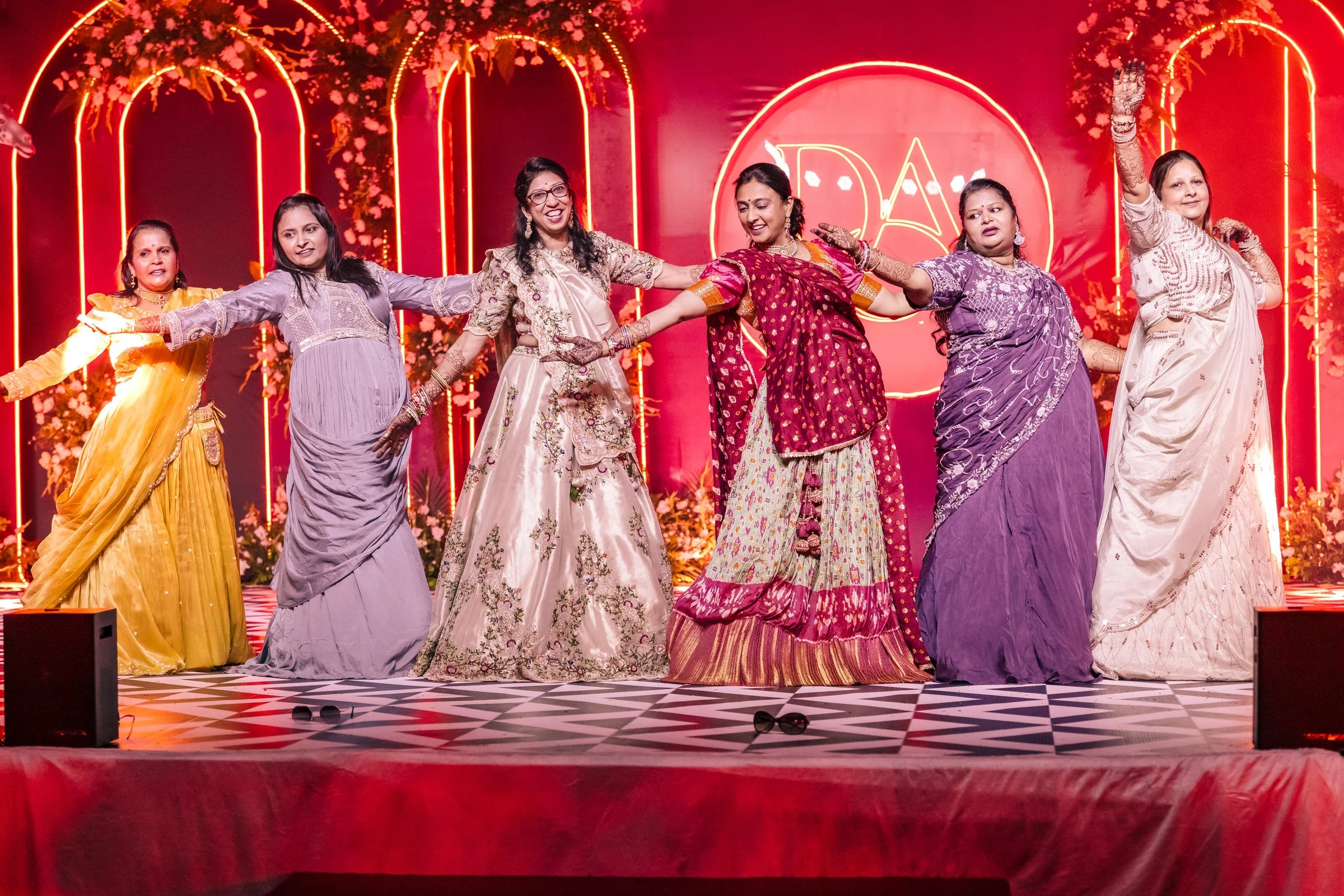
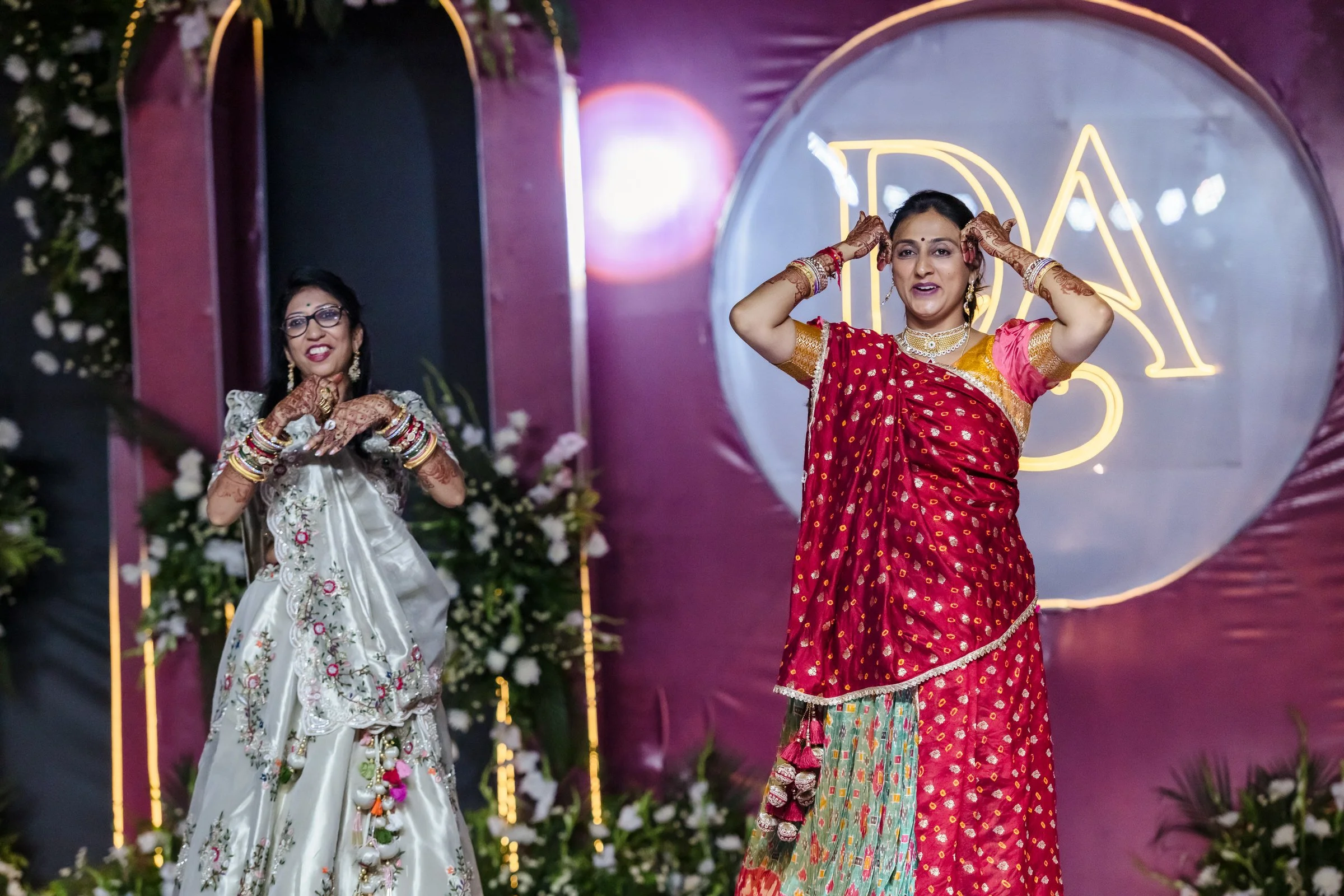
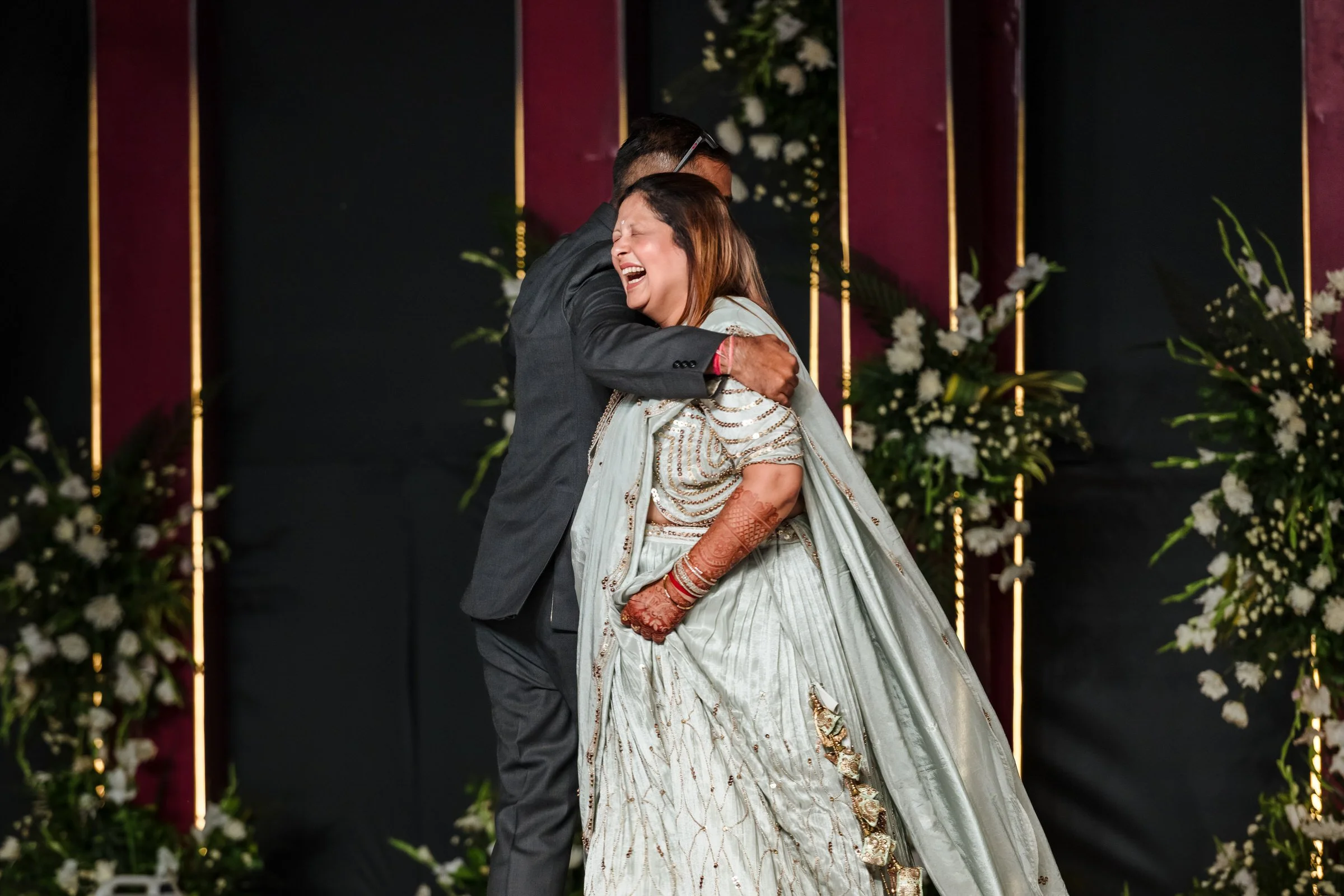
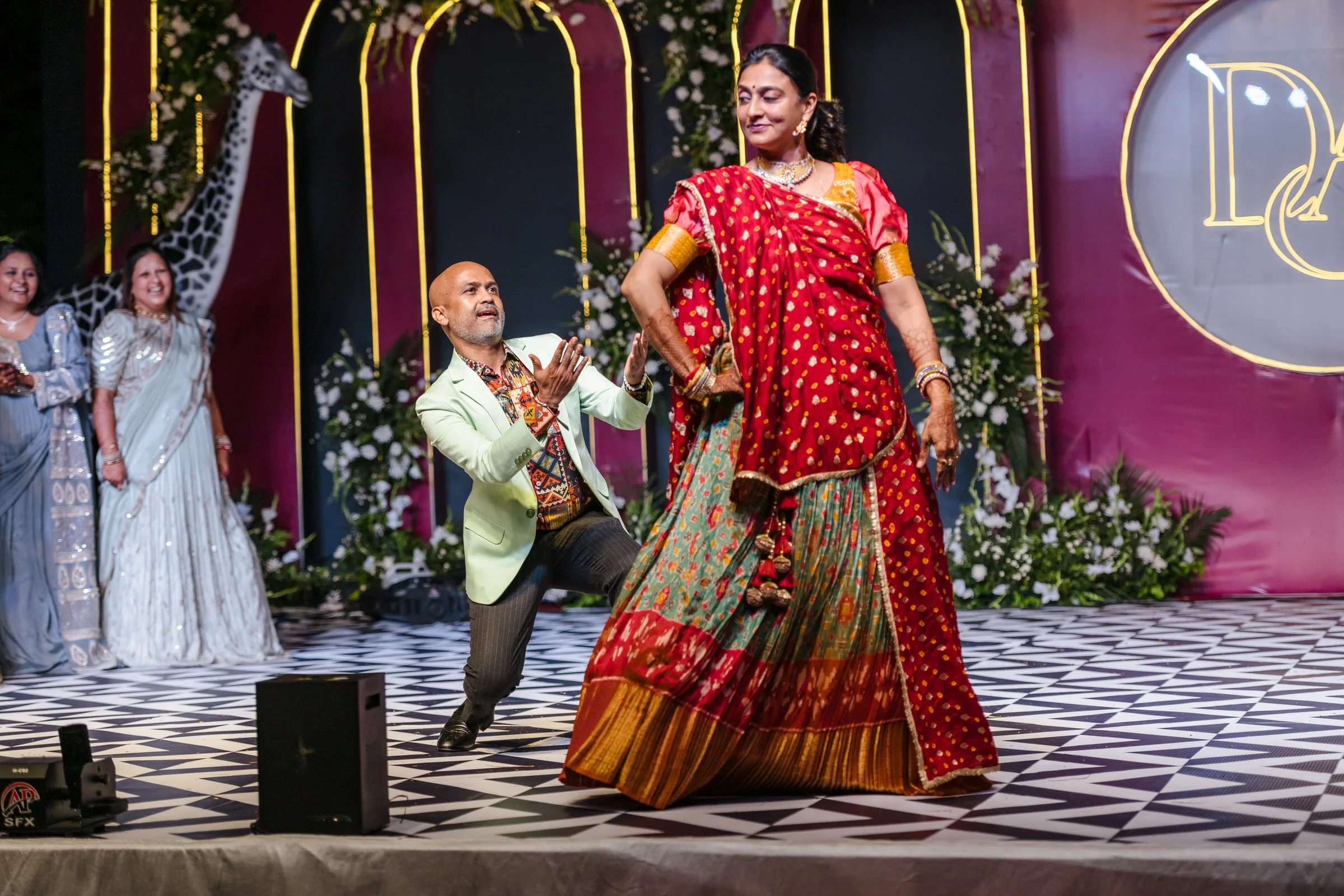
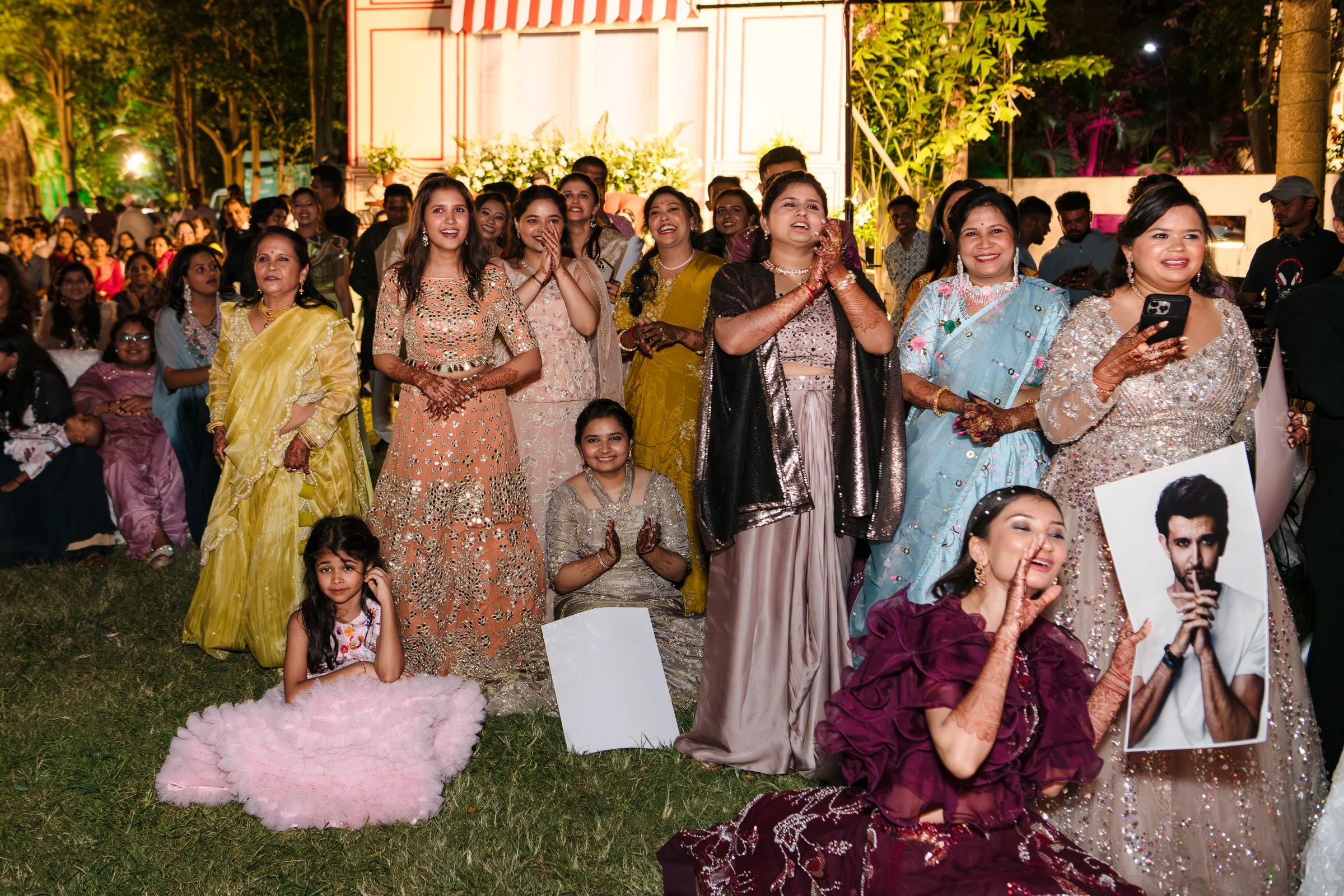
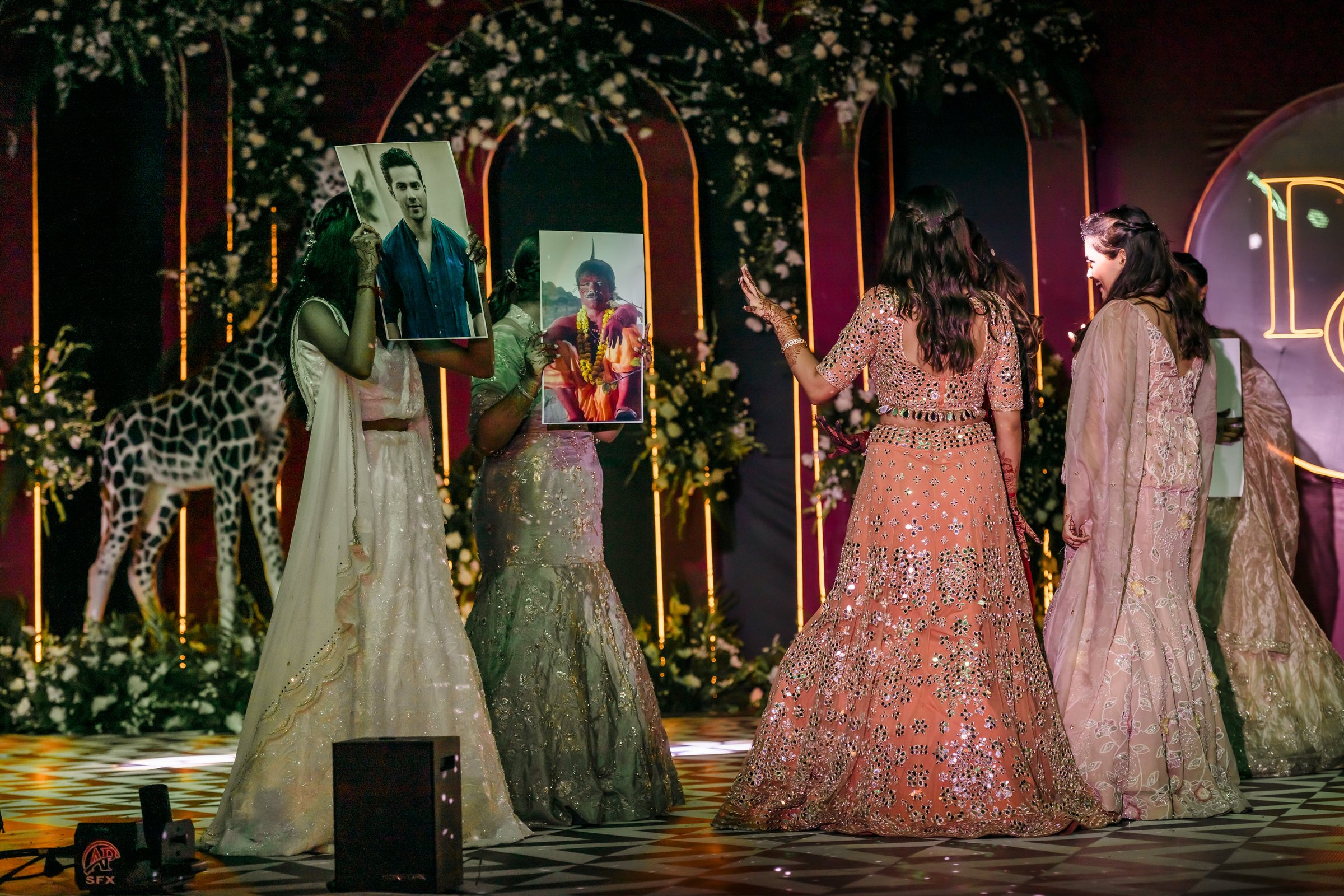
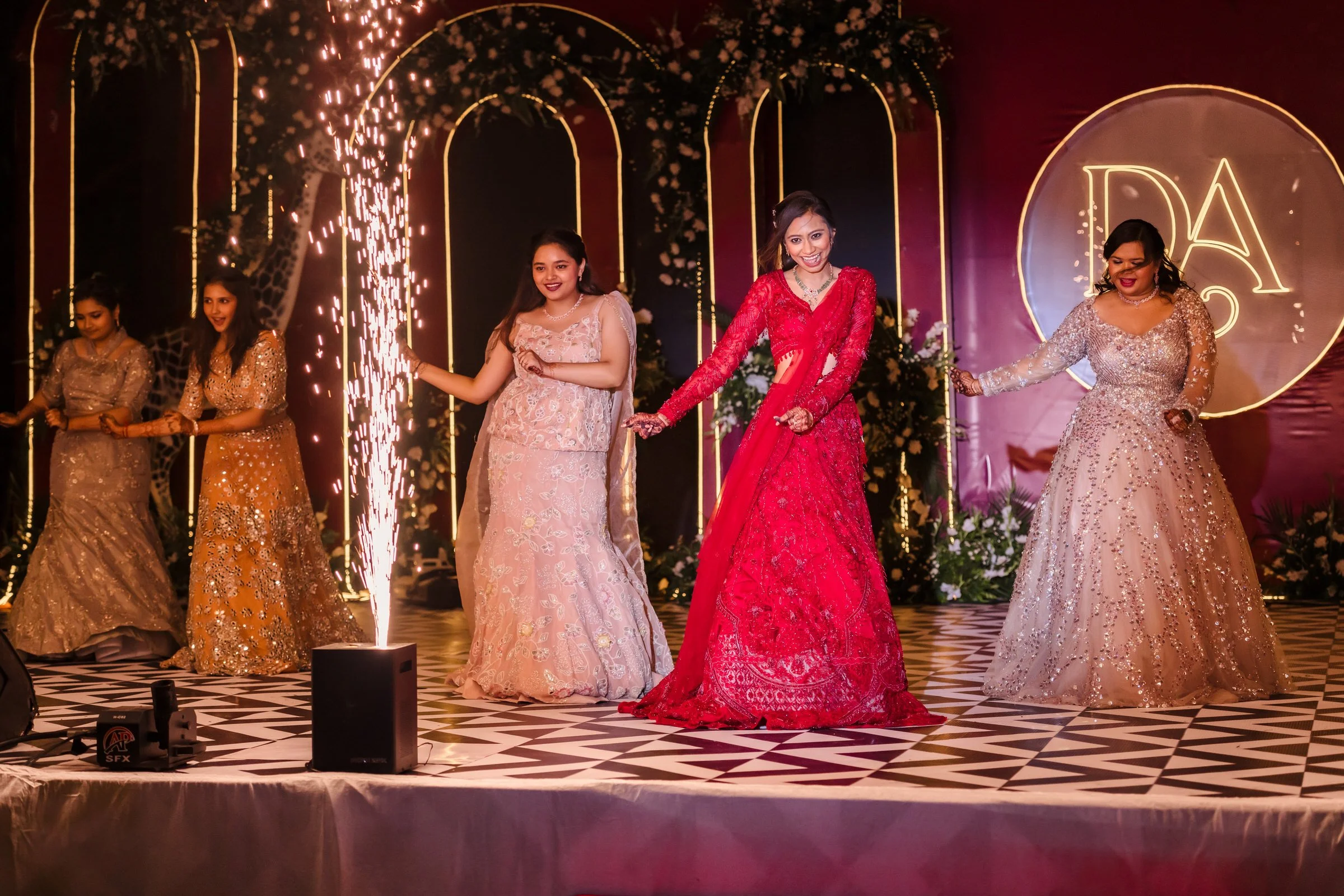
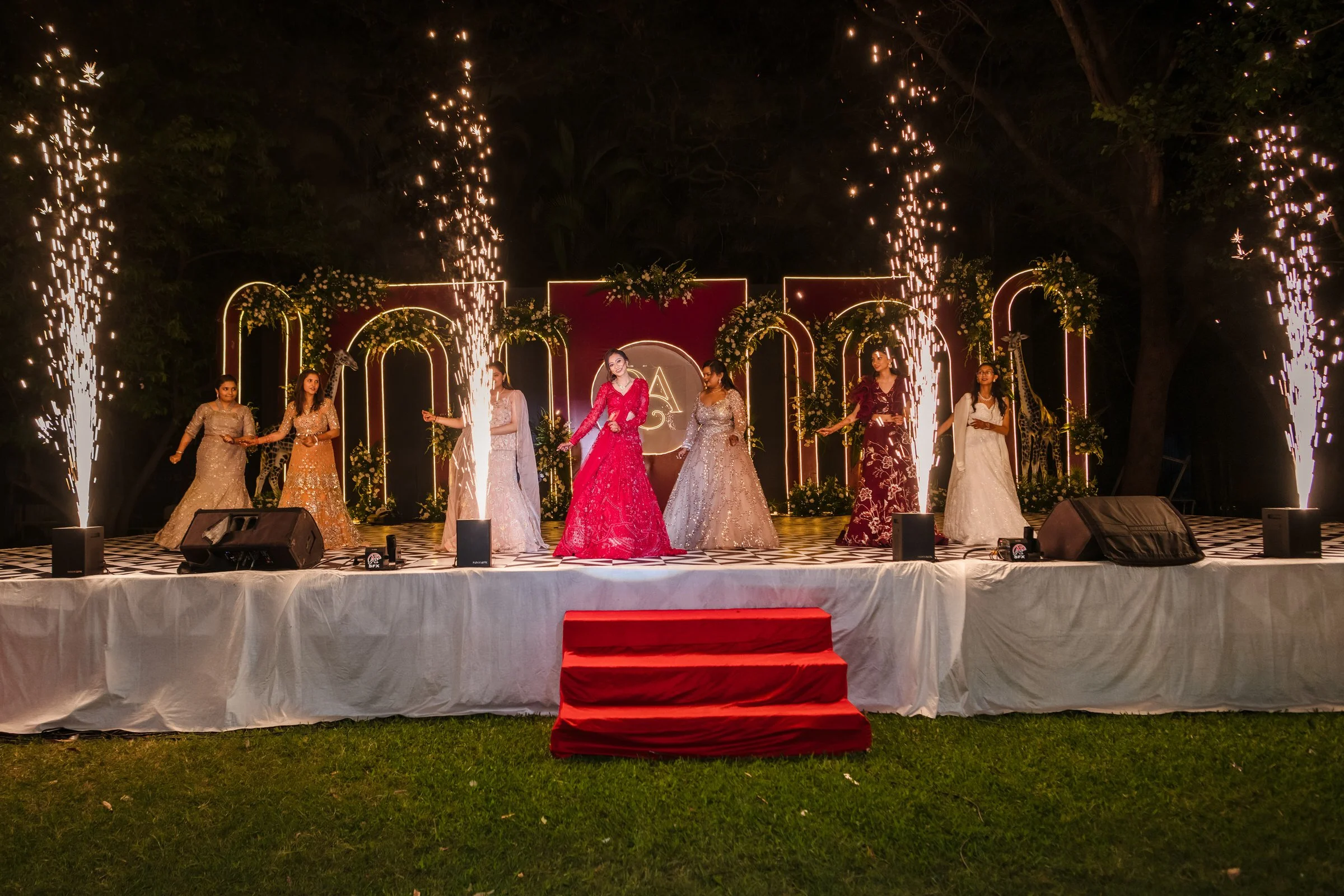
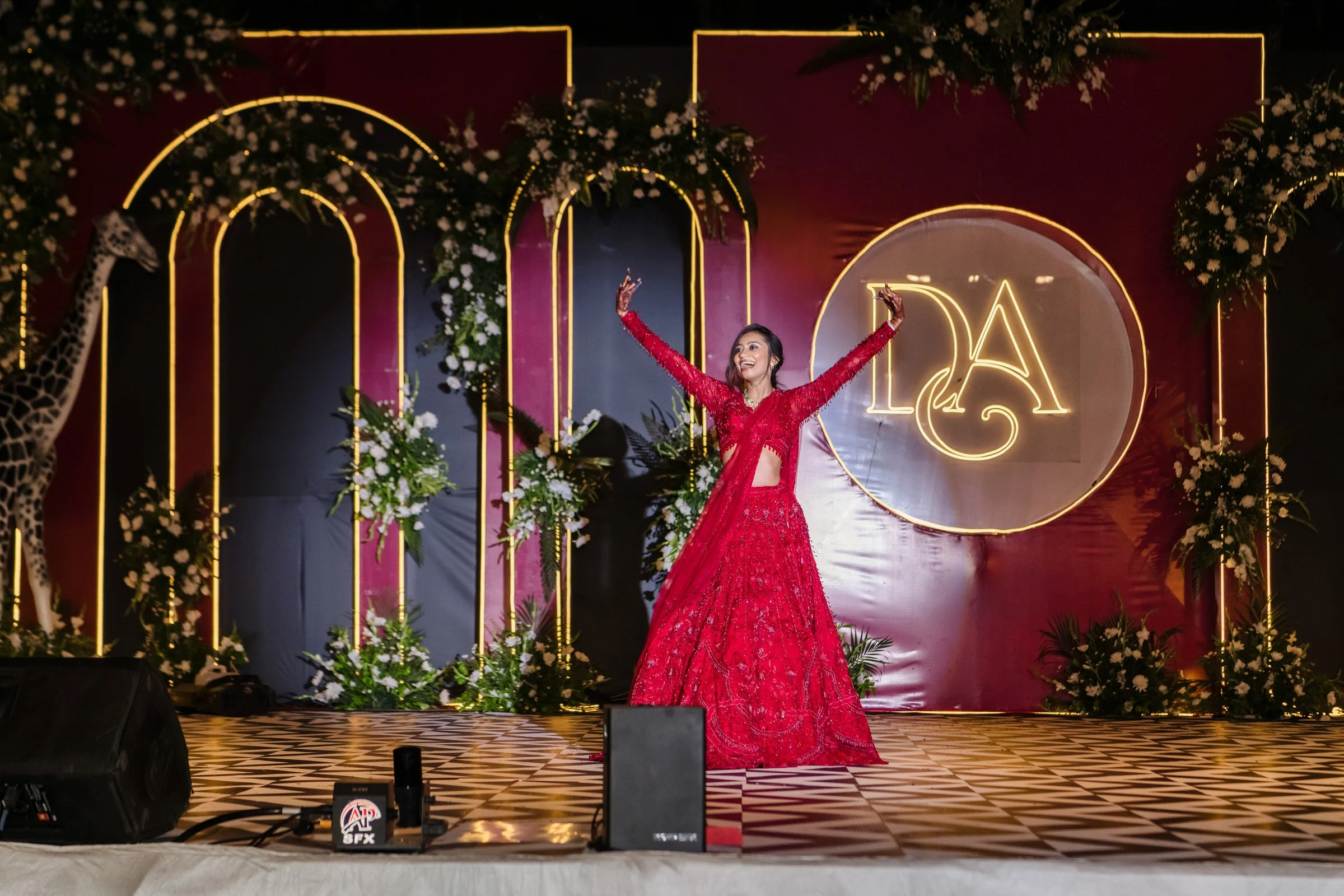
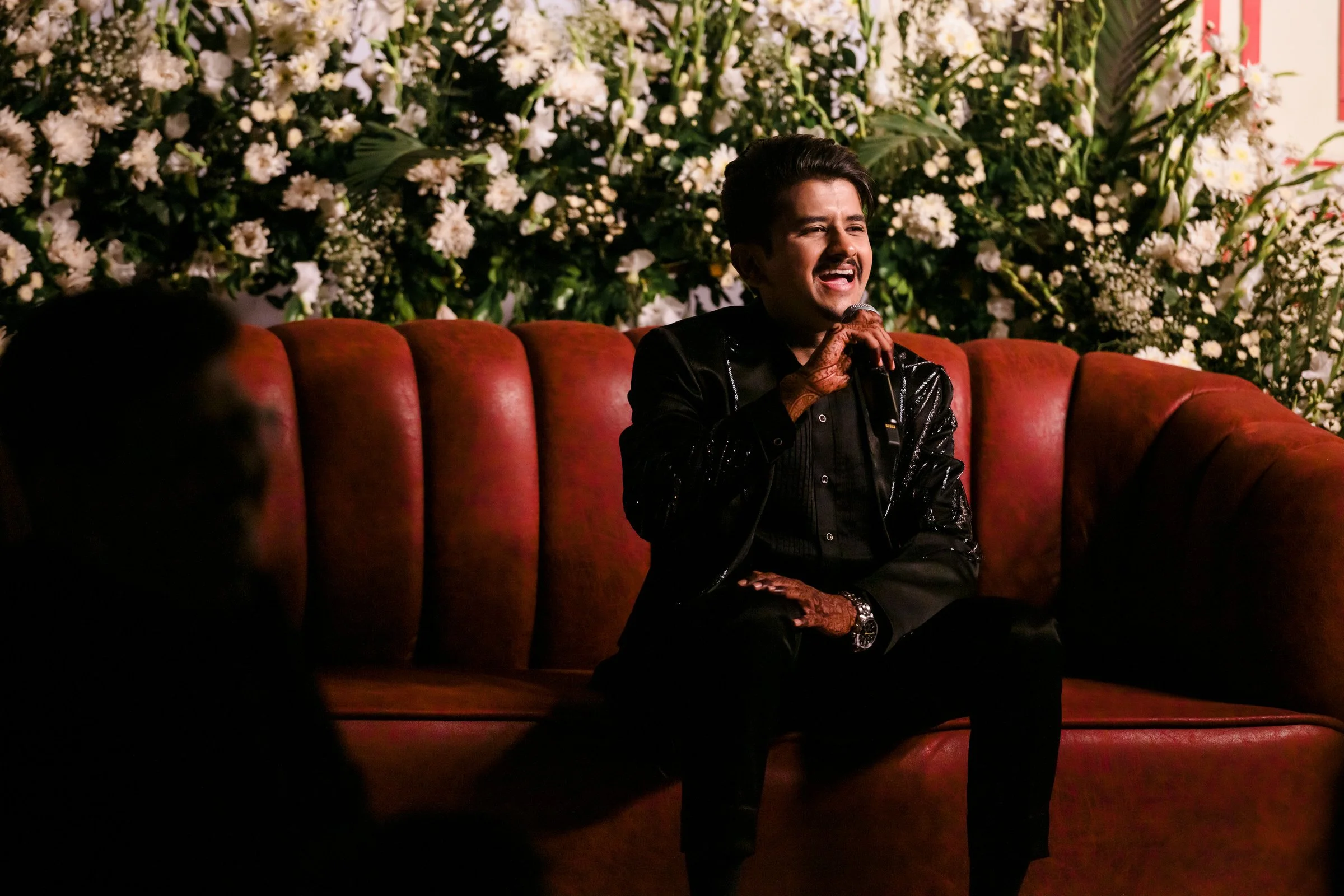
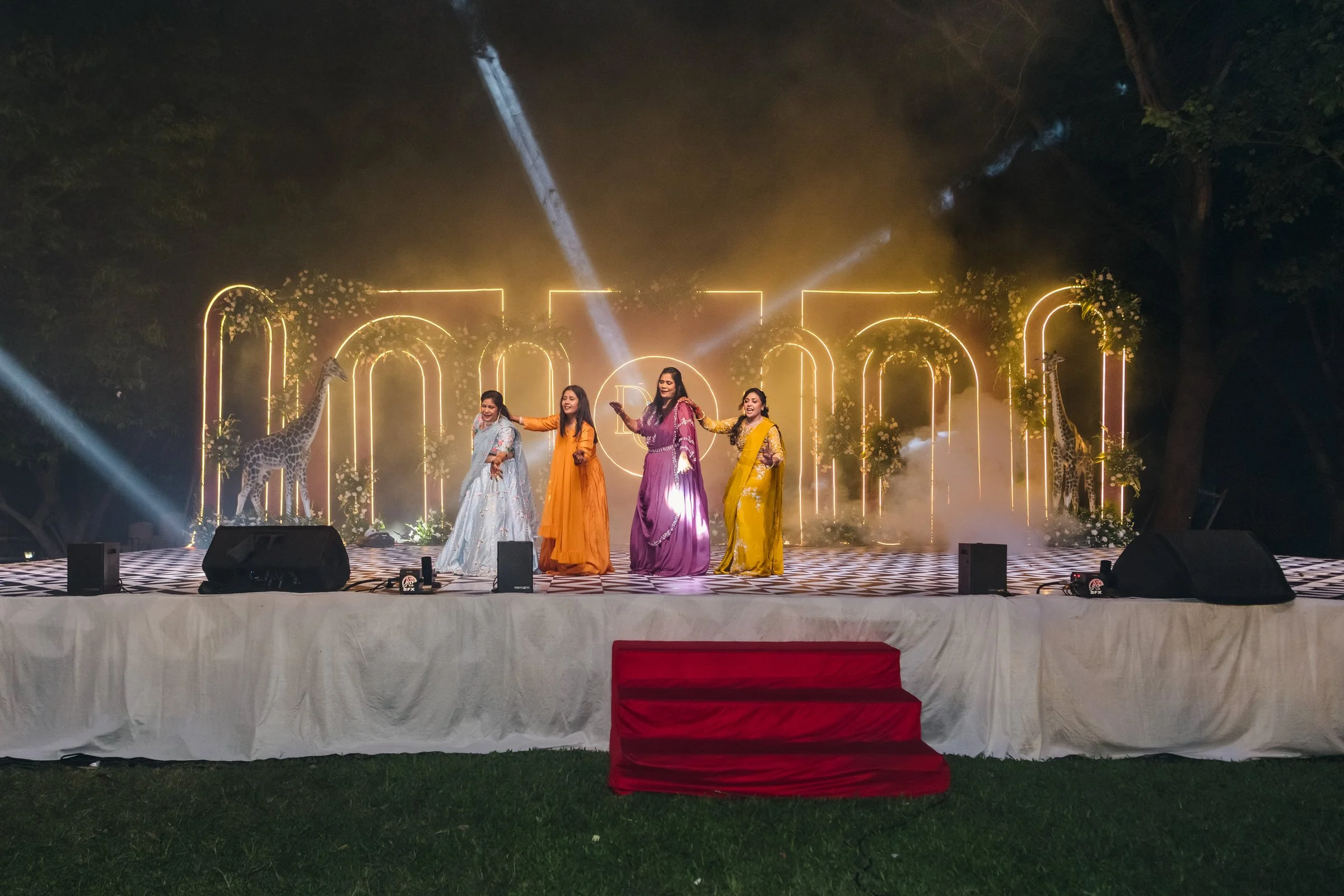
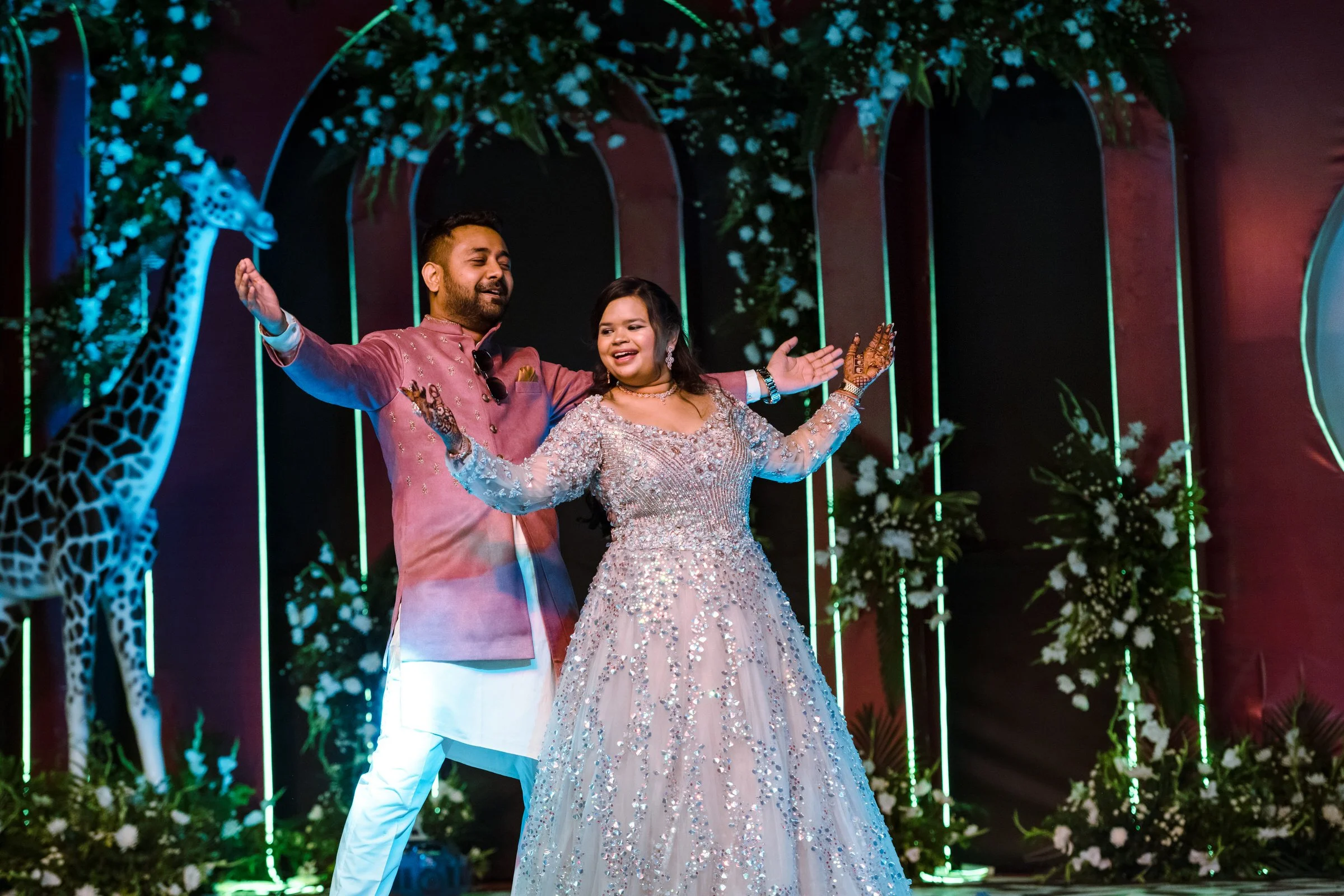
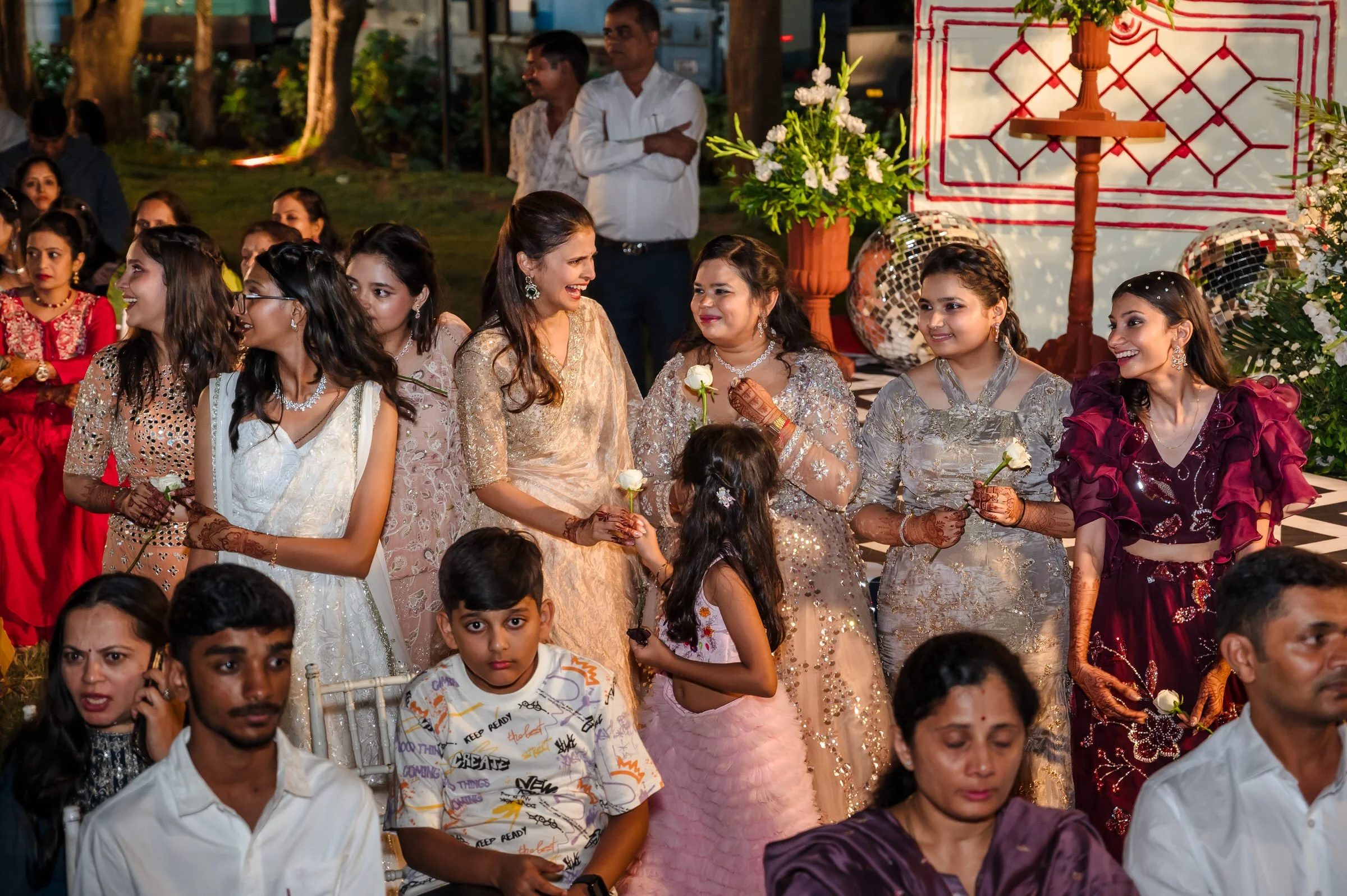
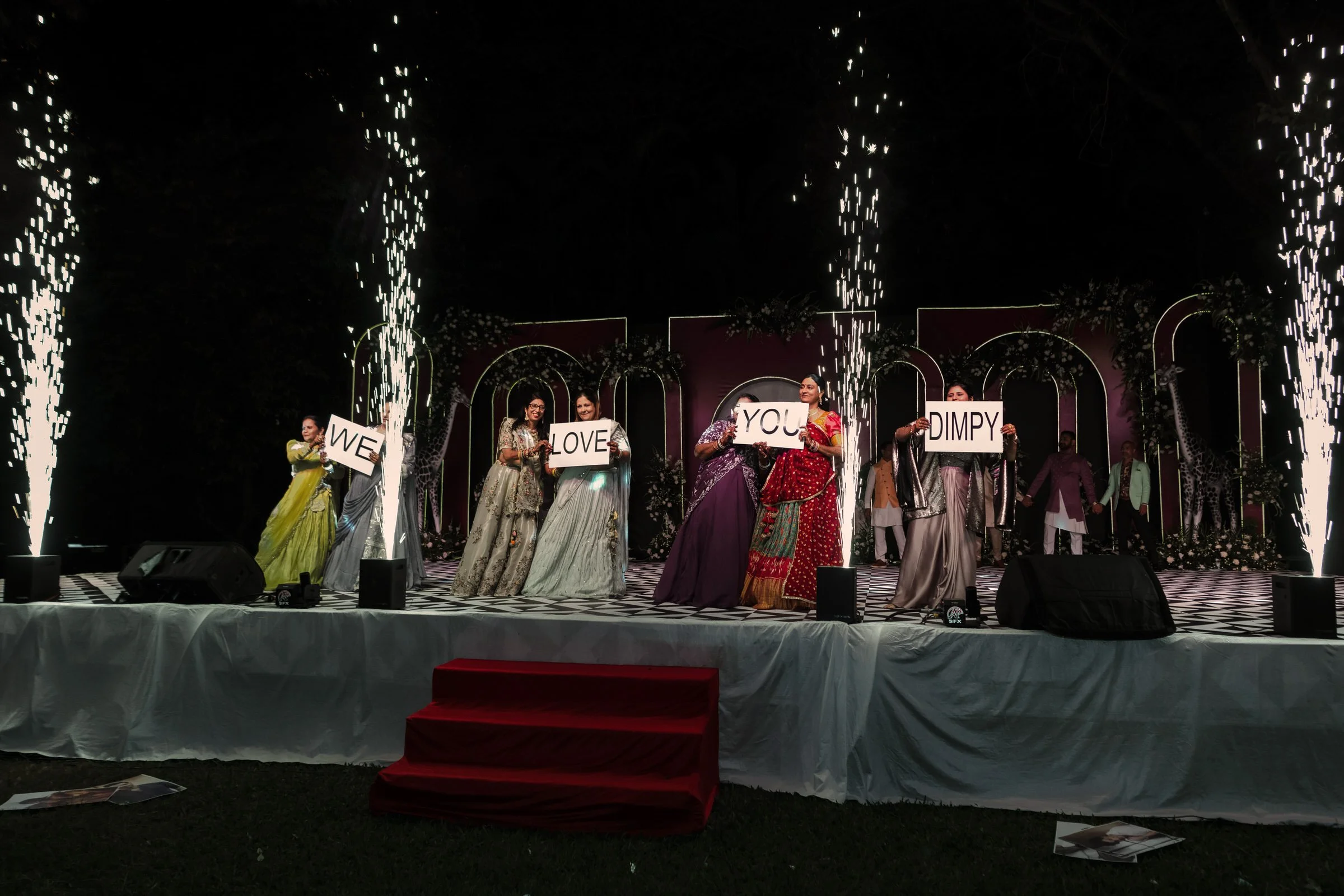
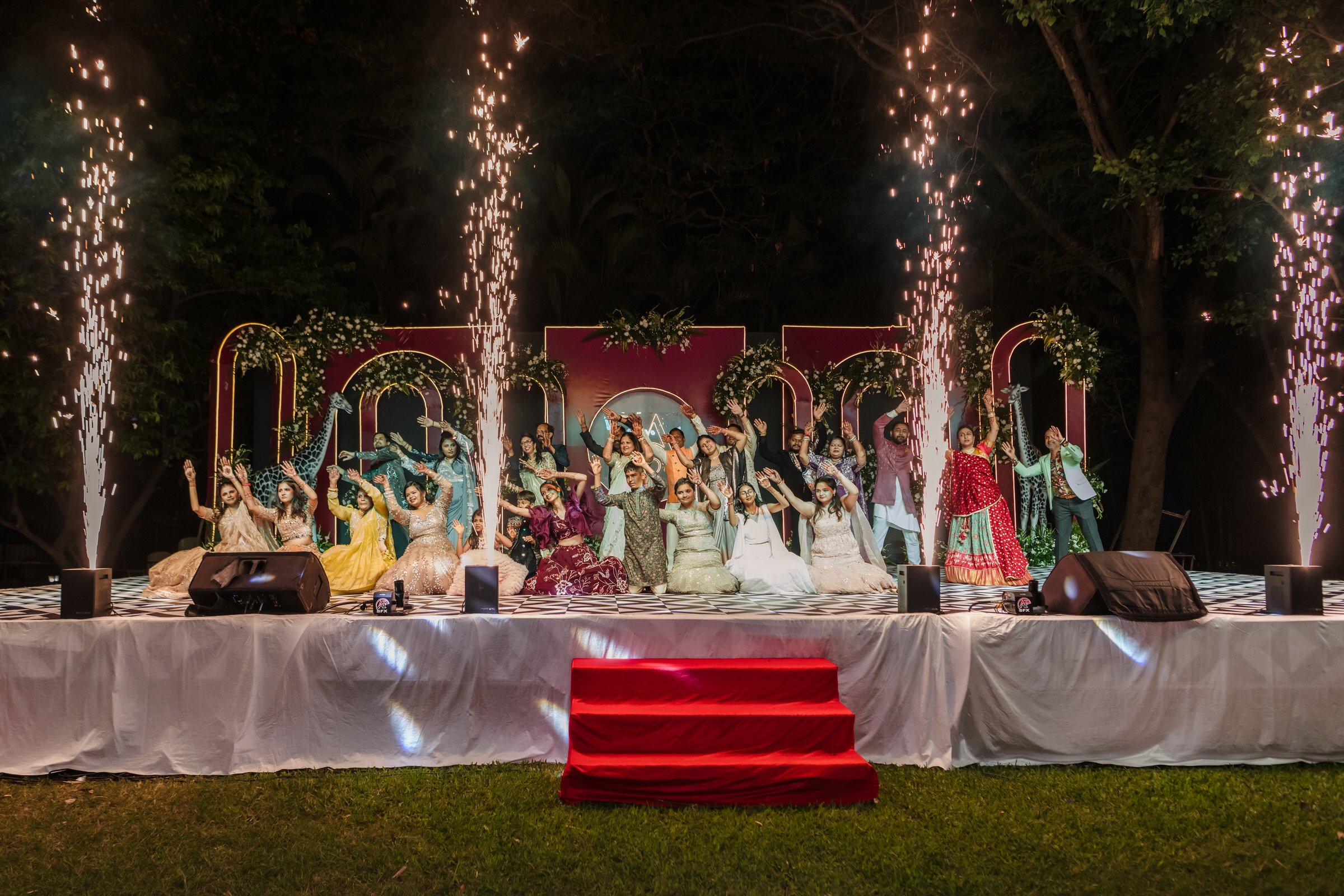
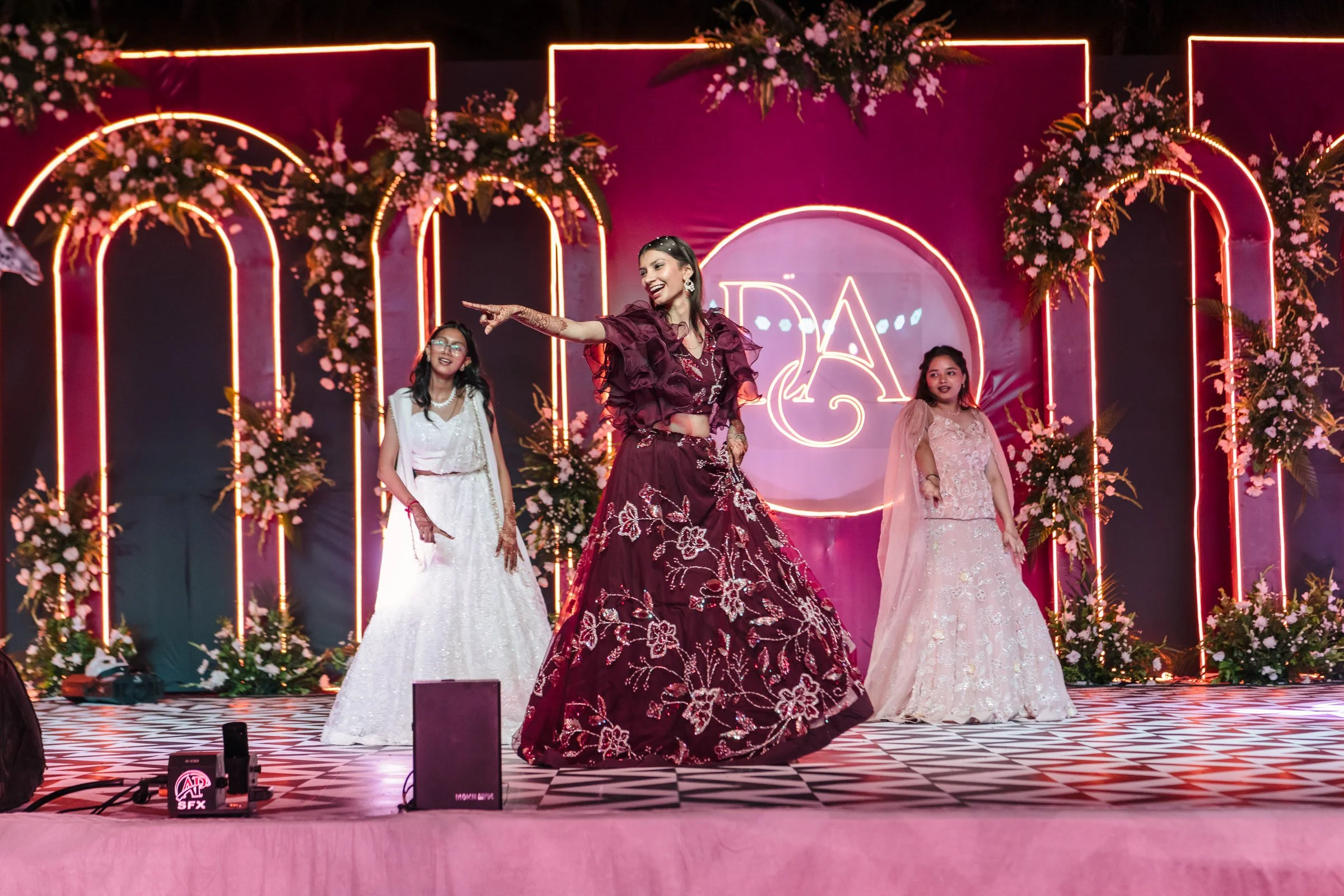
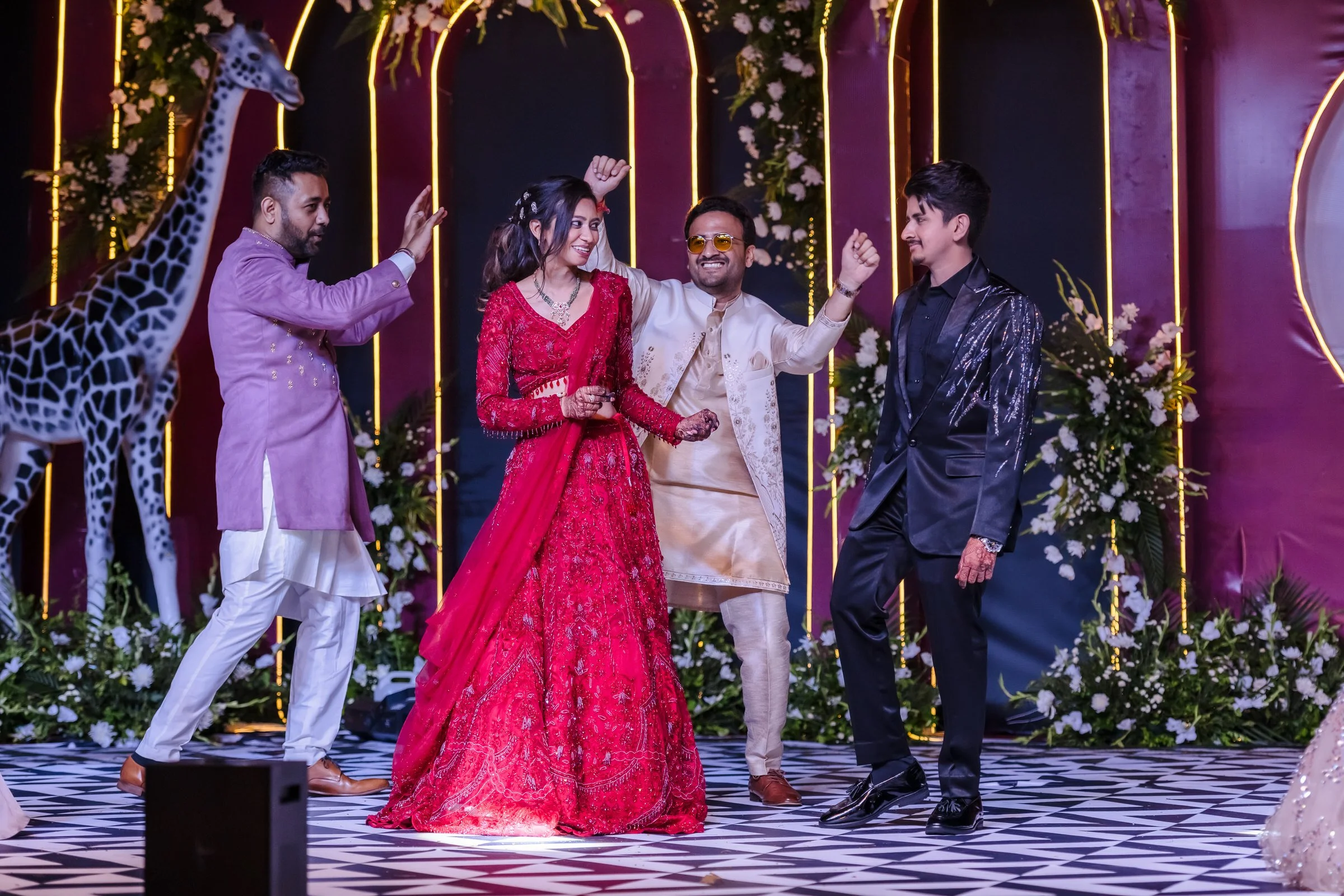
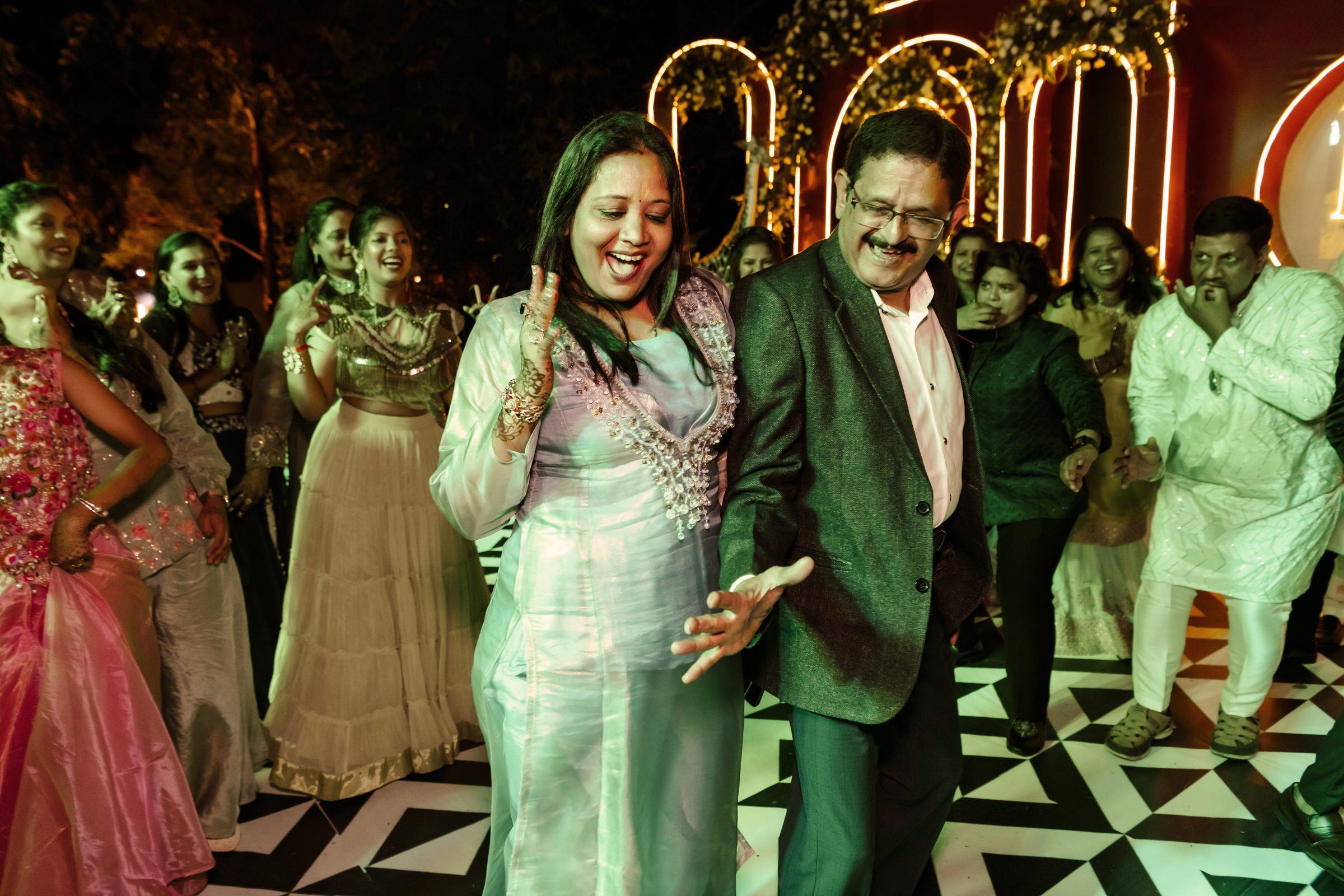
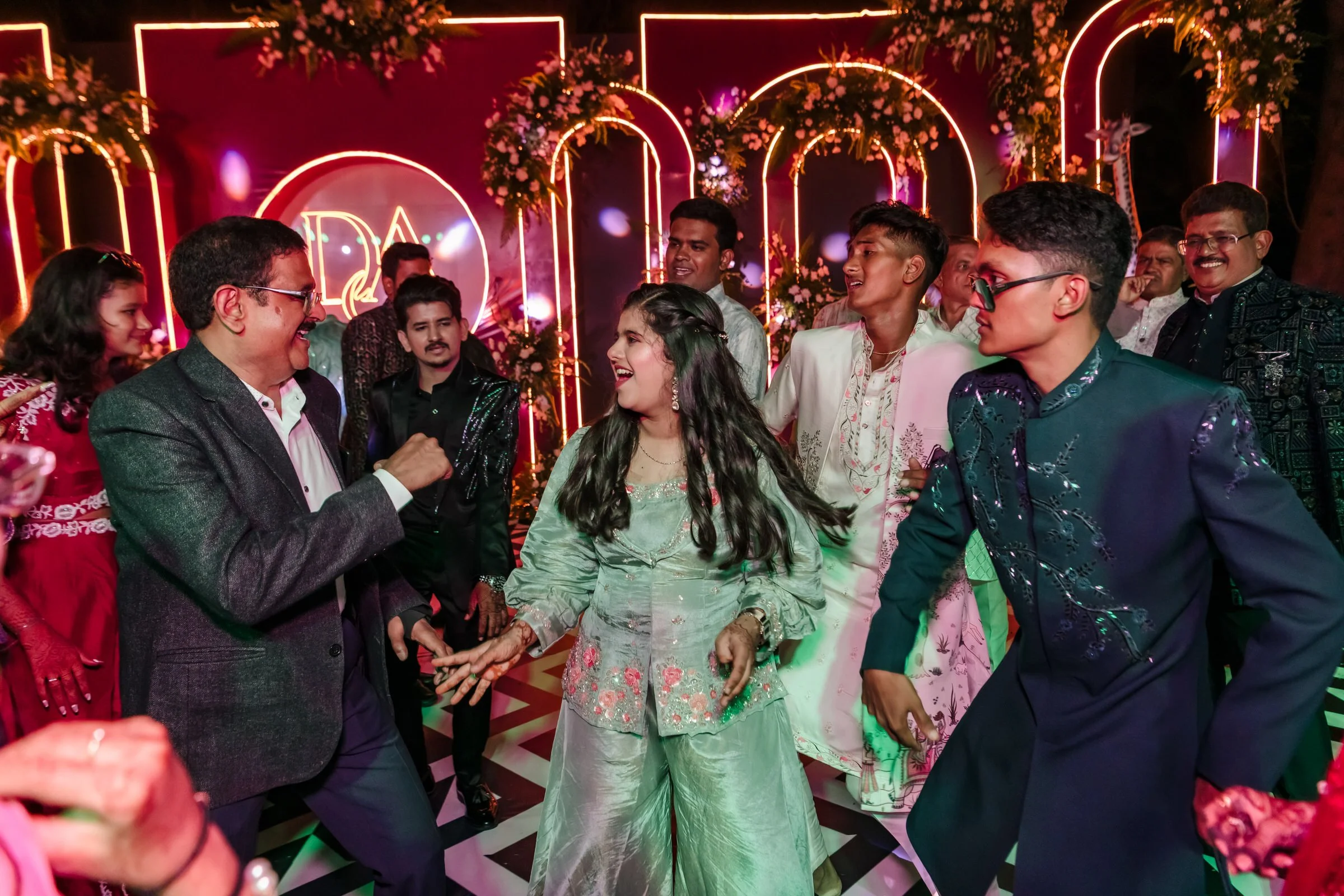
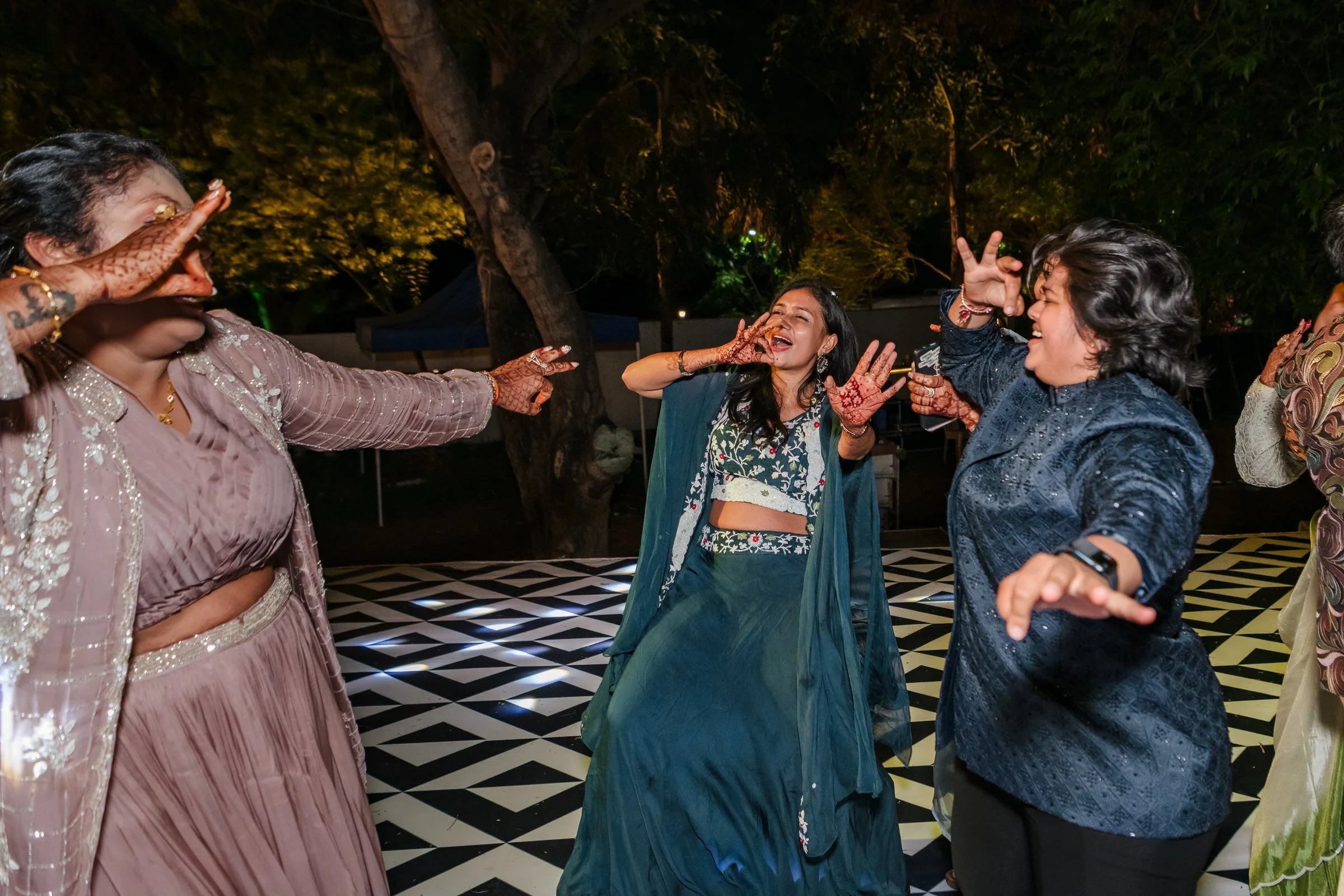
After that, performances. Both sides of the family took the stage in turn, group after group. Cousins, siblings, parents, the lot. This is the heart of a Marwari sangeet and it is why the function runs long. Every group has rehearsed, every group wants its moment, and nobody is willing to go first or last.
Then the open floor. Once the arranged performances are done, the stage stops mattering and the entire room dances. That is usually the best hour of the whole wedding, and it is also the hour most people are too busy enjoying to photograph for themselves.

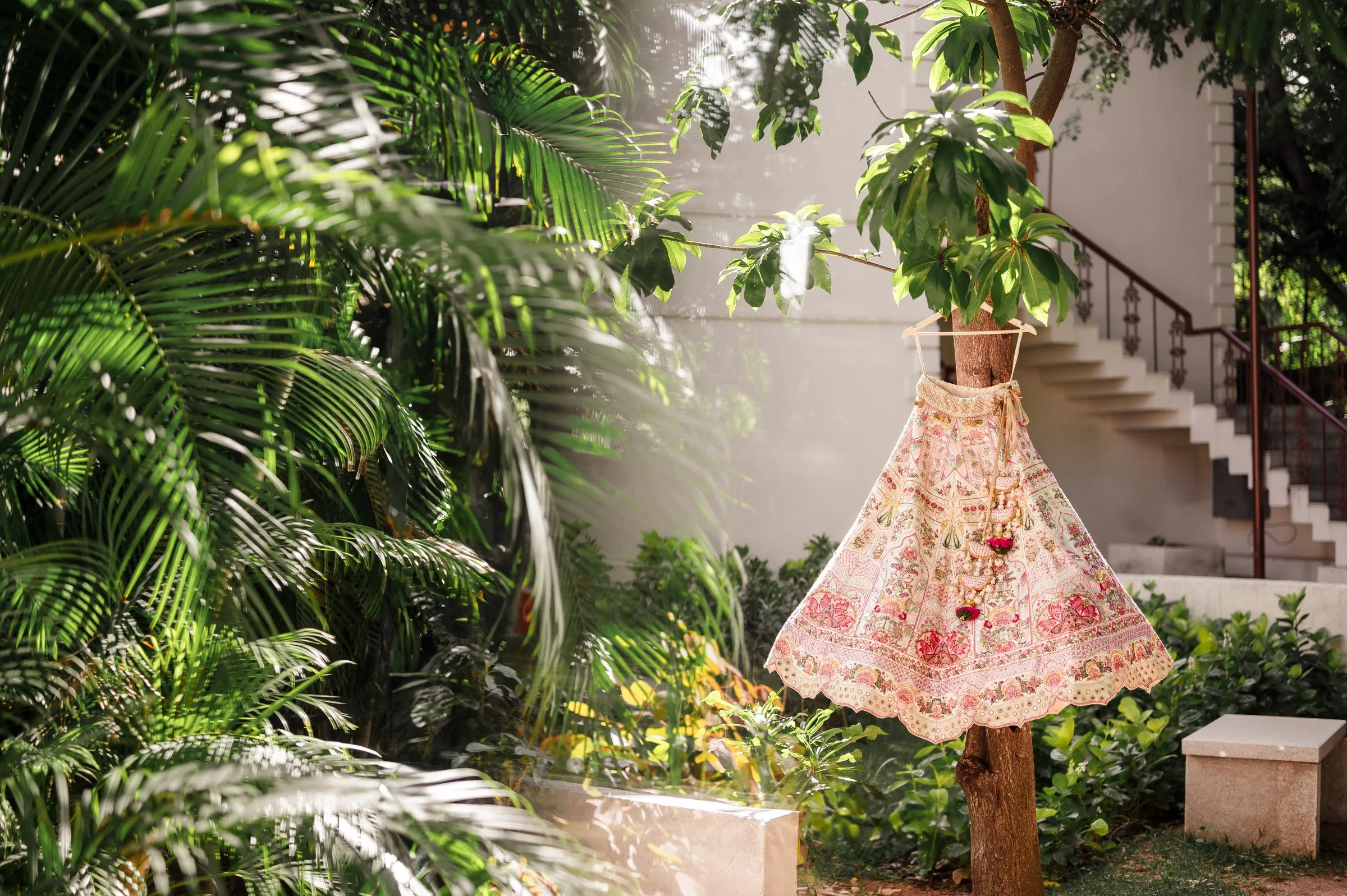
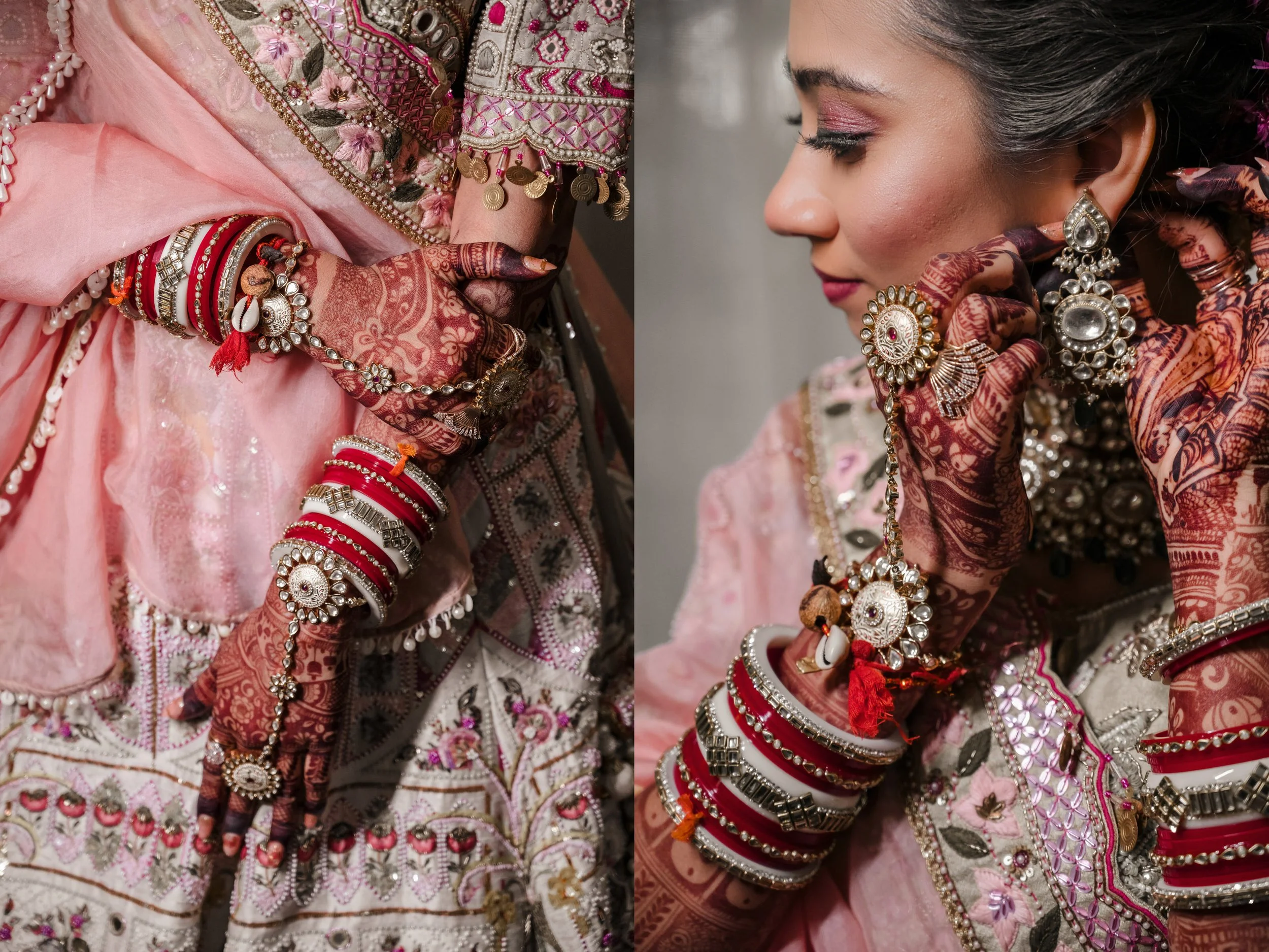
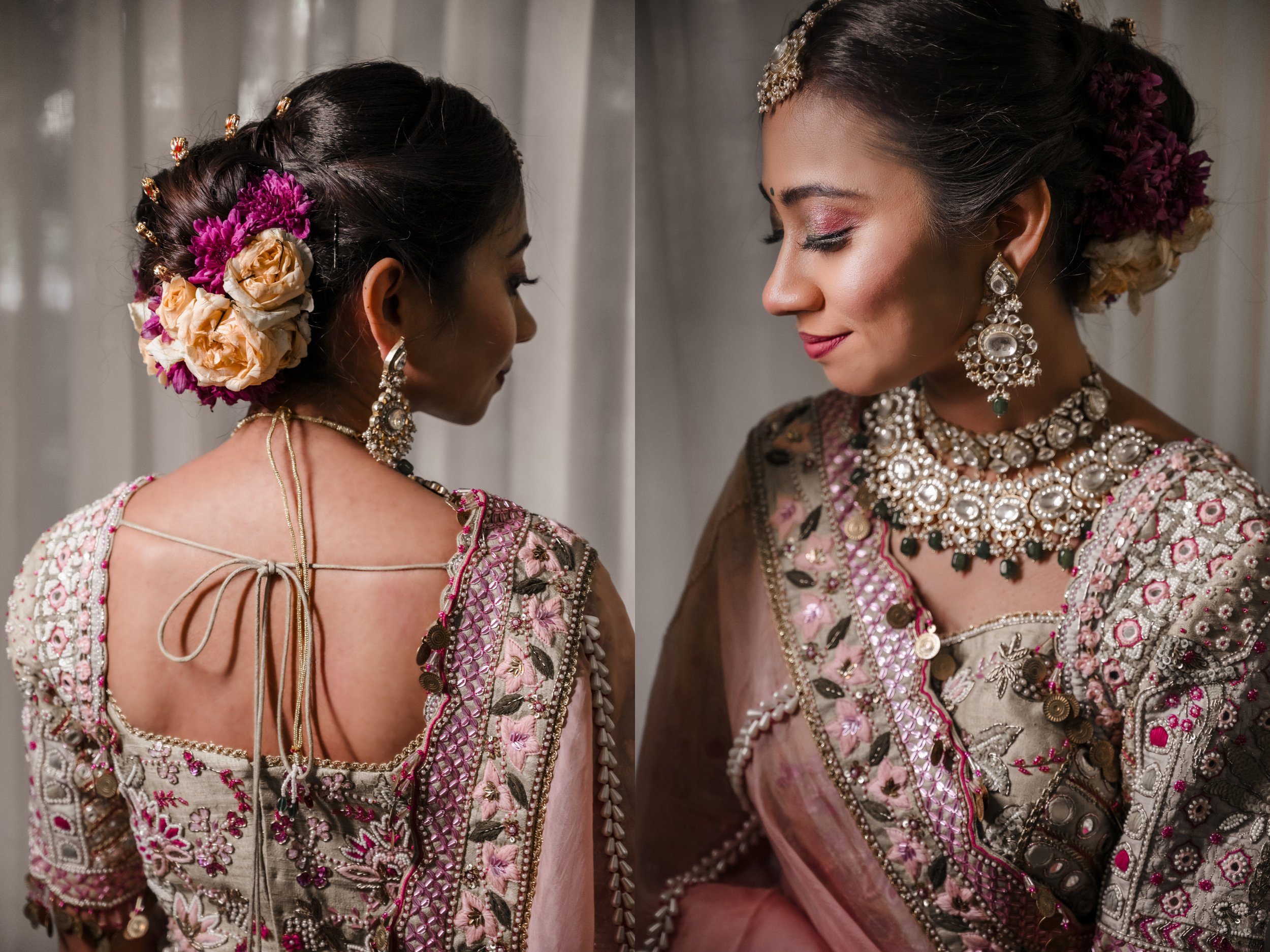
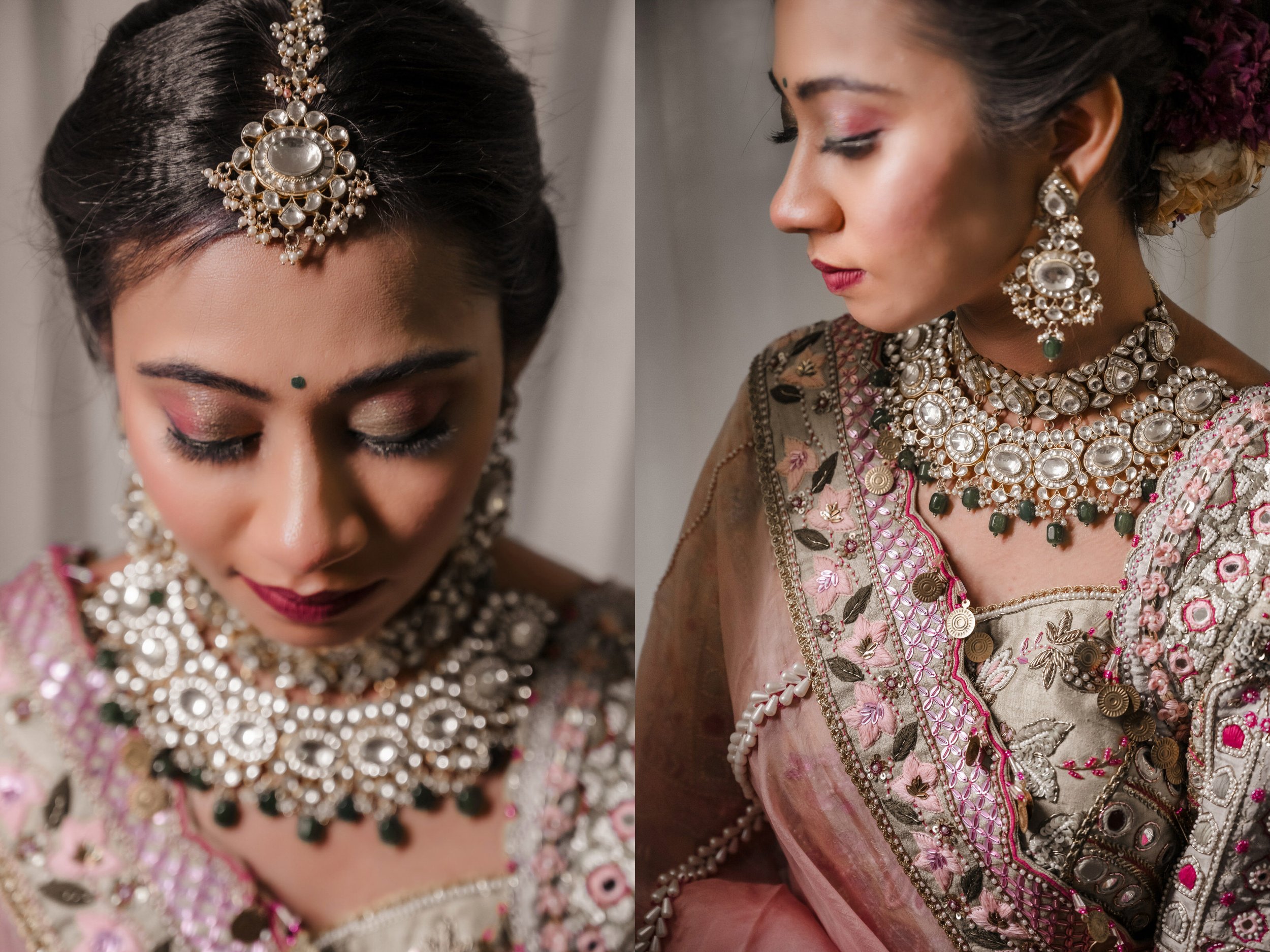
Day two, morning: getting ready, the baraat, and the Marwari wedding rituals
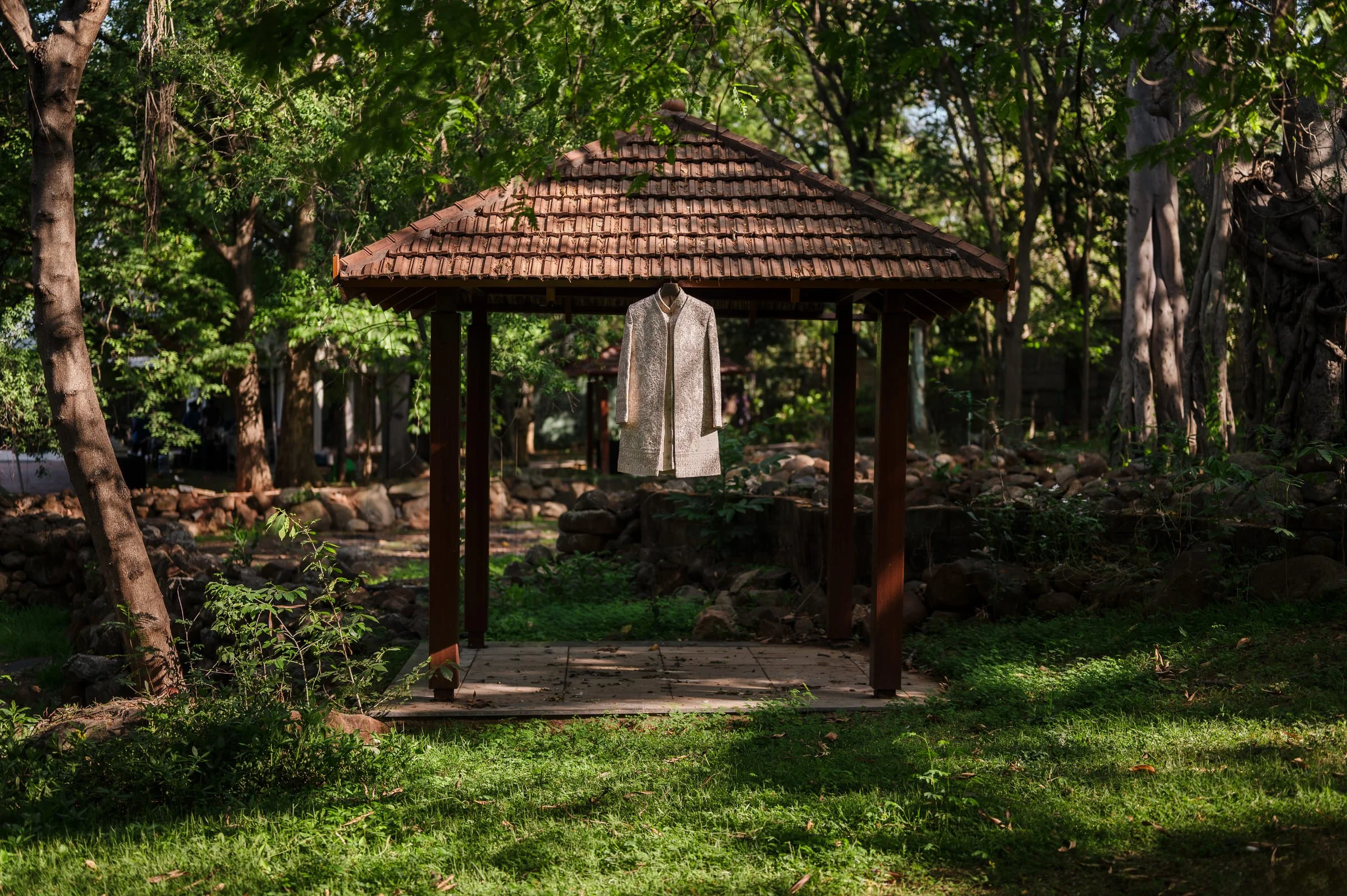
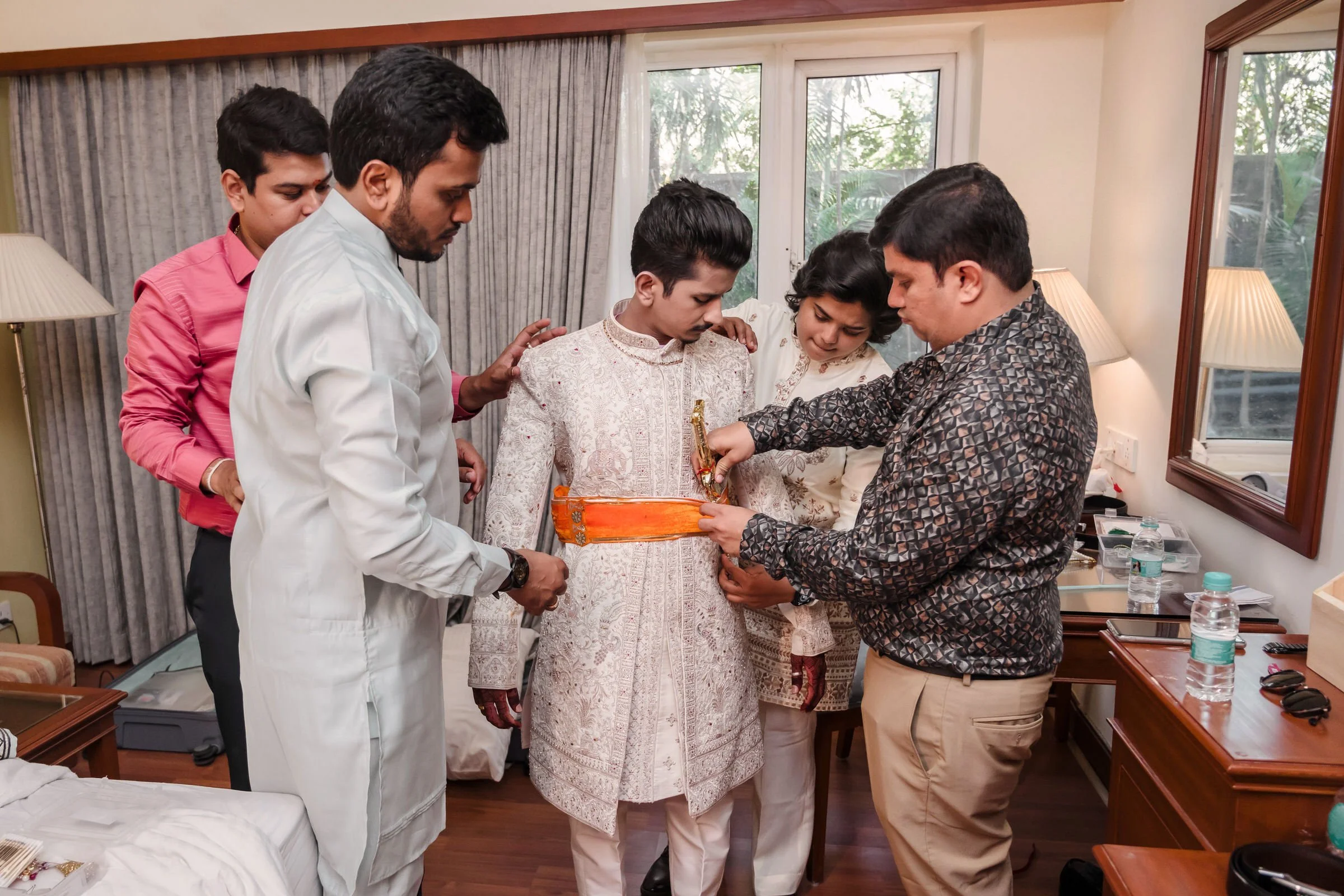
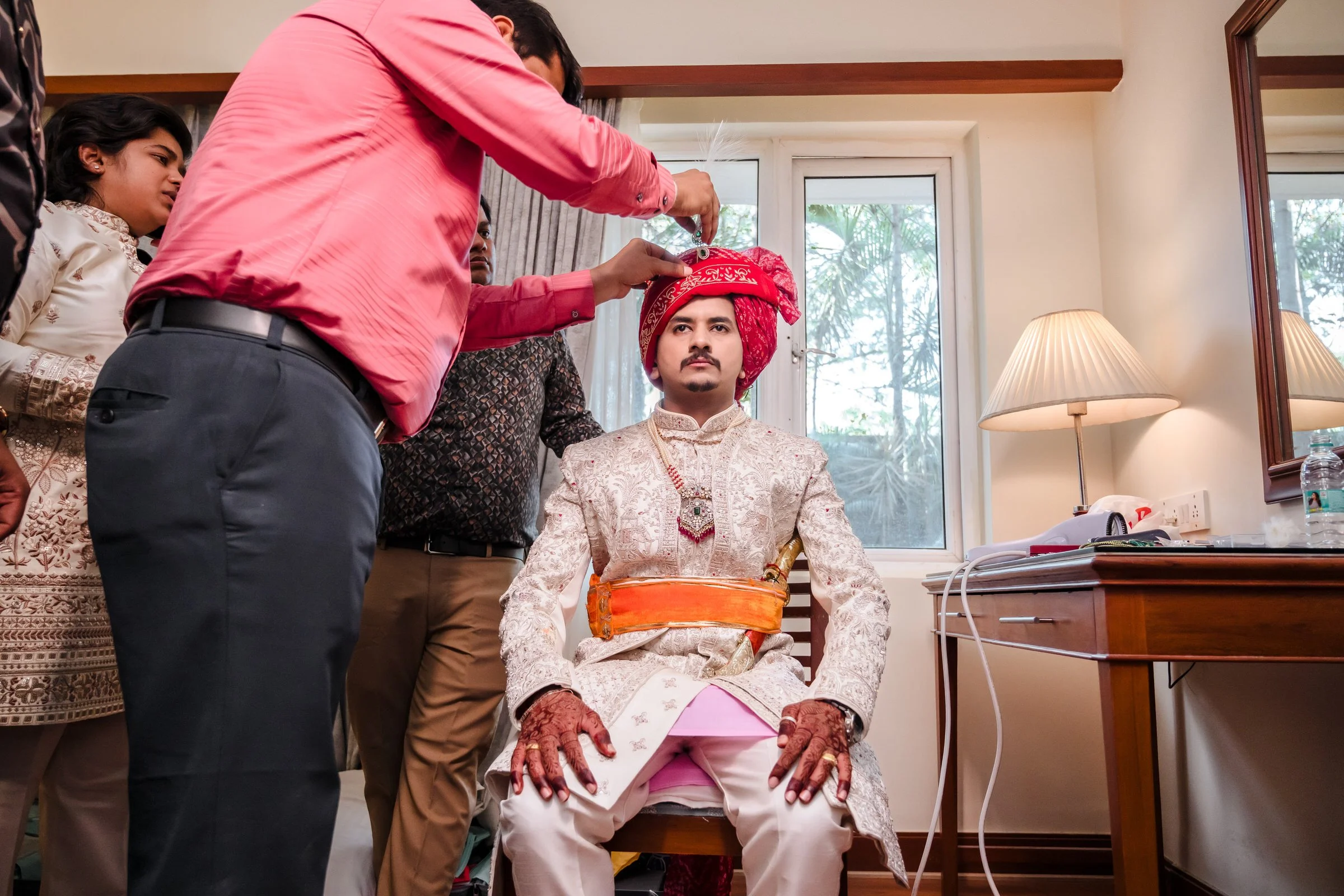
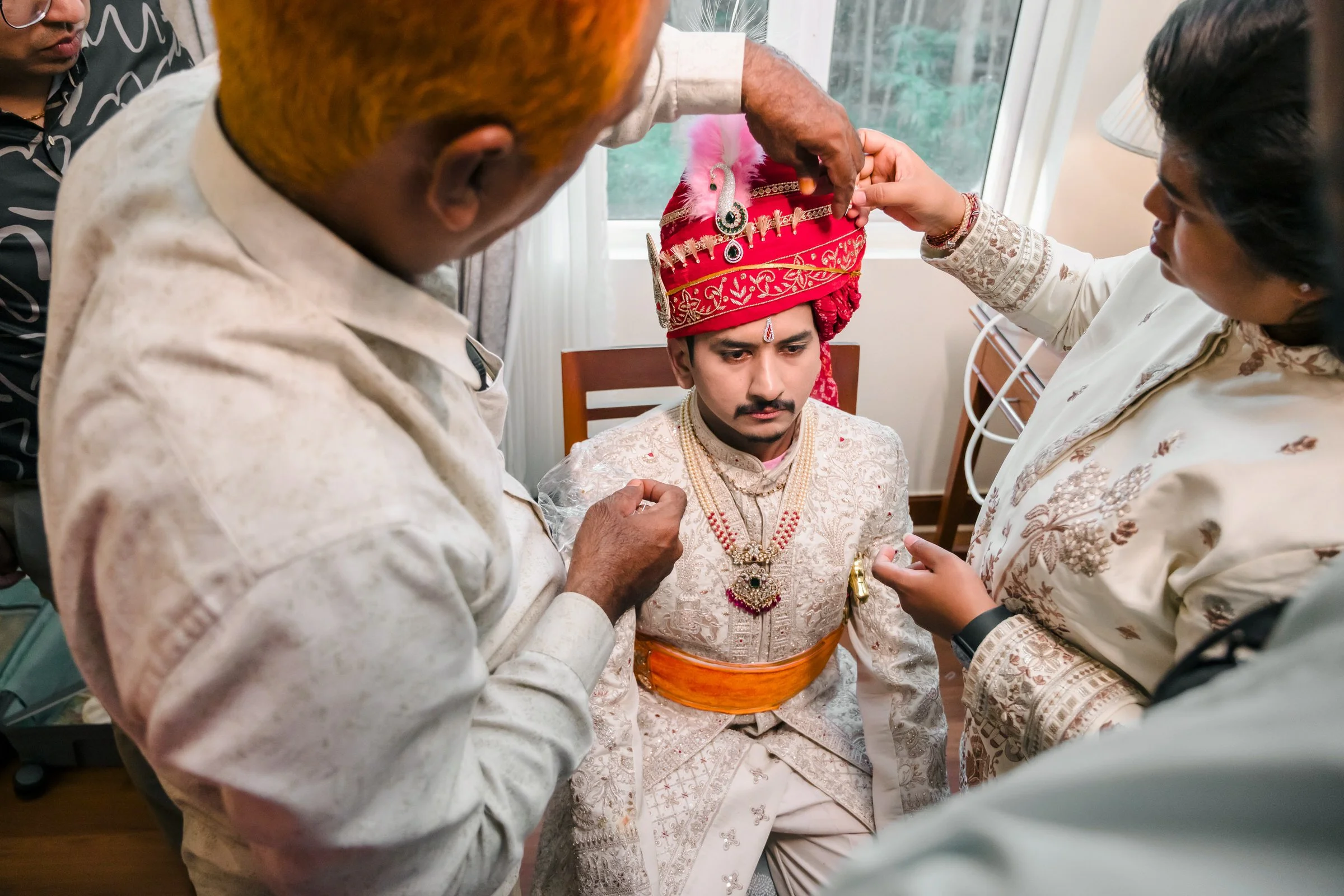
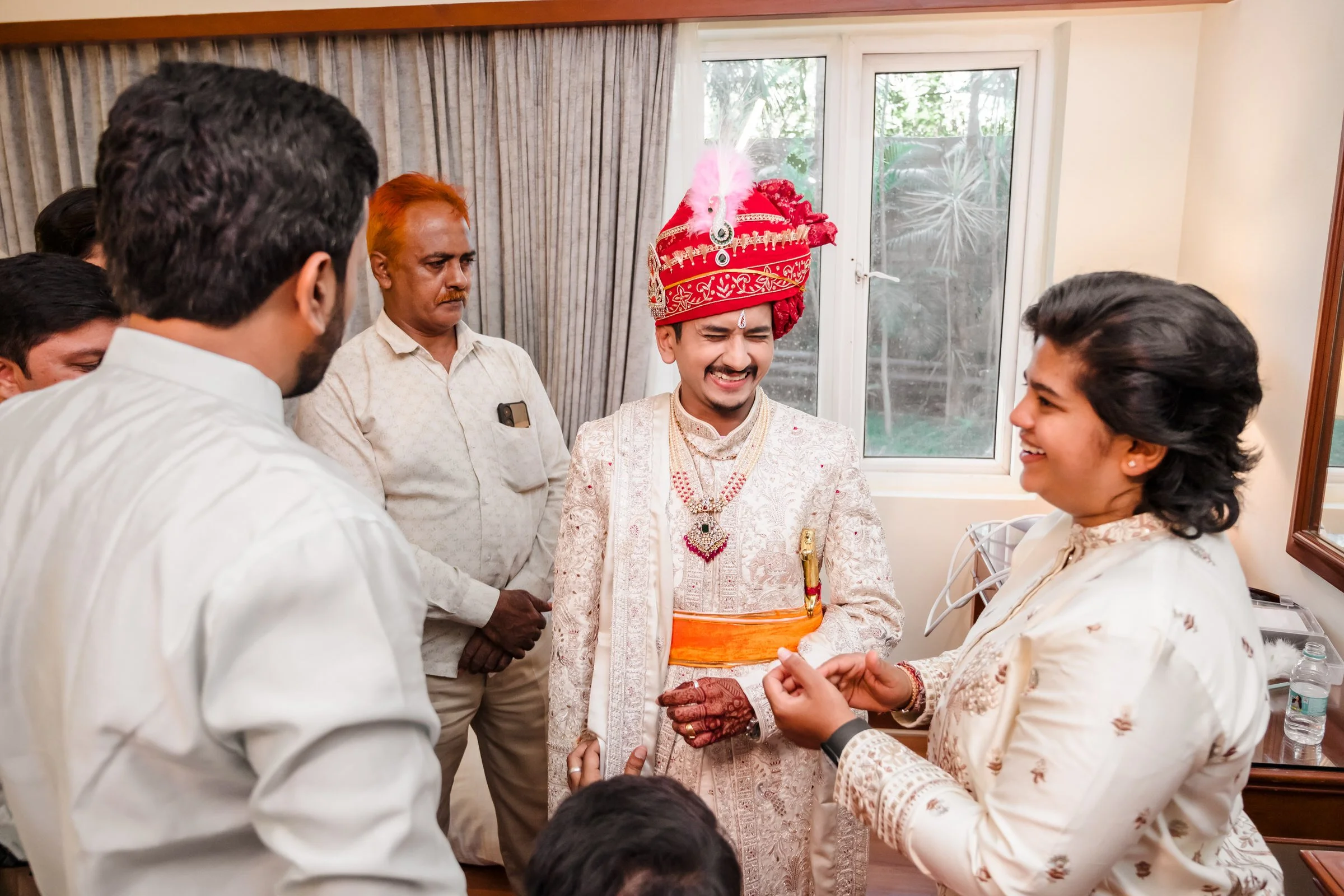
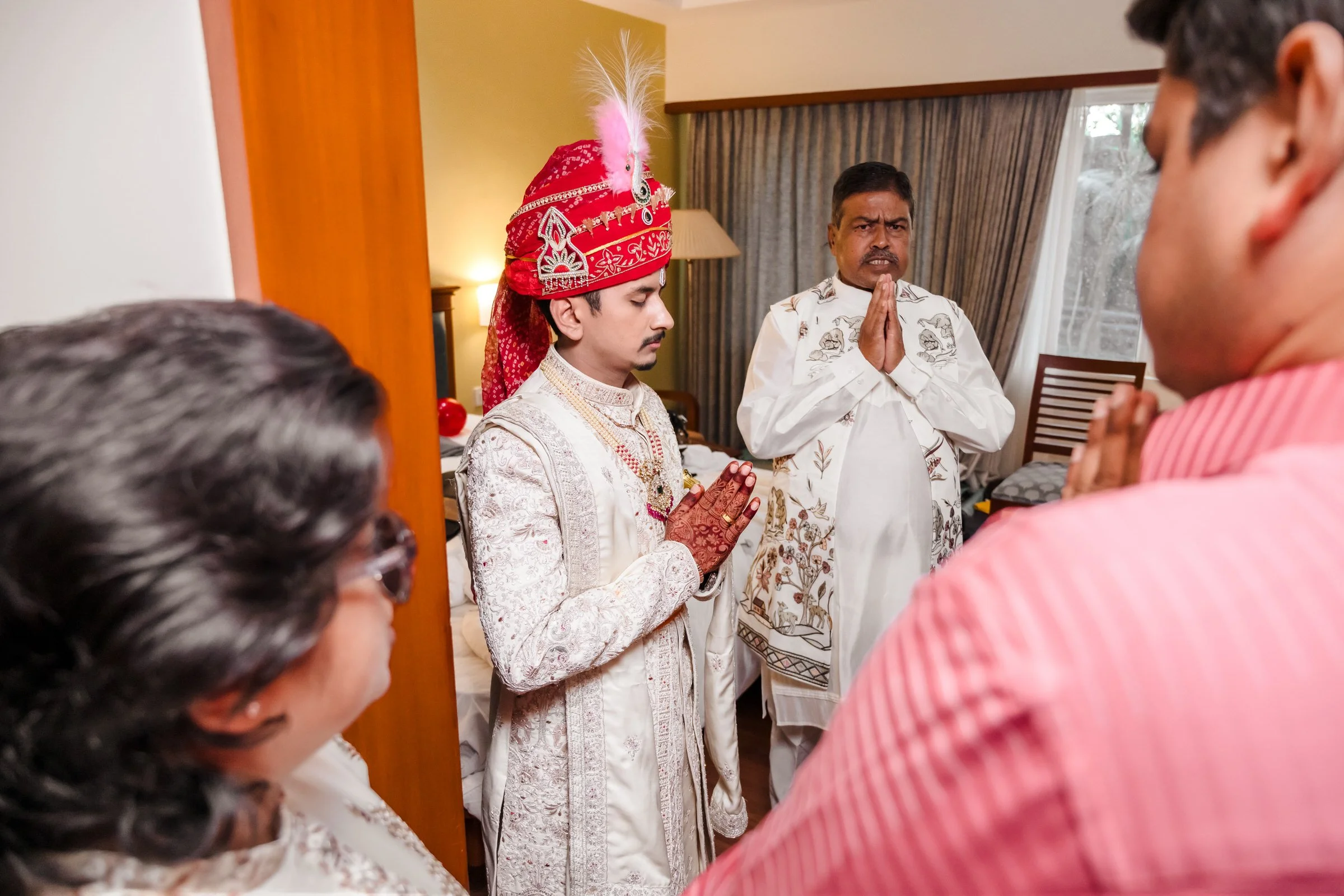
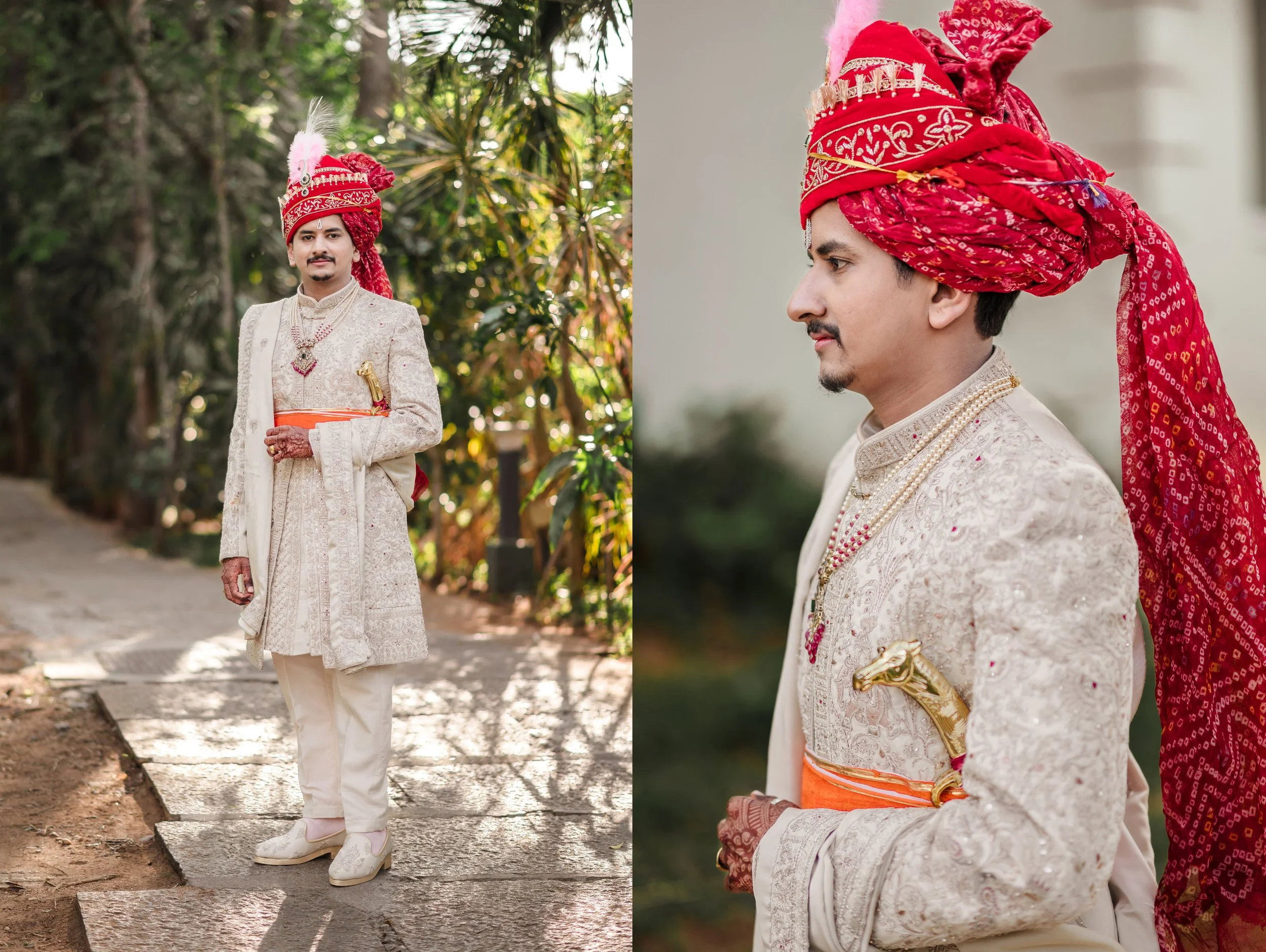
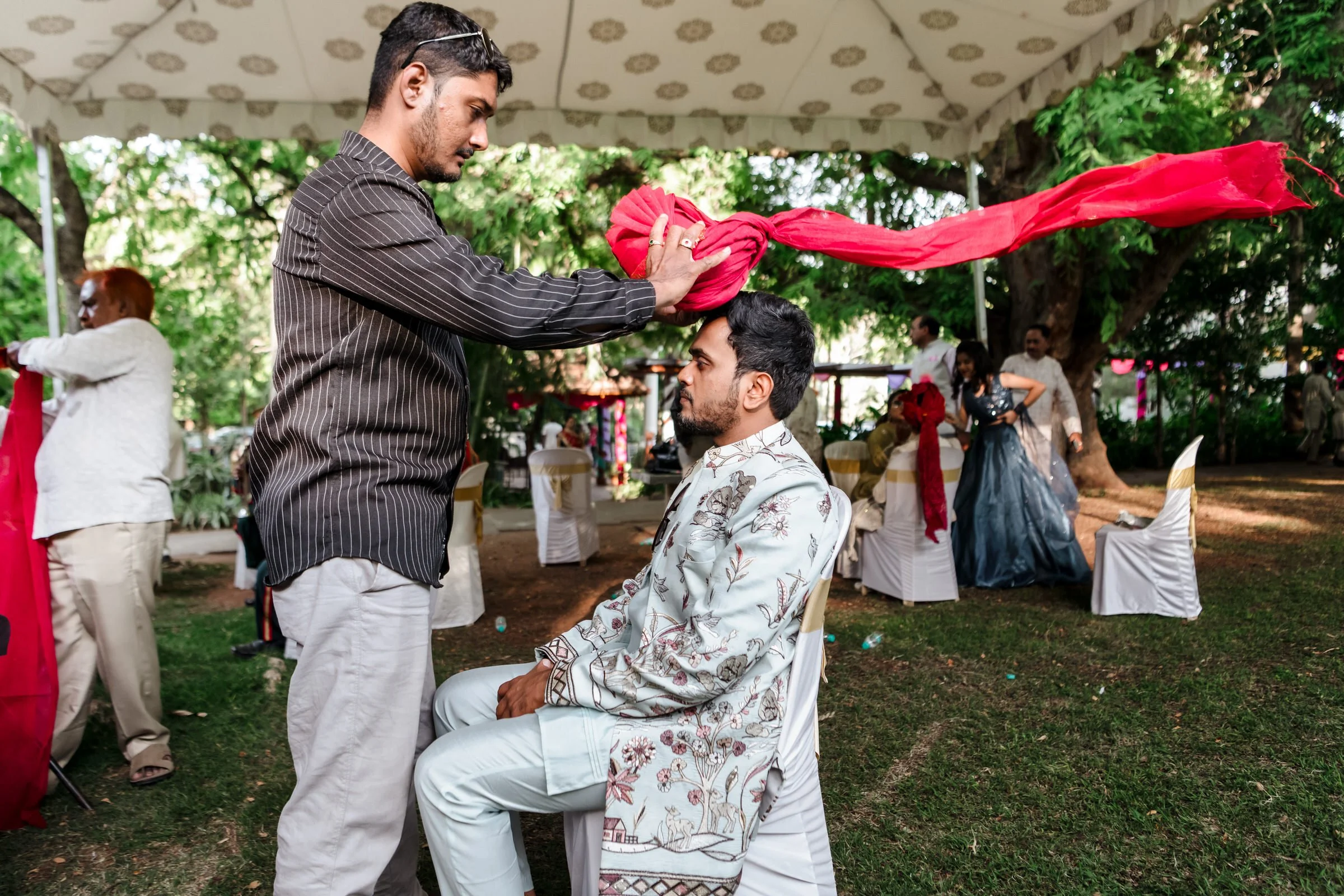
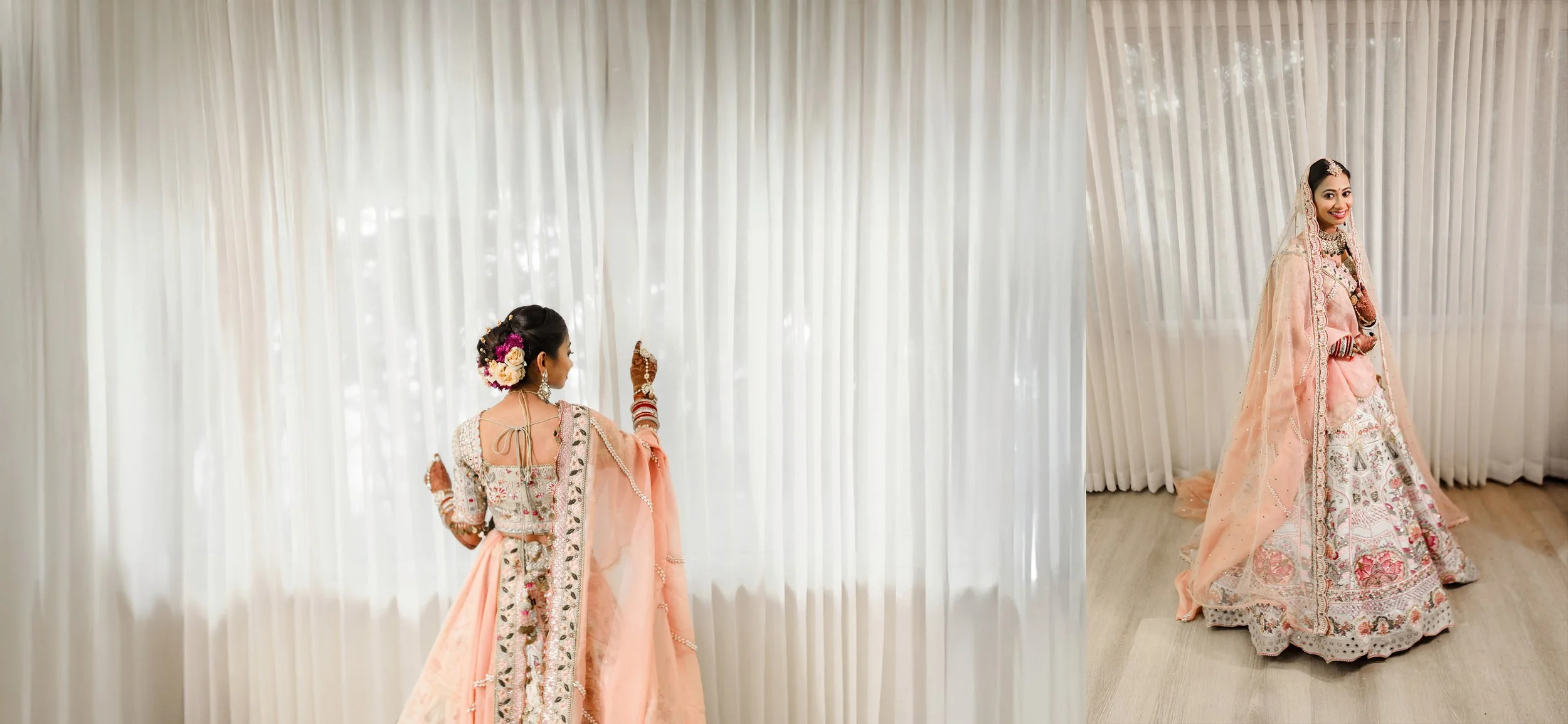
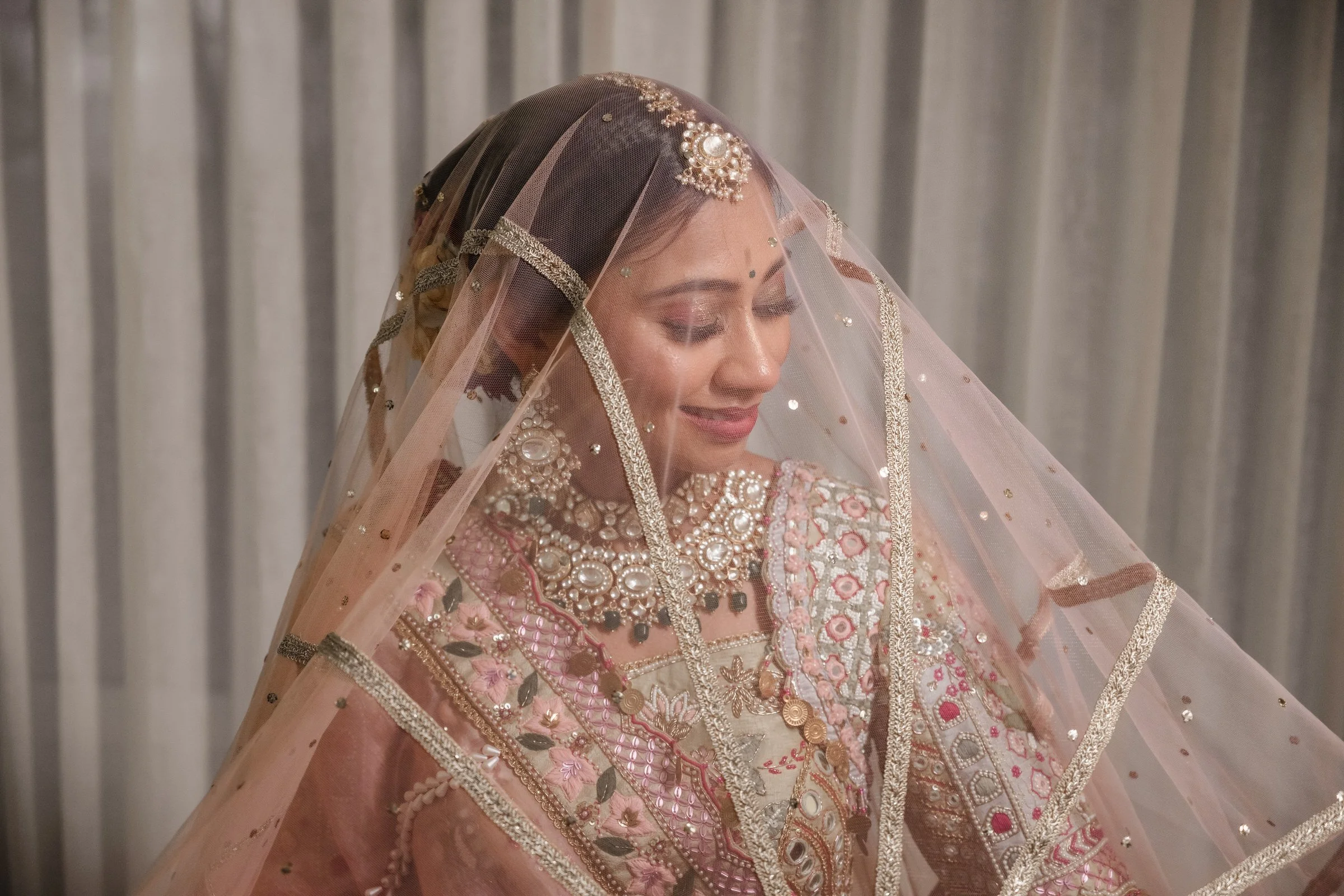
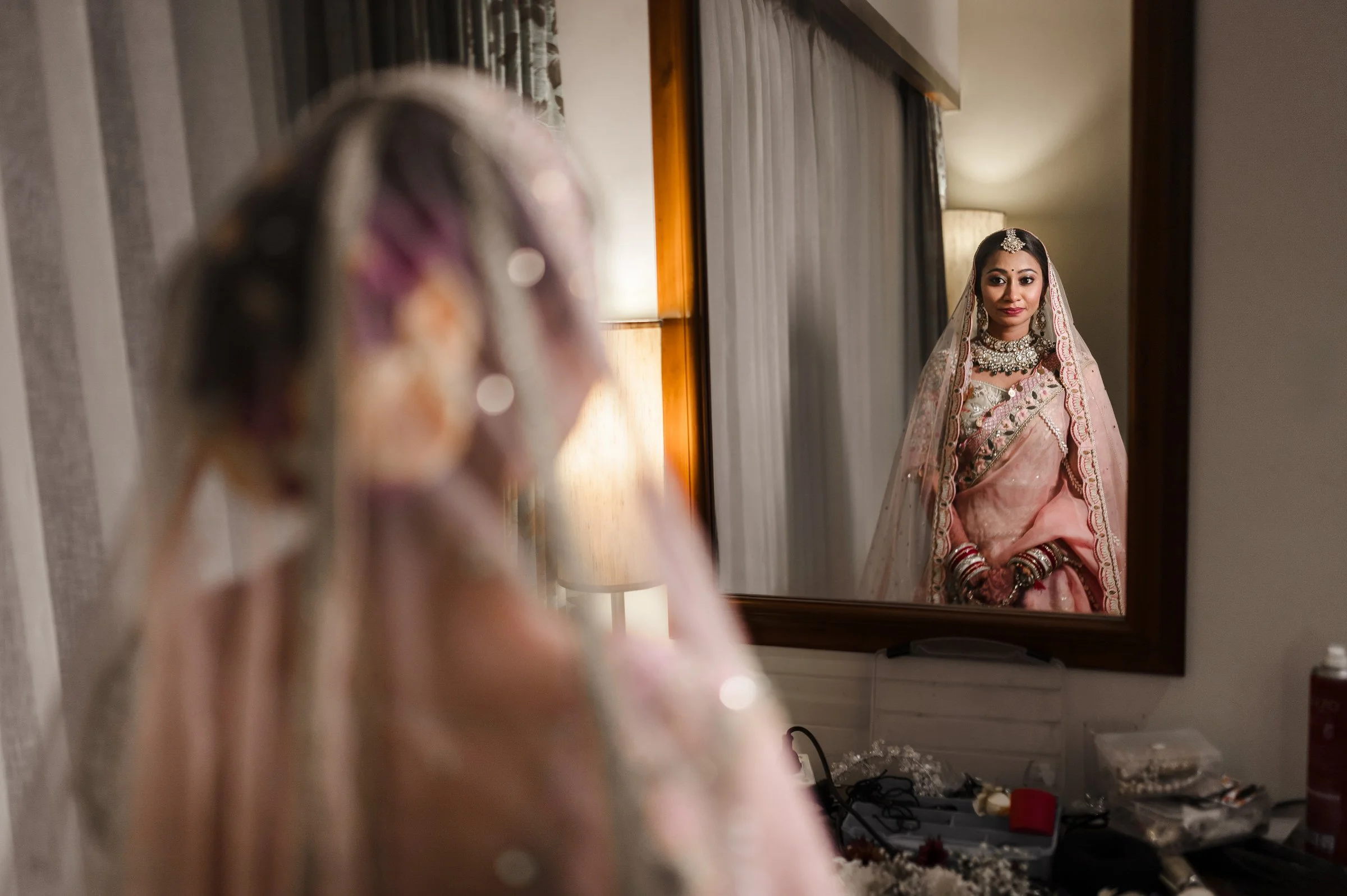
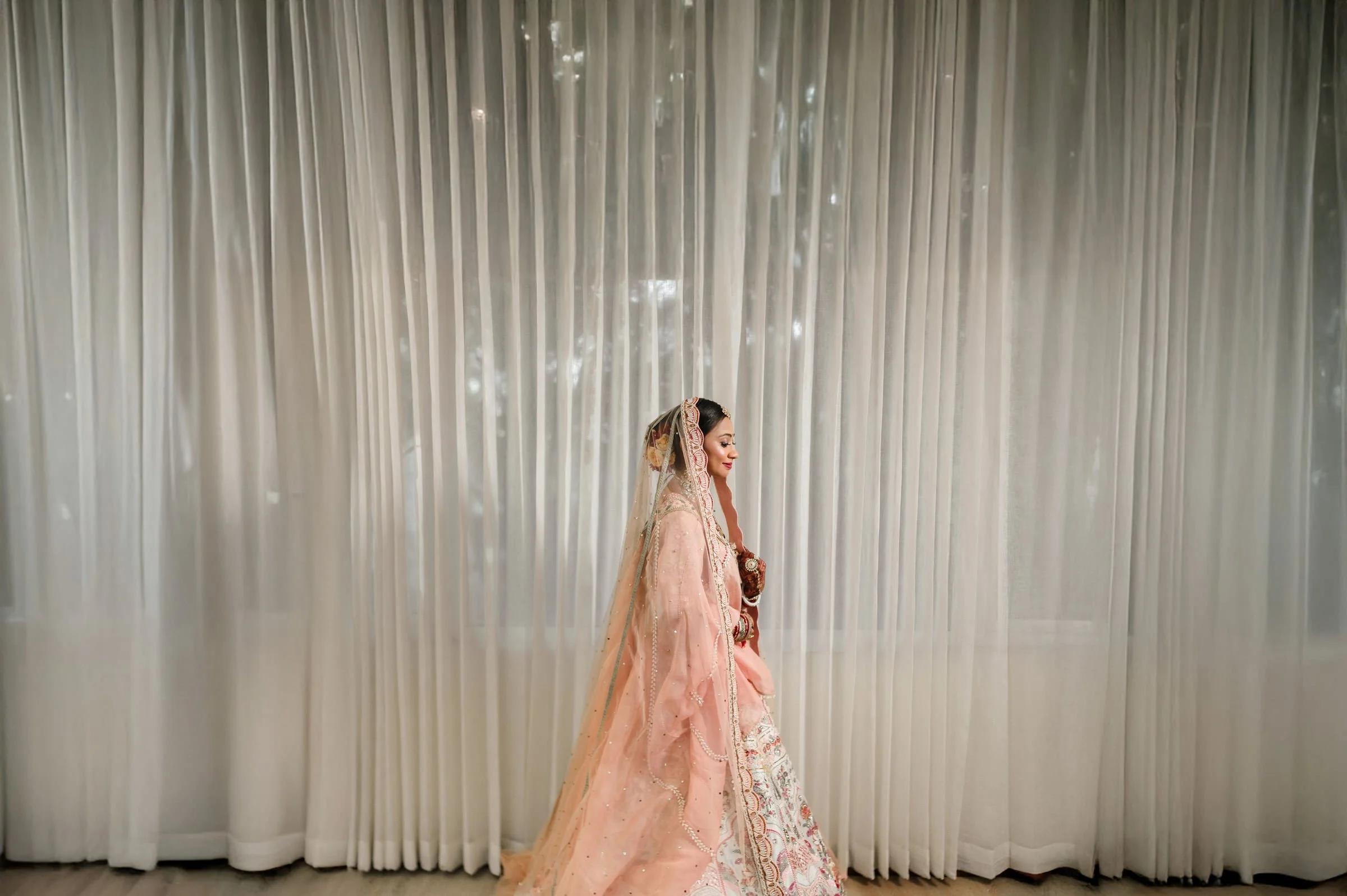
The wedding day started quiet. Getting ready pictures for both of them, which is the last calm anybody got.
Then the baraat.
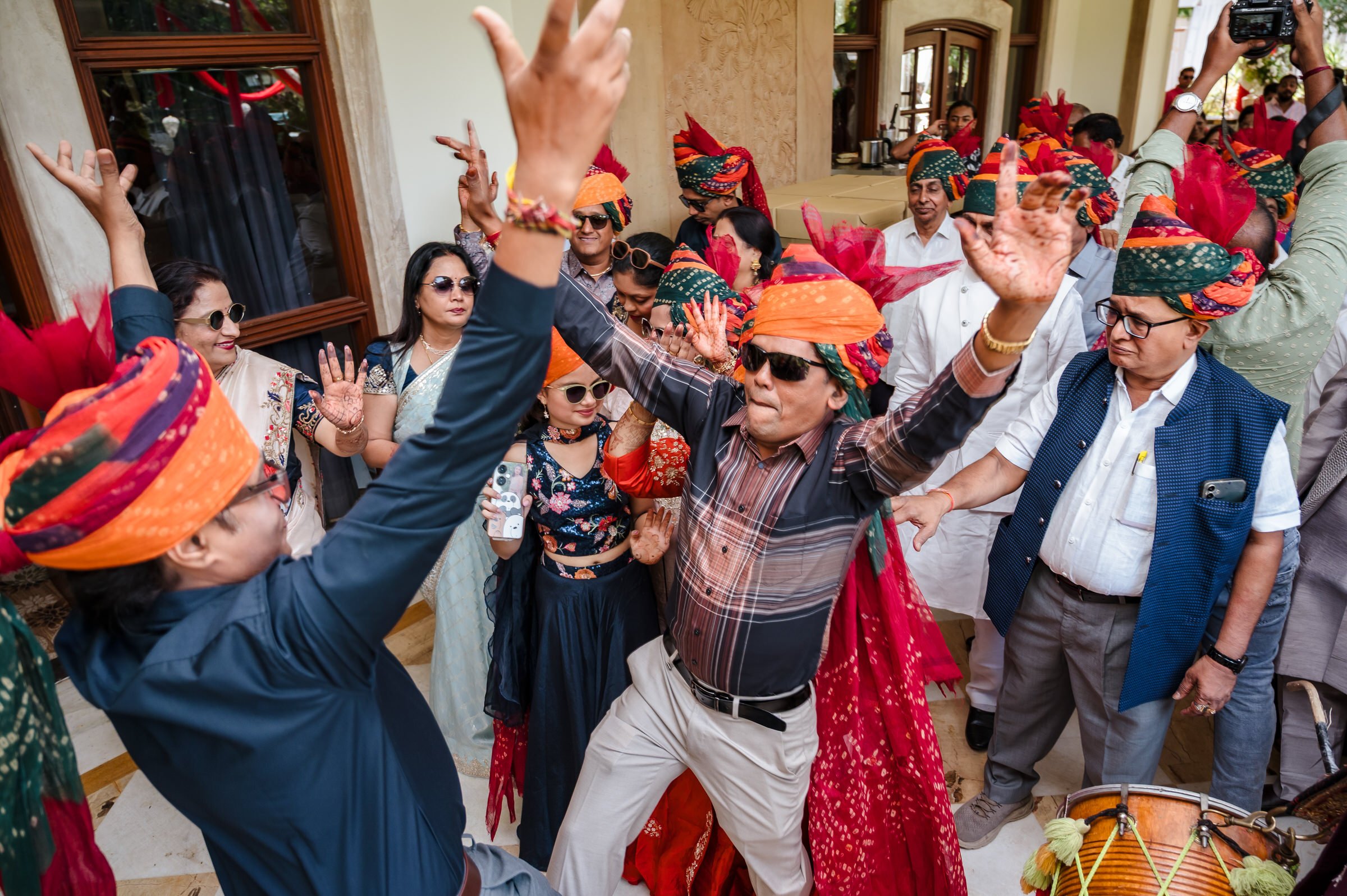
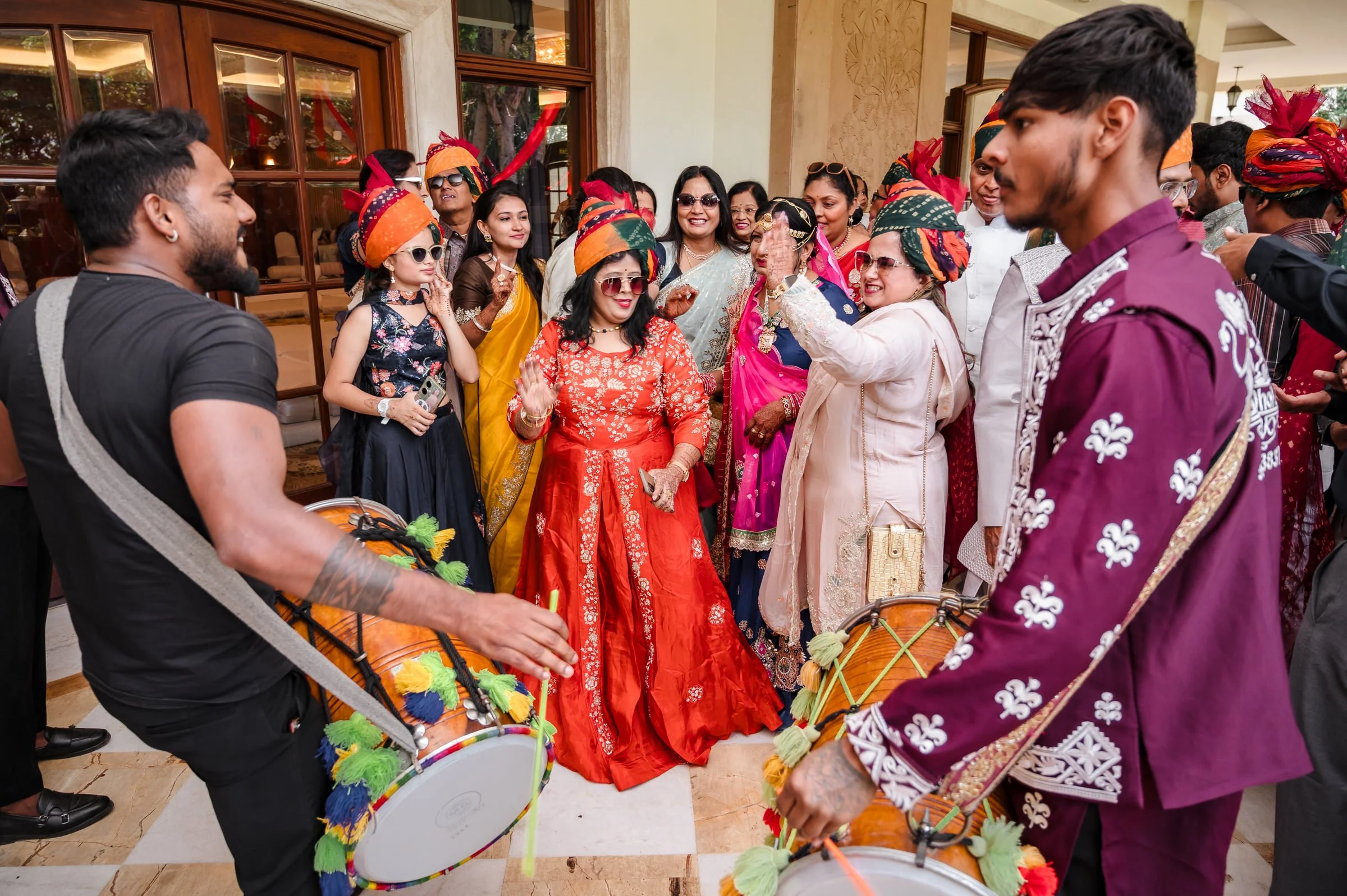
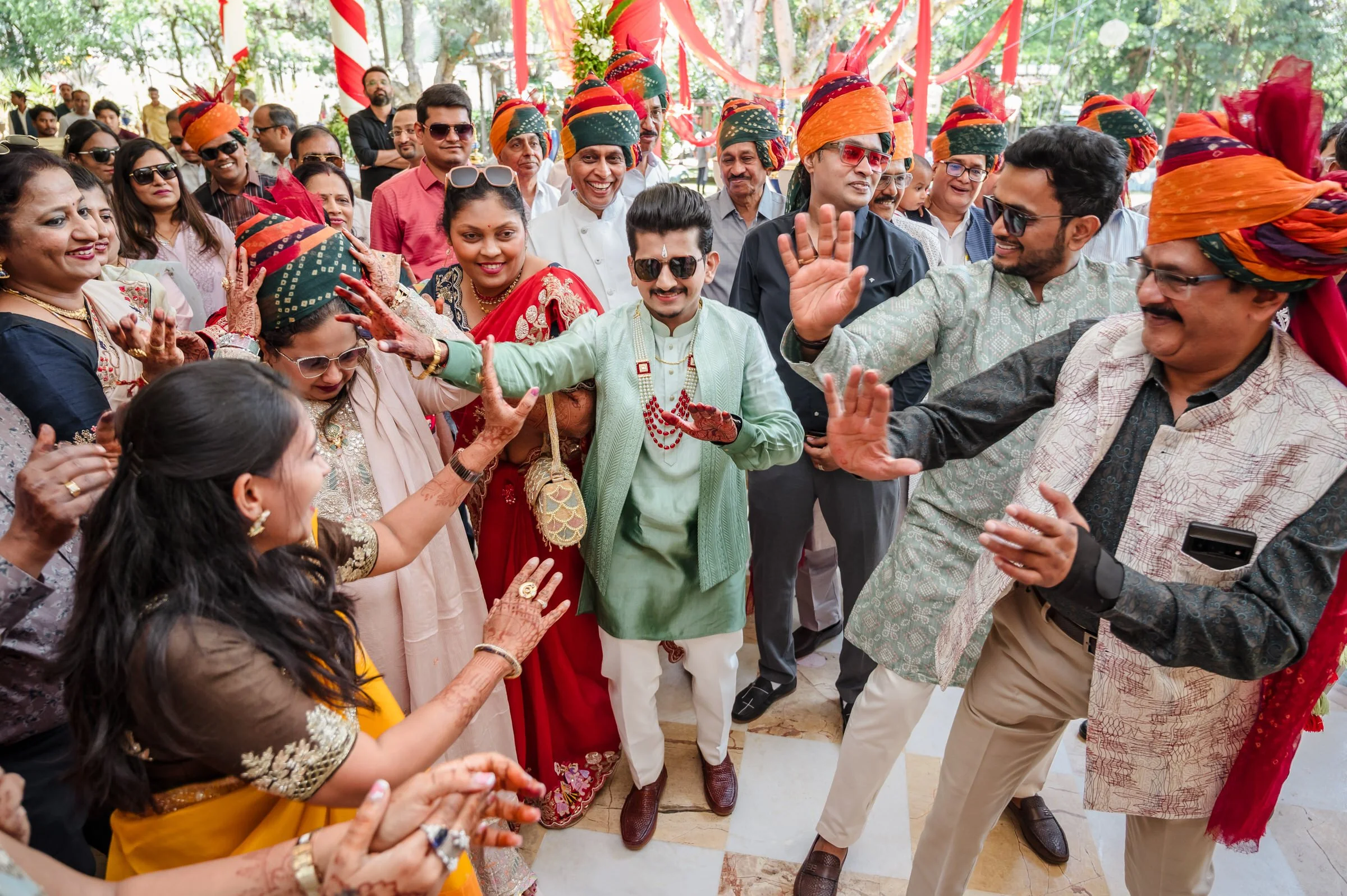
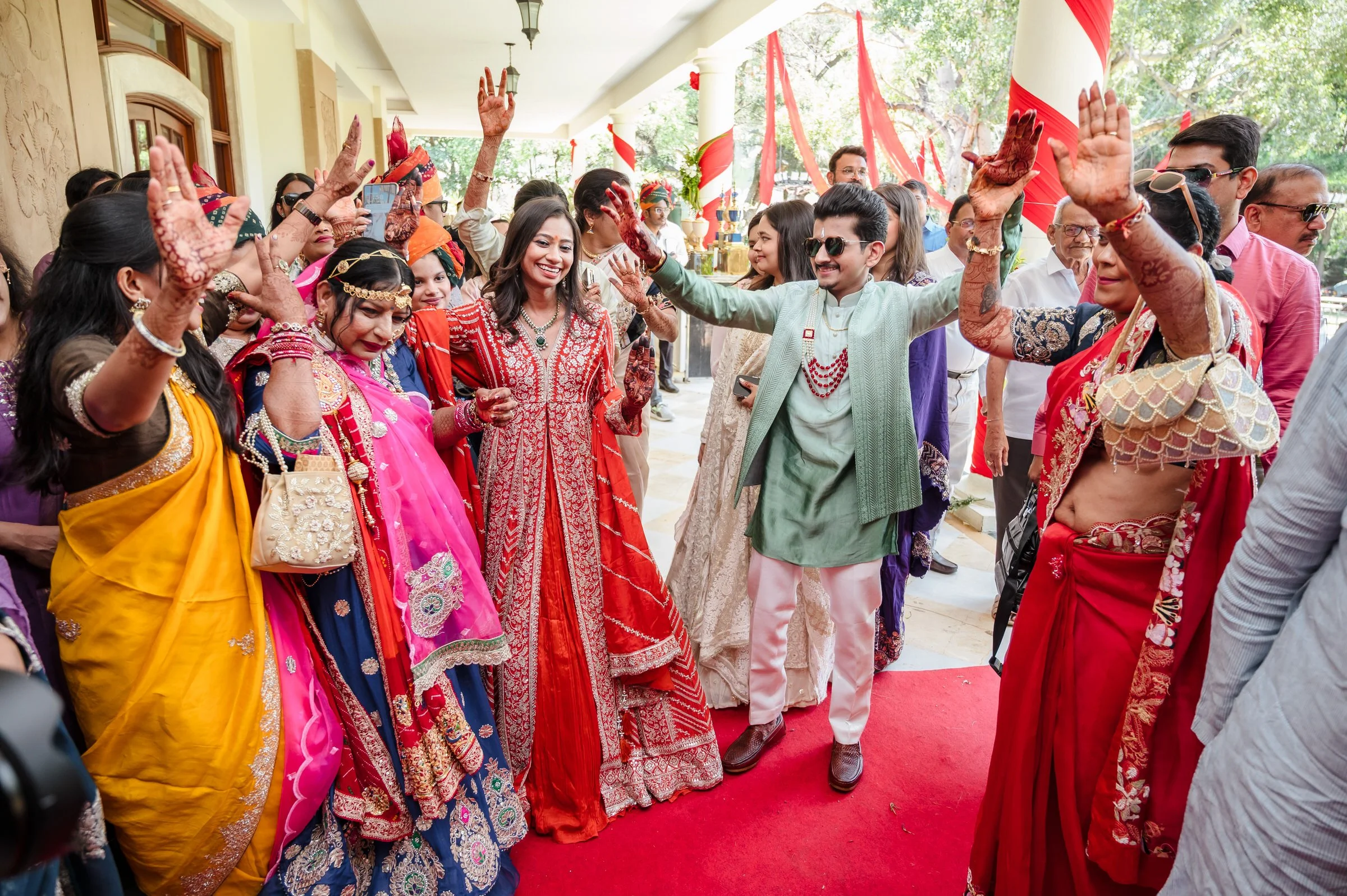
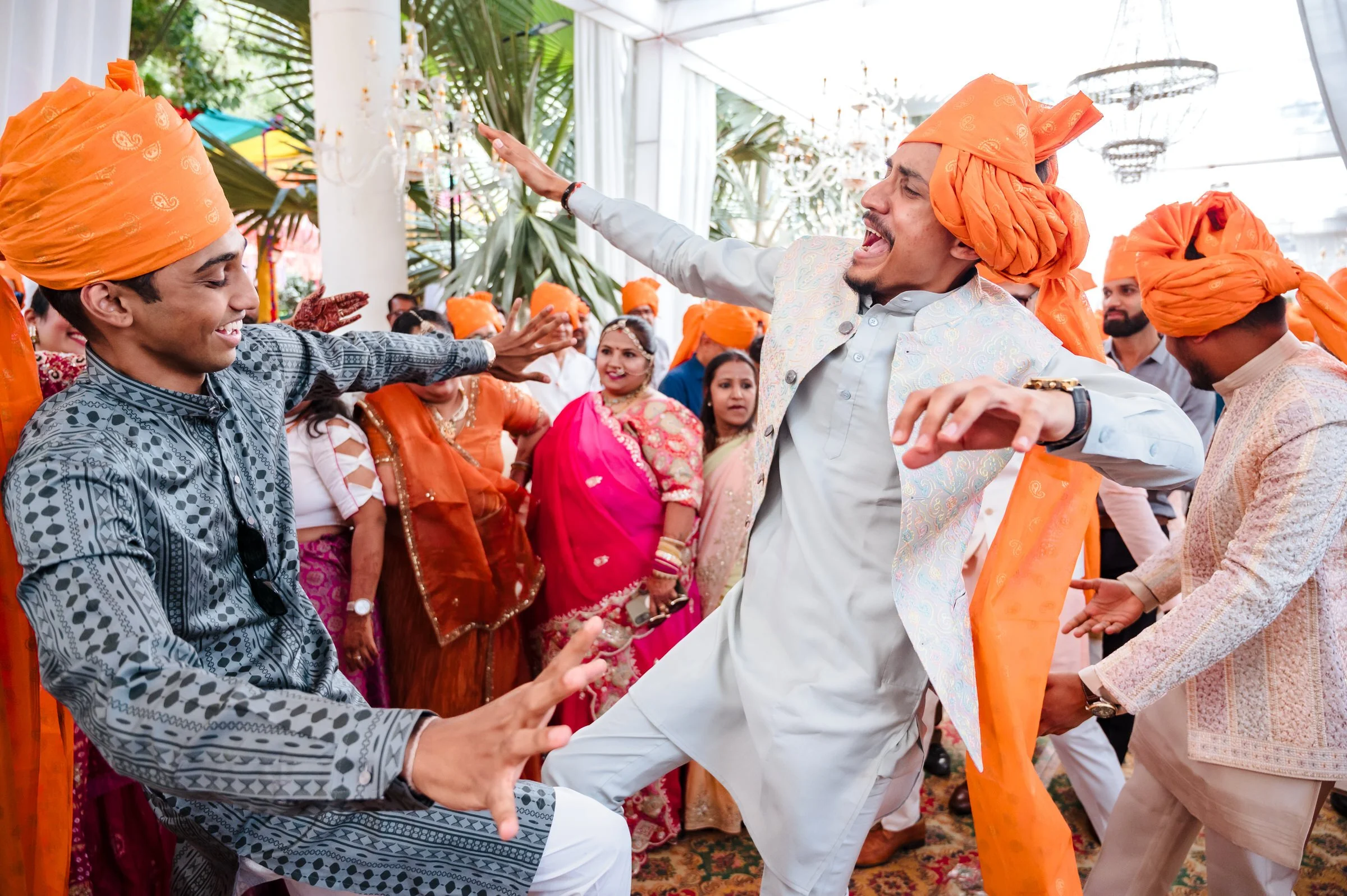
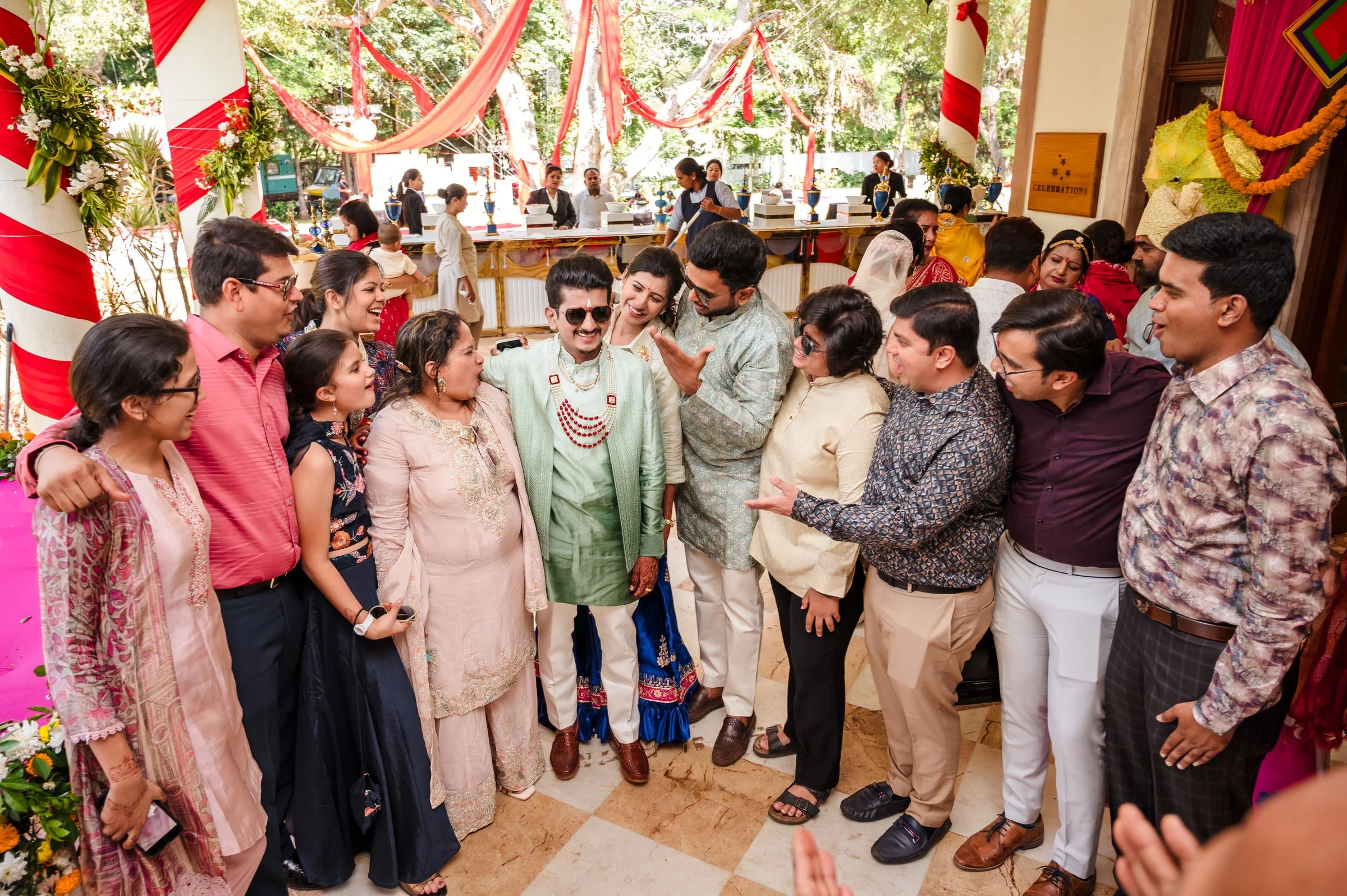
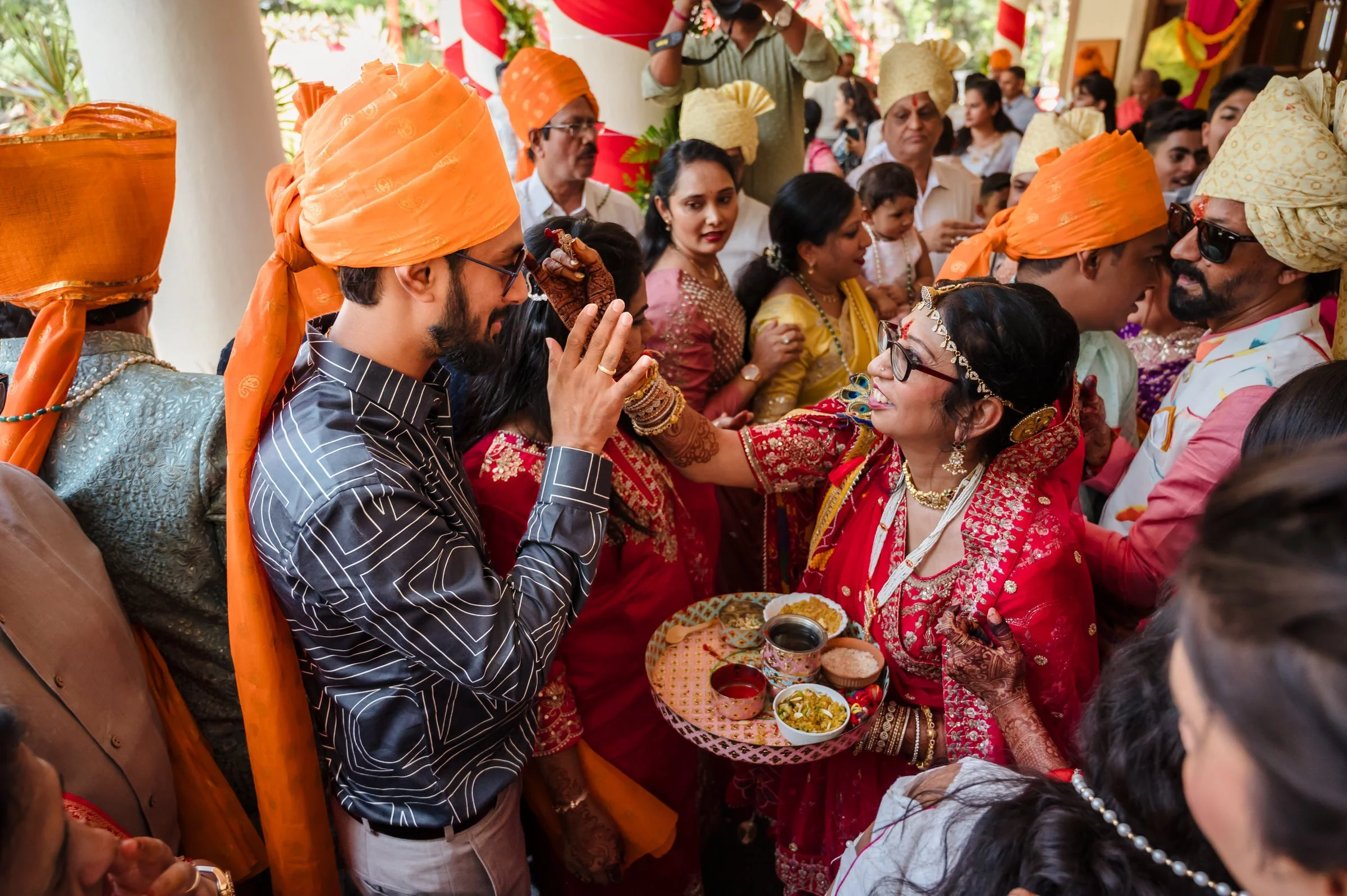
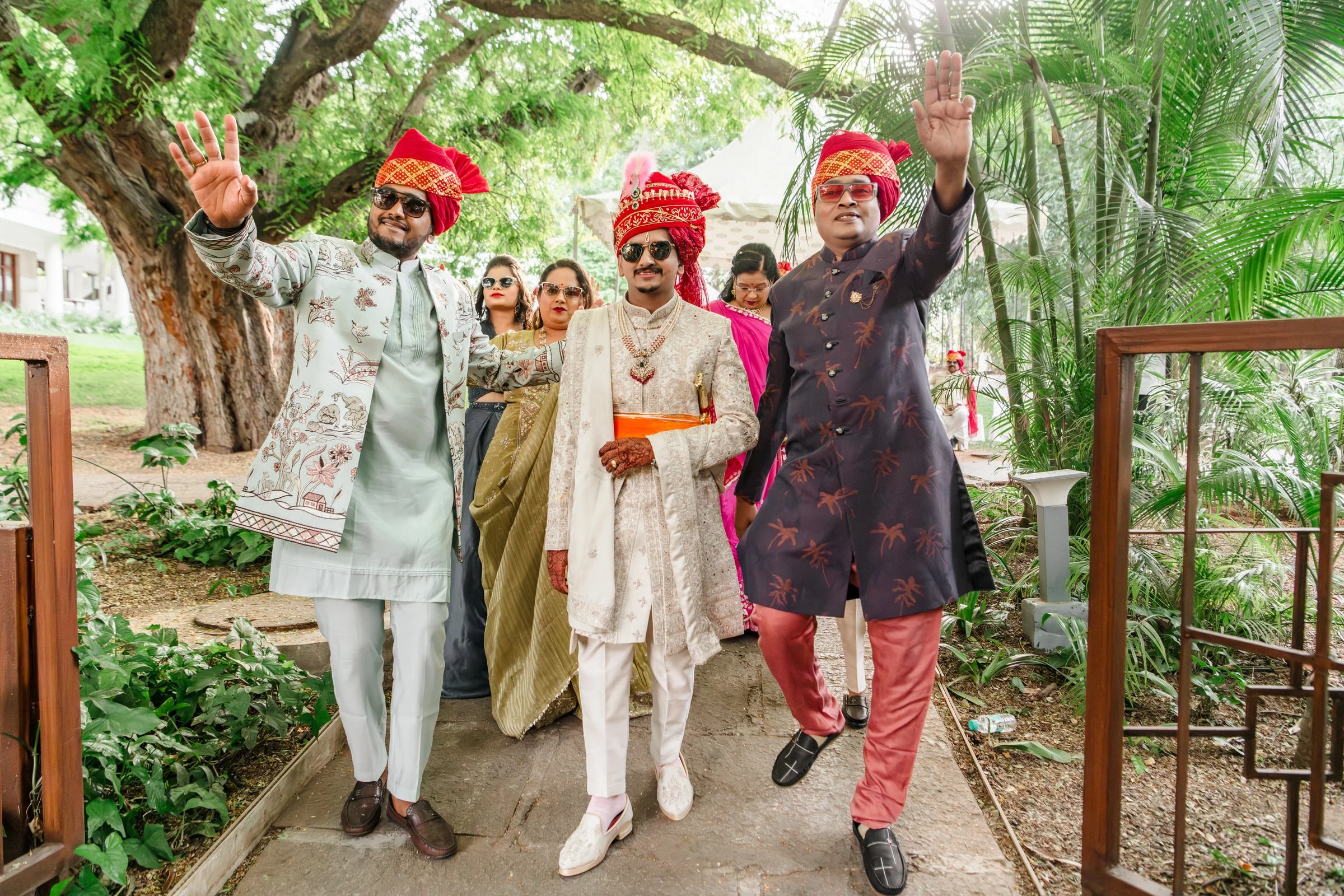
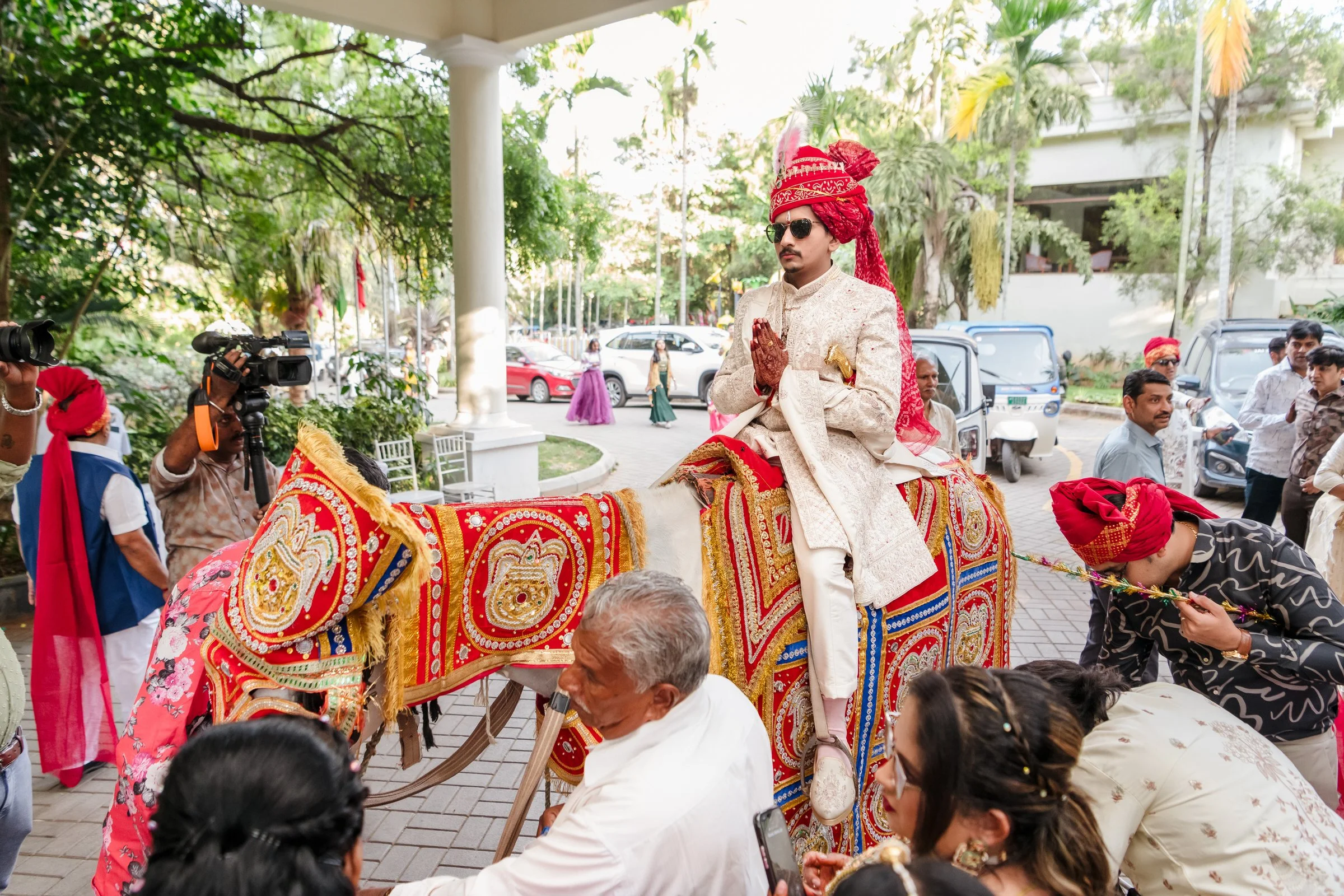
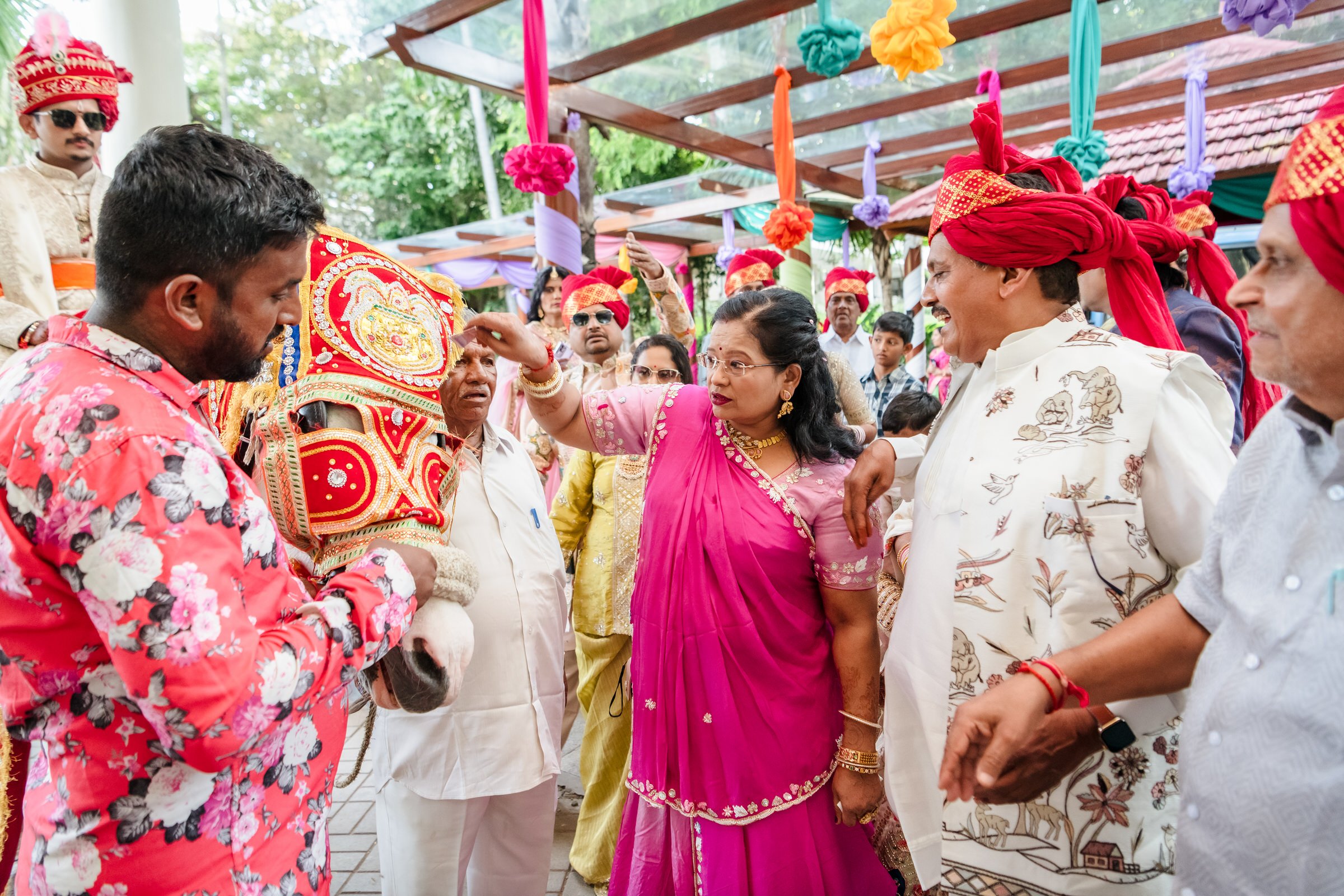
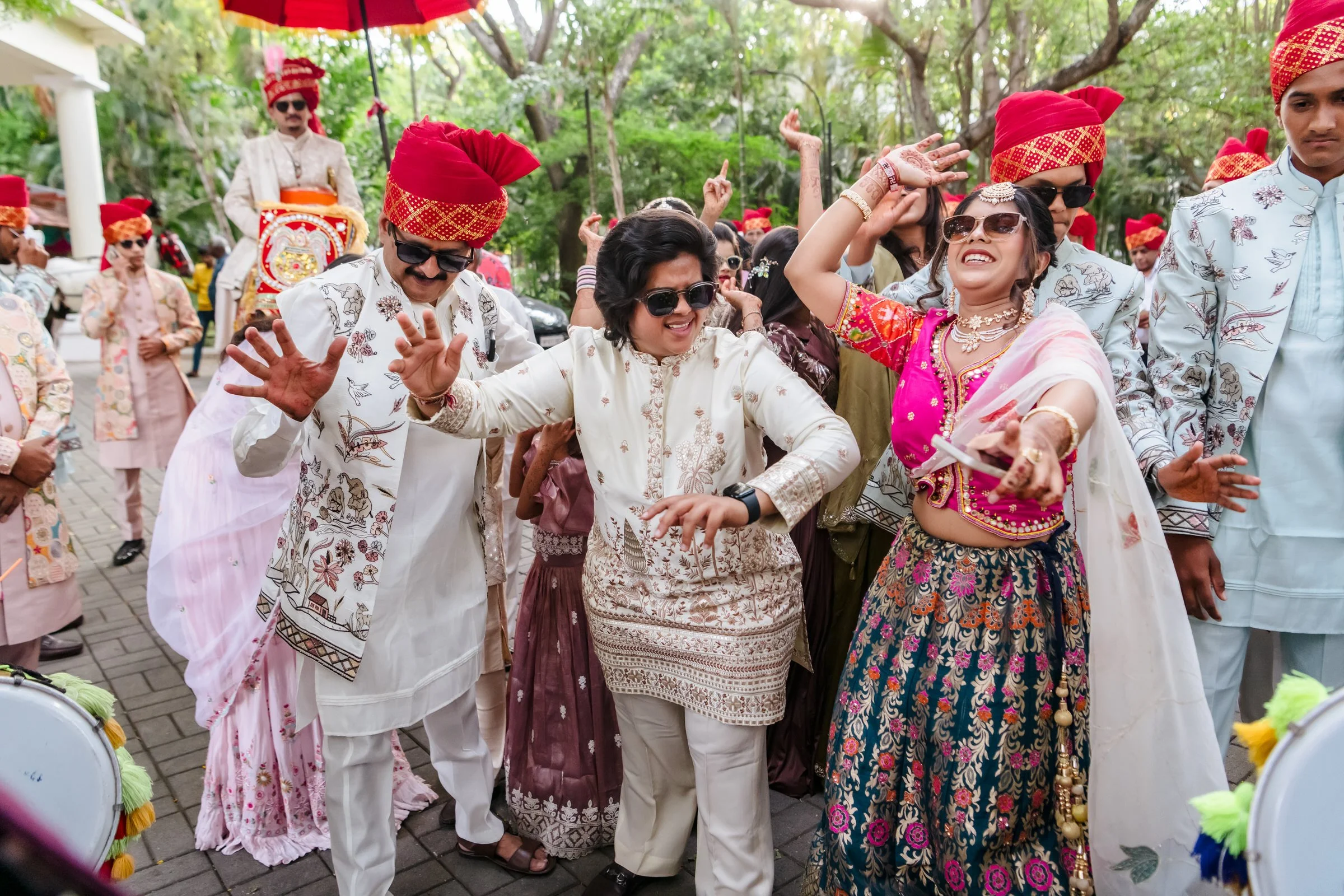
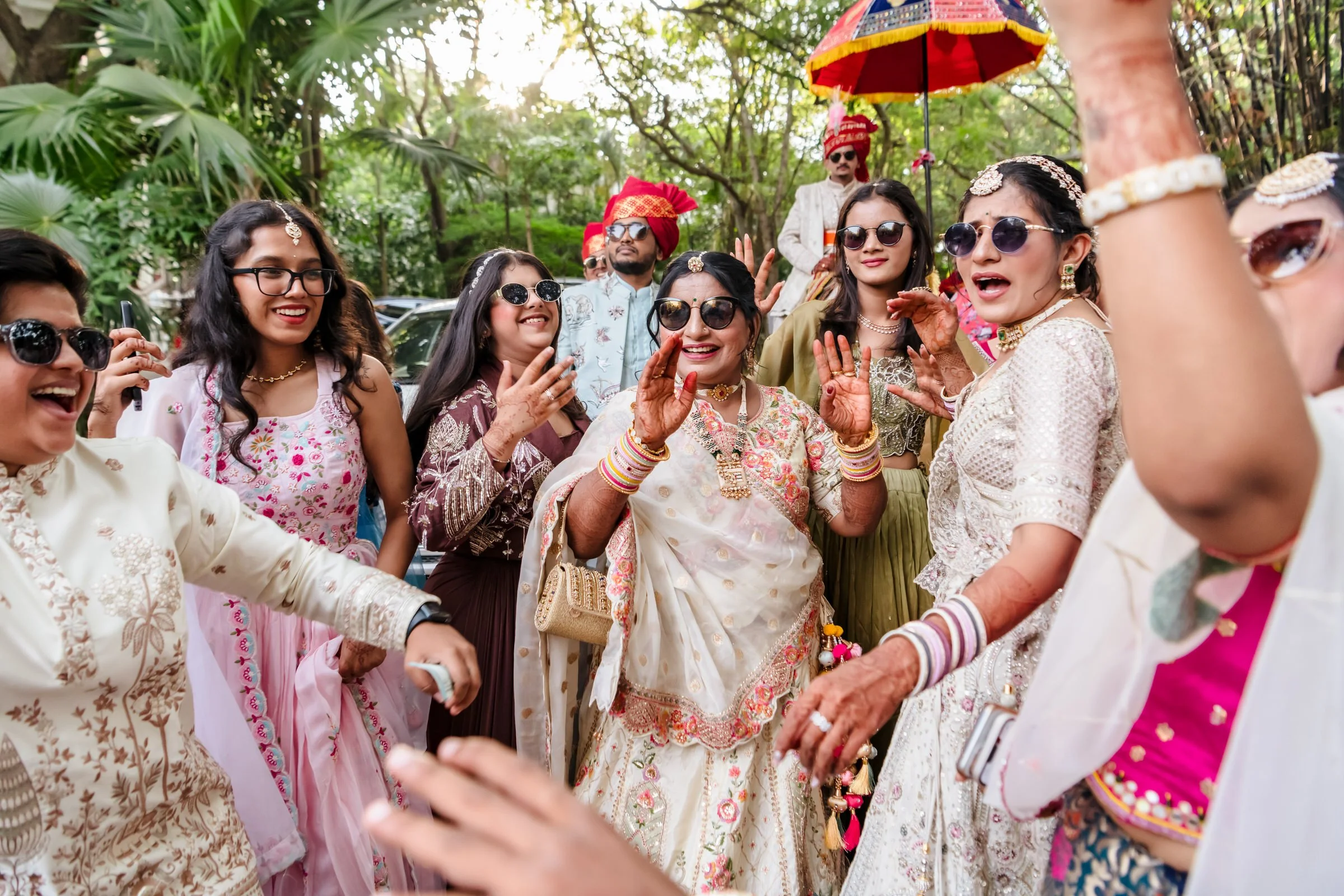
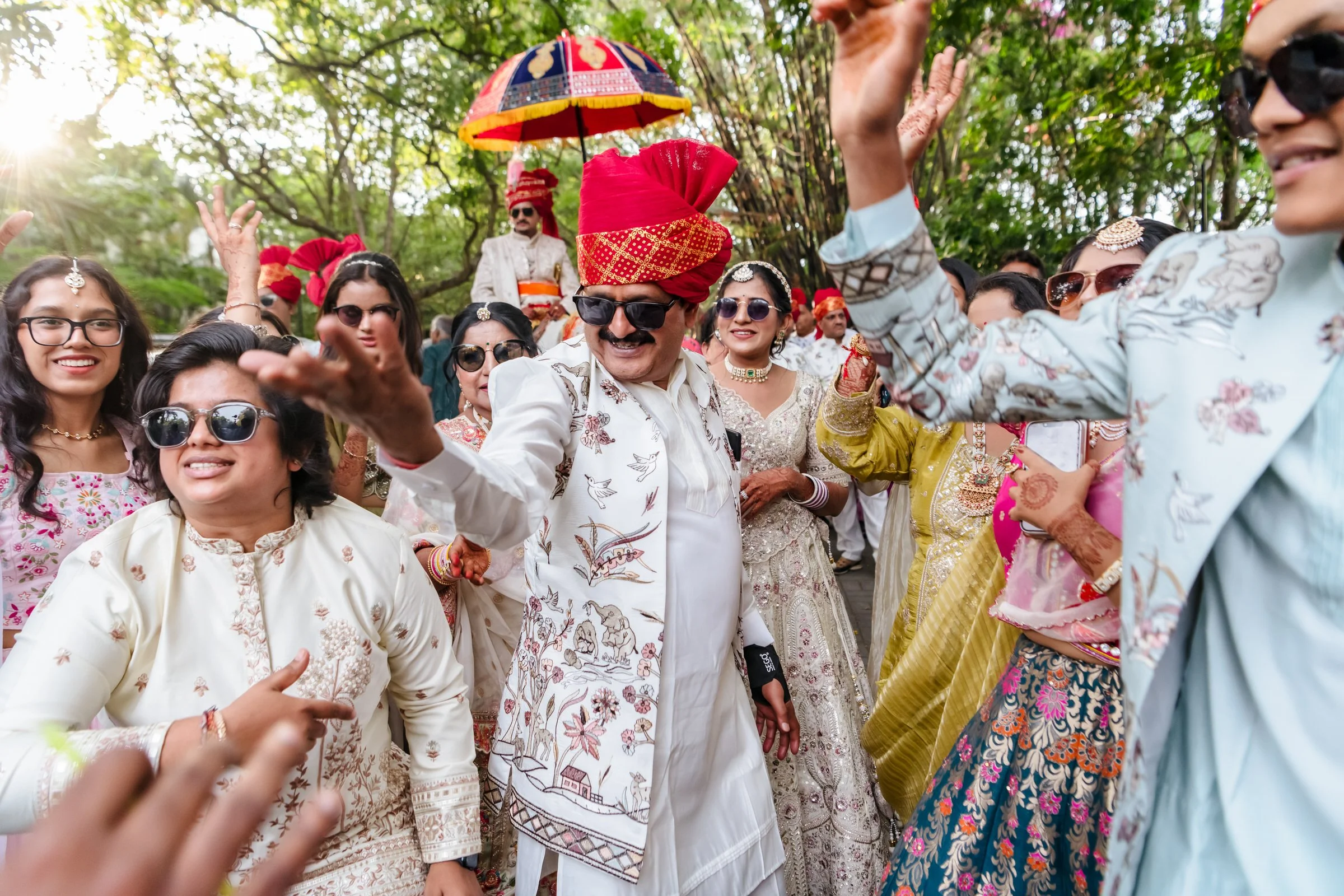
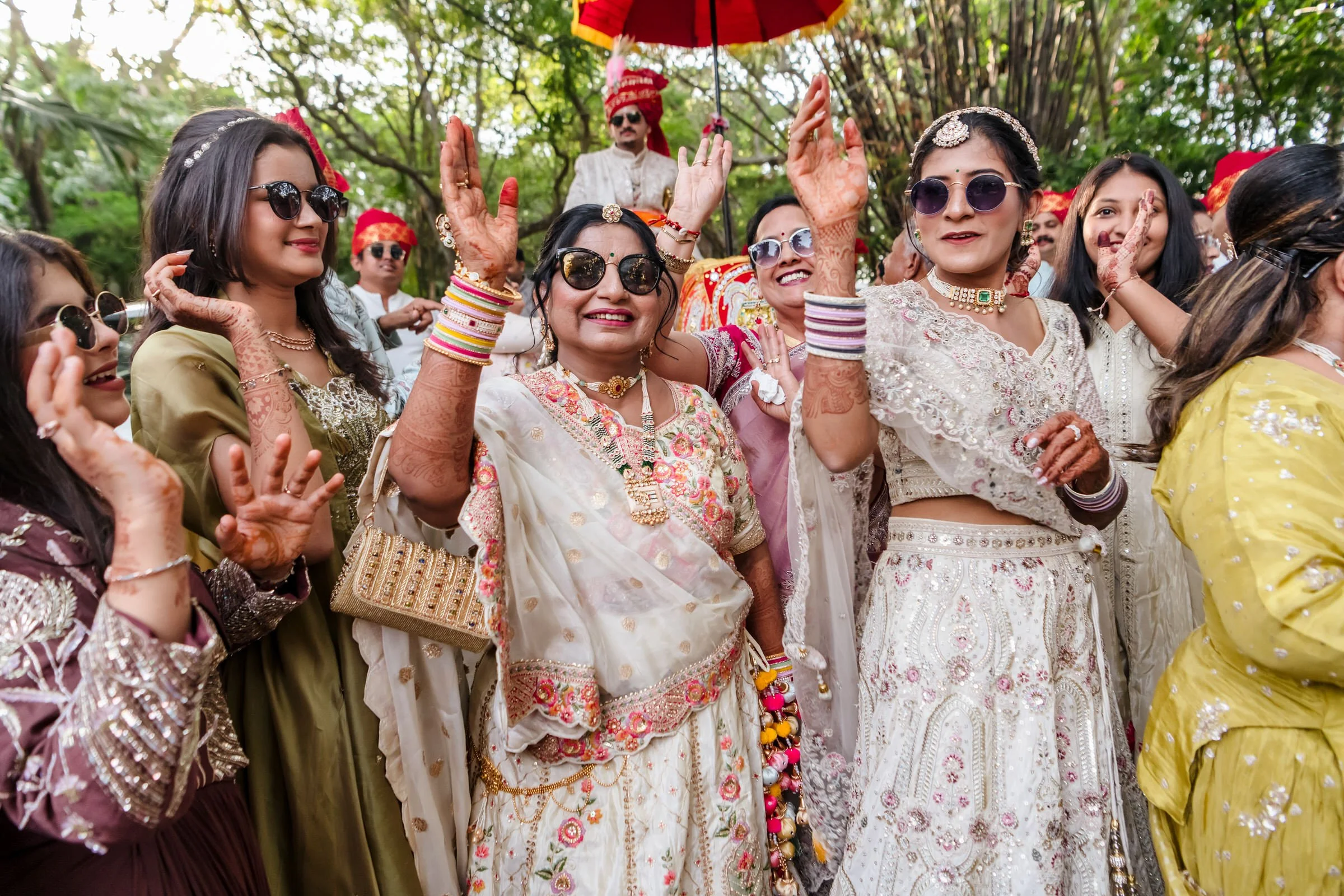
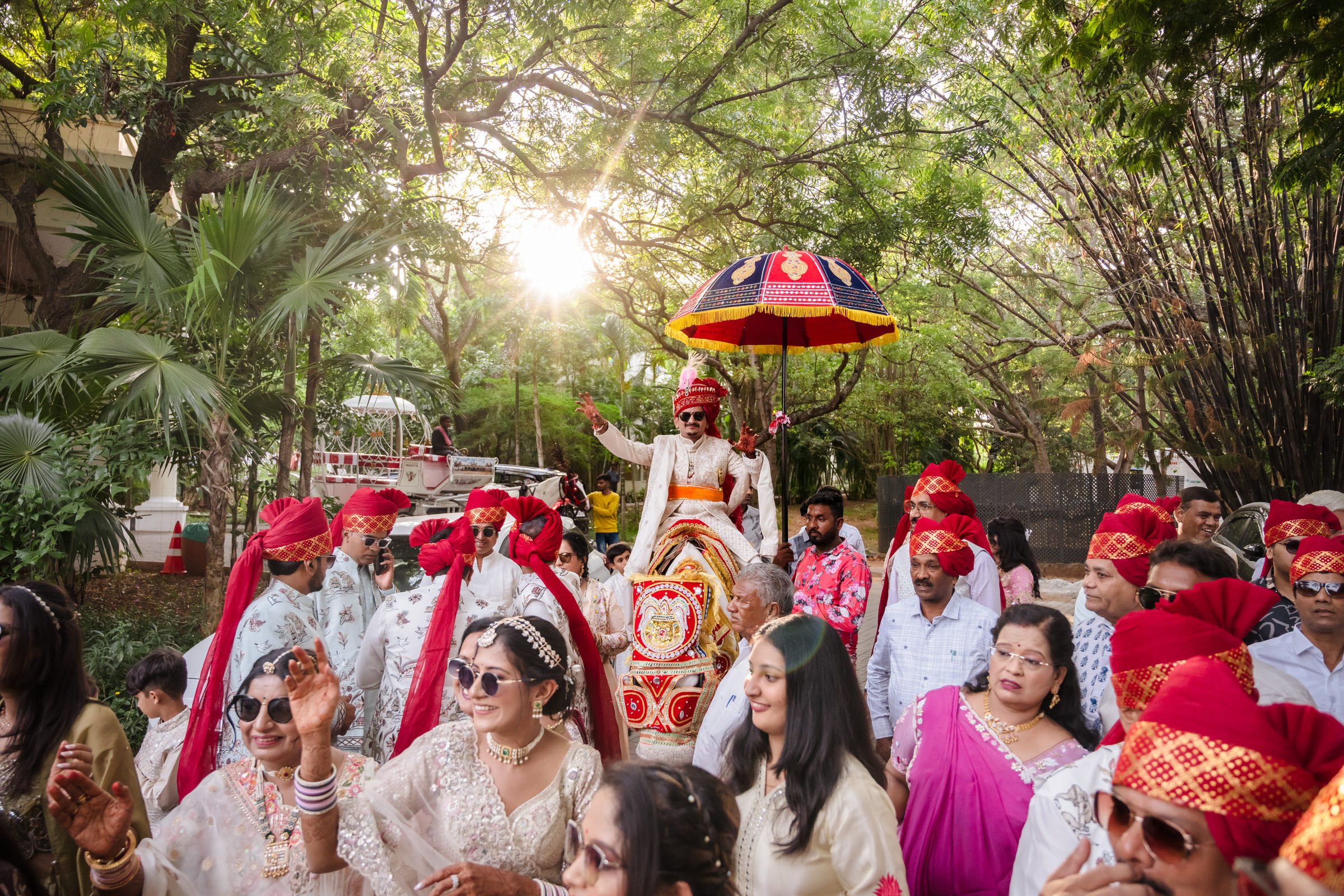
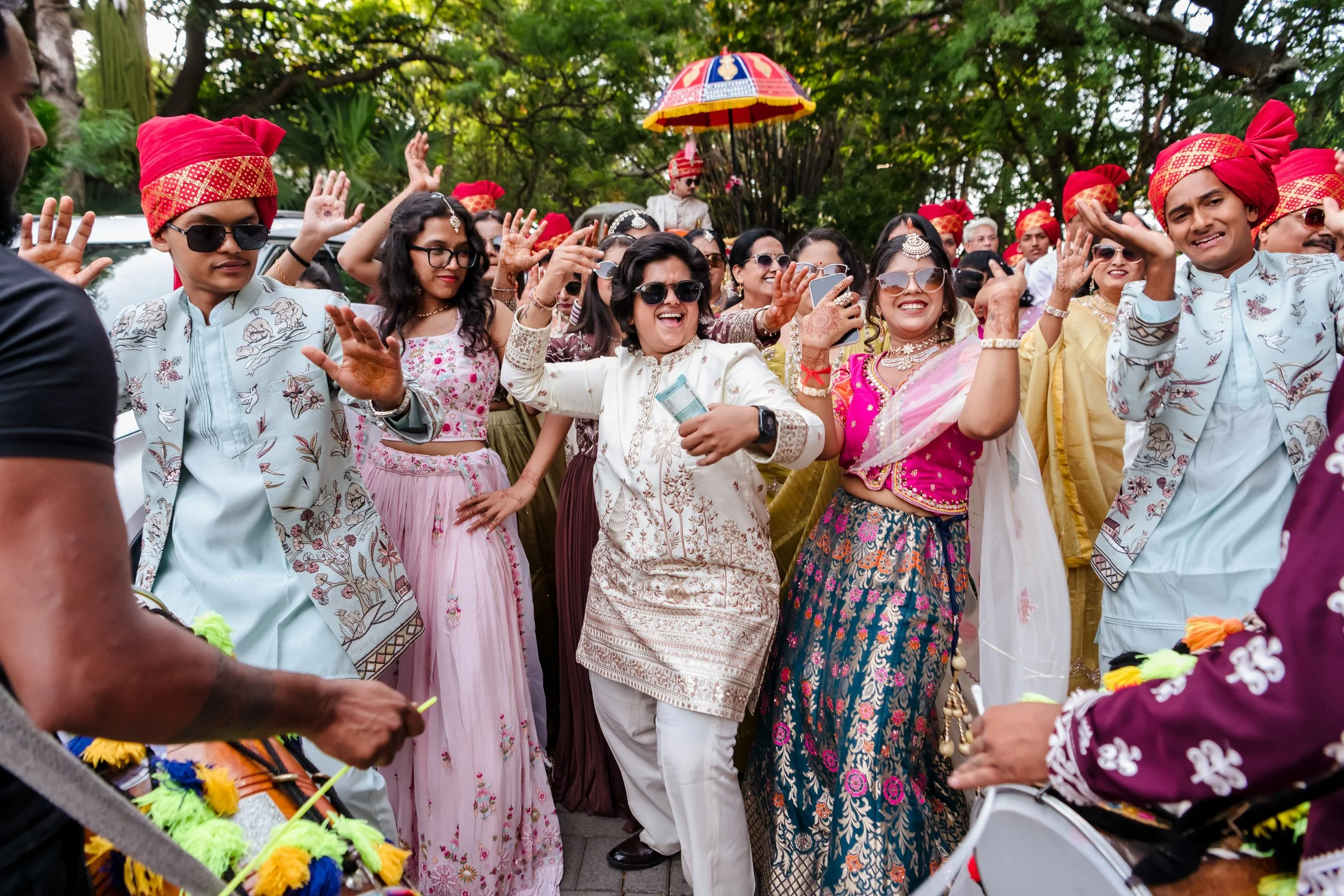
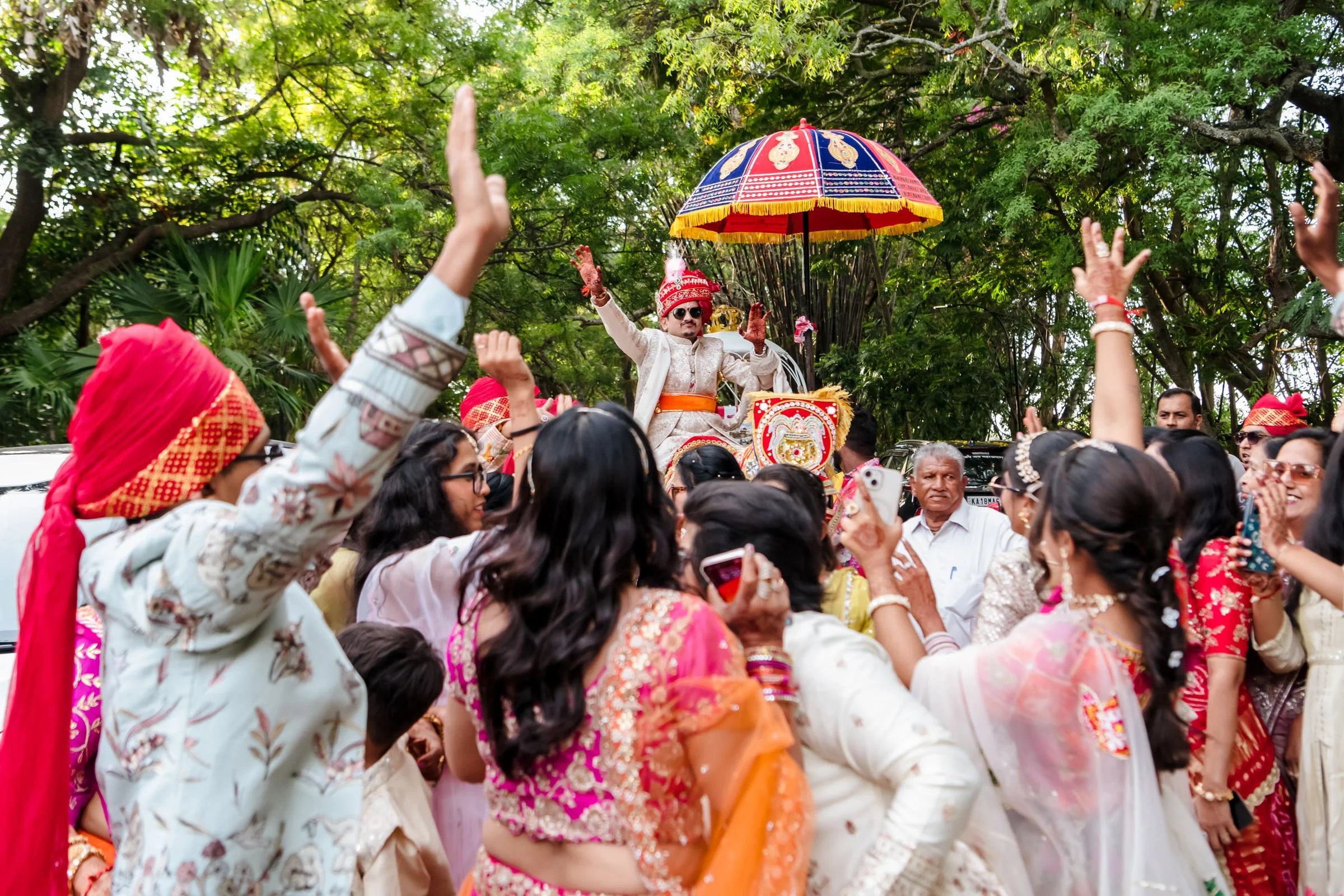
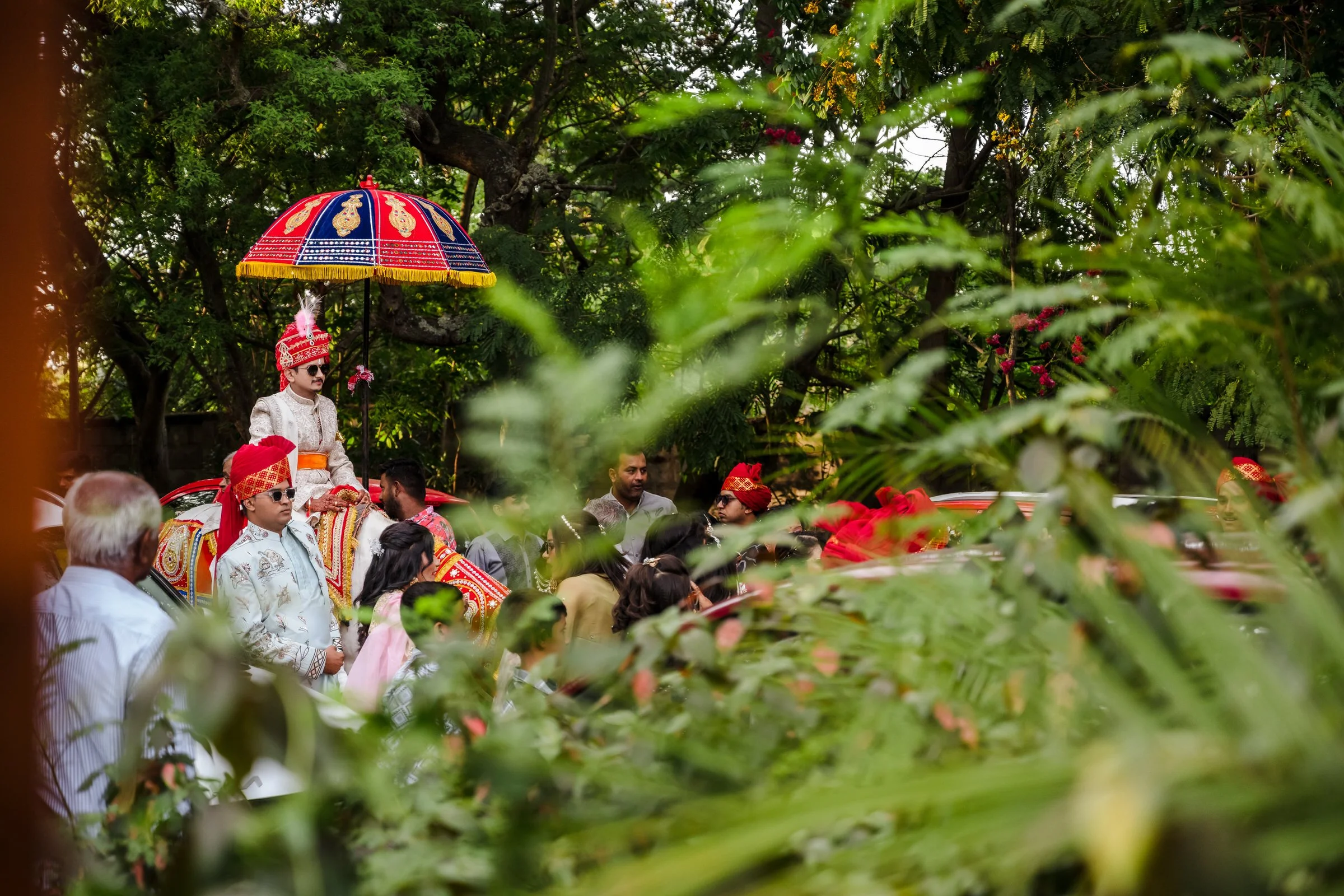
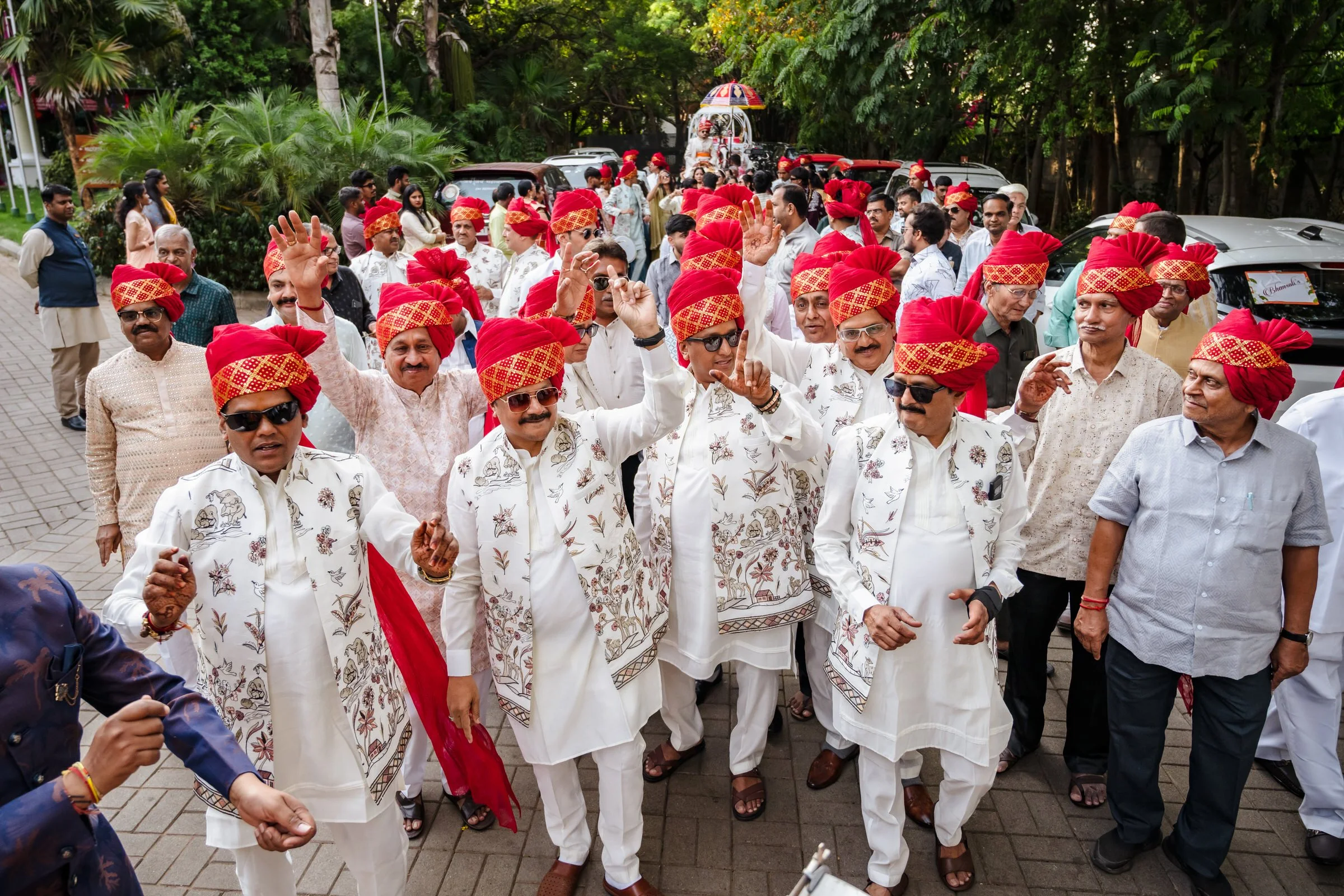
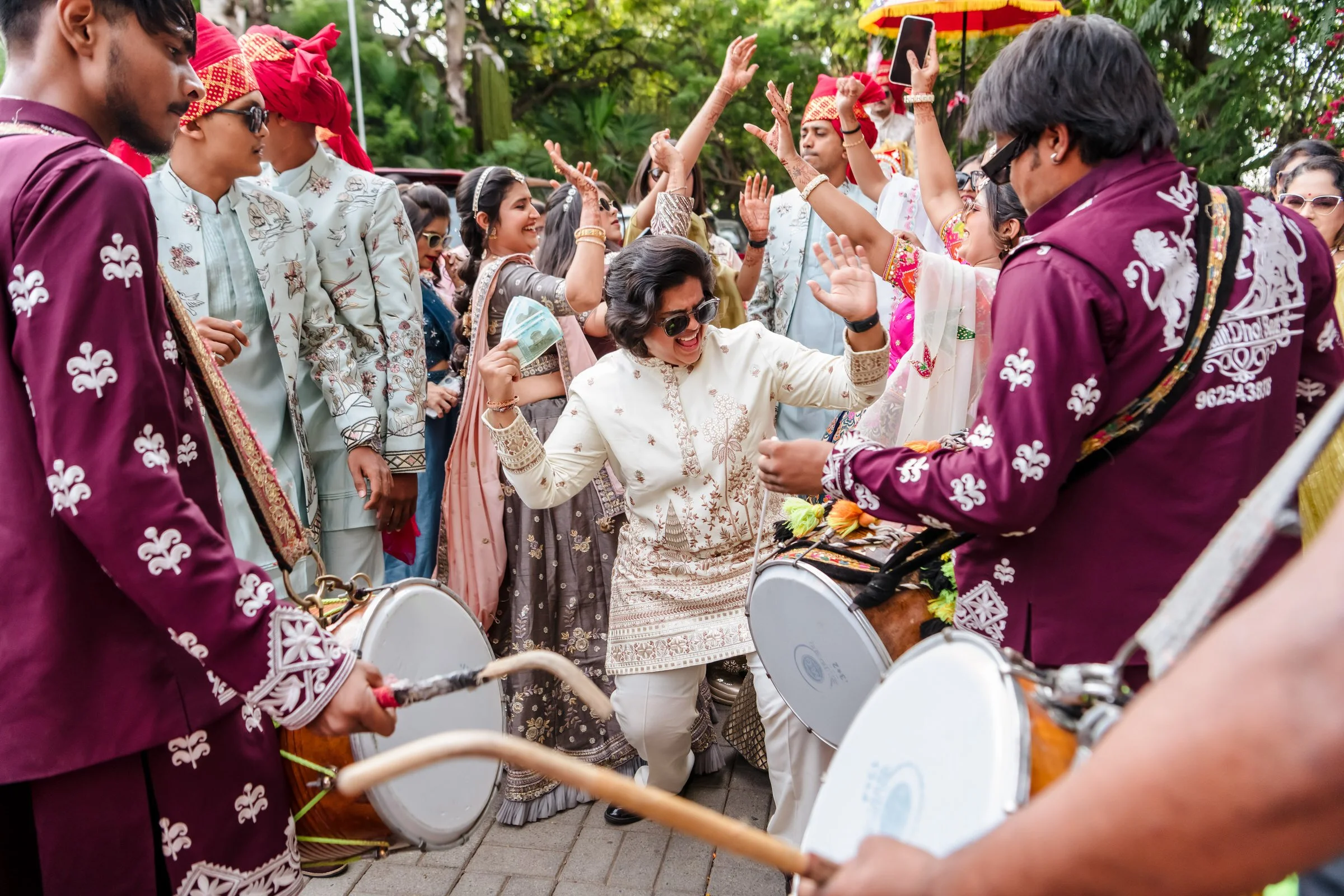
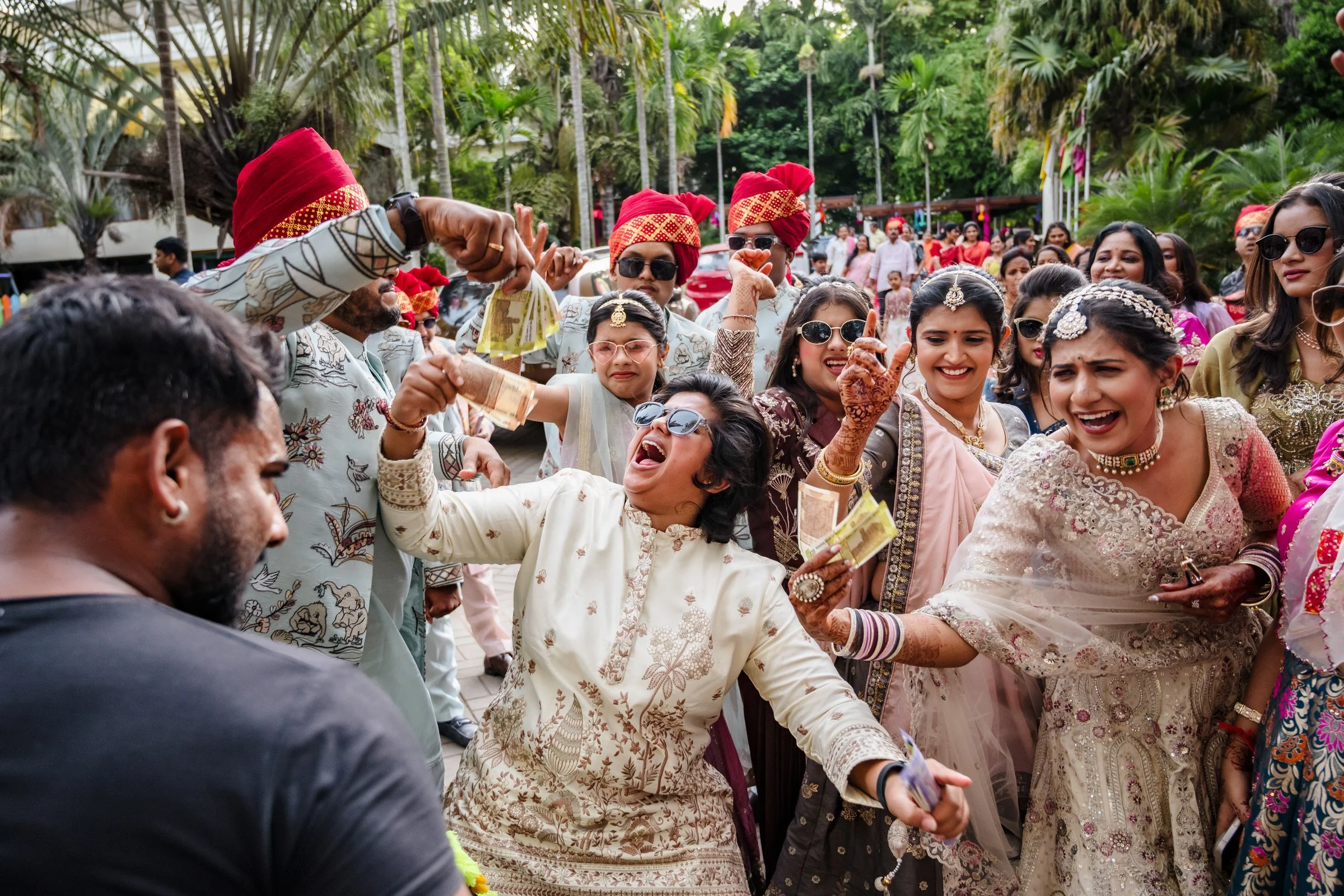
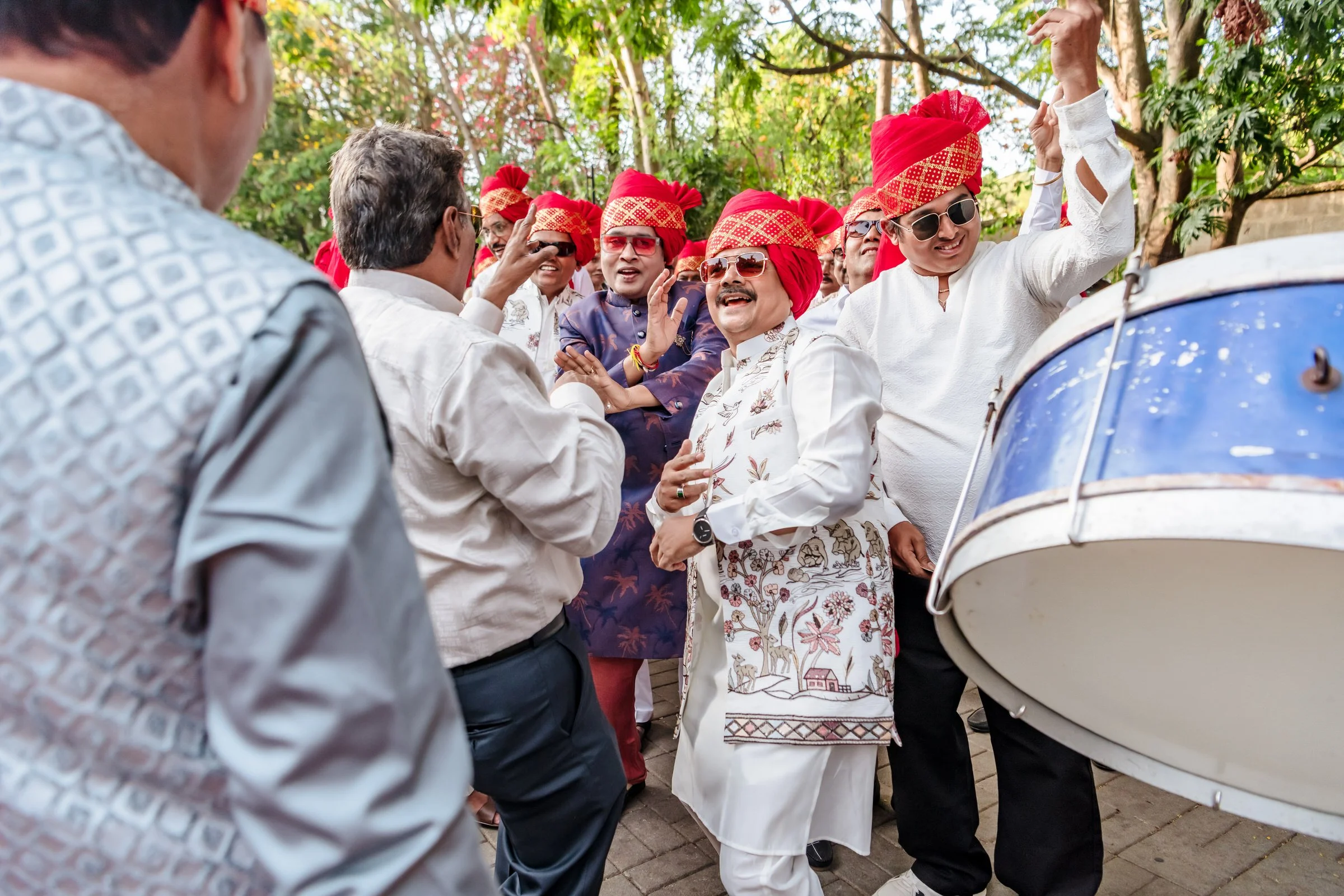
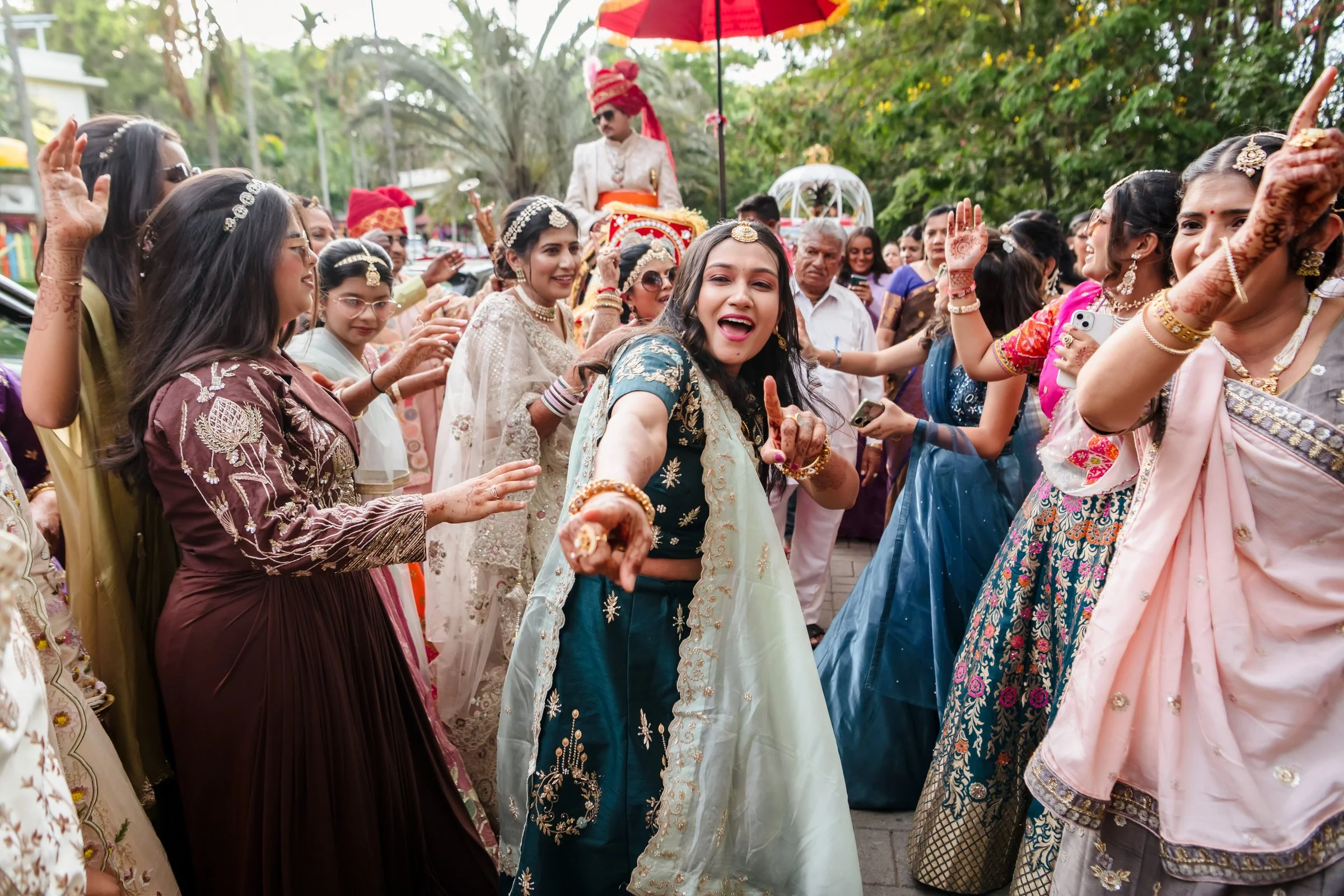
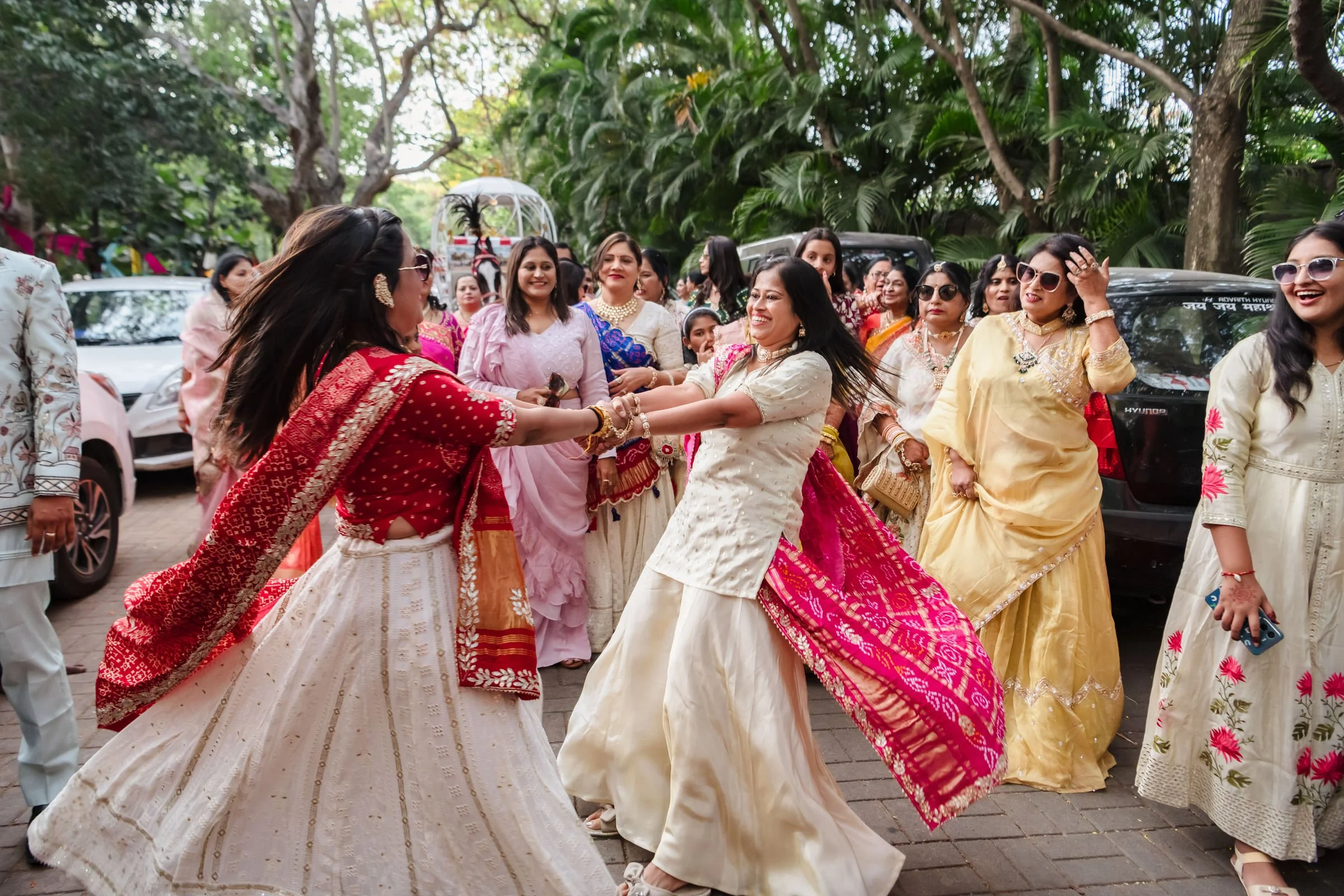
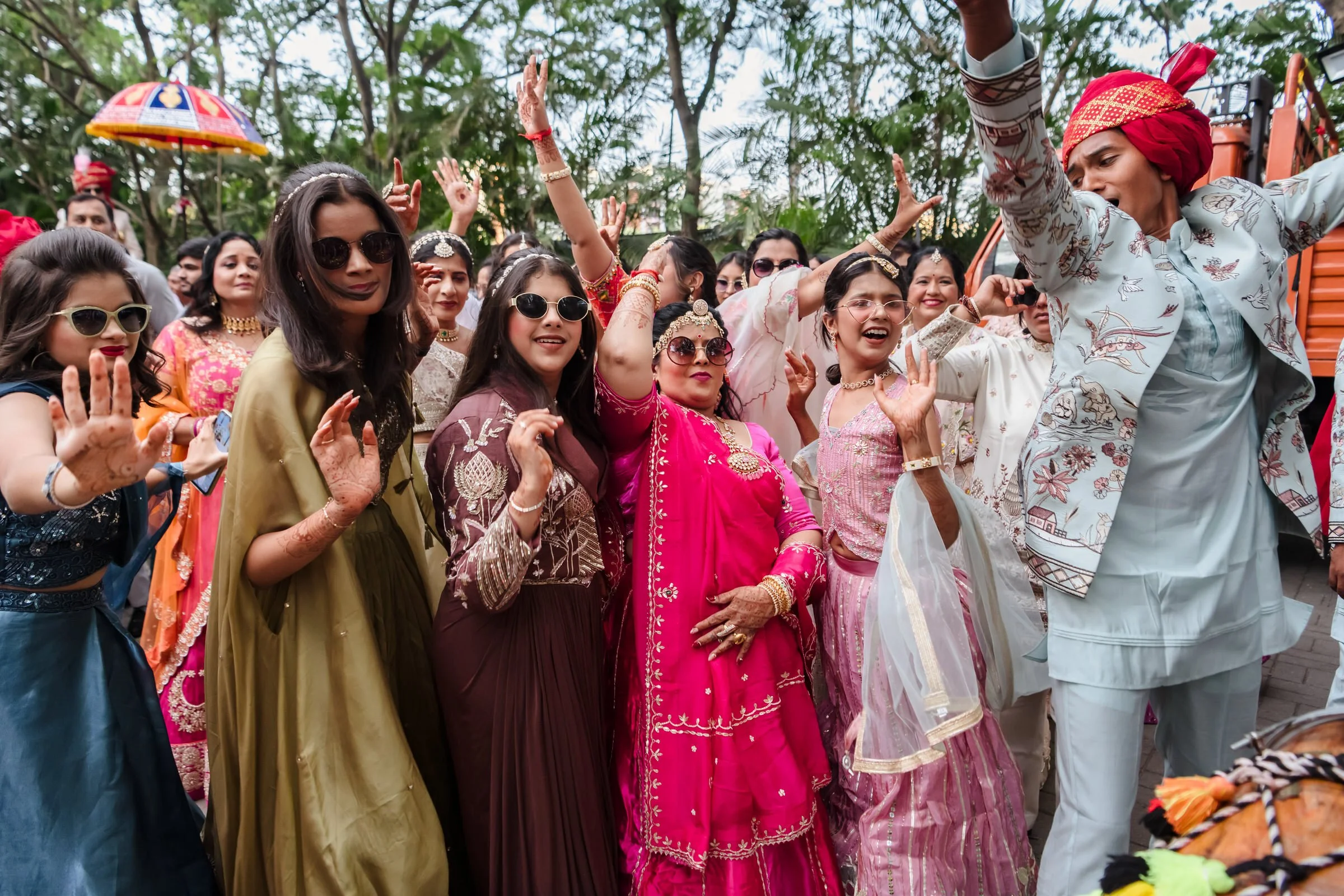
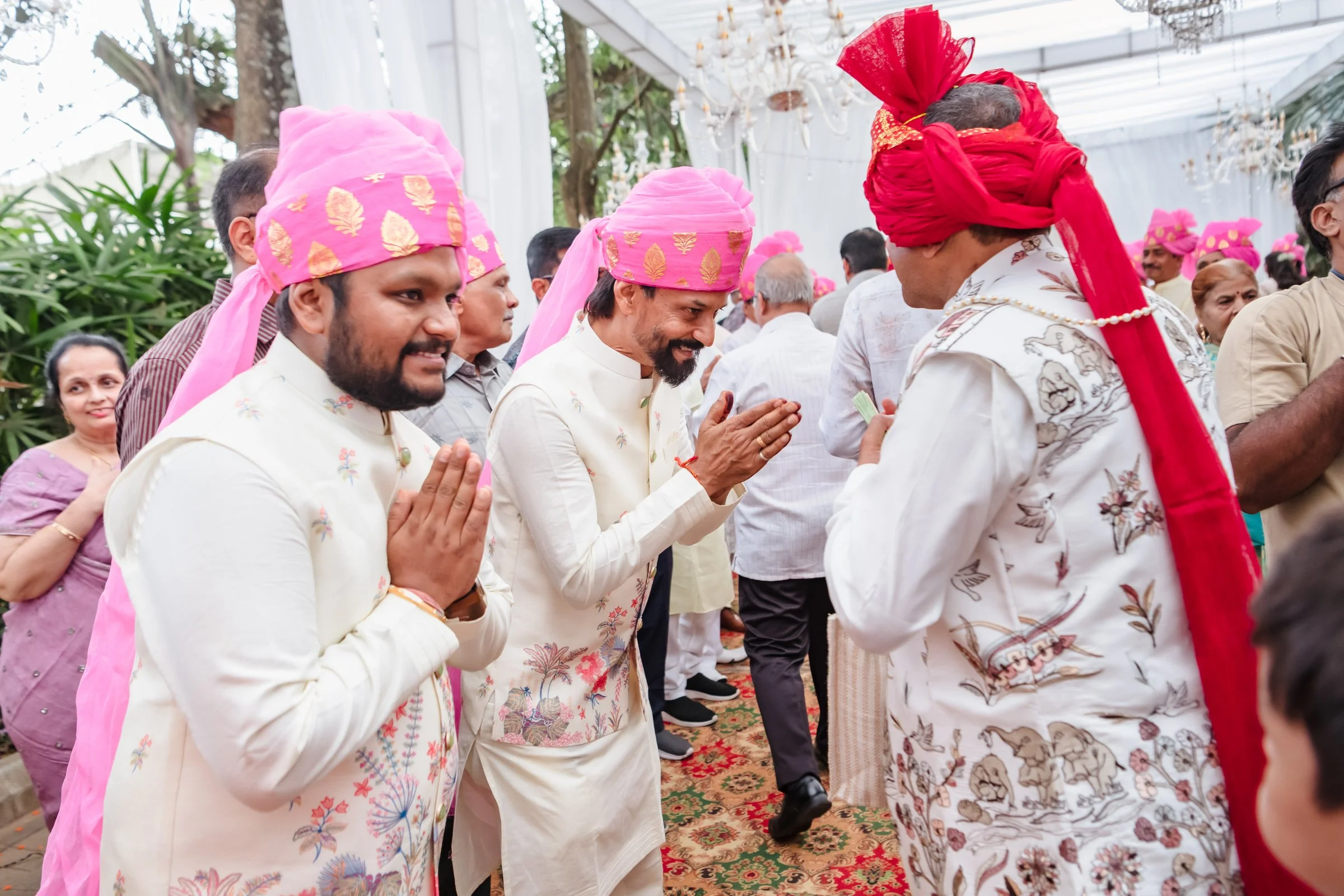
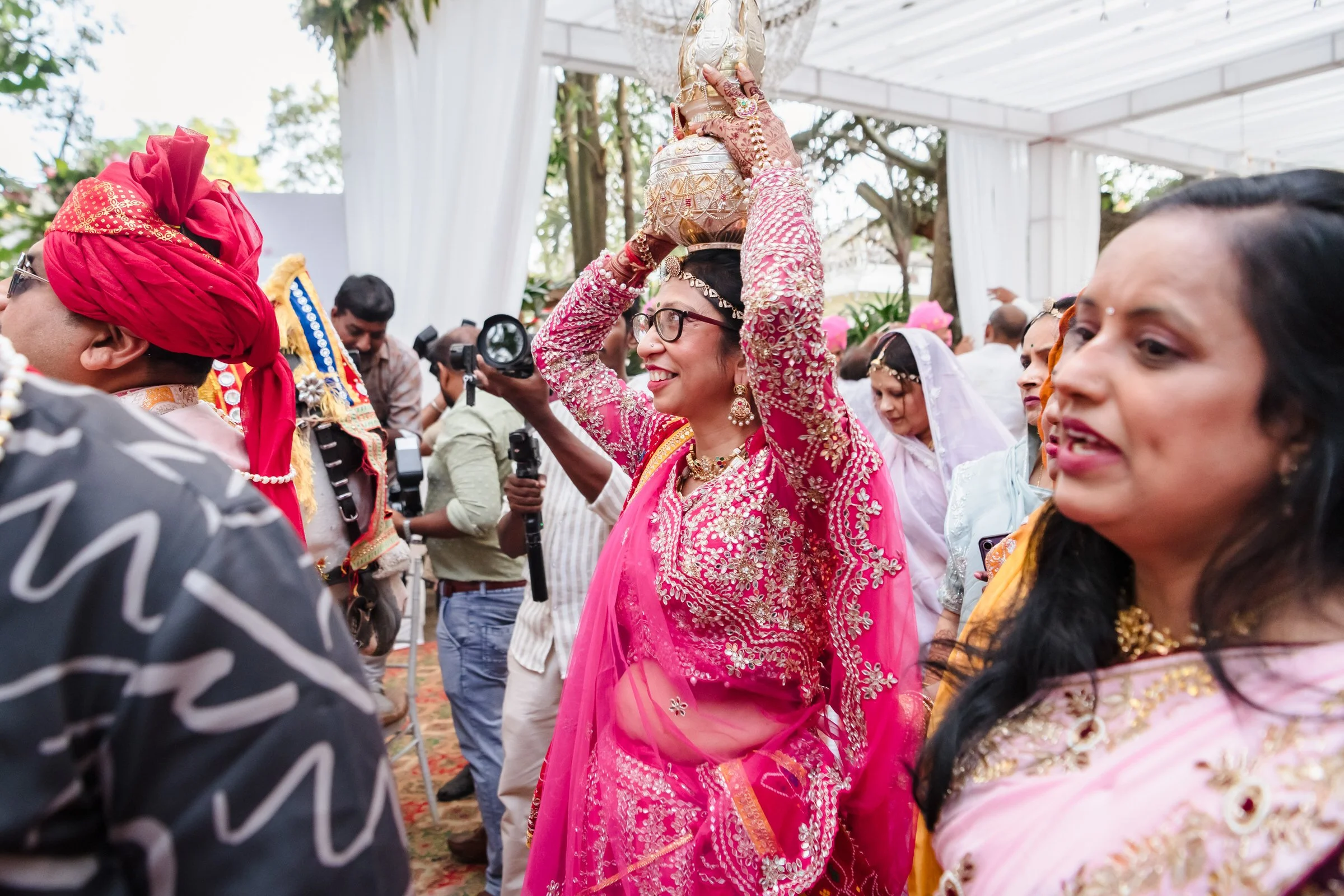
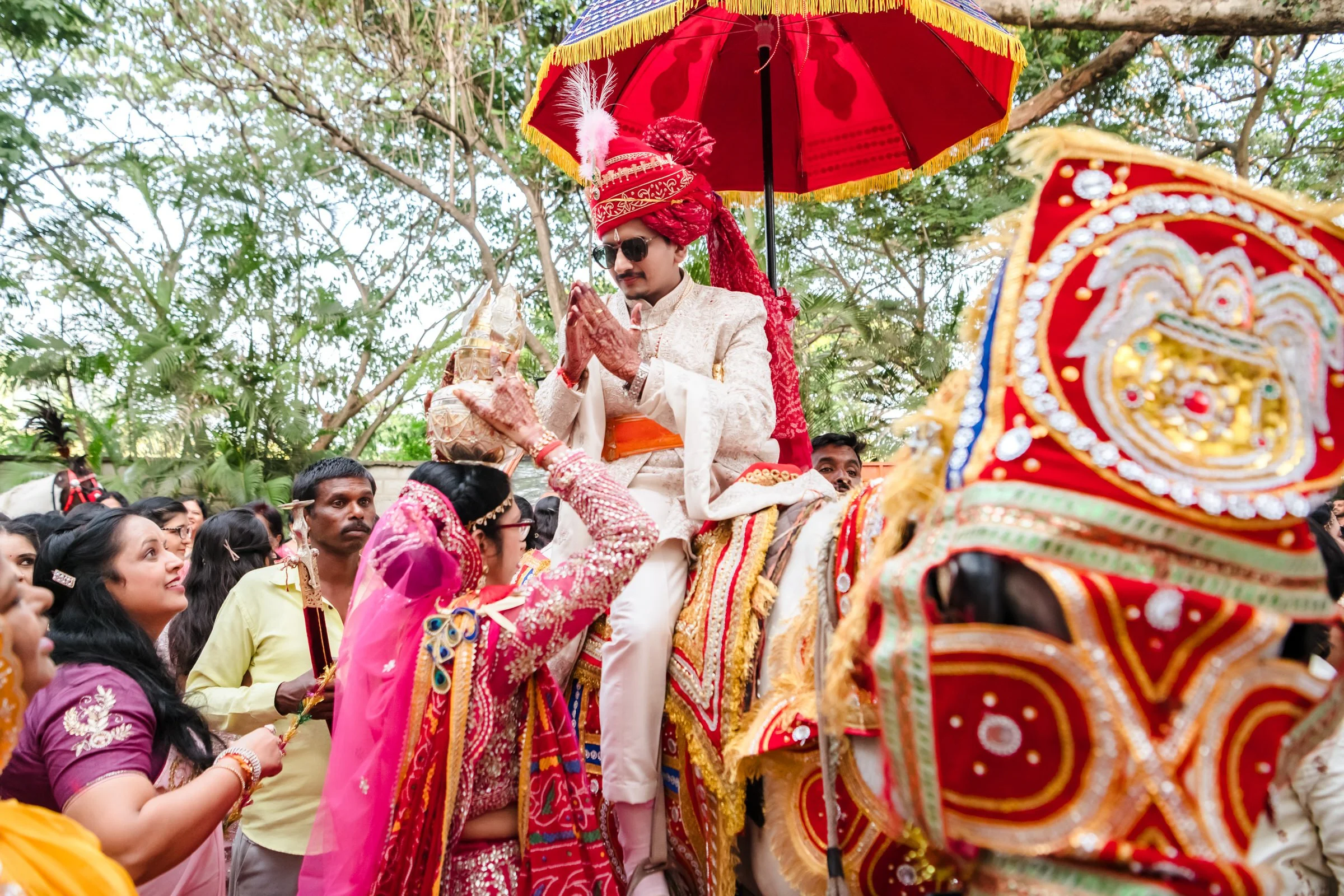
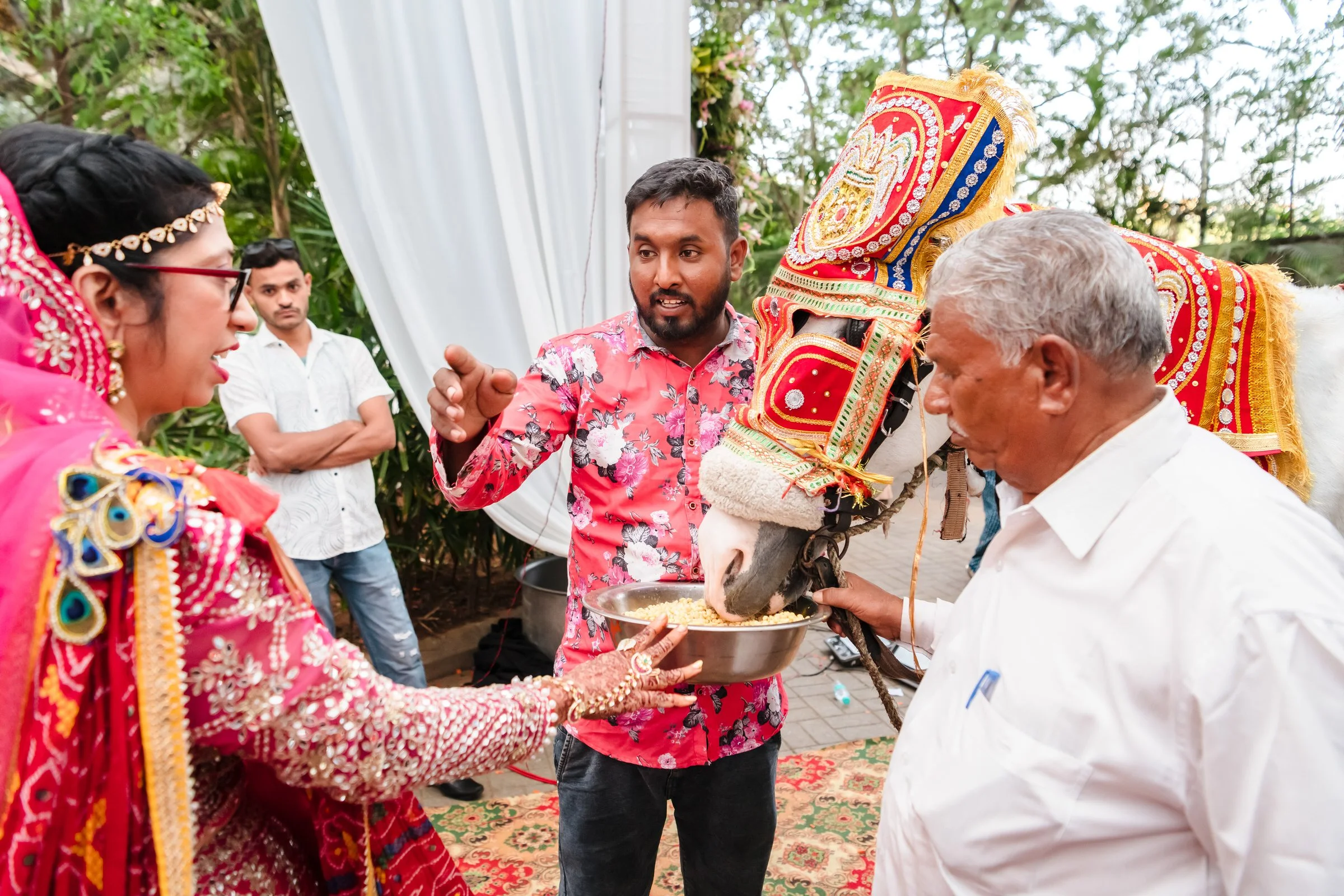
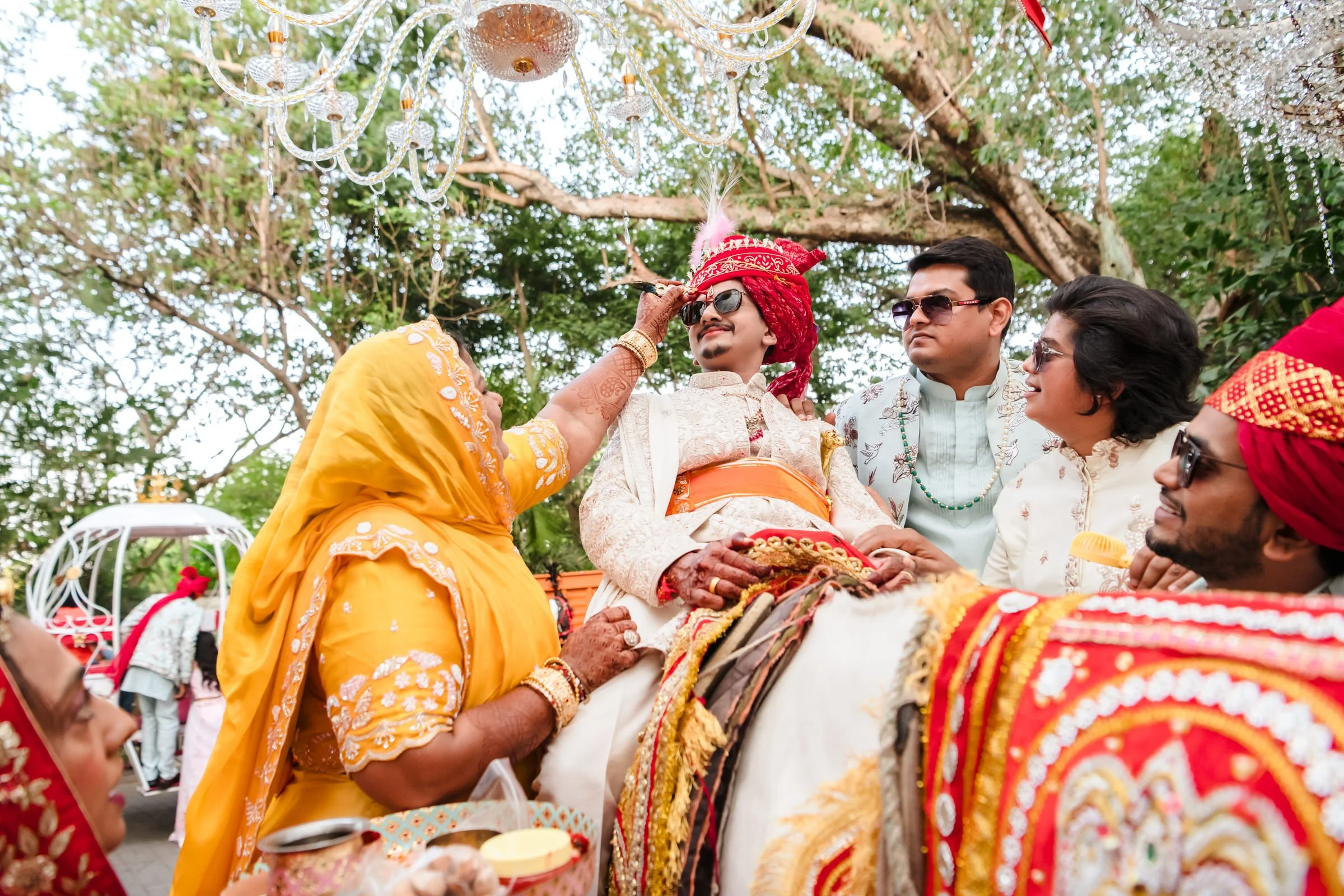
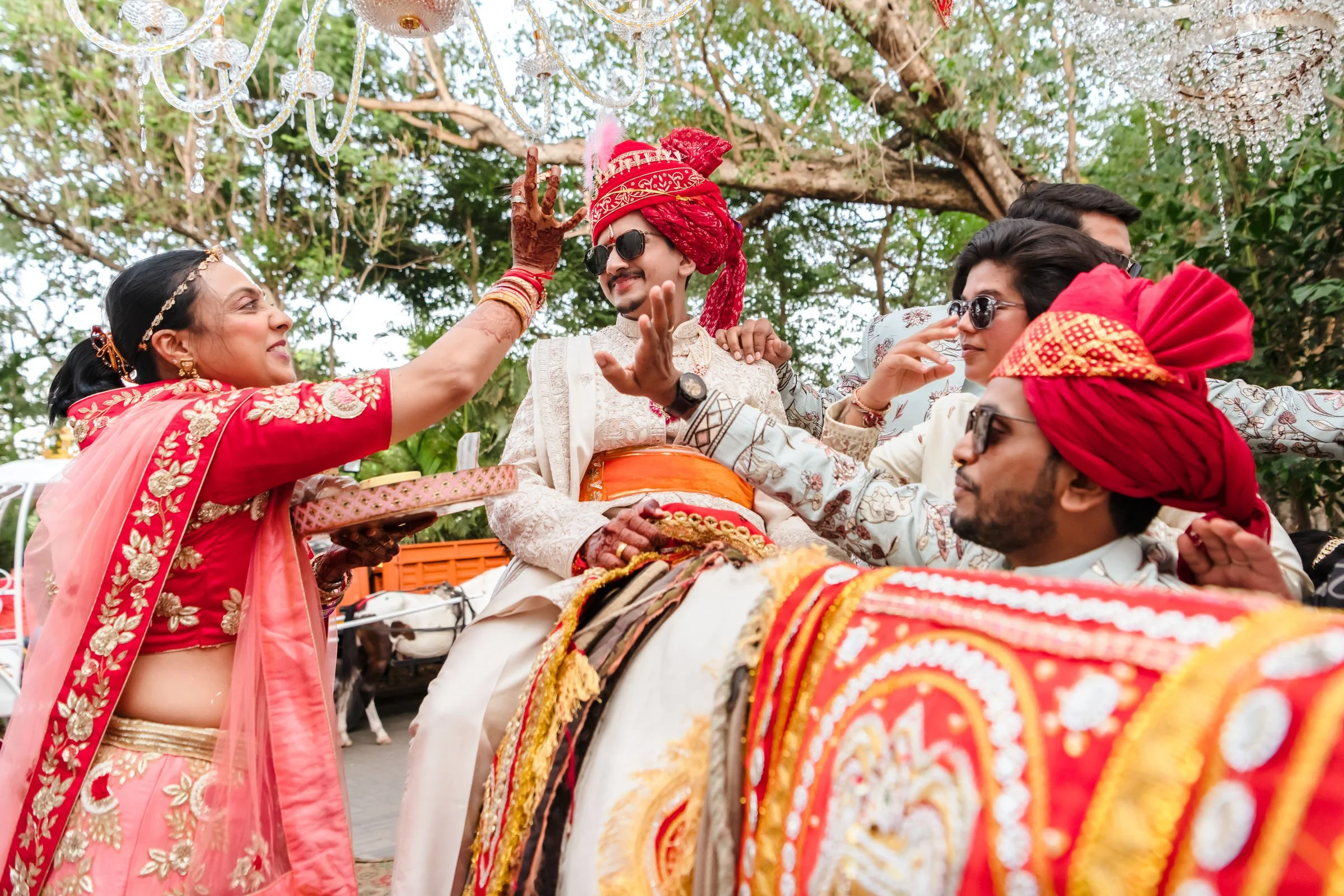
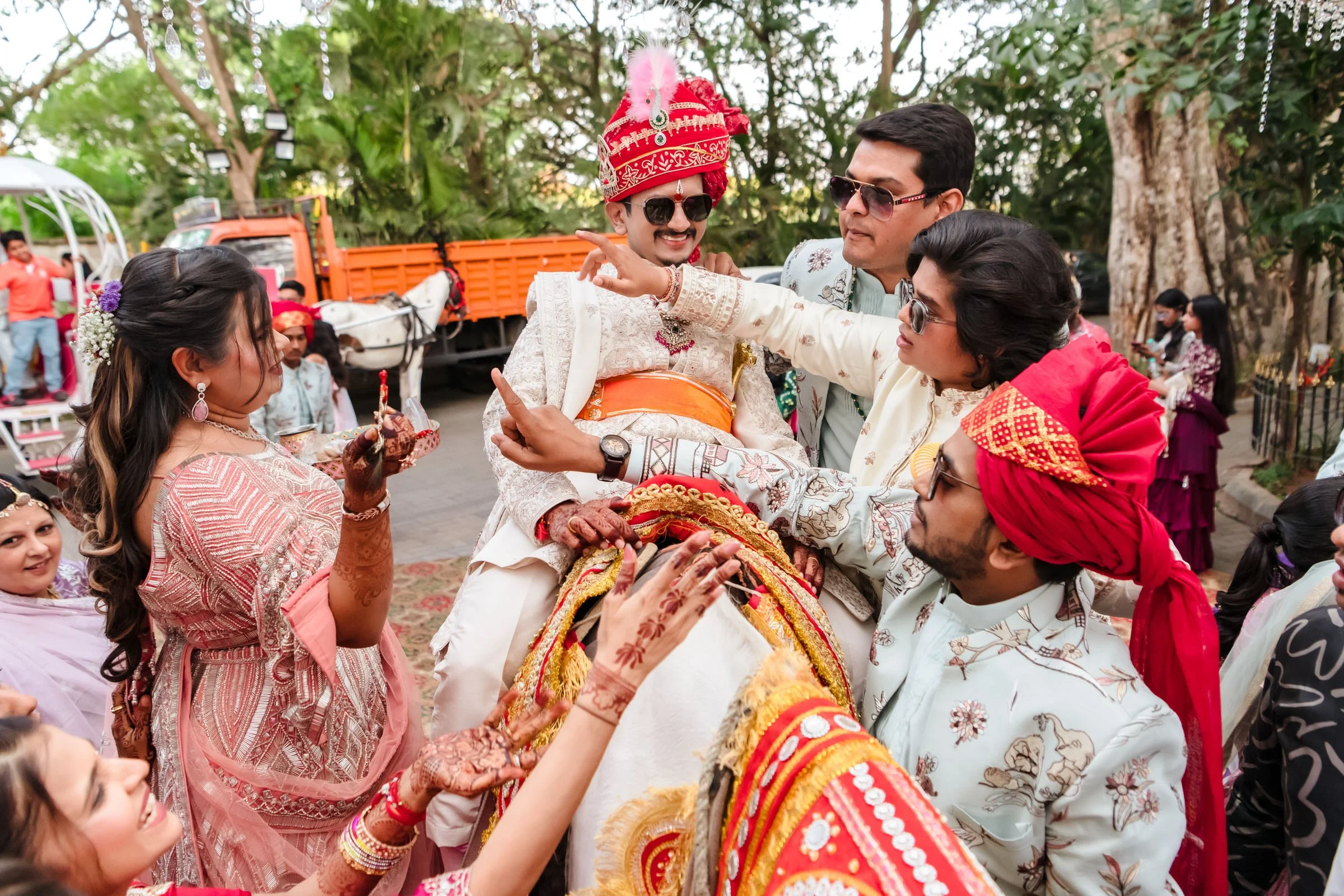
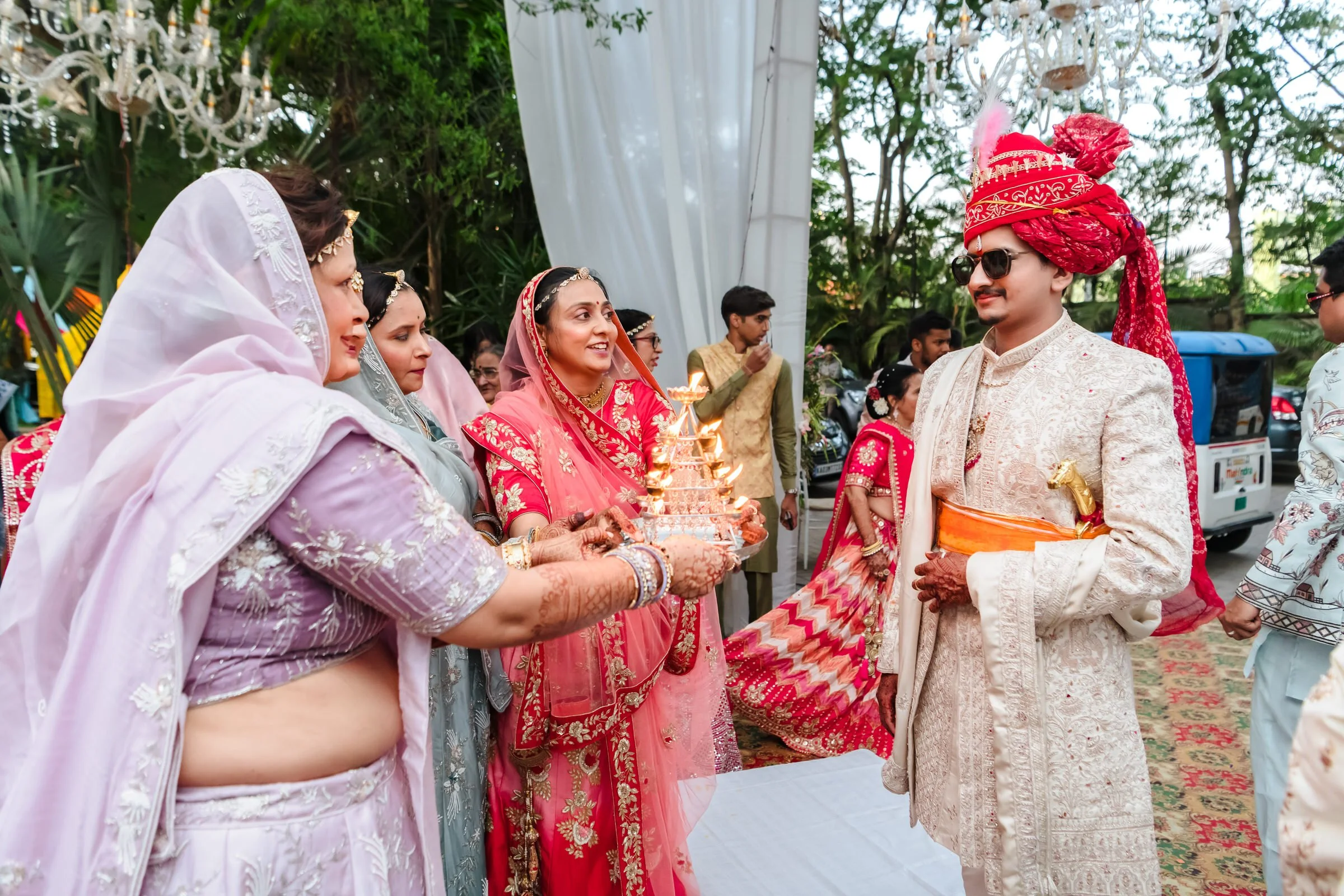
A Marwari baraat is not a procession so much as a moving party that happens to be heading somewhere. The groom's side dances the whole way, the dhol does not stop, and the distance gets covered at whatever pace the dancing allows, which is slow. This one had serious energy in it. Performances inside the procession, people pulling each other in, the kind of baraat where it takes a long time to travel a short distance.
A resort baraat has one real advantage over a city one. No traffic, no road to clear, no police timing. The procession can take as long as it takes, and at this wedding it took a while.
What happens after the baraat arrives
This is the part of a Marwari wedding that couples themselves are often hazy on, because the morning moves fast and the priest sets the pace. Here is the broad order, so you know what you are looking at.
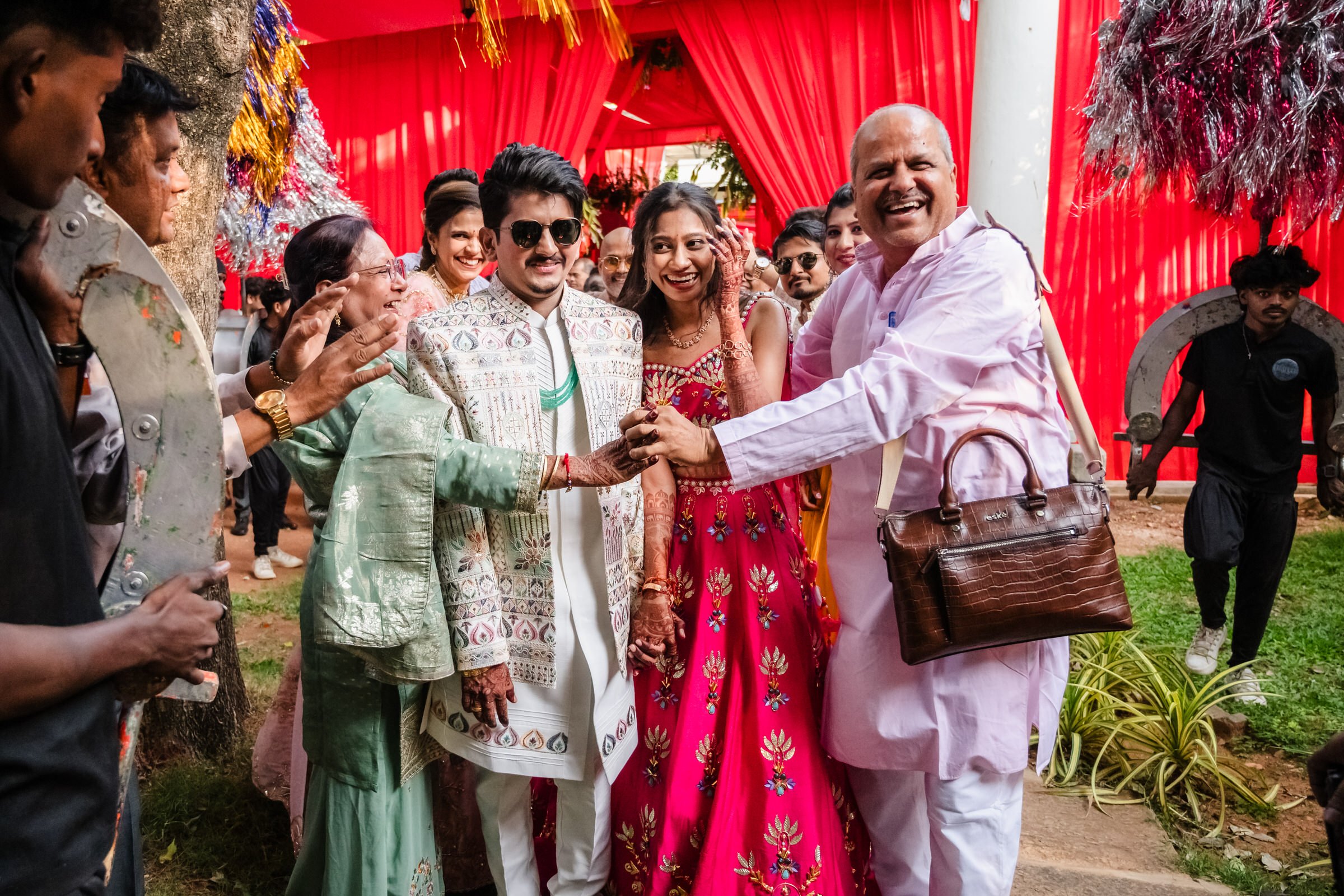
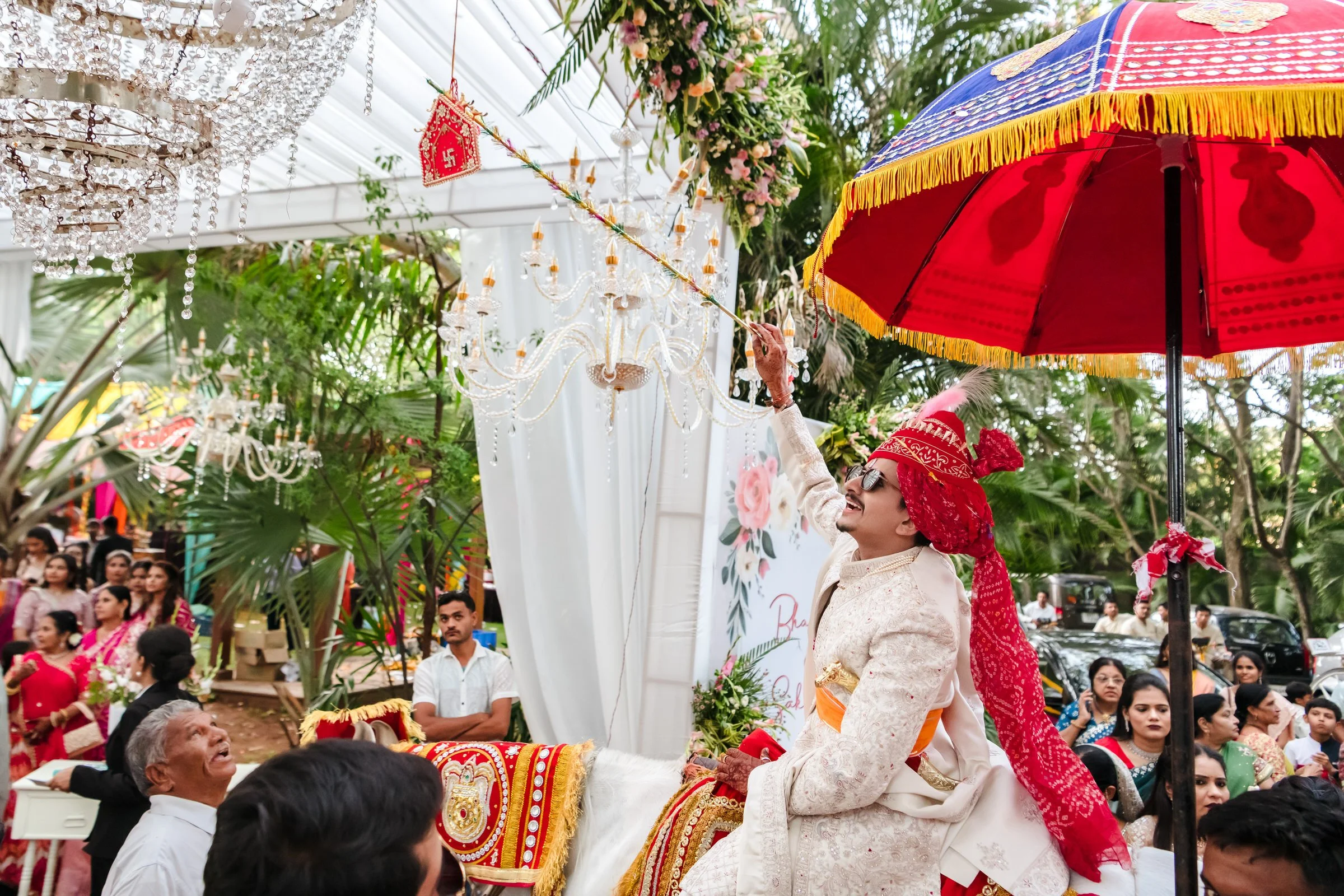
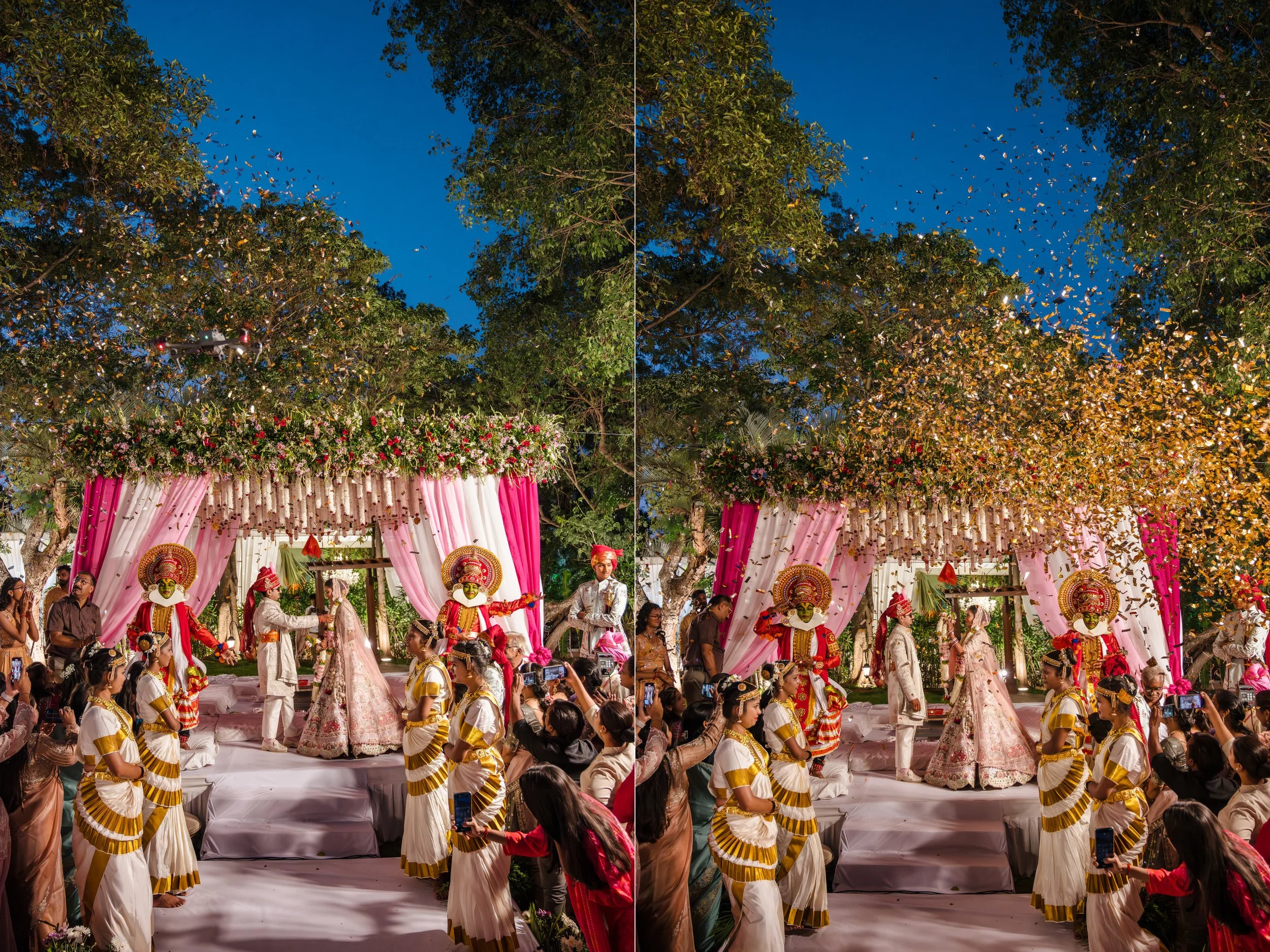
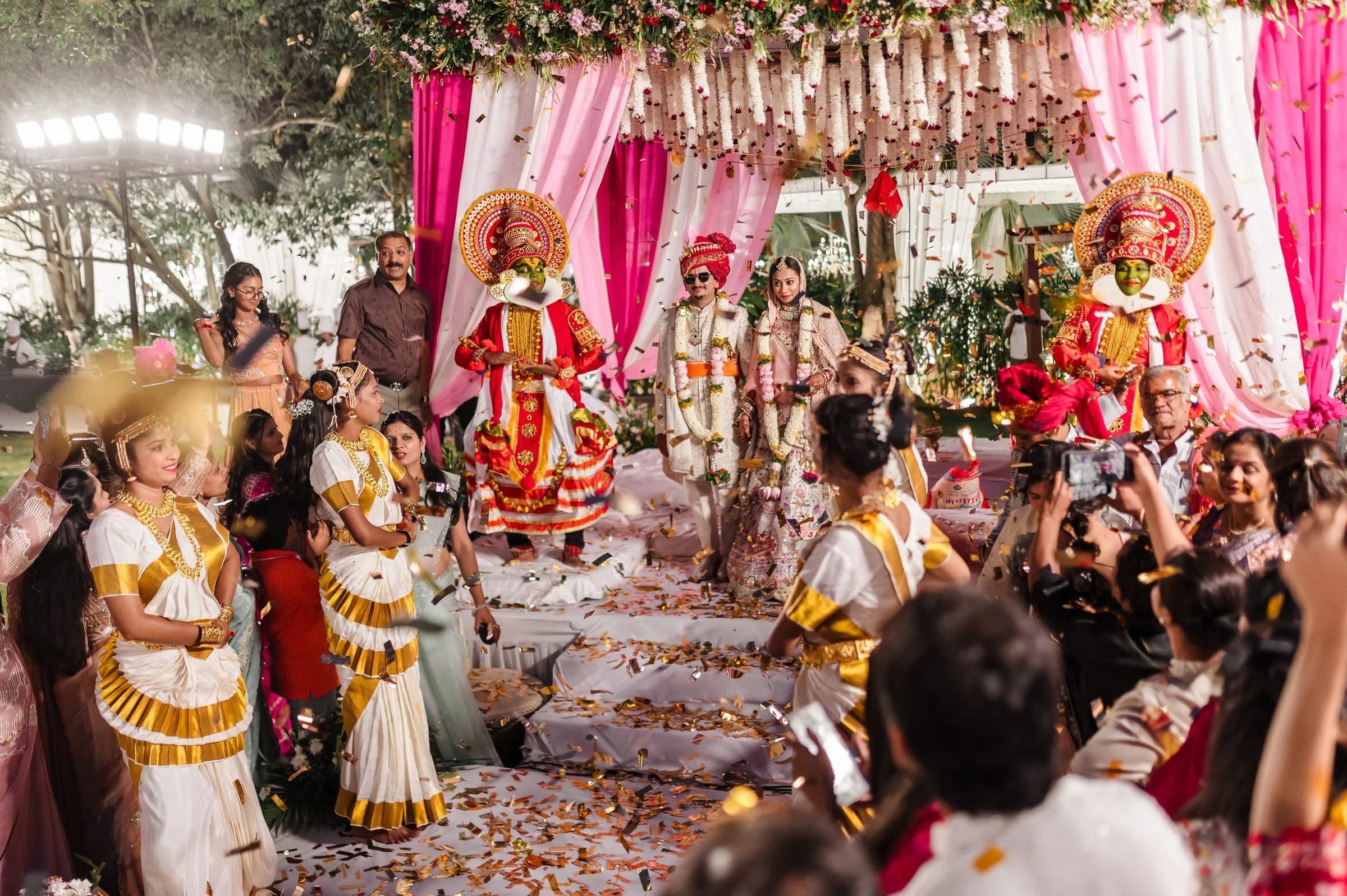
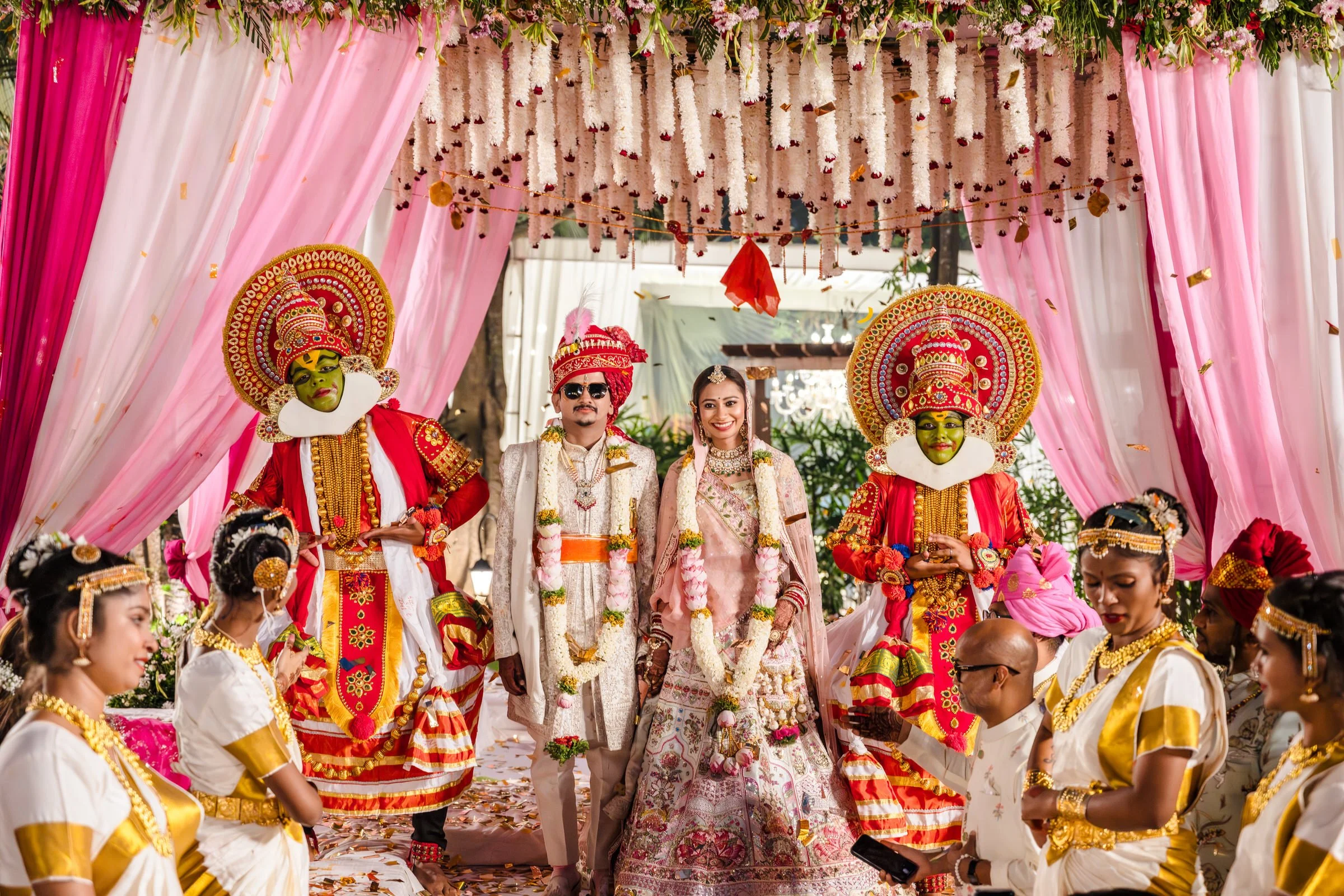
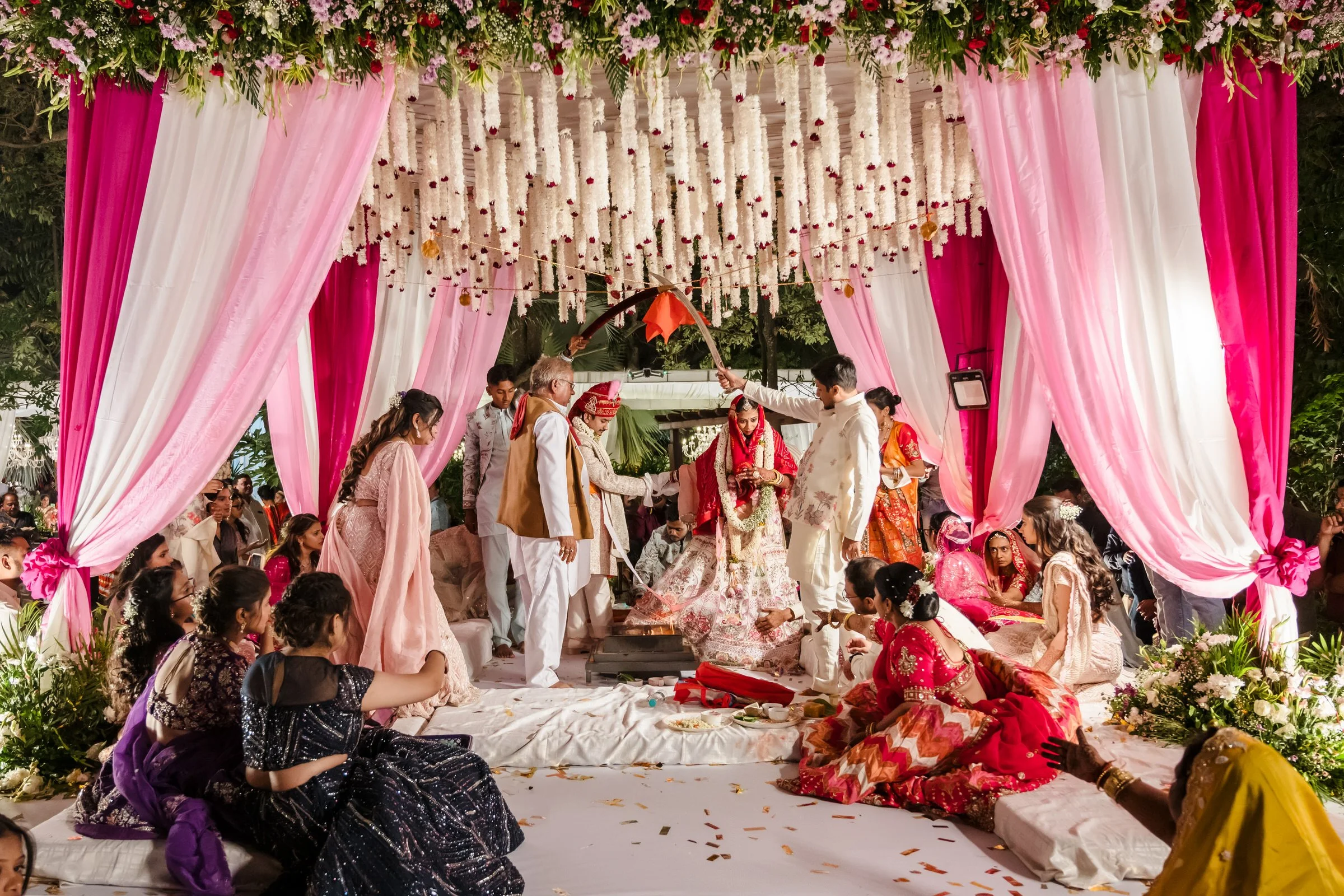
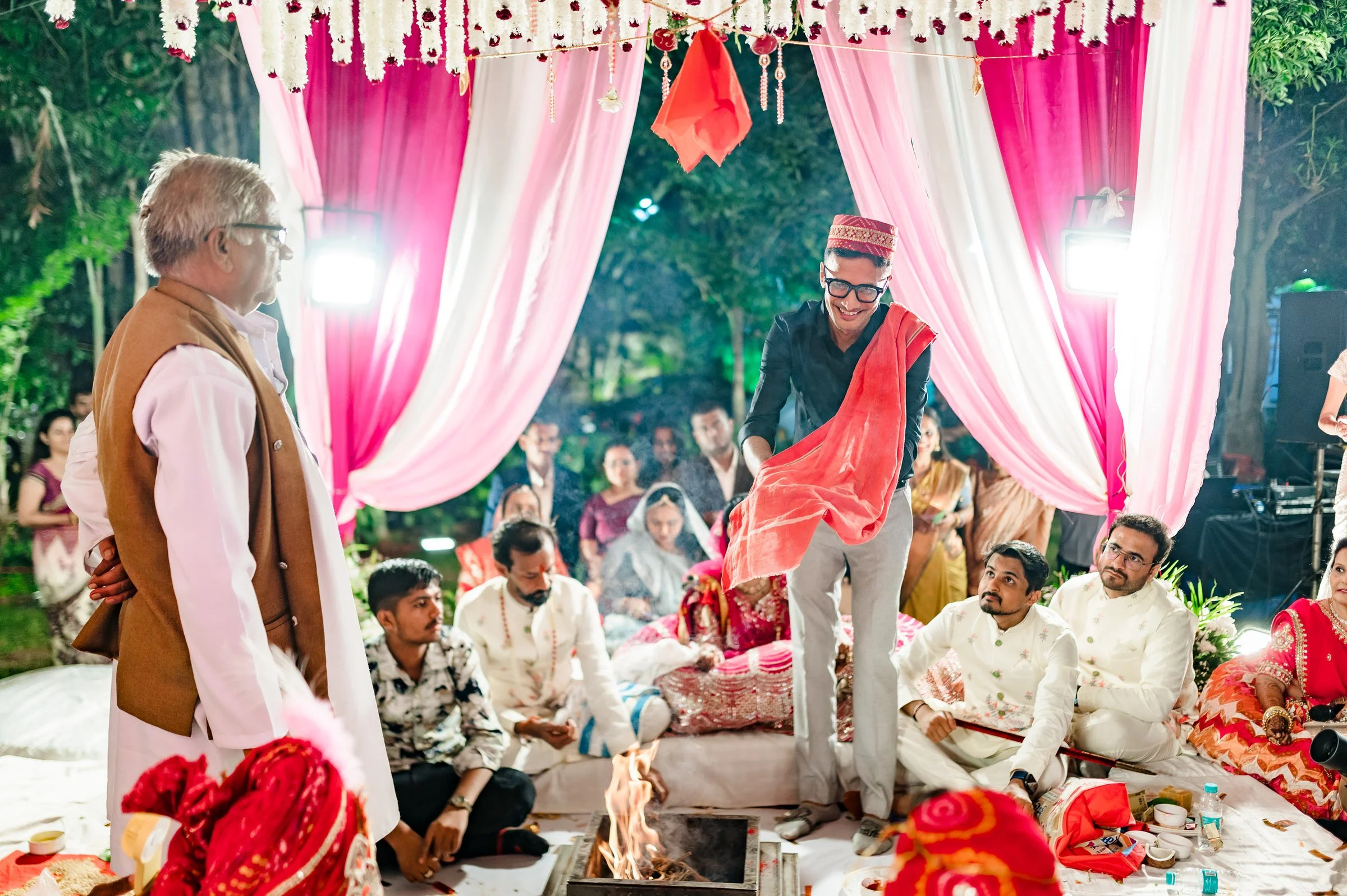
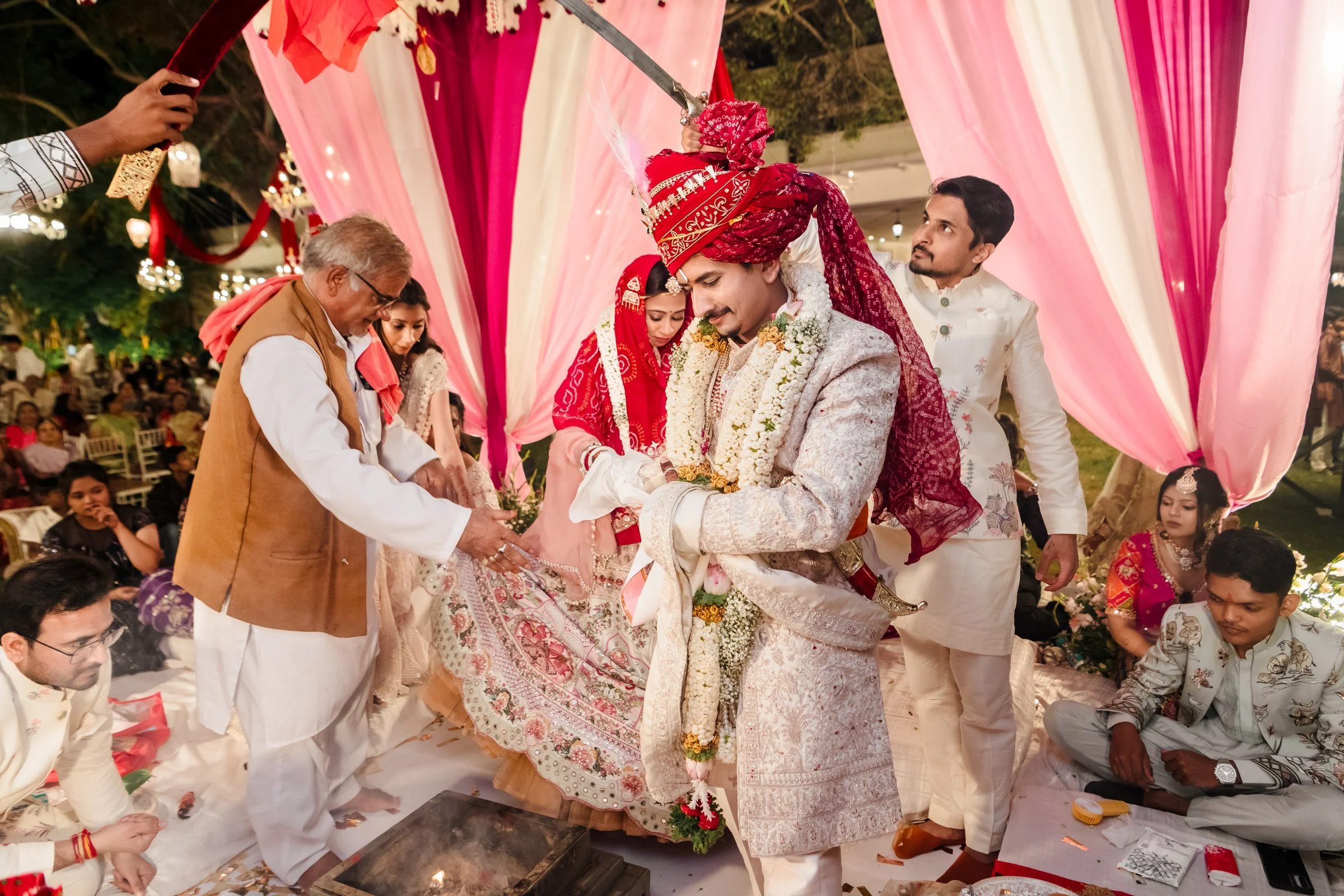
Toran. Before the groom can enter, he touches the toran, the decorated arch at the entrance, traditionally with a neem branch or stick. It is a warding-off ritual and it is over in seconds, but it is the first real frame of the wedding and the groom's whole side is crowded behind him for it.
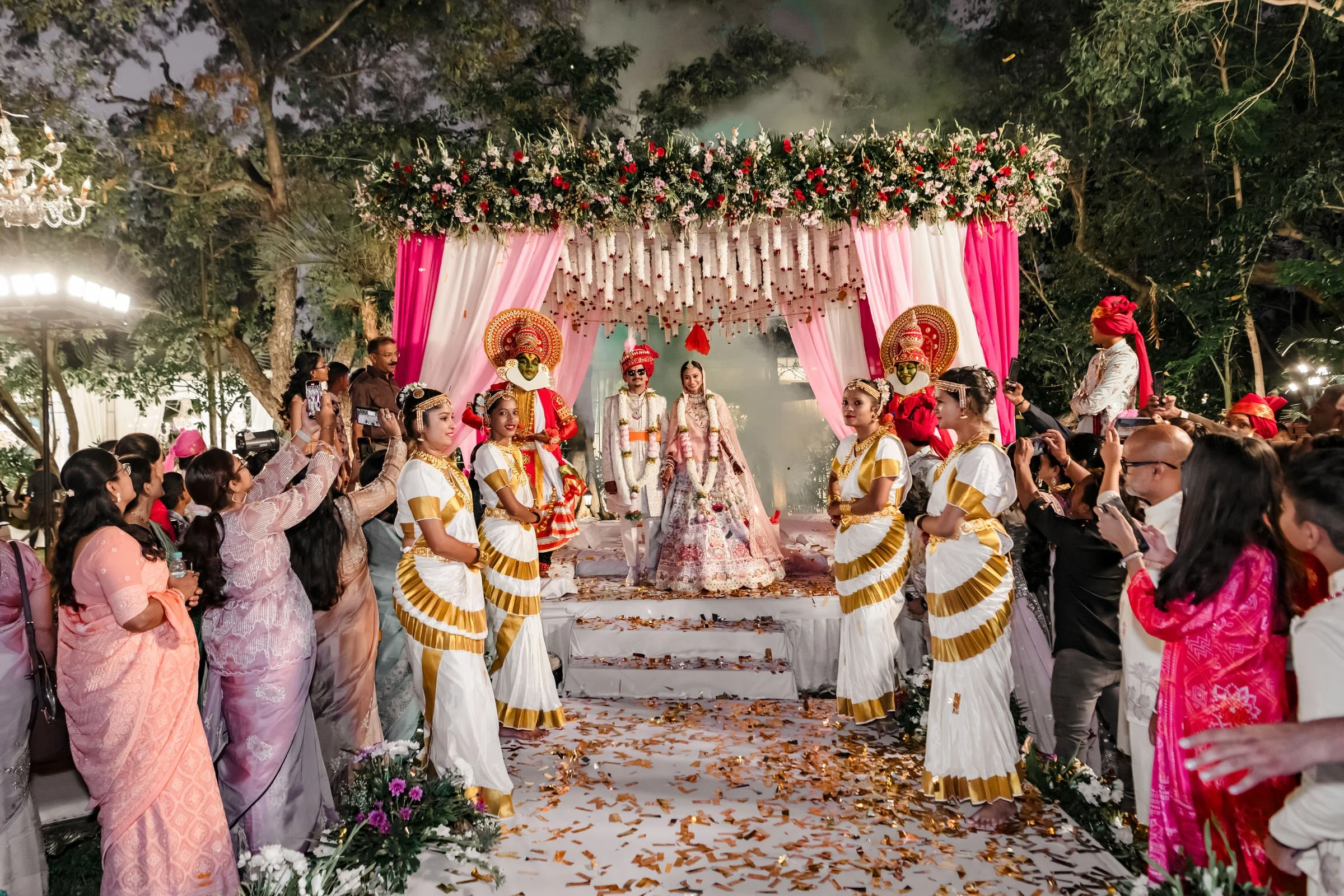
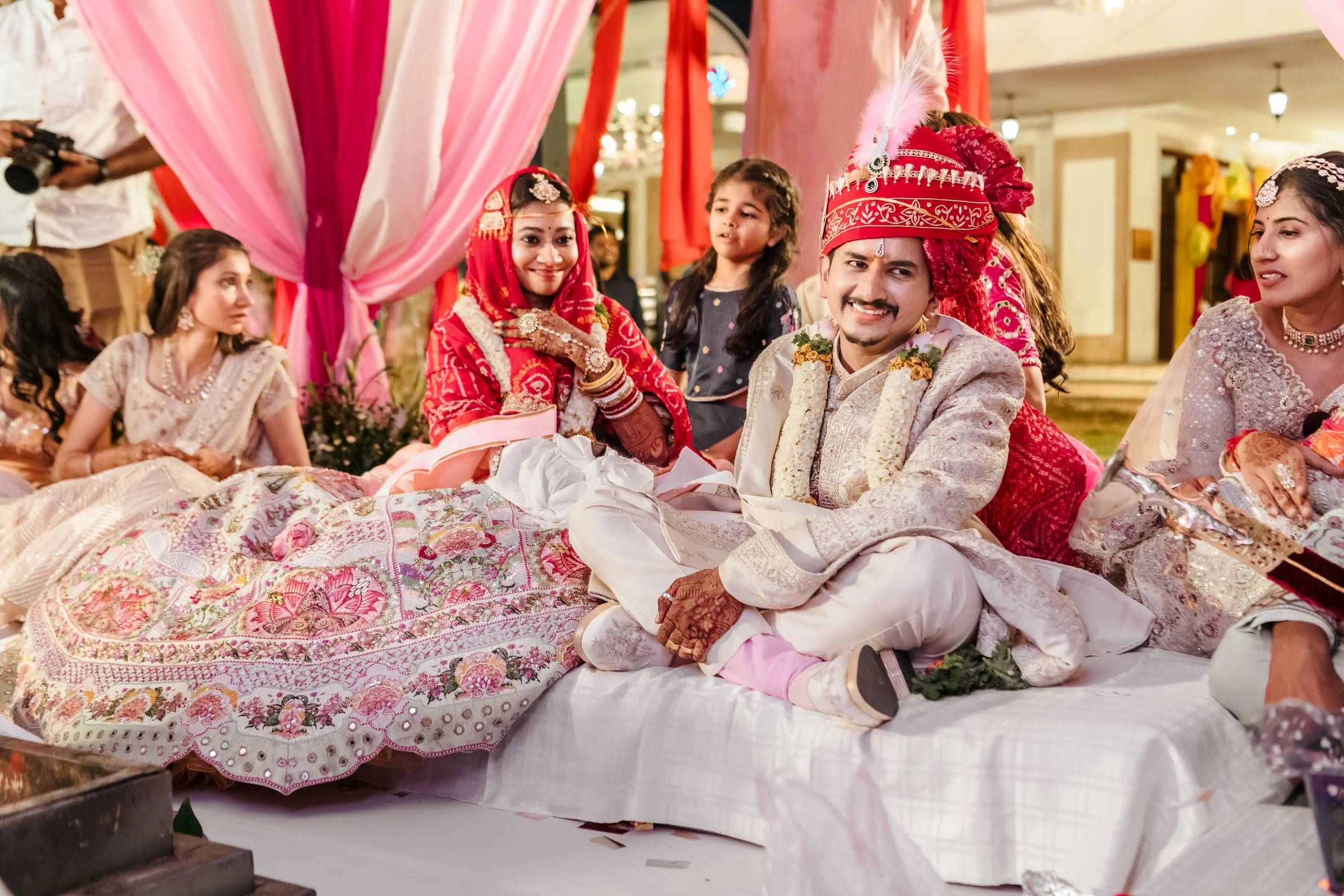
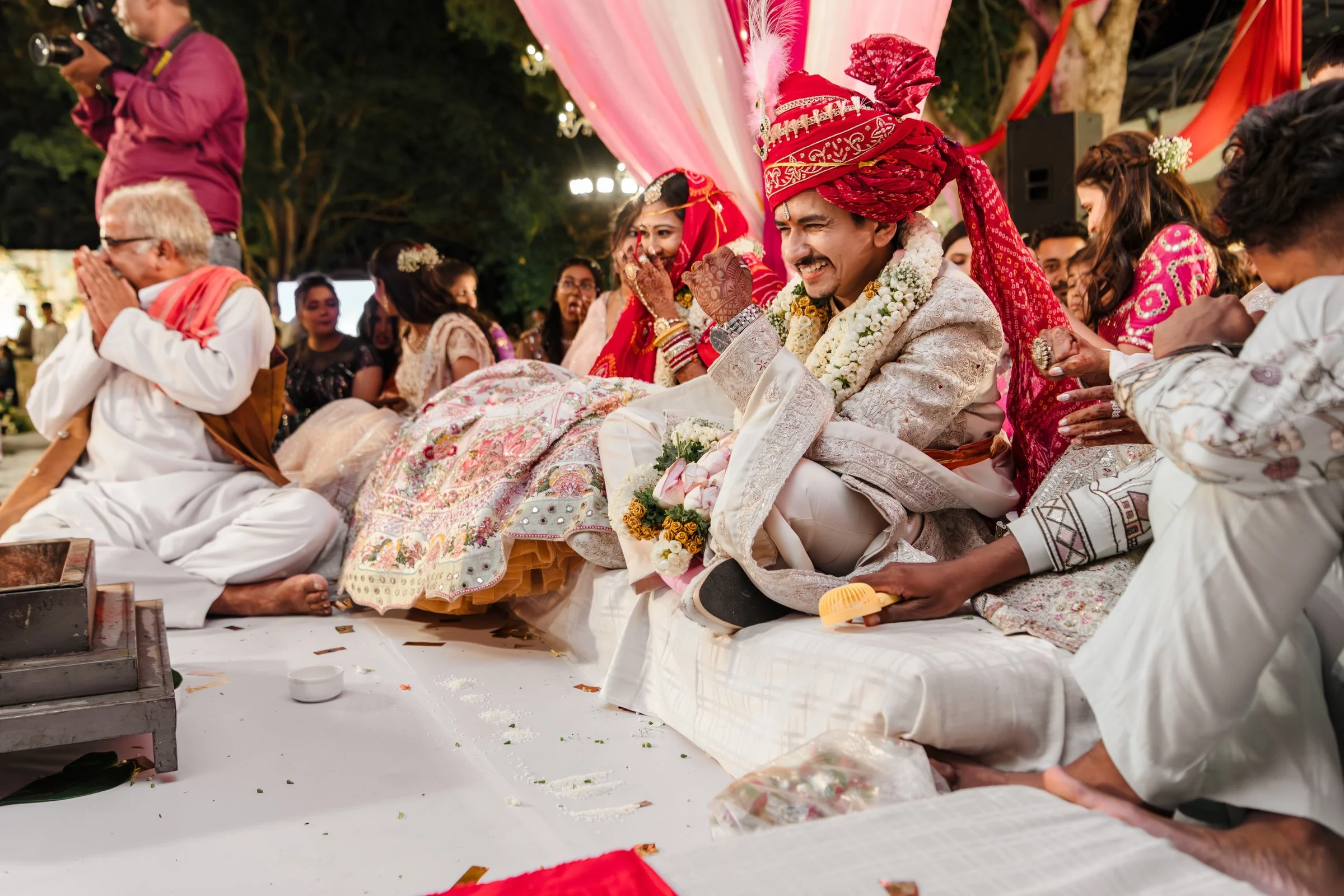
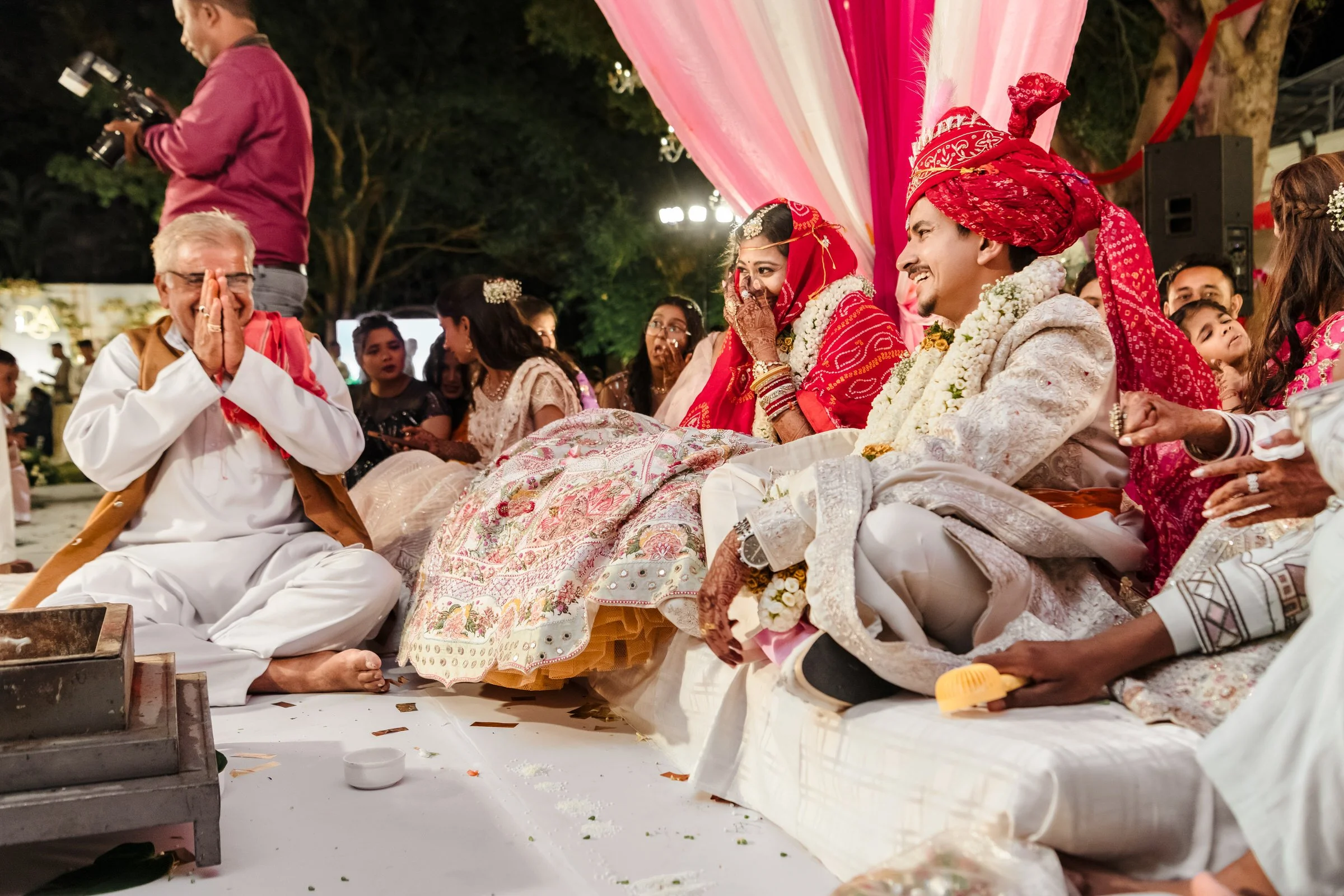
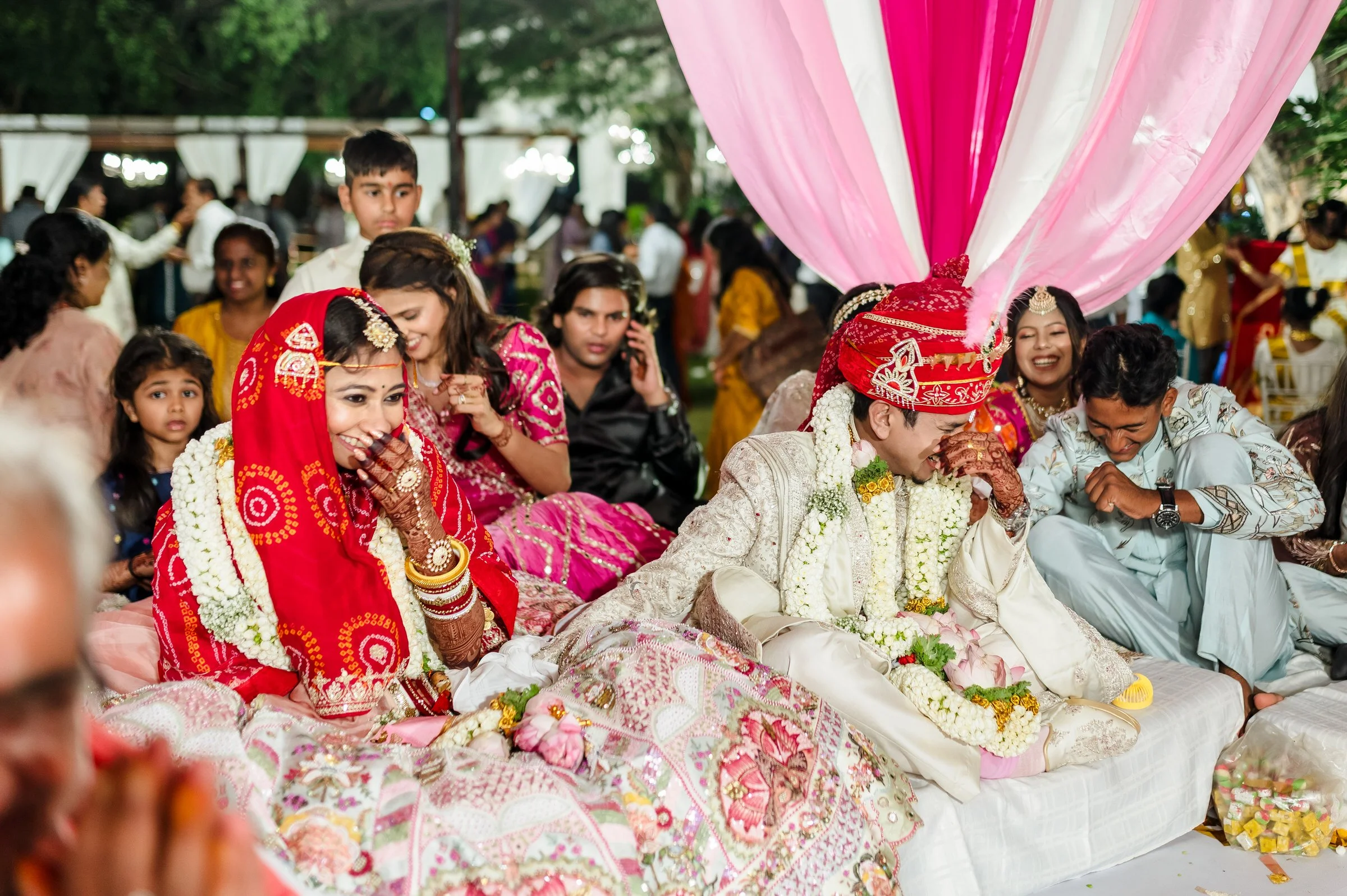
Jaimala or varmala. The couple come face to face and exchange garlands. Both families are usually trying to lift their own side higher, so it almost never goes cleanly, which is why it photographs well.
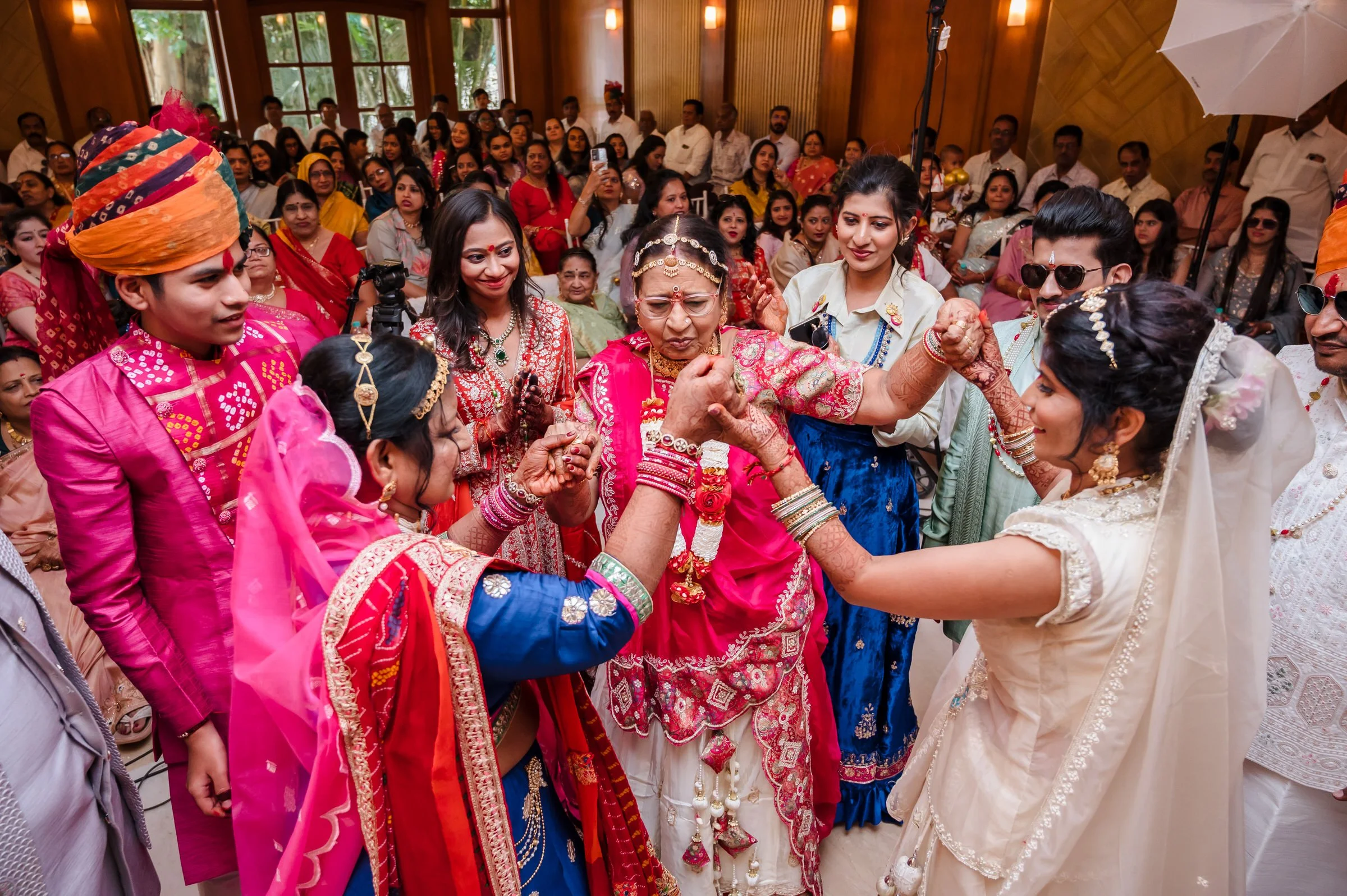
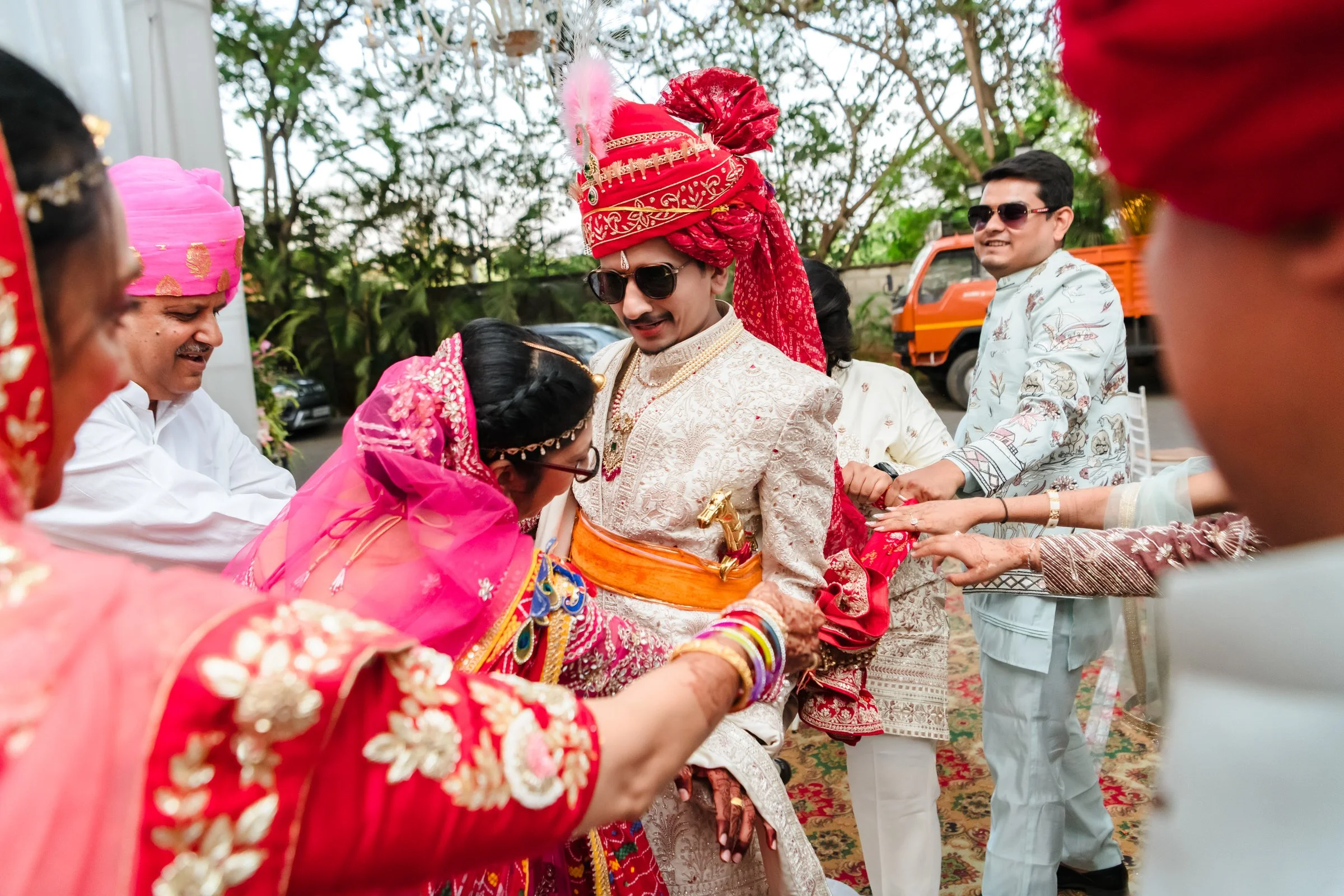
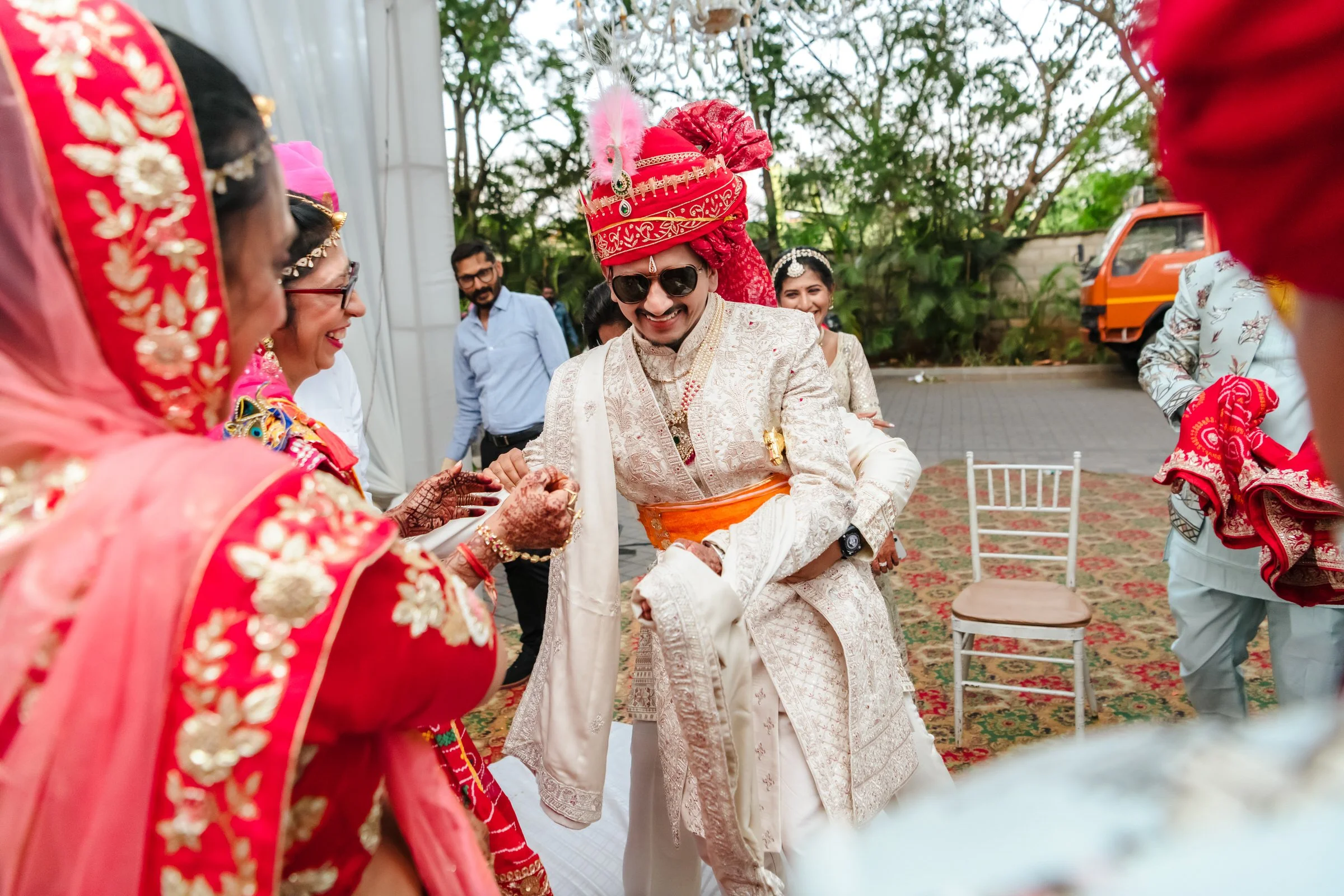
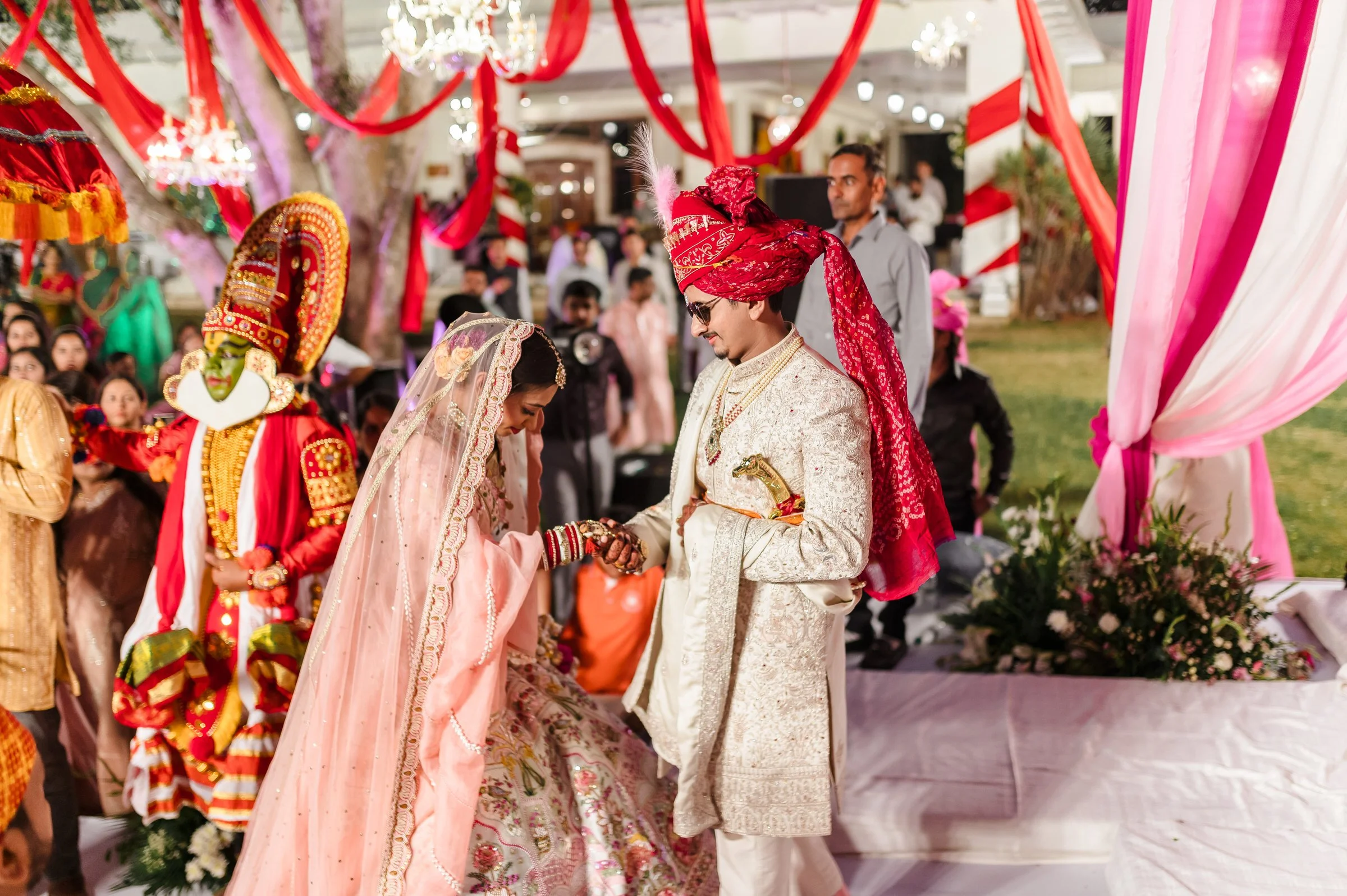
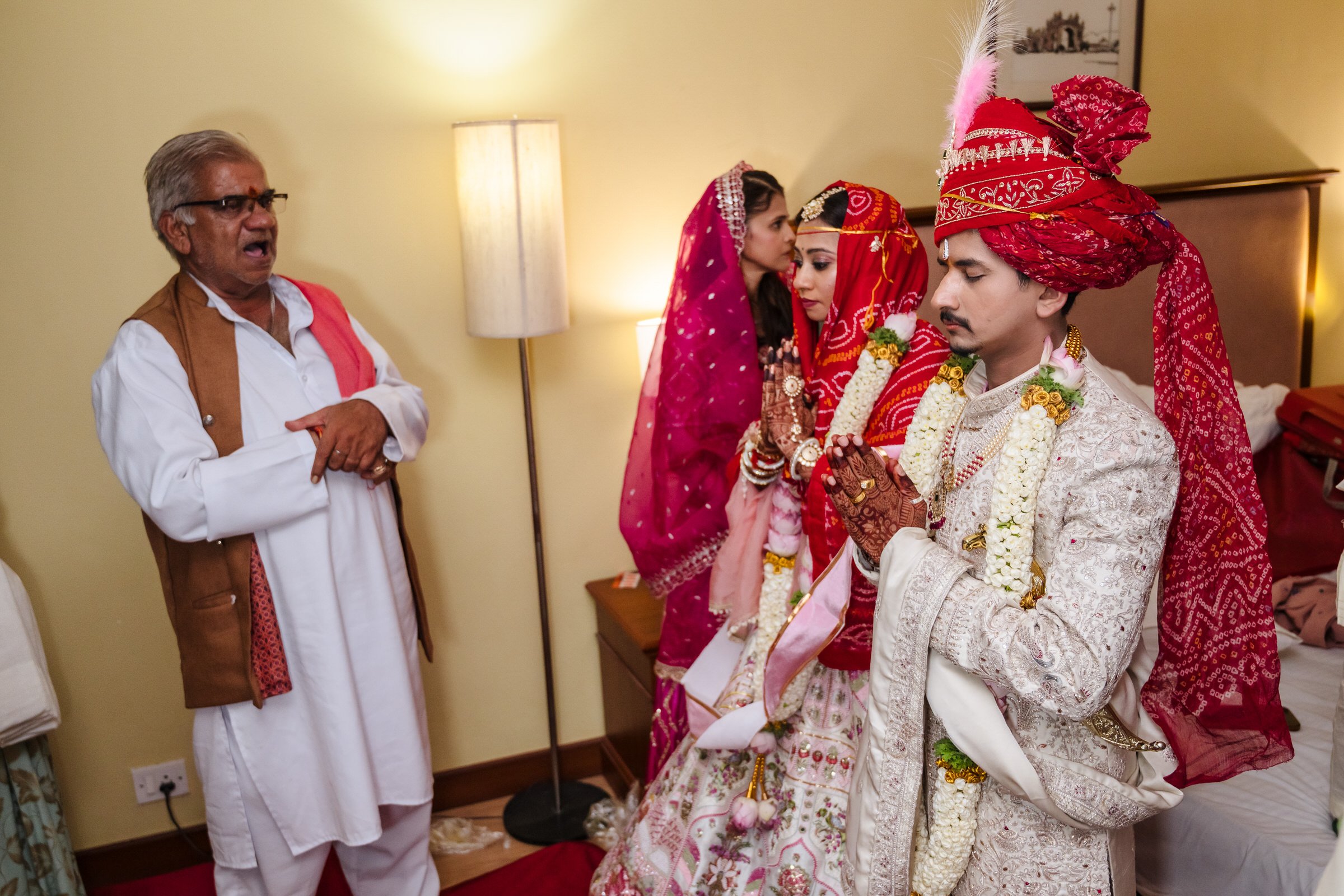
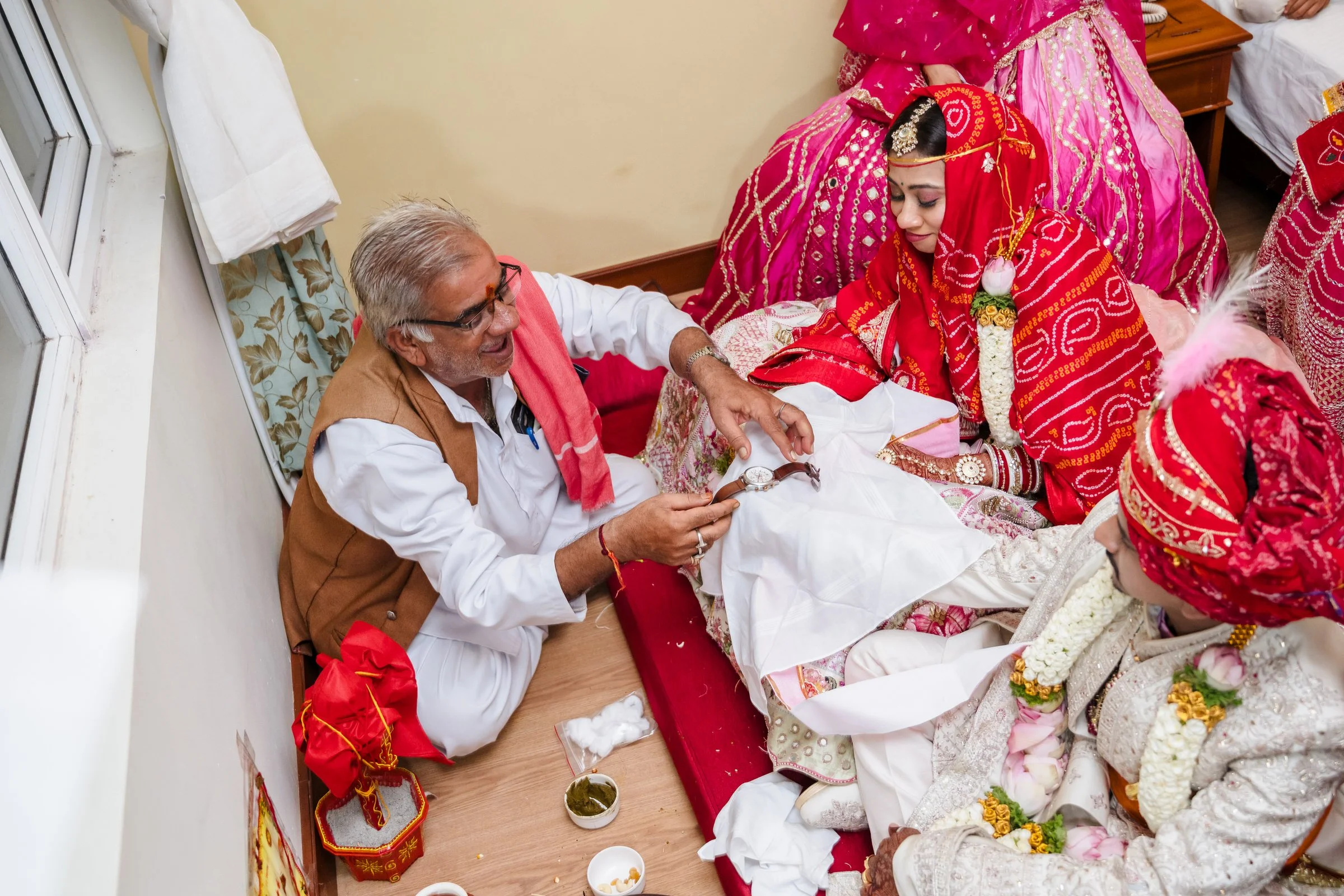
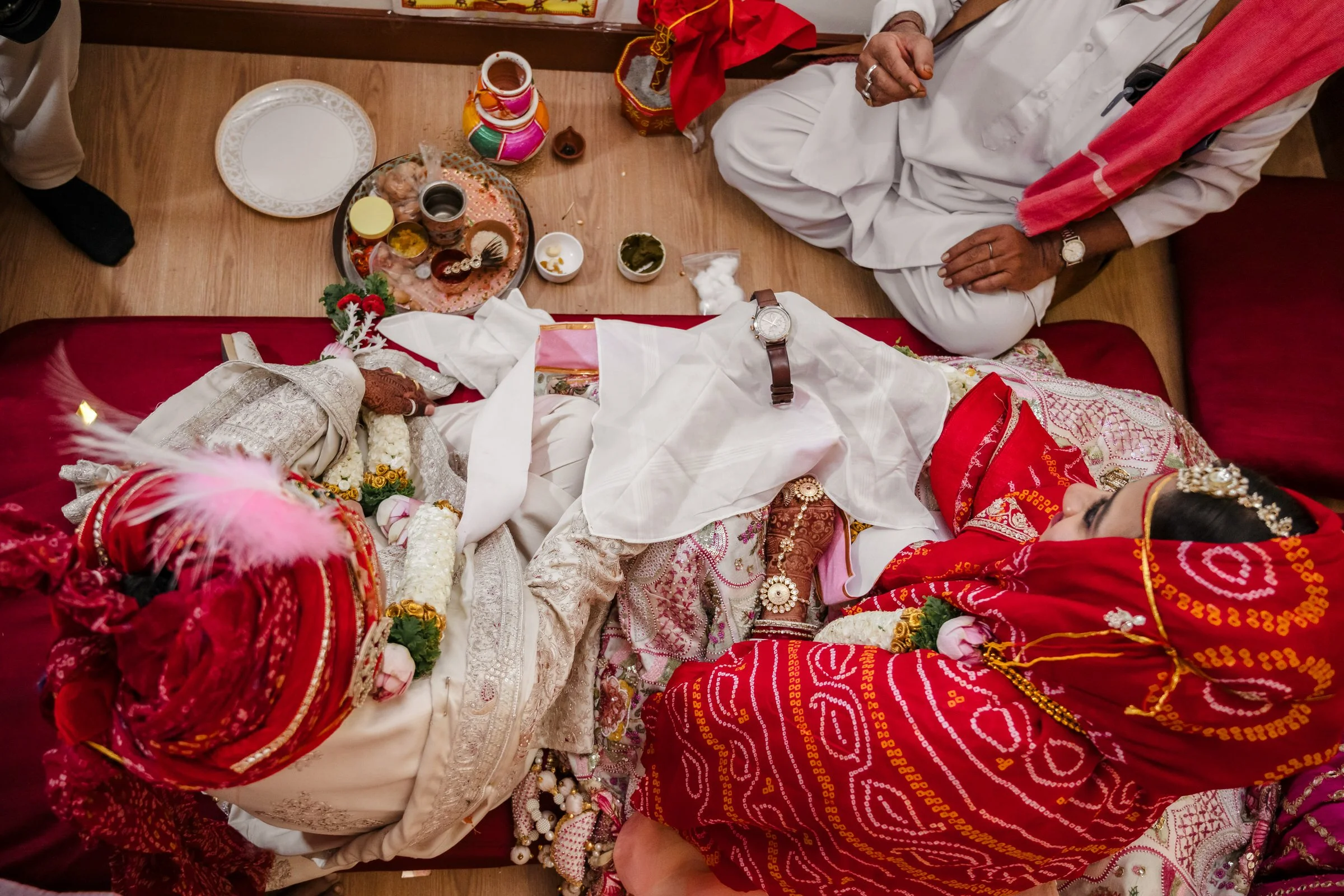
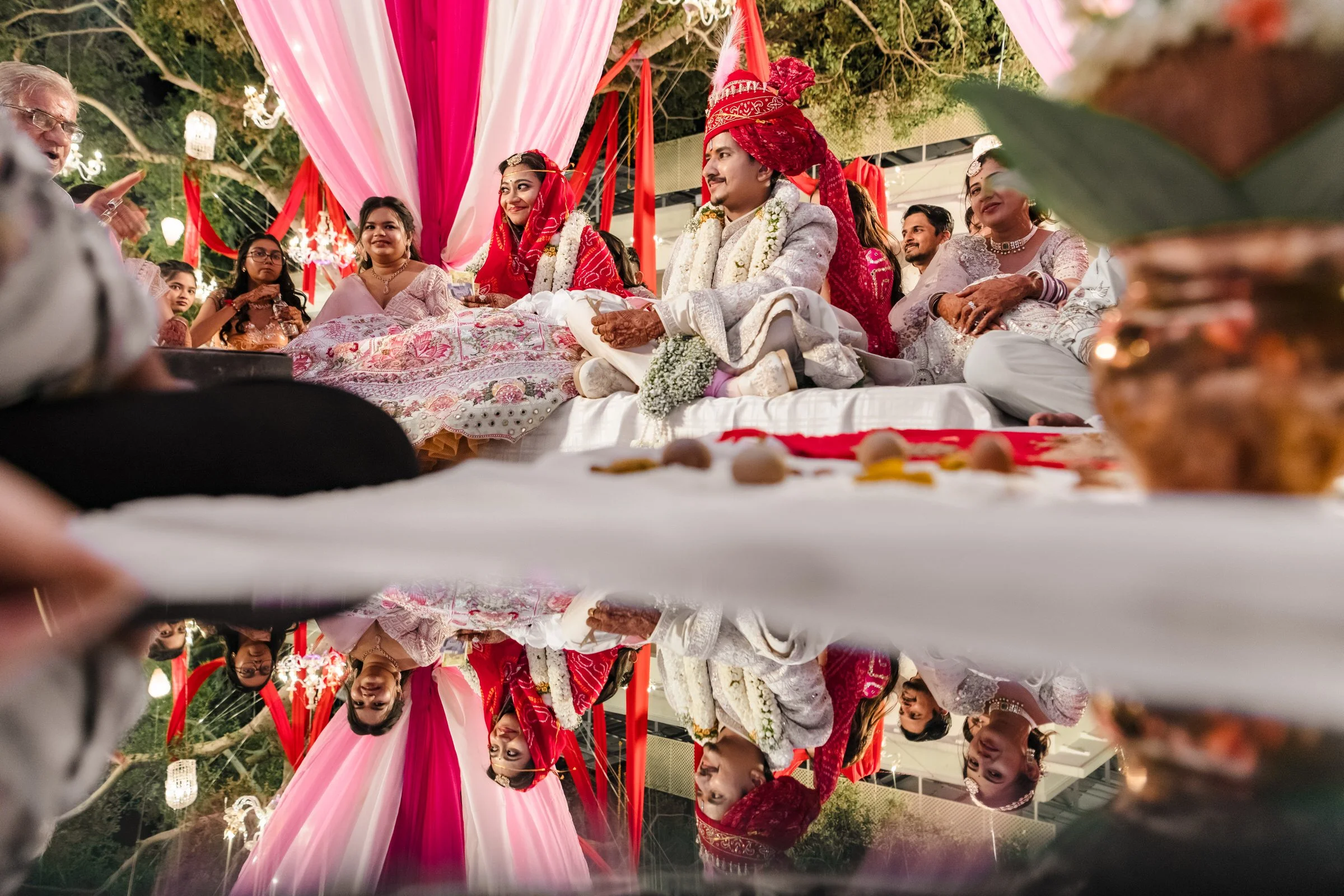
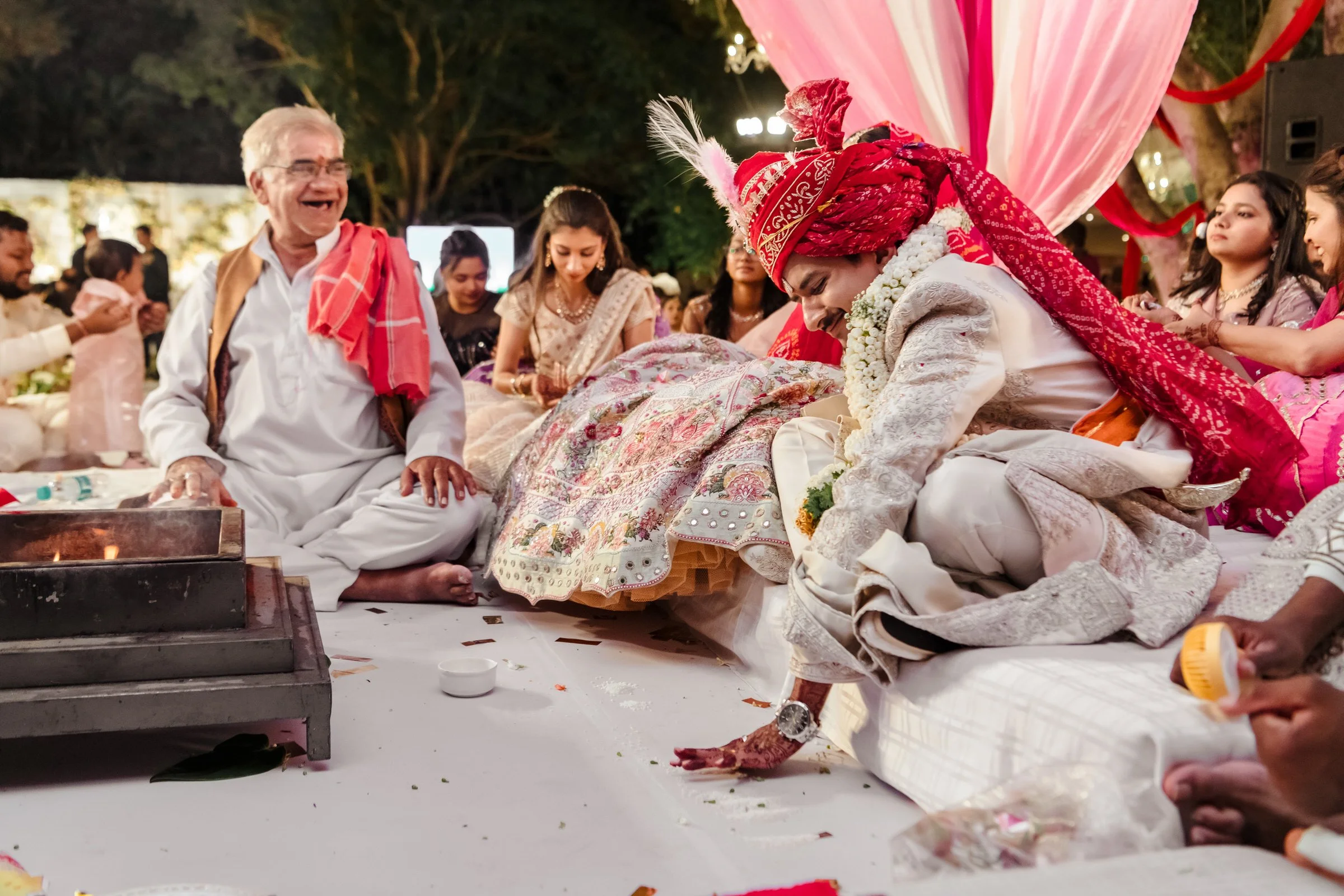
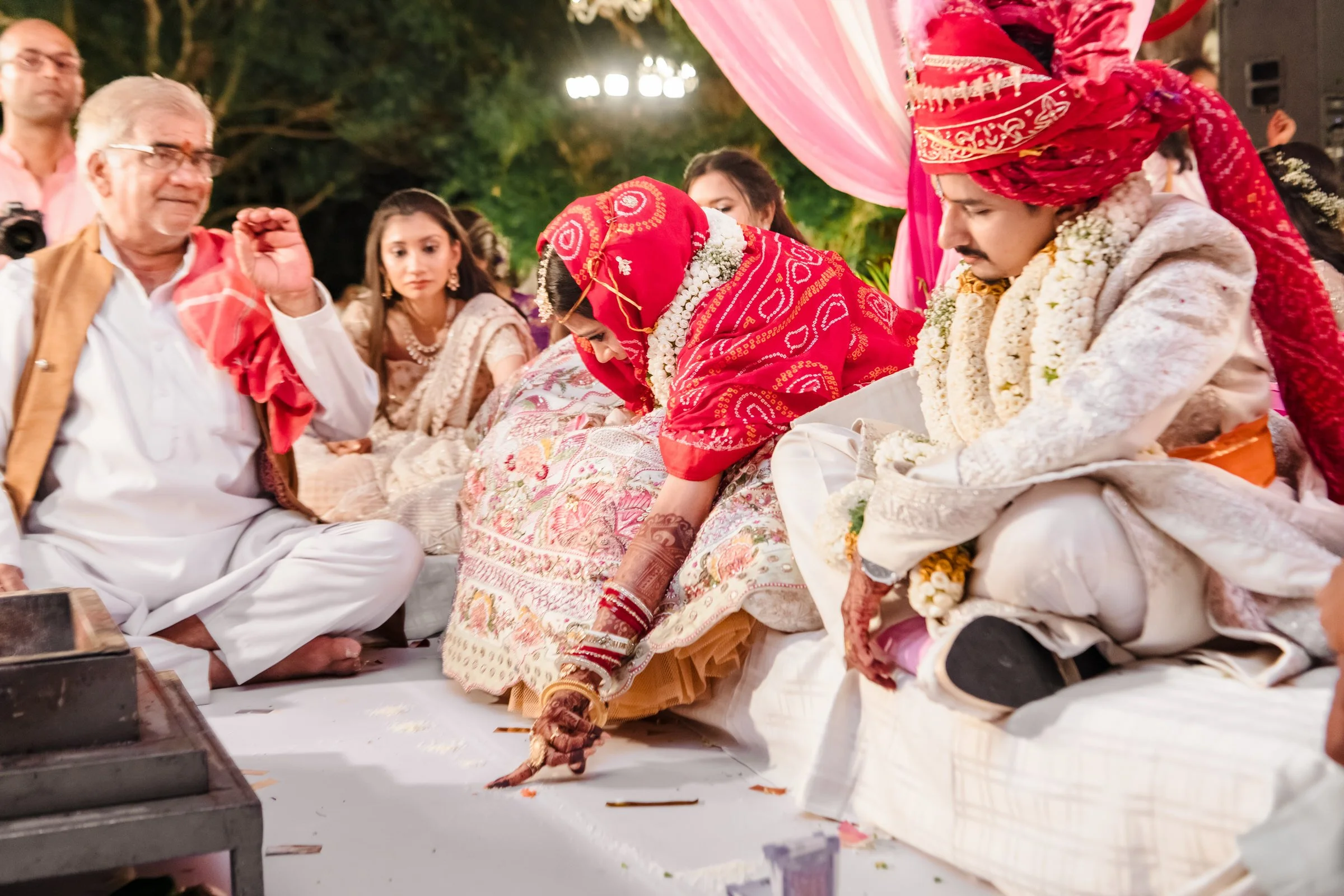
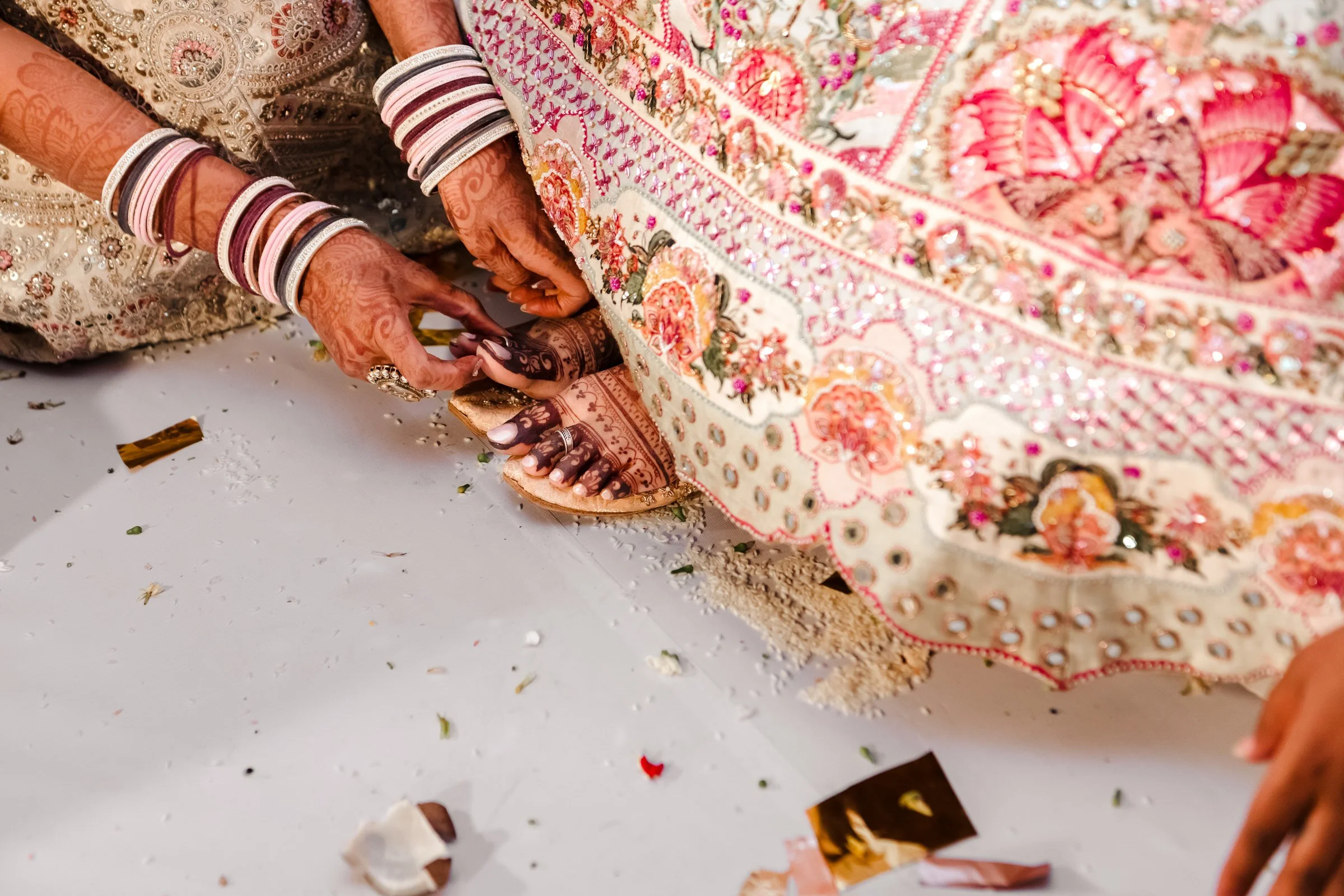
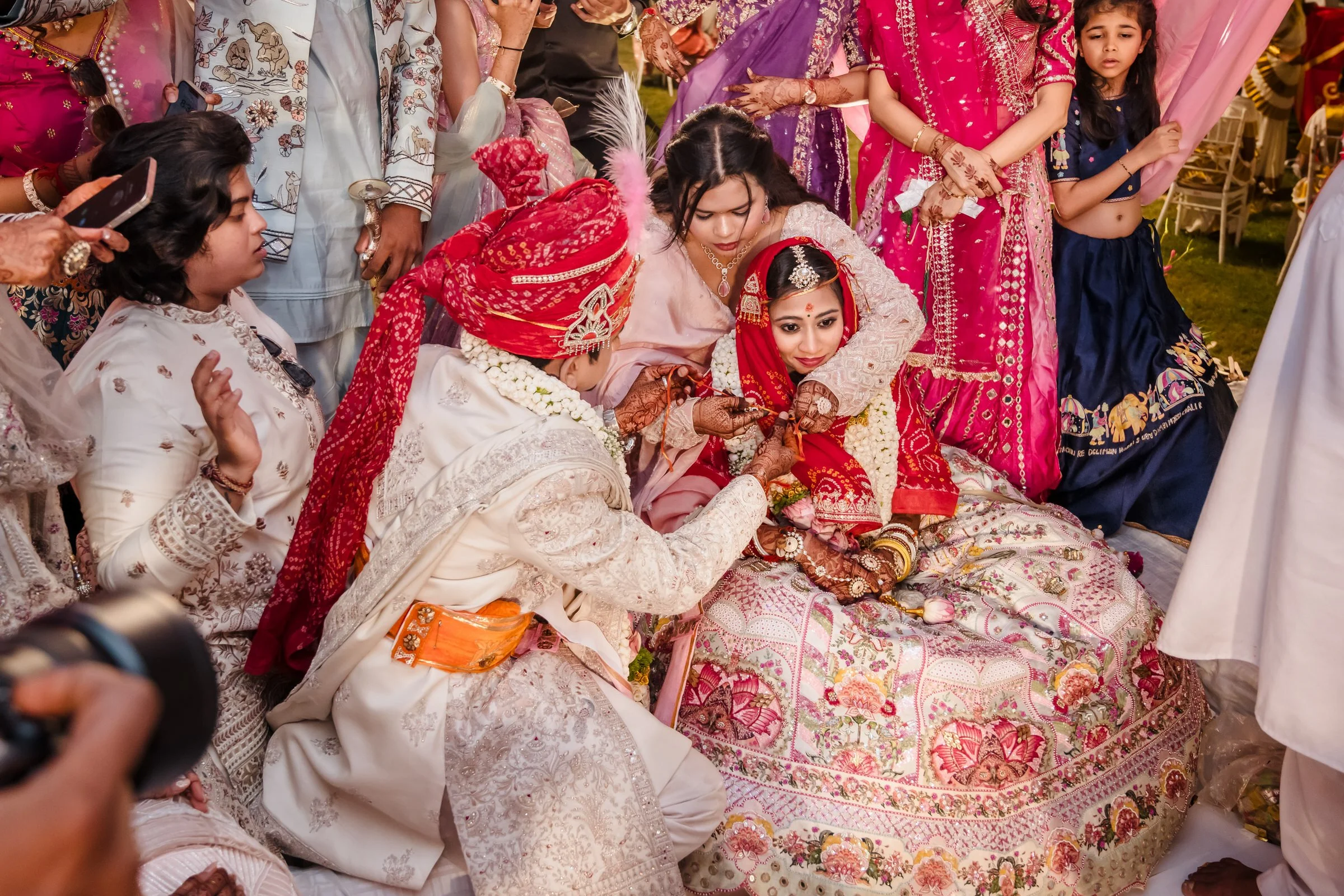
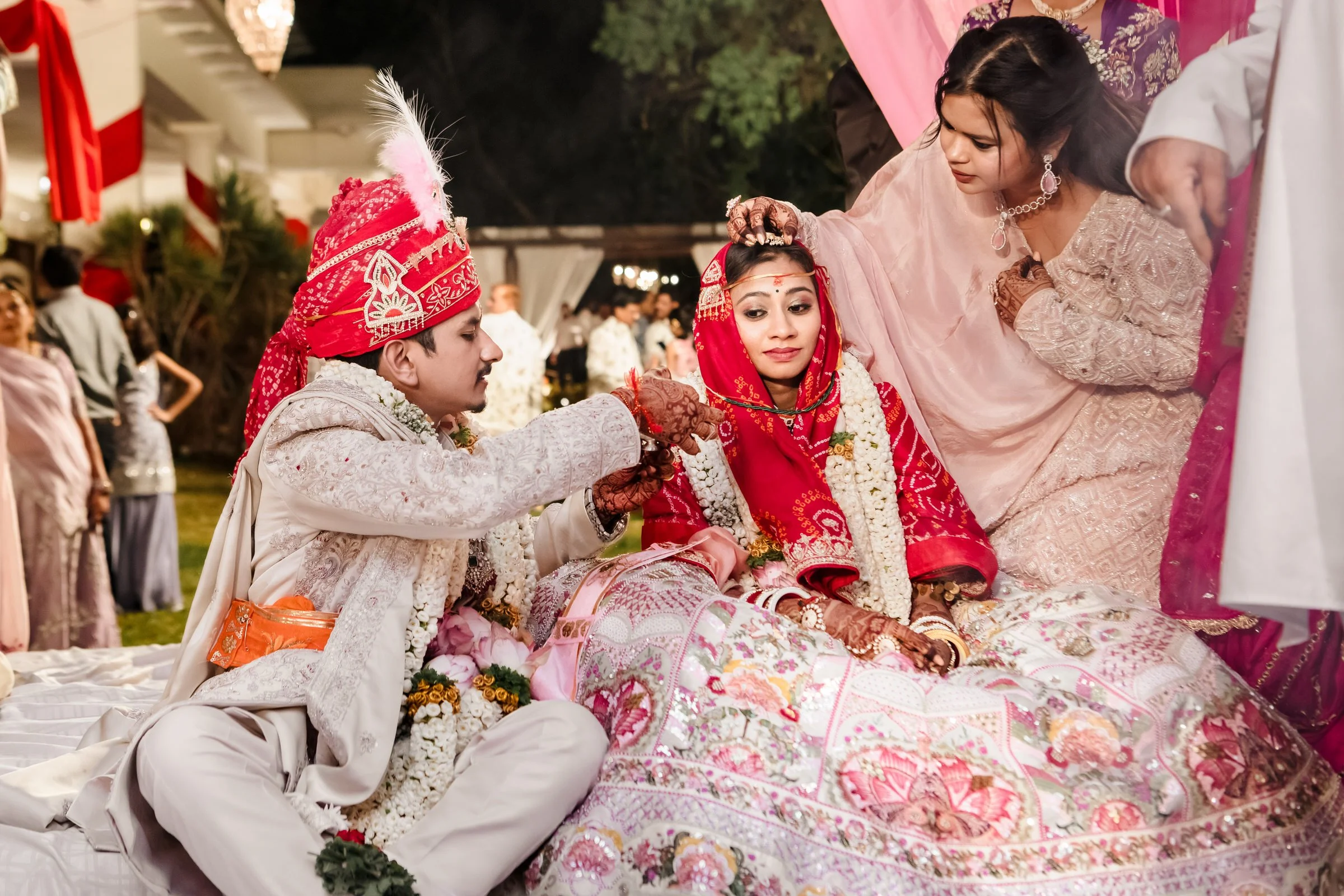
Granthi Bandhan, also called gathjoda. The bride's chunri is knotted to the groom's stole, often by the priest or the groom's sister. From this point they move as one through the rest of the ceremony. It is a small gesture with very little drama around it and it is one of the quietest, best pictures of the day.
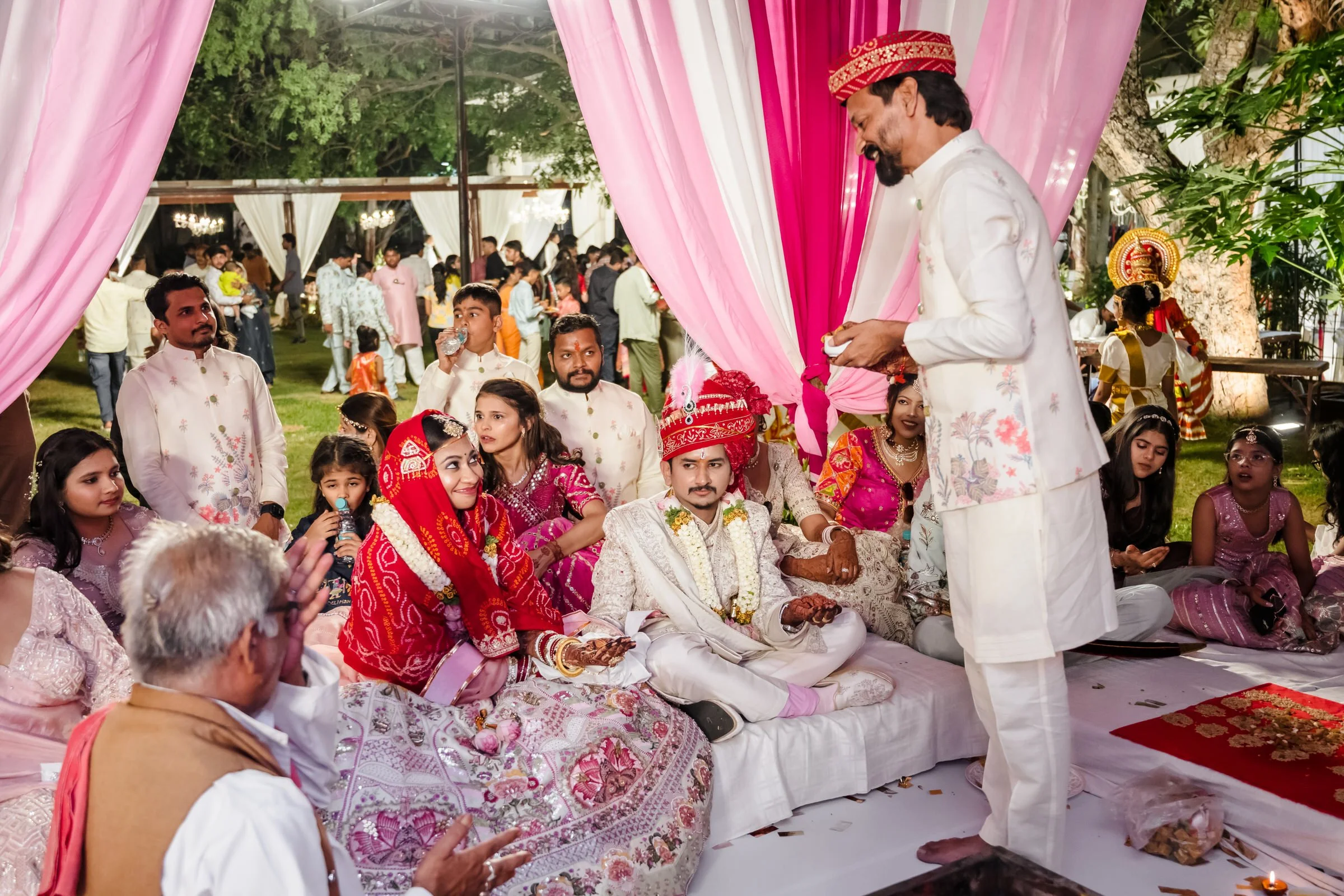
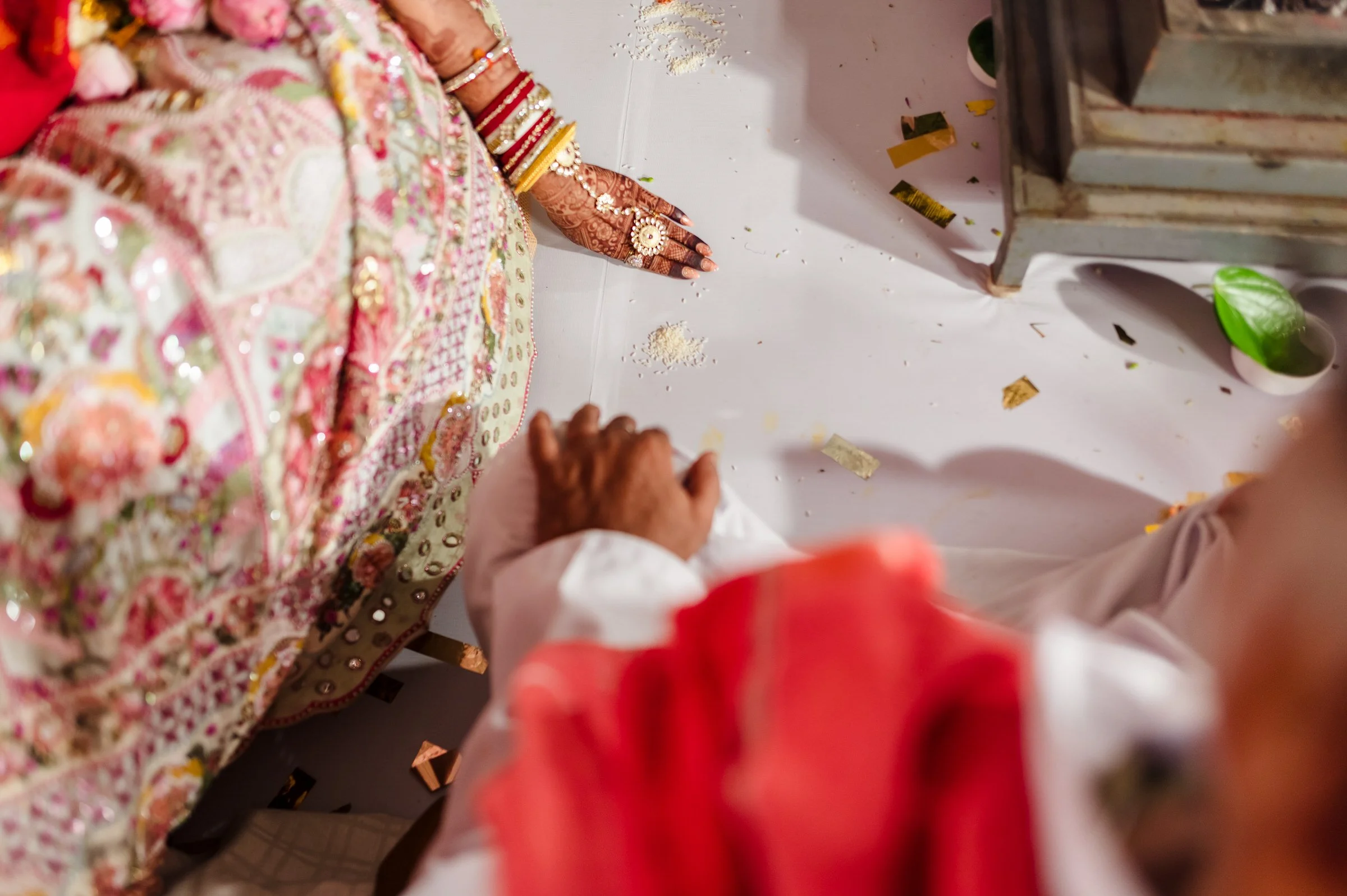
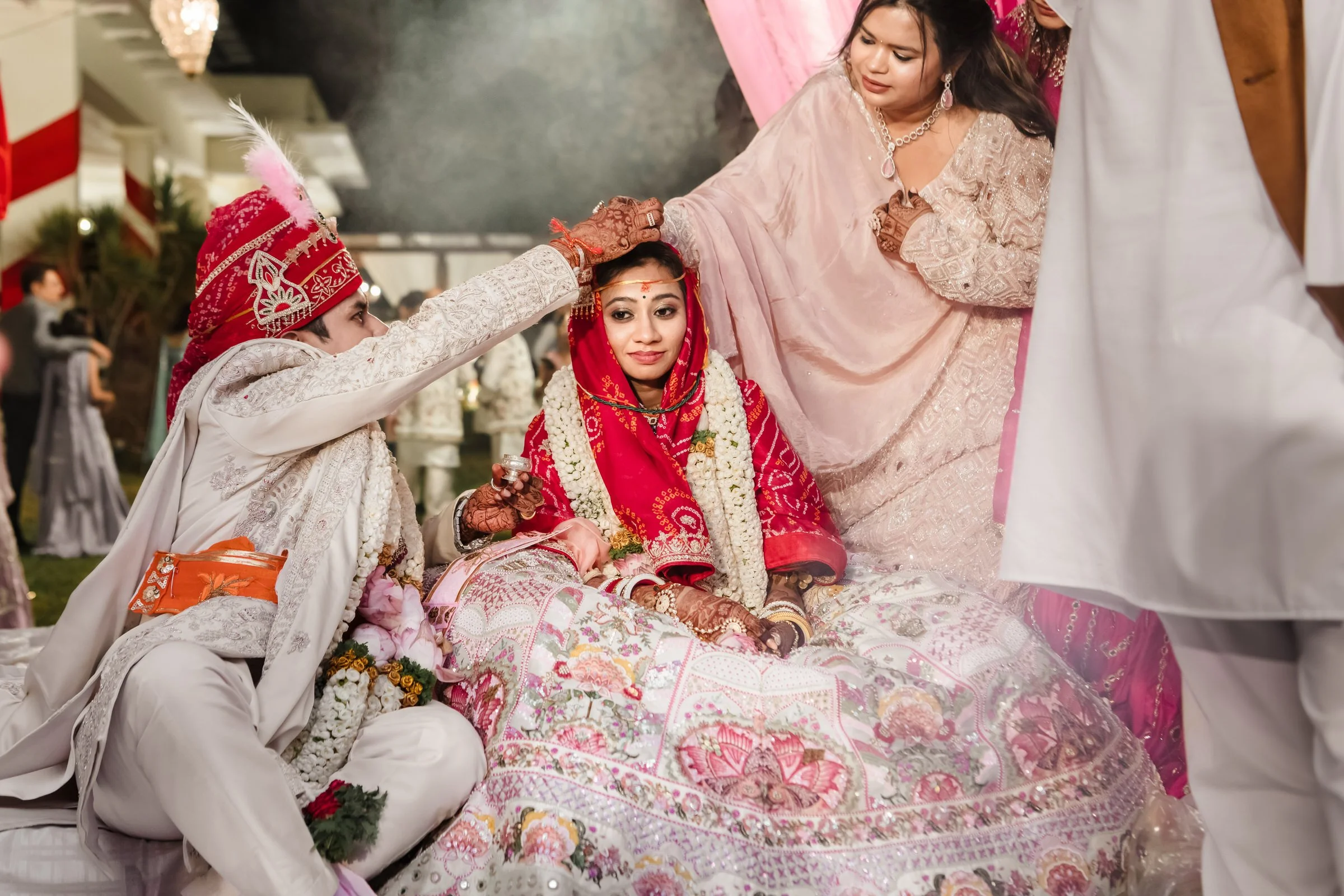
Paanigrahan. The groom takes the bride's hand and holy water is poured over it while he makes his promise to stand by her. The hands are the picture here, not the faces.
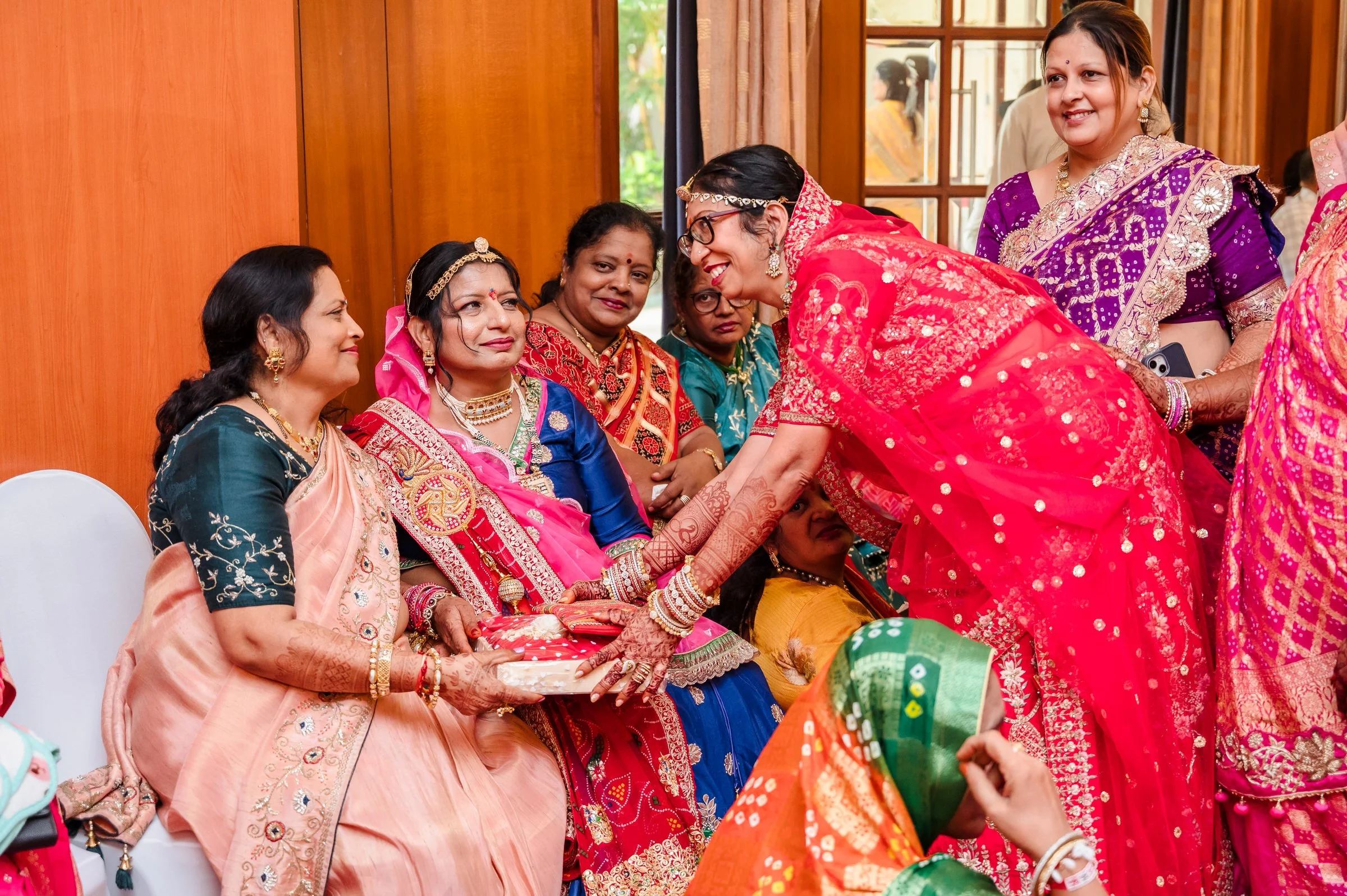
Kanyadaan. The bride's parents give her away. In our experience this is where the first tears of the day come, usually from someone nobody was watching.
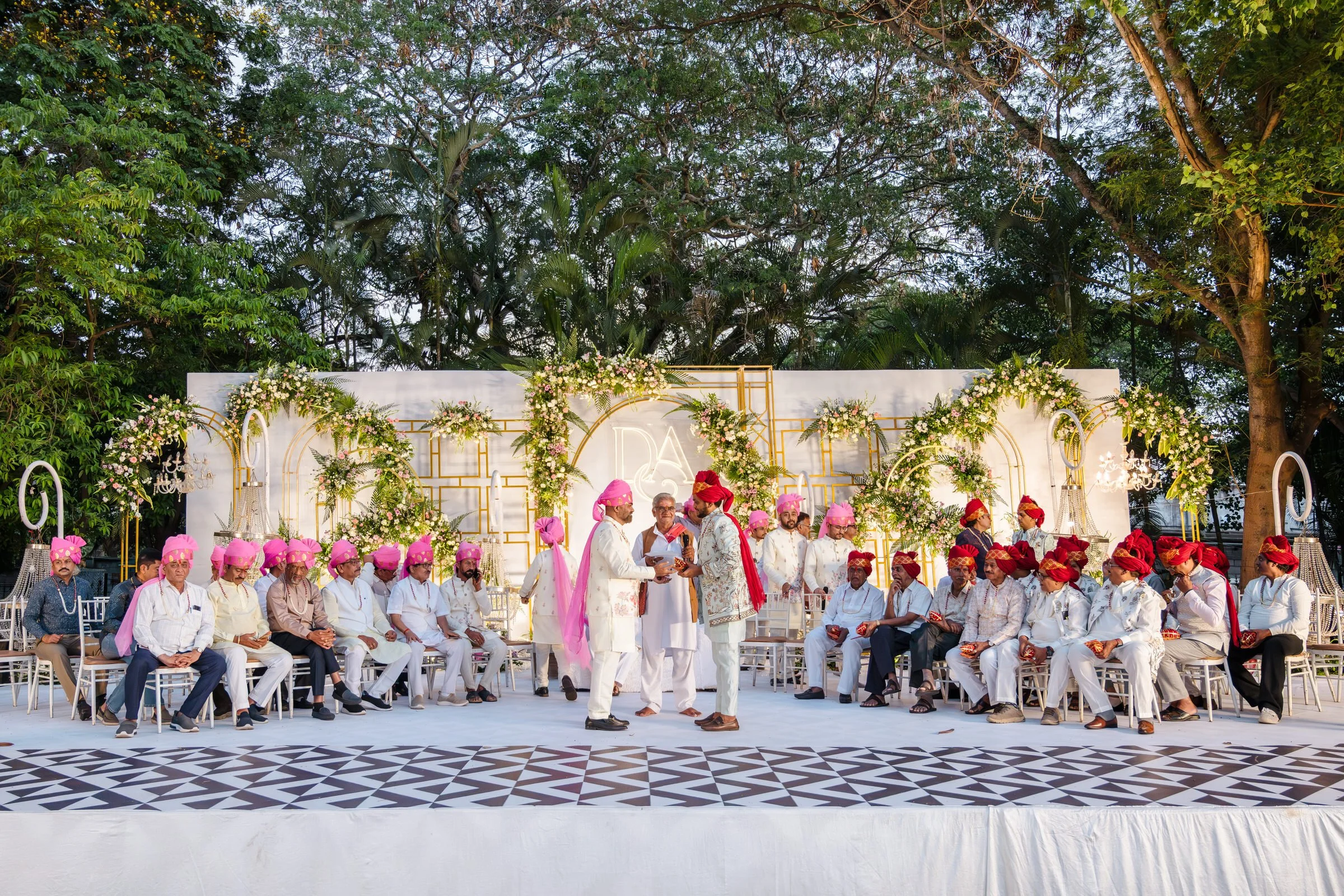
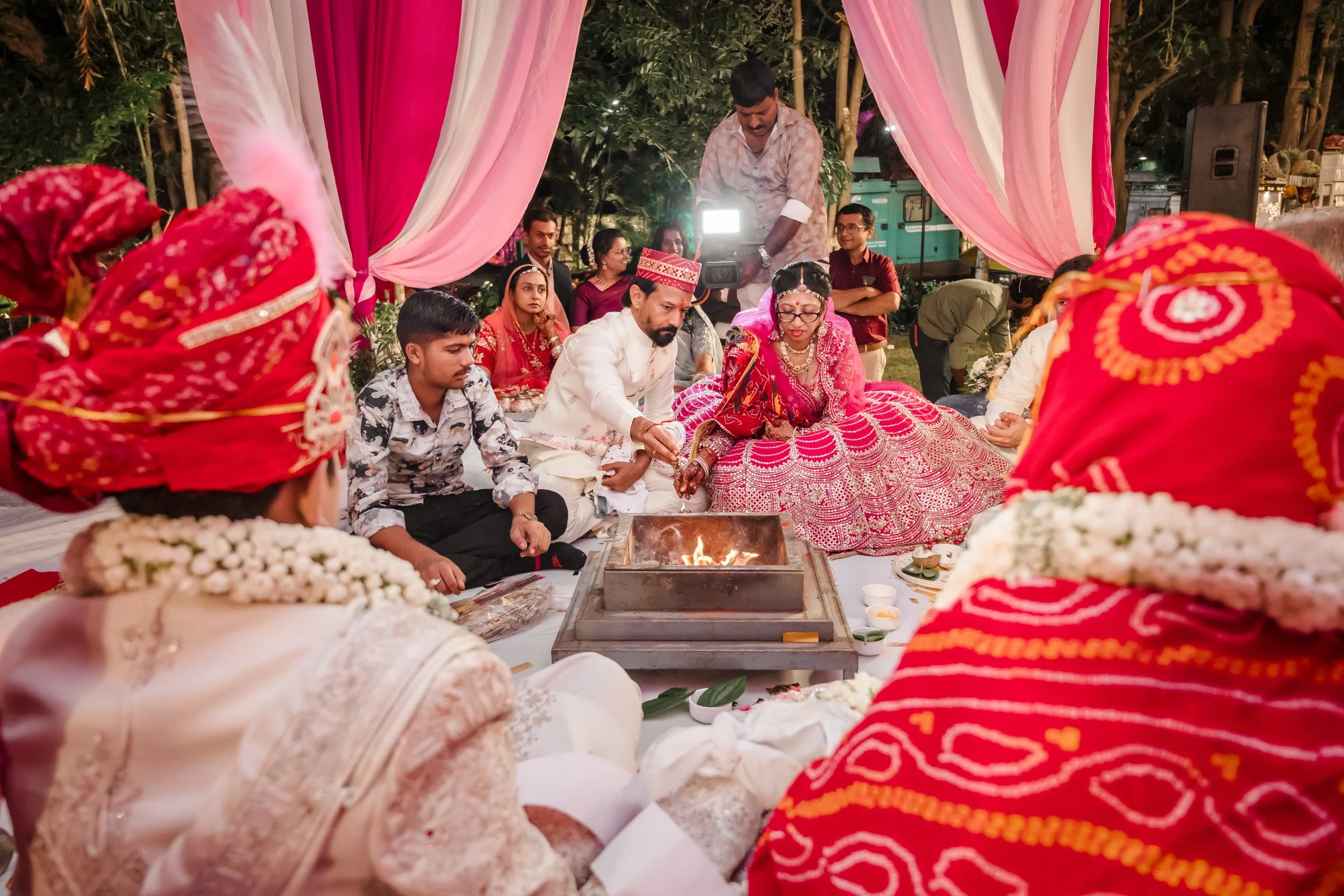
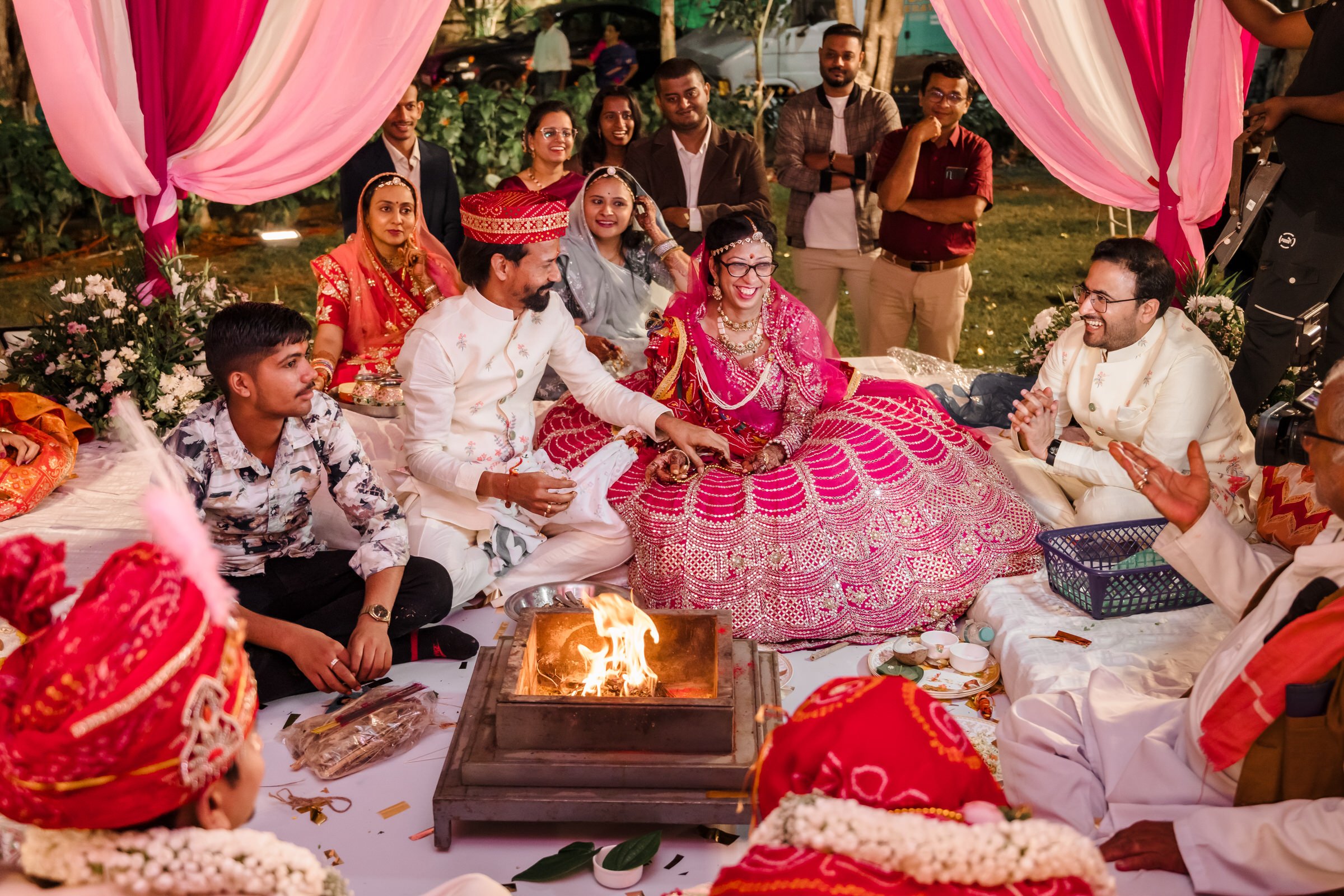
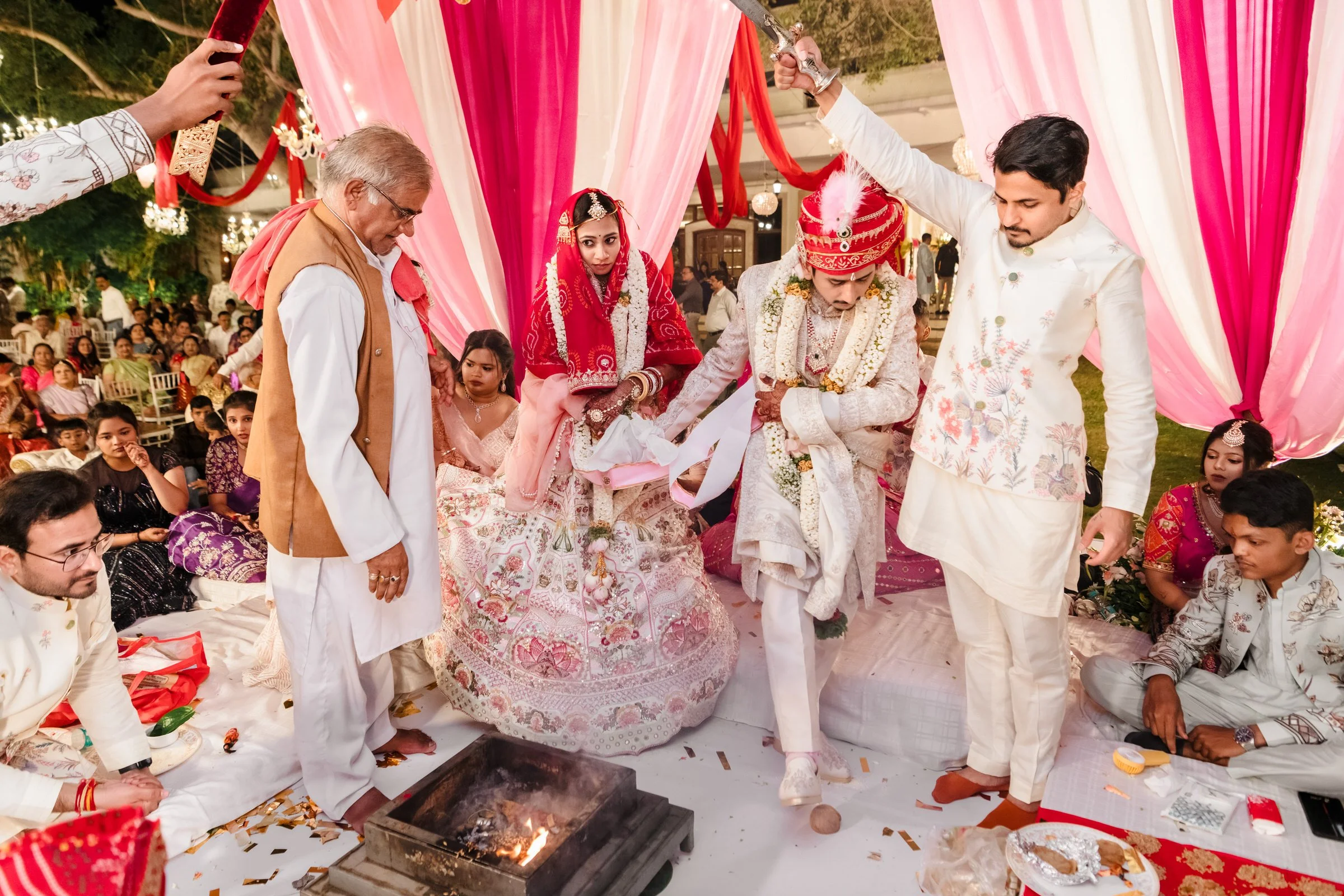
Pheras. The couple circle the sacred fire while the vows are recited. One thing worth knowing if you are planning yours: the number is not fixed across Marwari families. Some perform seven, some four, and families differ on who leads which rounds and on whether some of them happen at the entrance rather than at the mandap. Ask your priest beforehand and tell your photographer, because the lead changes between the bride and the groom mid-ritual and it decides where we need to be standing.
Sindoor Daan and the mangalsutra. The groom applies sindoor and ties the mangalsutra. Short, central, and completely unrepeatable.
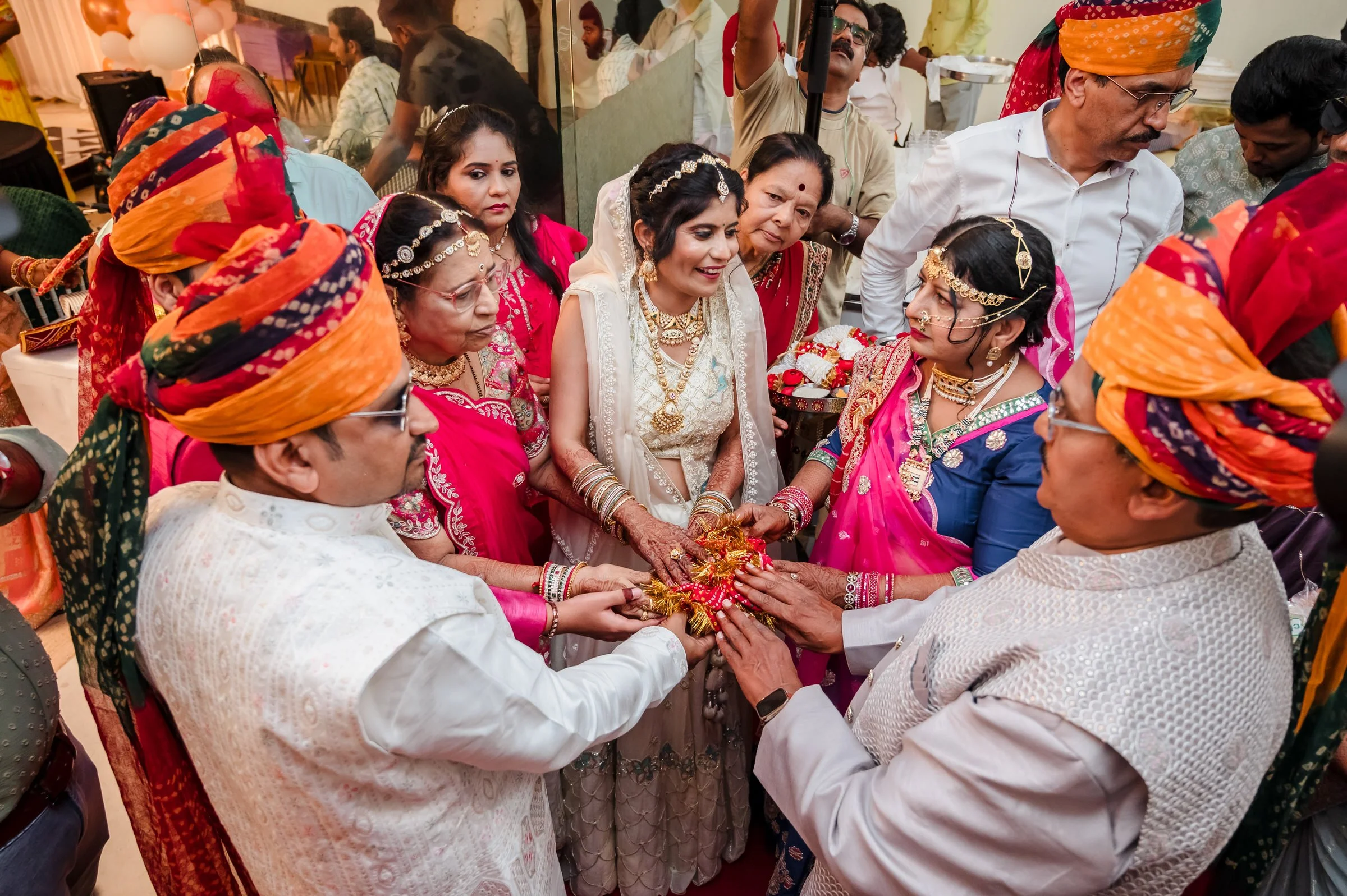
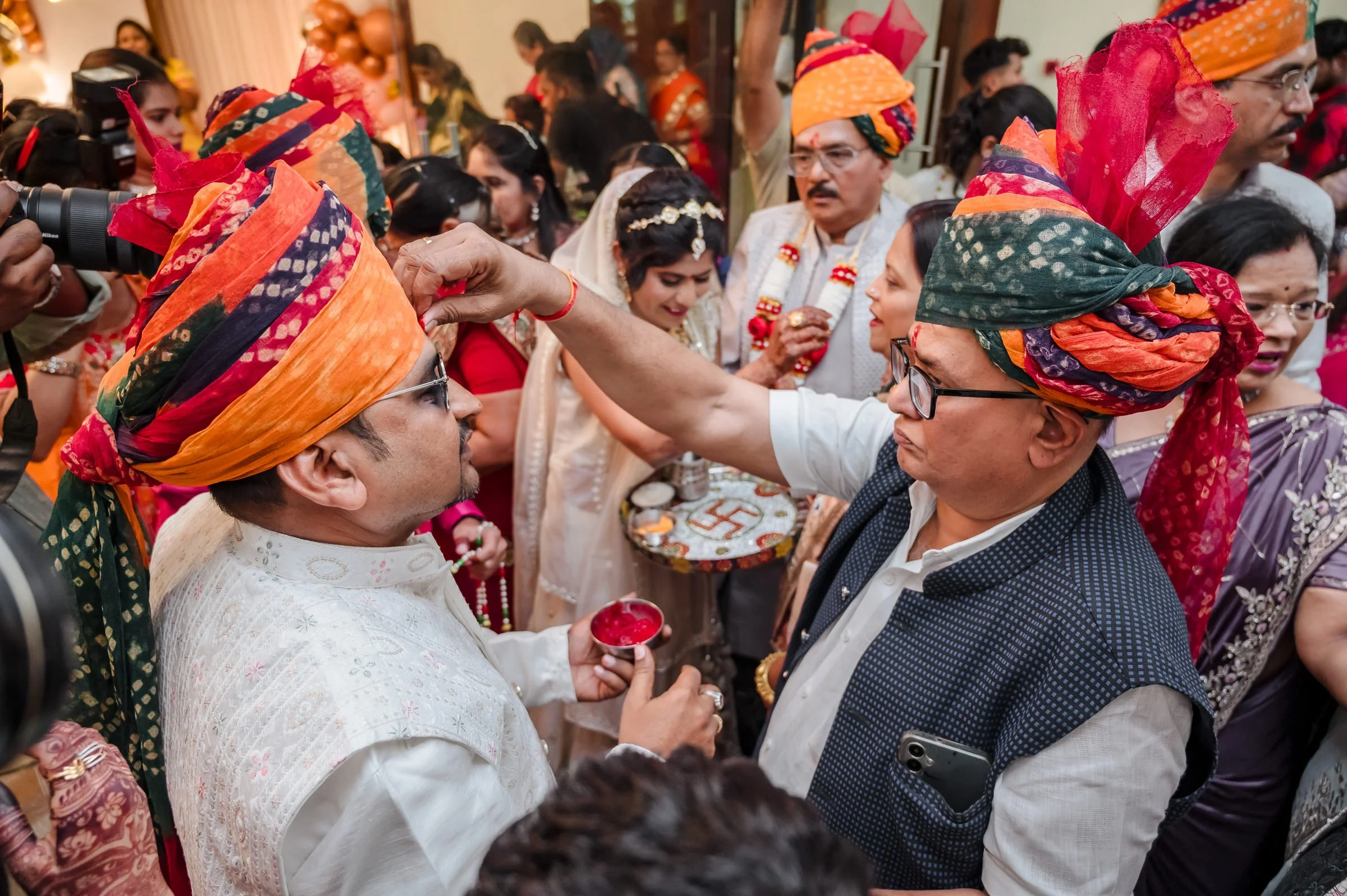
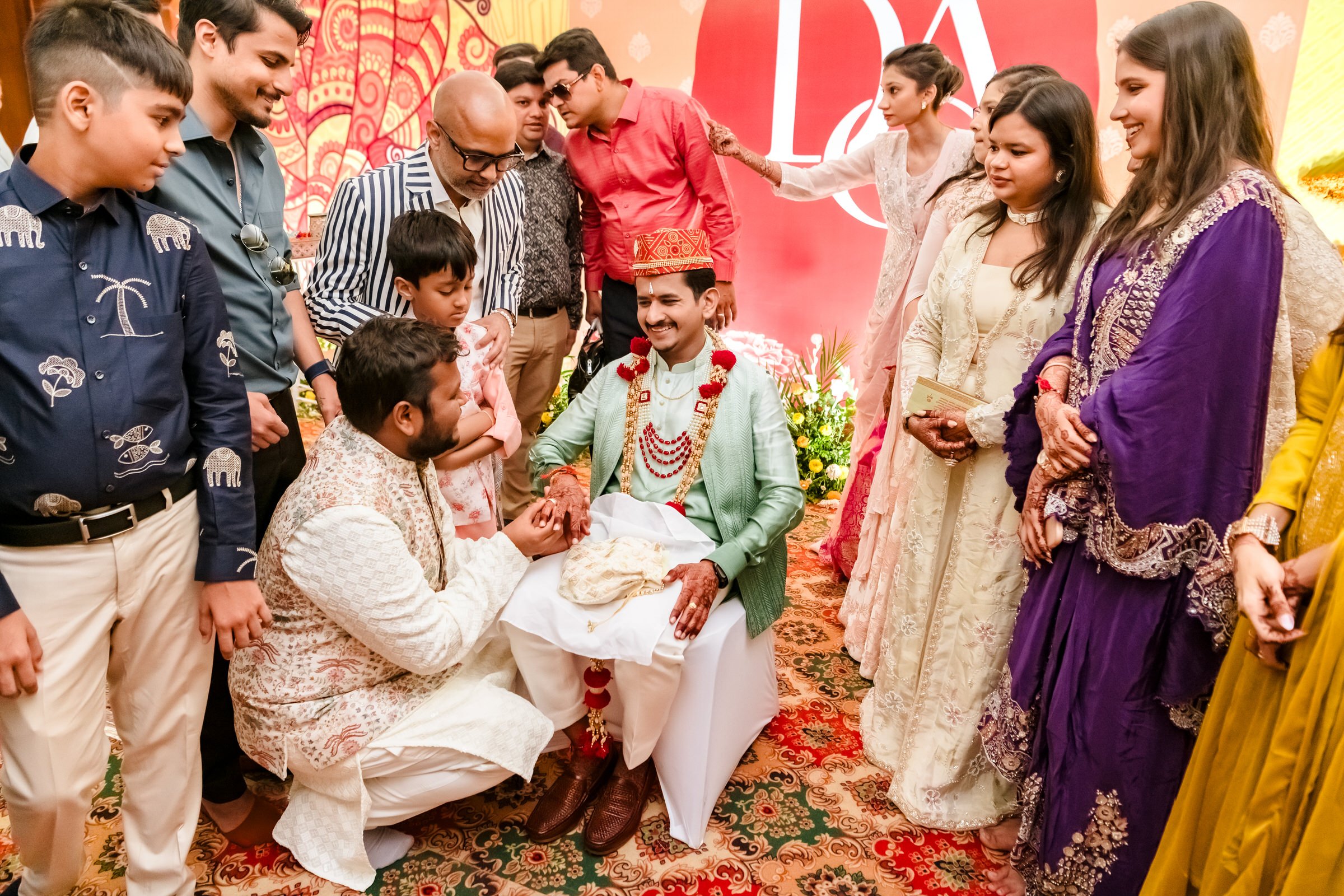
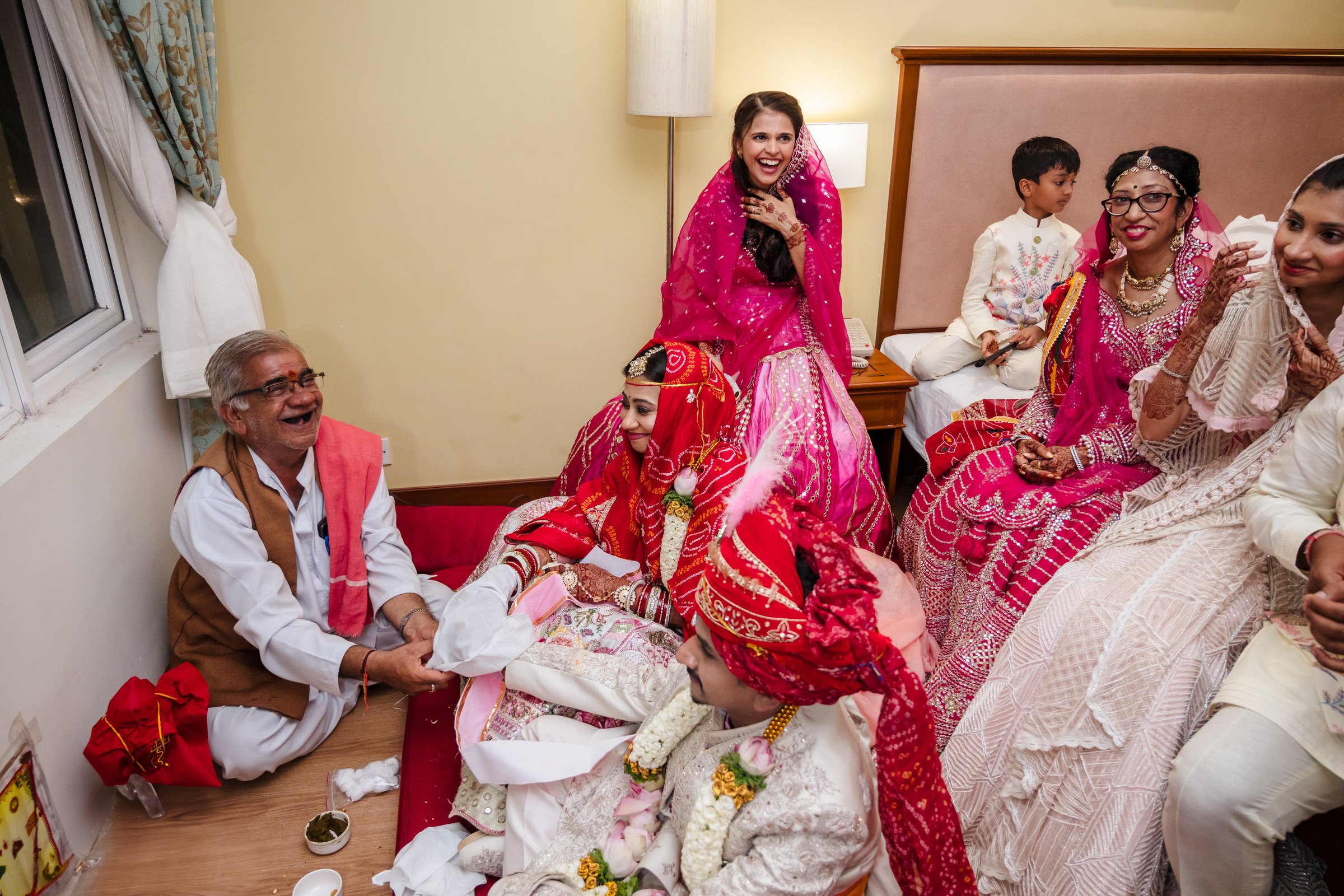
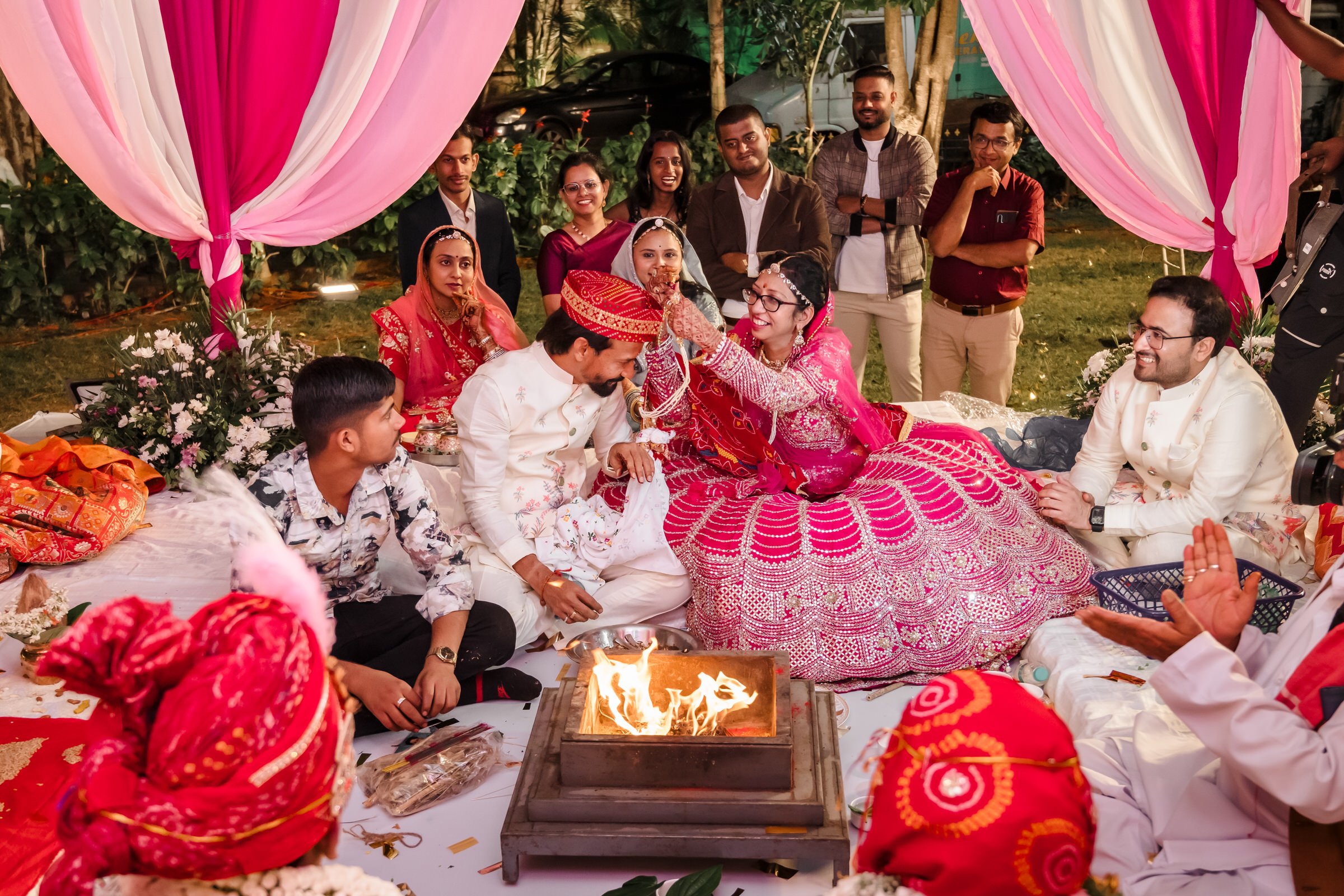
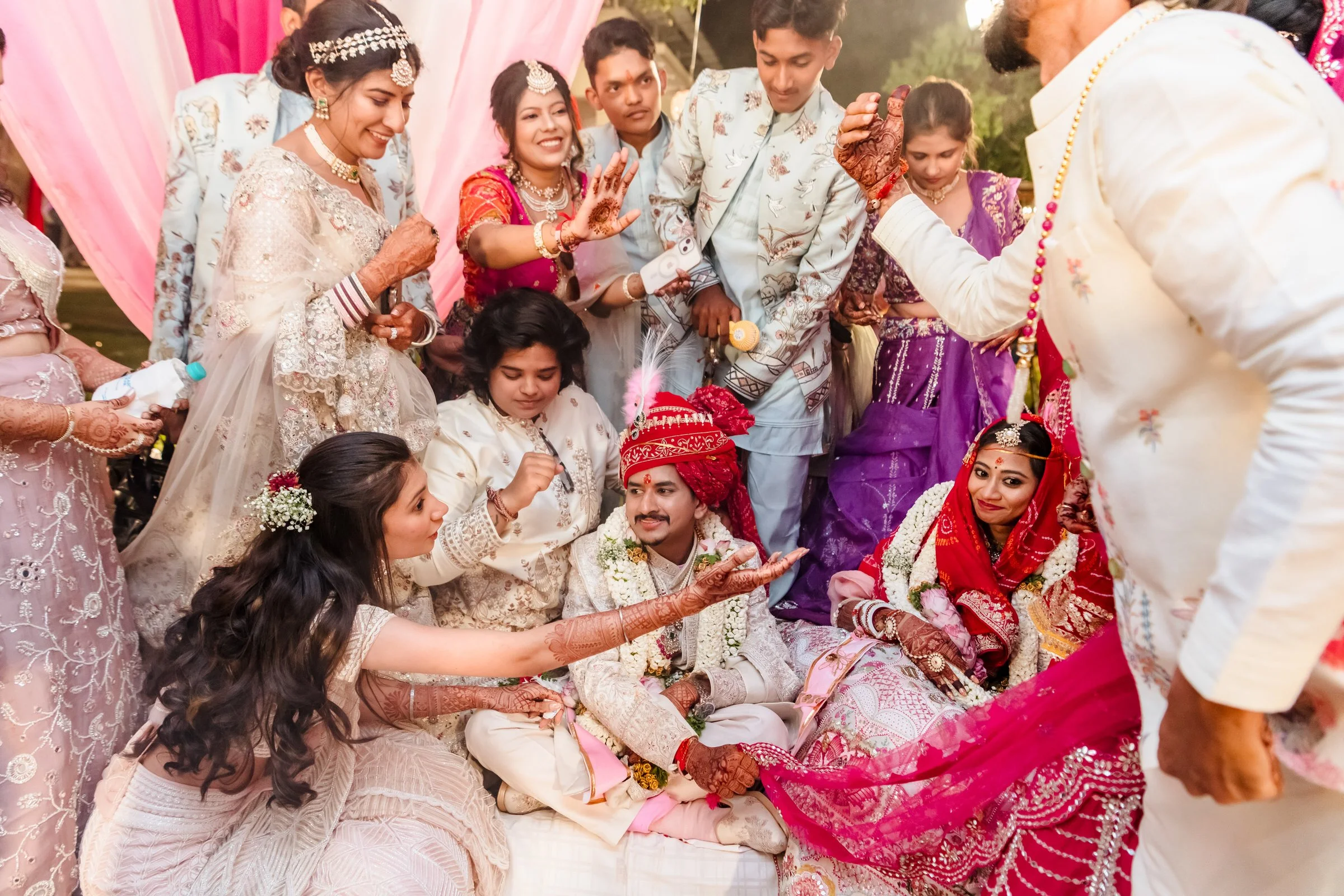
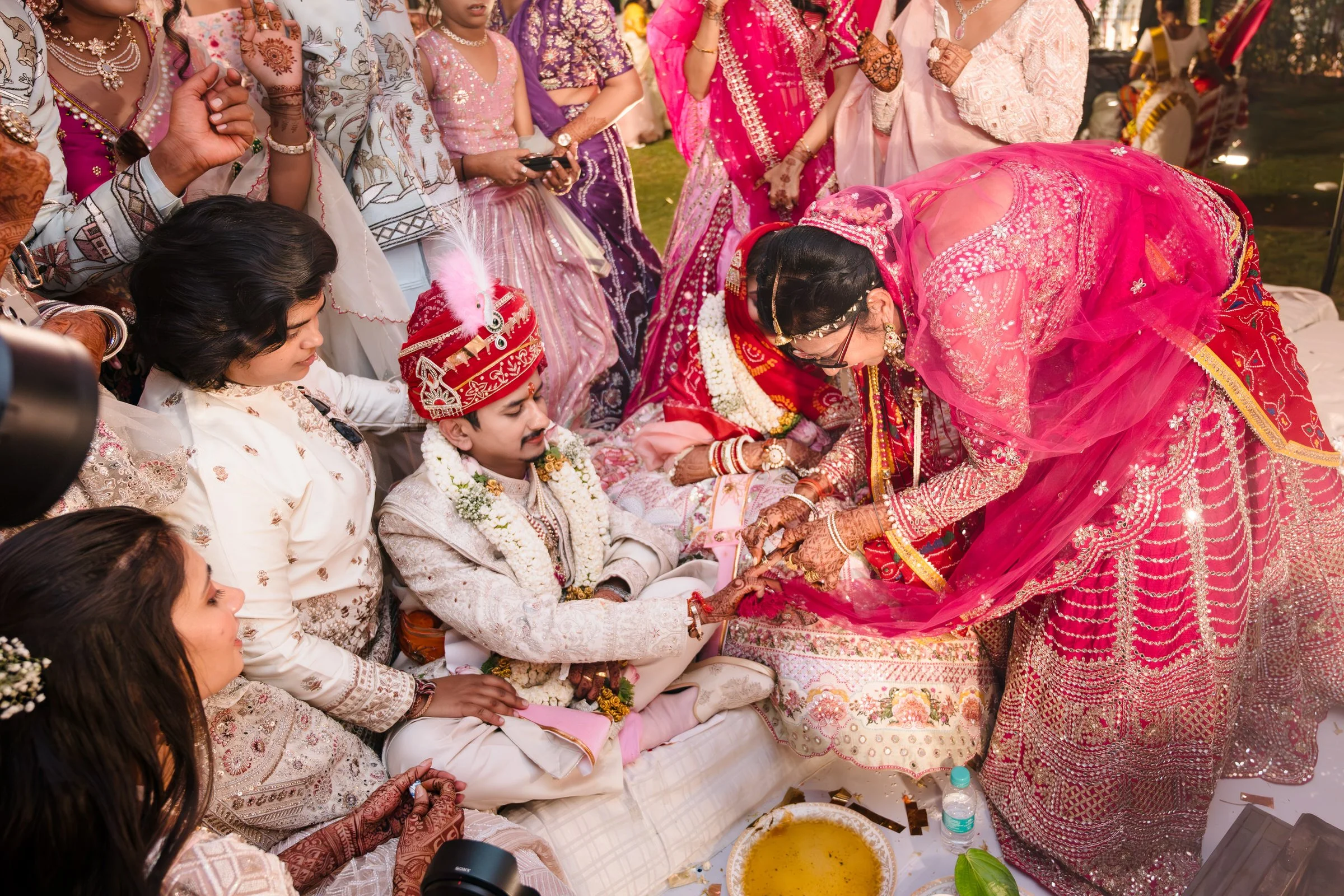
Then come the lighter bits that every family does differently. Ashwarohan, joota chupai, the chunari draped on the bride by the groom's father. These are the rituals where the room finally relaxes and everybody talks over the priest.
The practical point for anyone planning a Marwari wedding is that this whole sequence runs long and runs on its own clock. Toran to sindoor can stretch across hours, the order shifts family to family, and almost none of it is announced. If your photographer does not know what is coming next, they find out at the same moment you do, which is too late.
Day two, evening: the reception
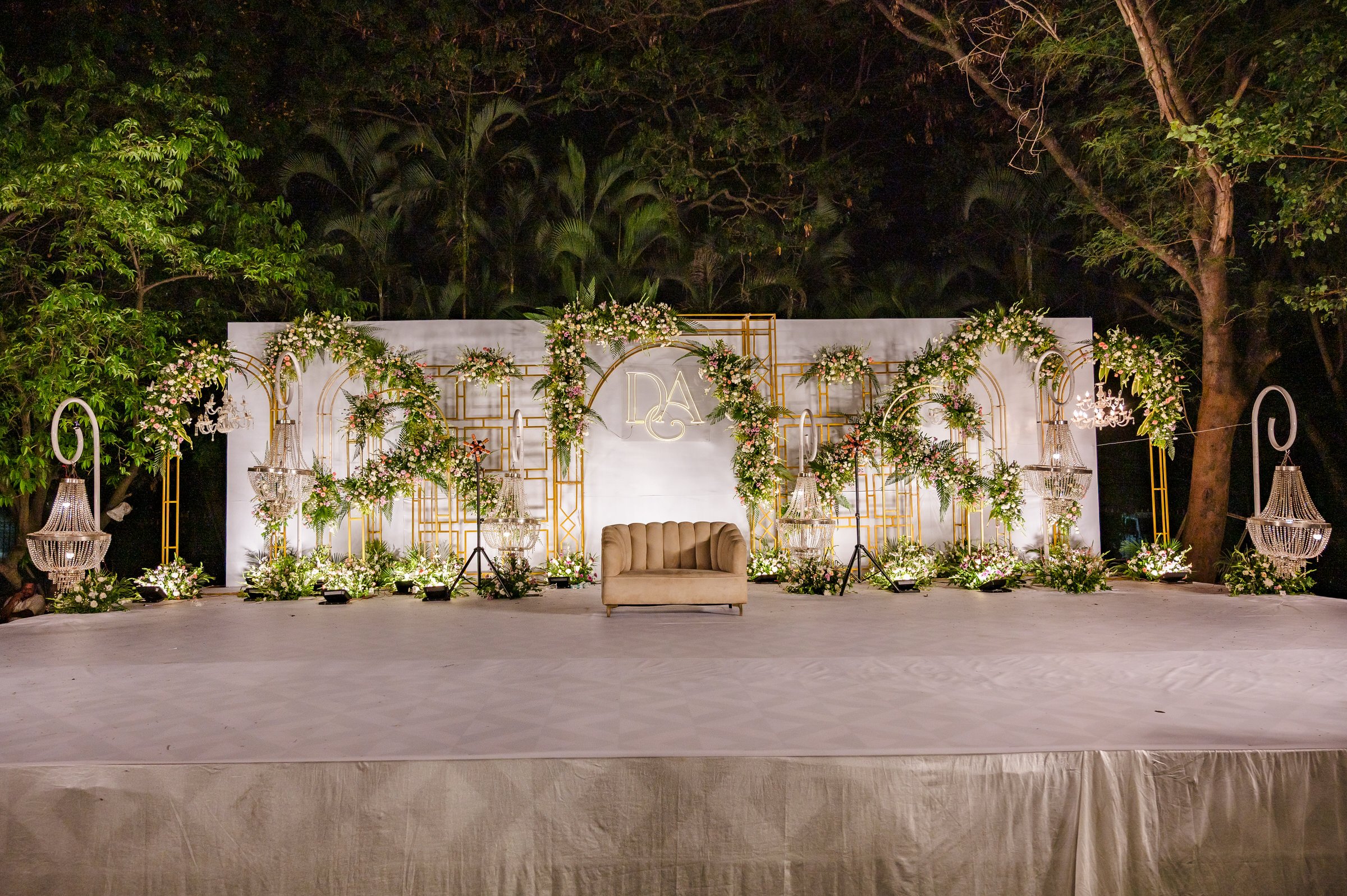
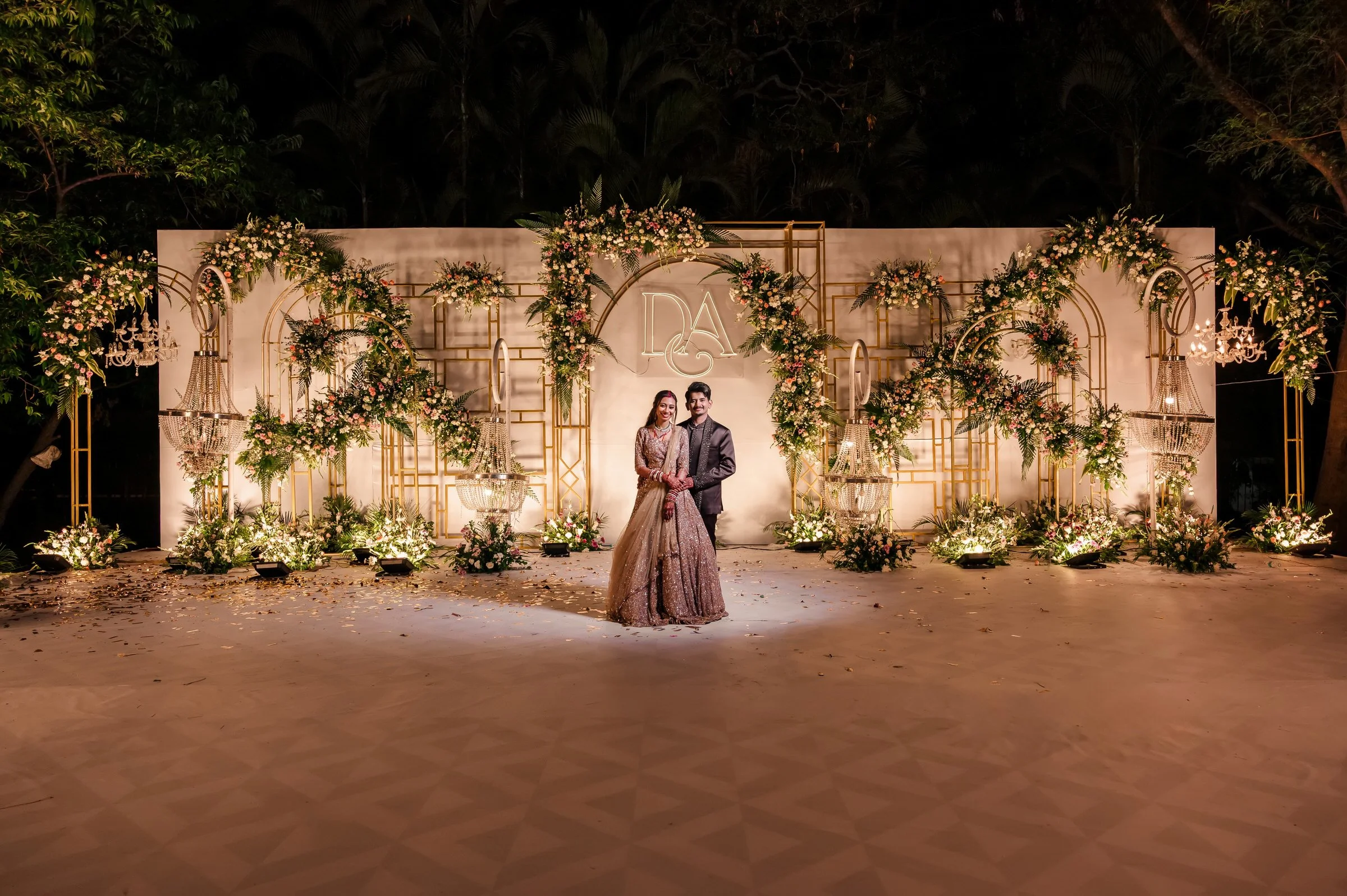
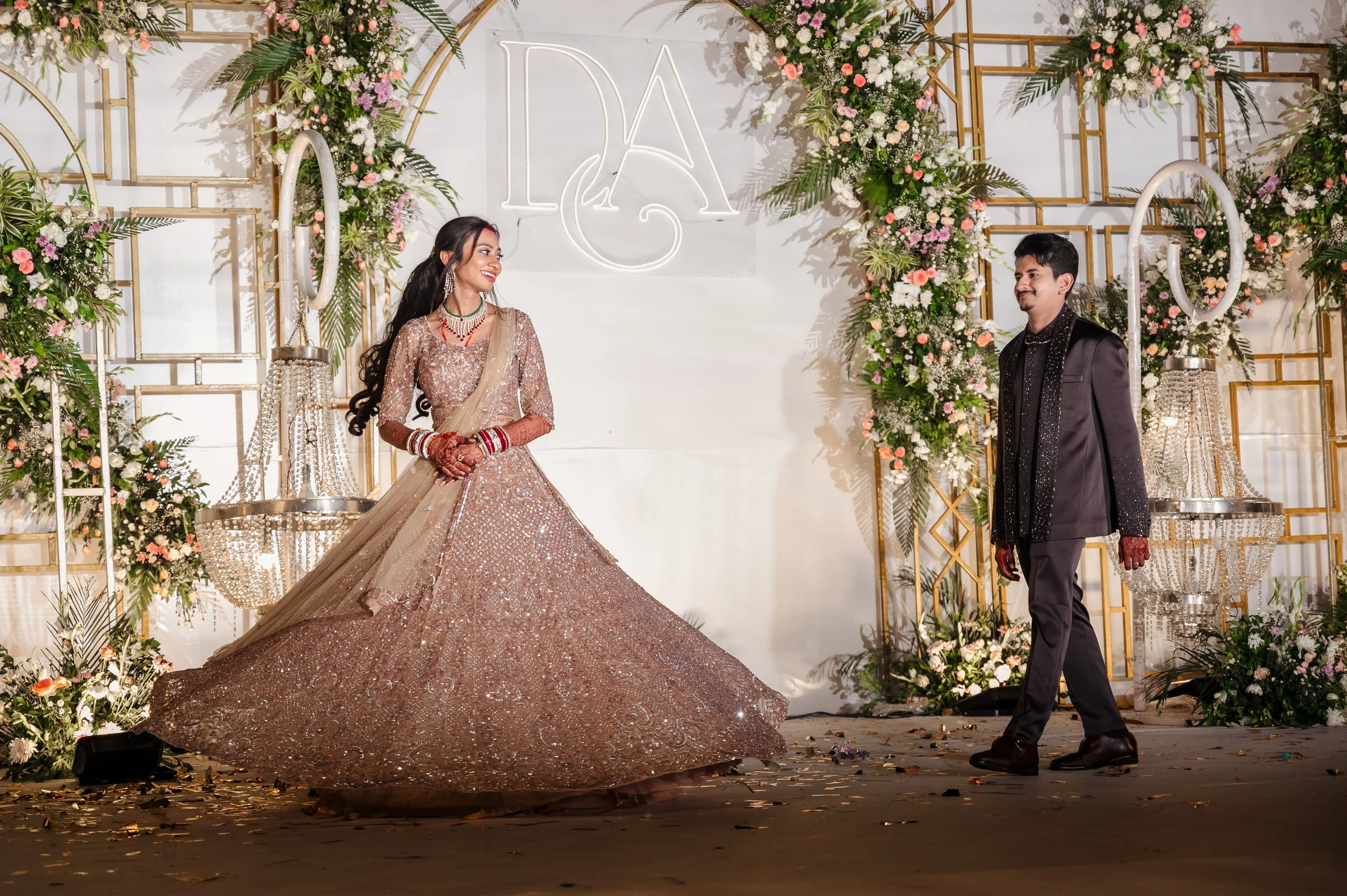
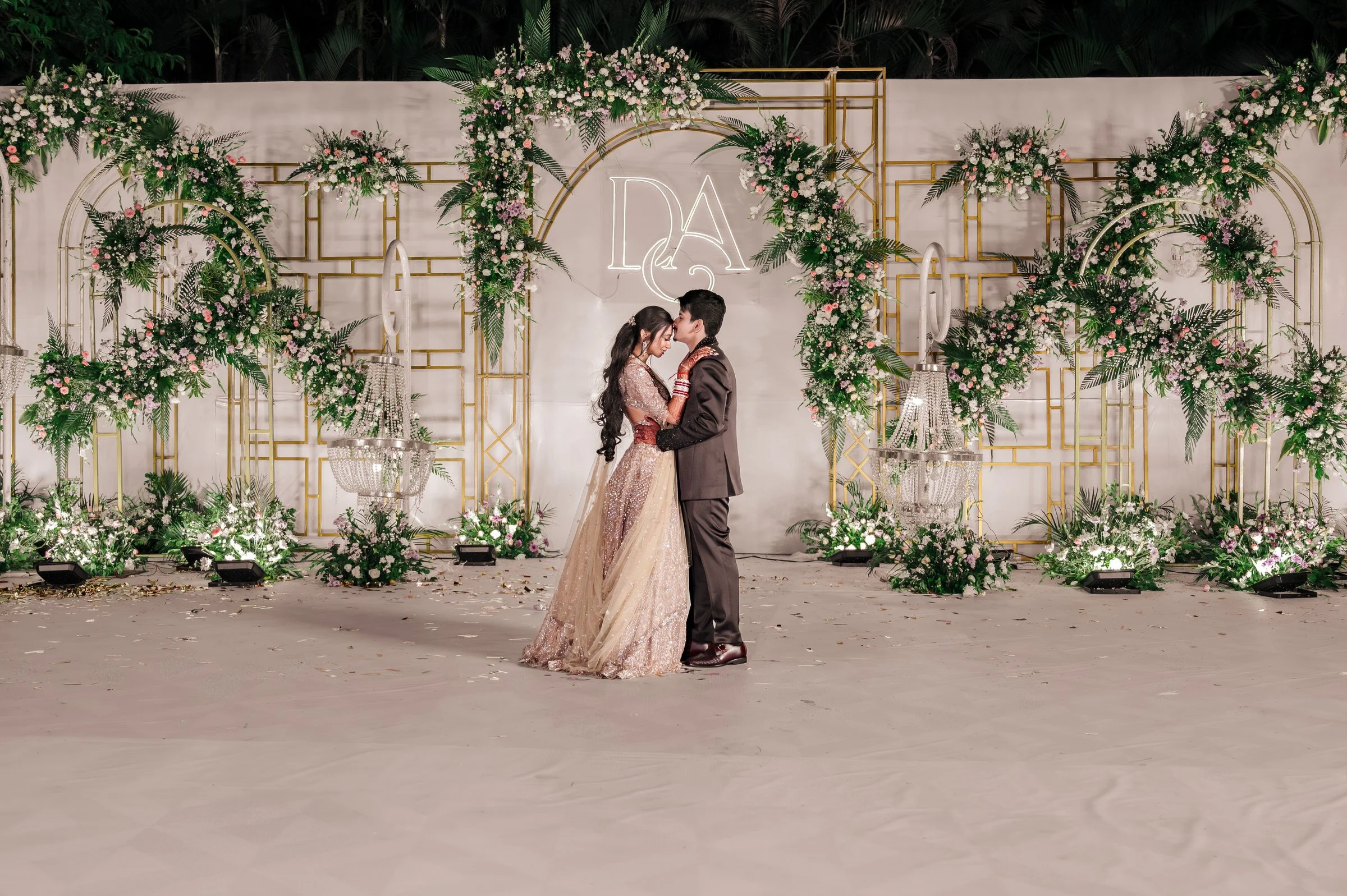
The reception was formal, and intentionally so.
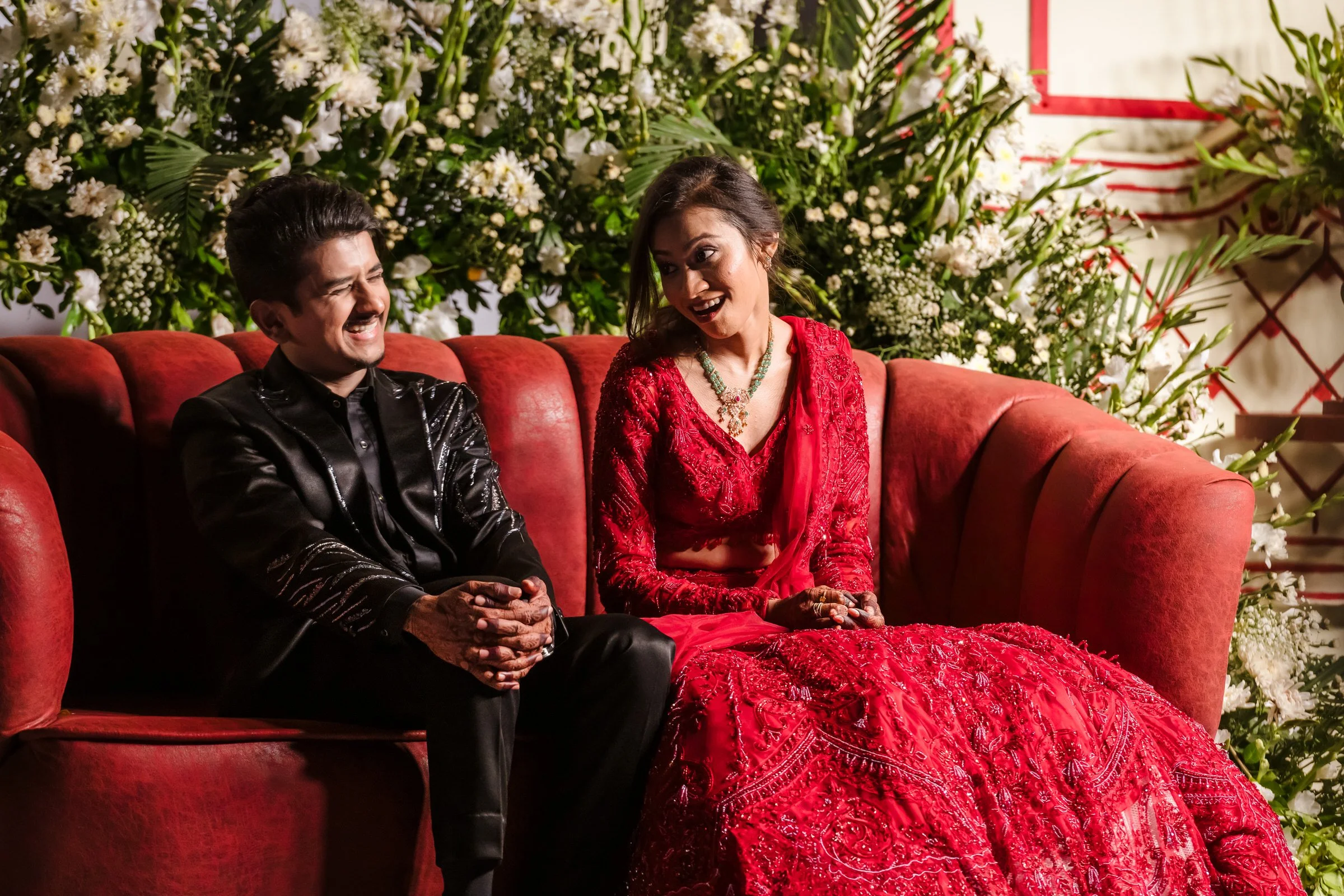
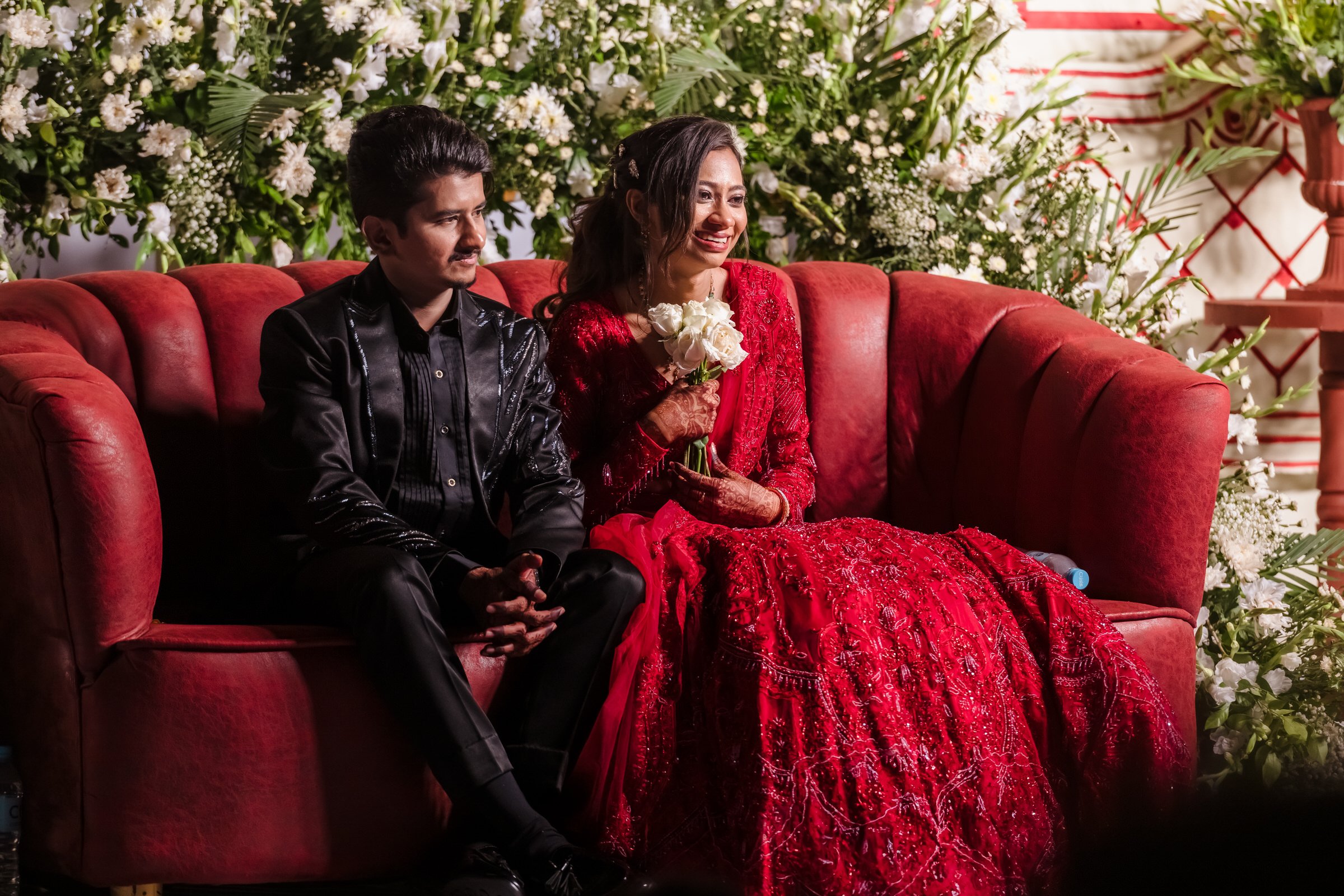
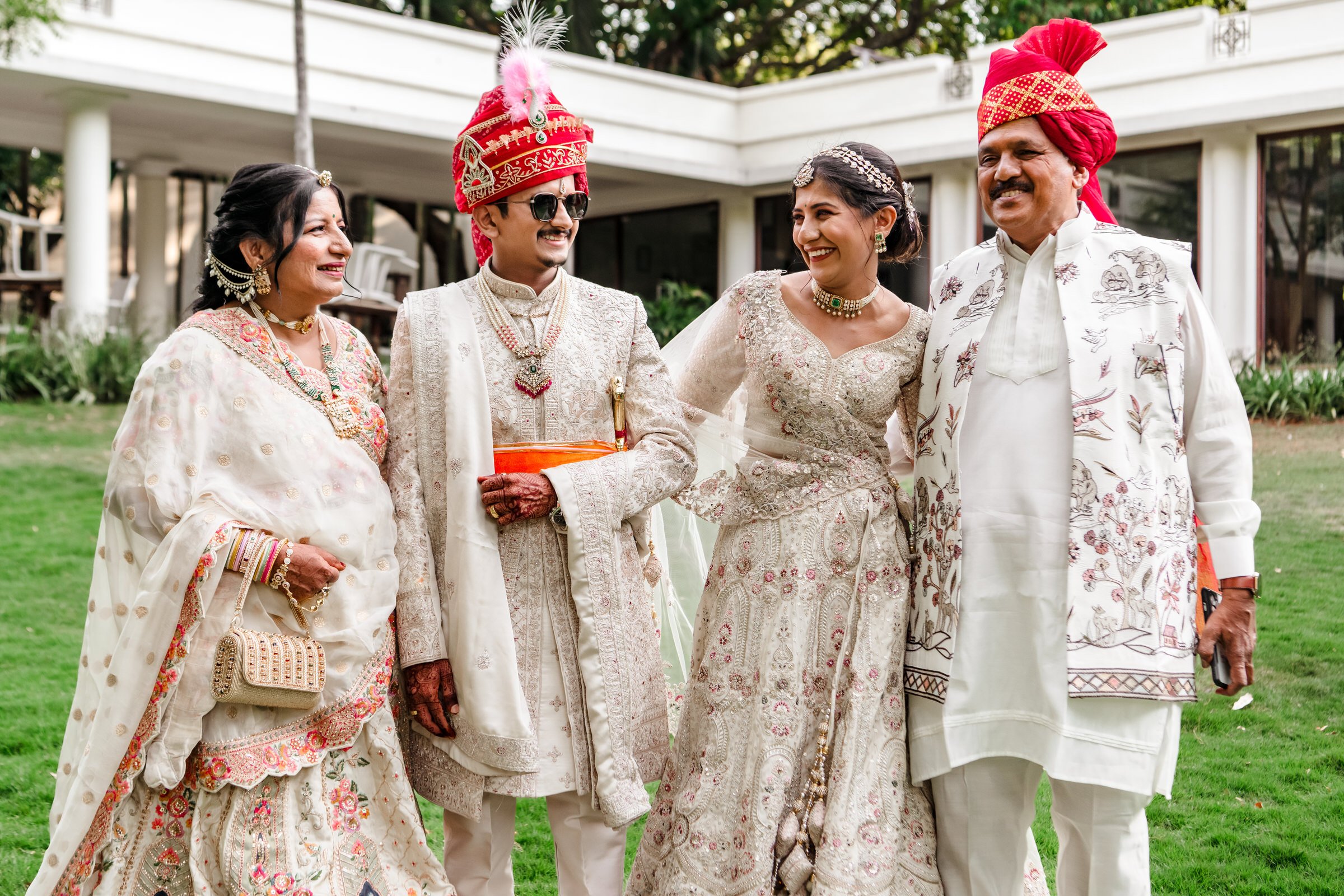
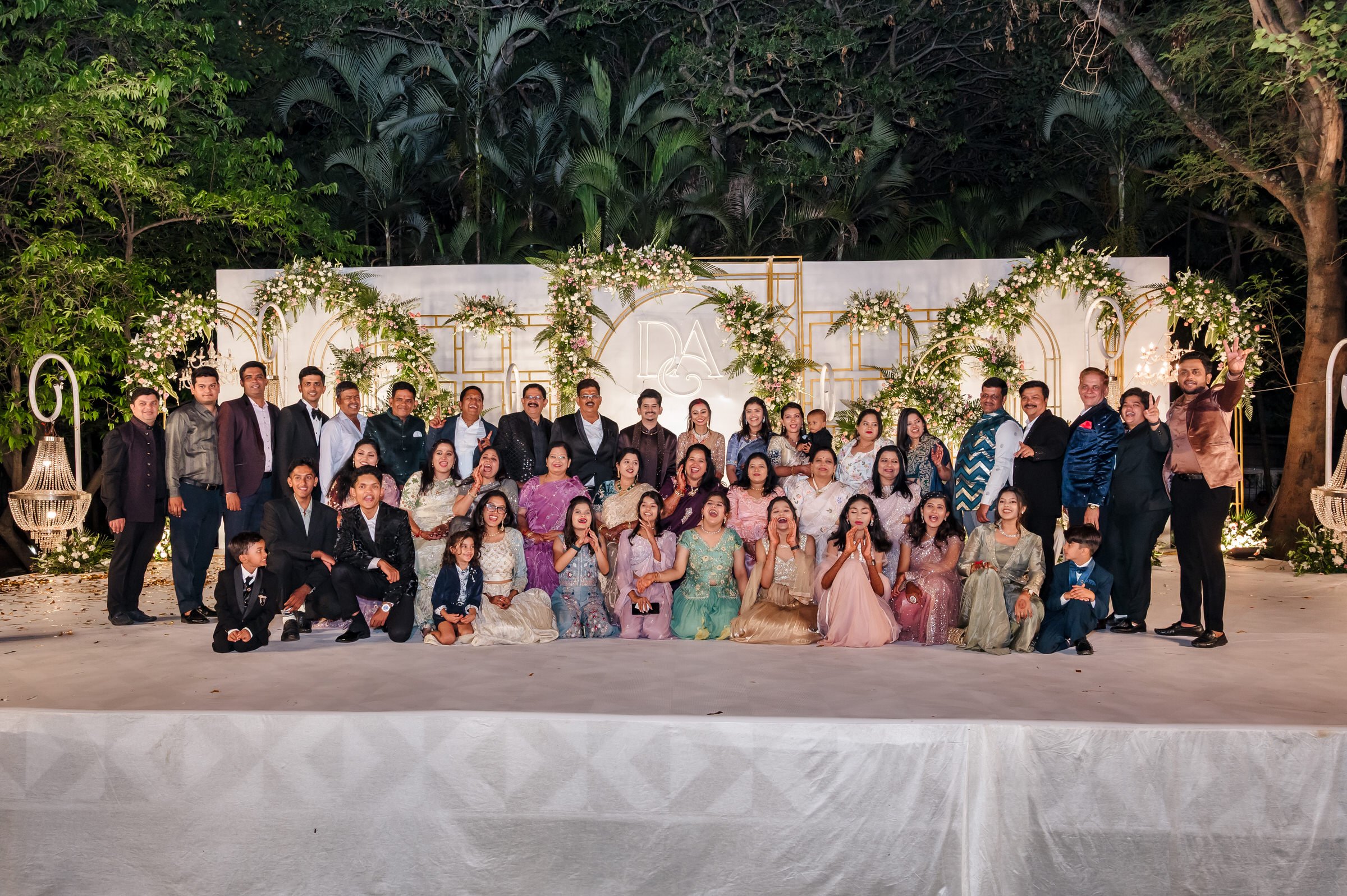
After two days of haldi, sangeet and baraat, a formal reception does something useful. It gives the extended family and the guests who have travelled an actual chance to greet the couple properly, in the quiet, without a dhol going. Different clothes, different pace, different pictures.
Couples sometimes ask whether a reception is worth it when there has already been a sangeet. For a destination wedding, it usually is. It is the one function built for the guests rather than for the celebration itself, and when people have flown in for you, that matters.
Day three: the ring game, and the vidai
The last morning started with games, the way a Marwari wedding does.
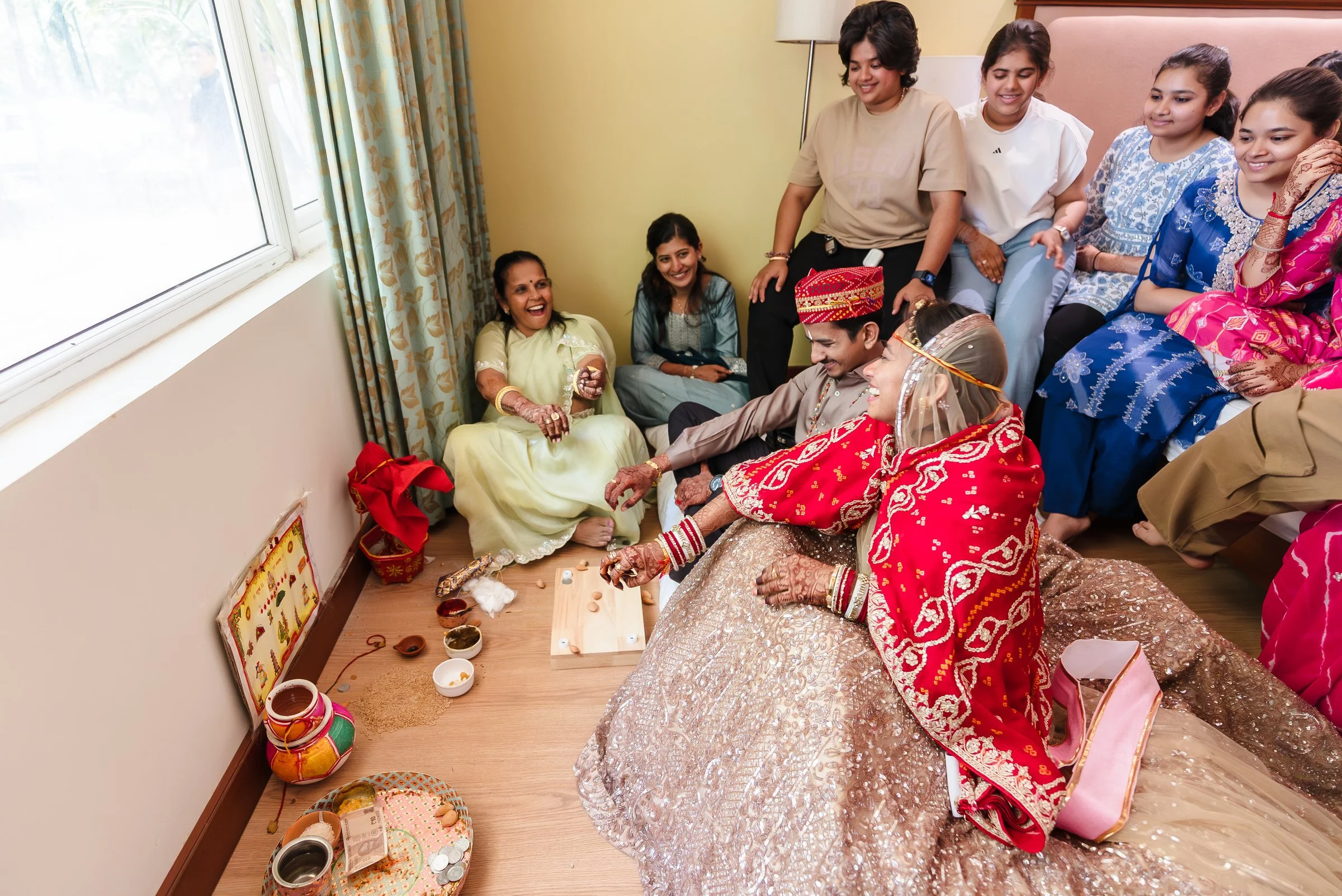
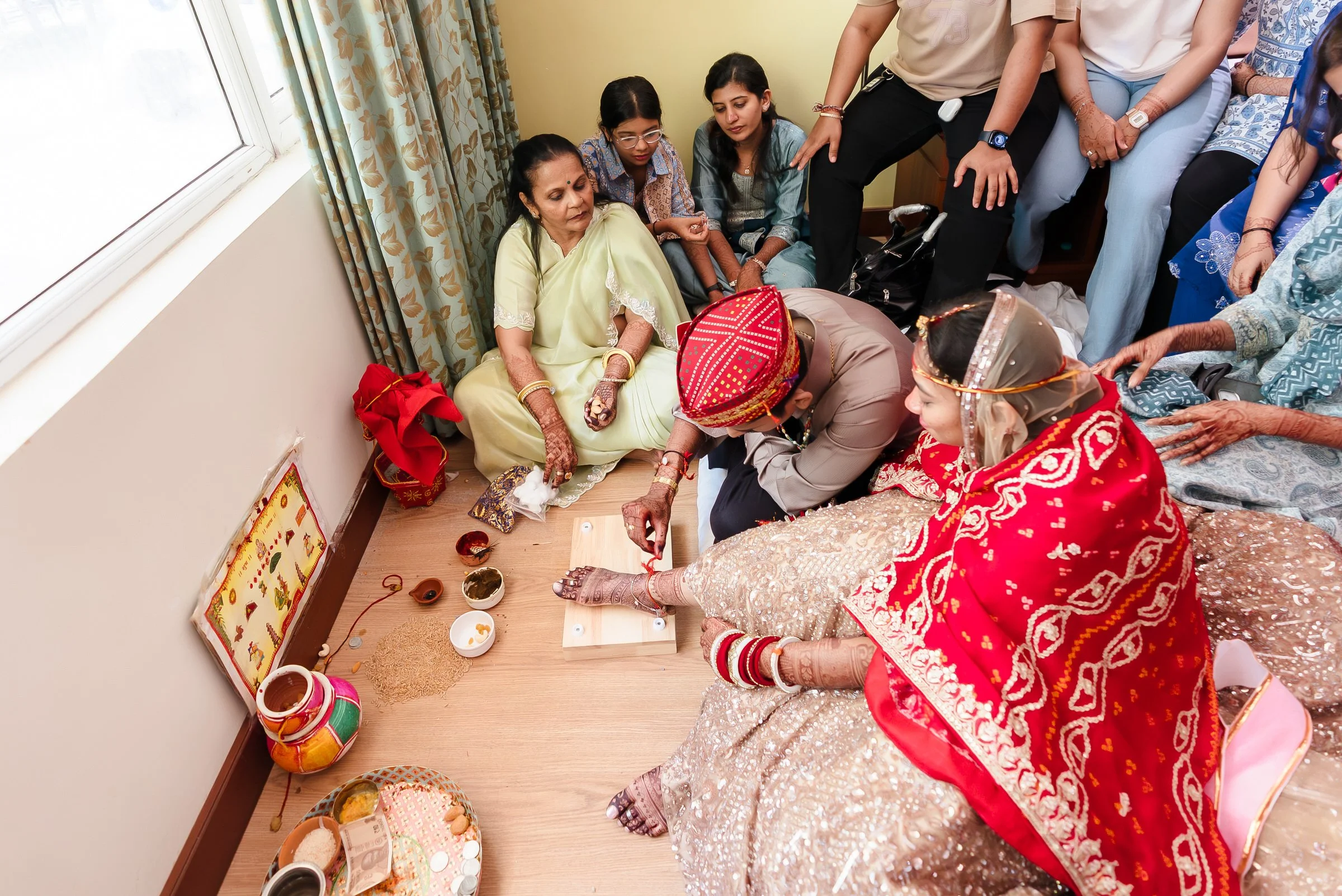
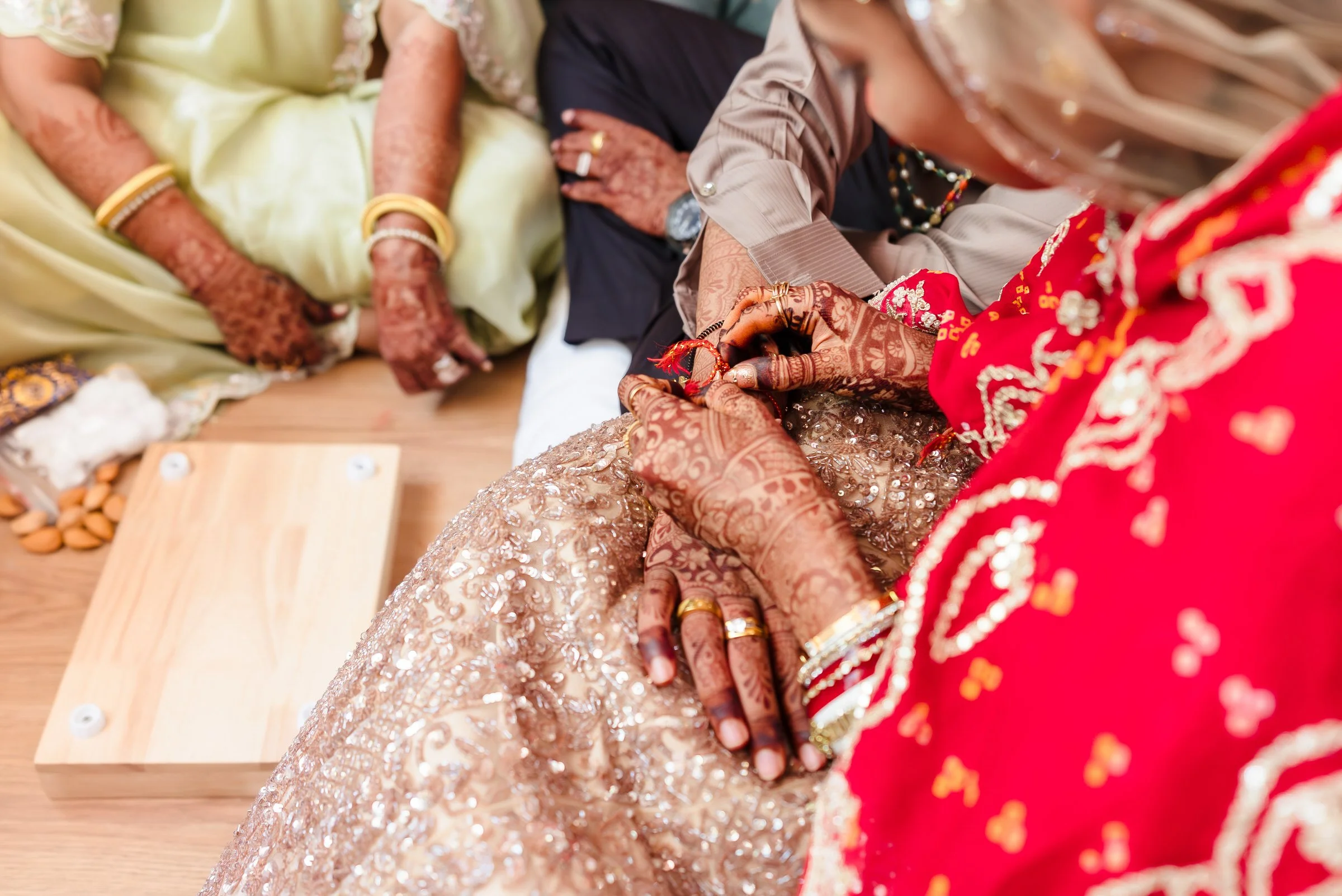
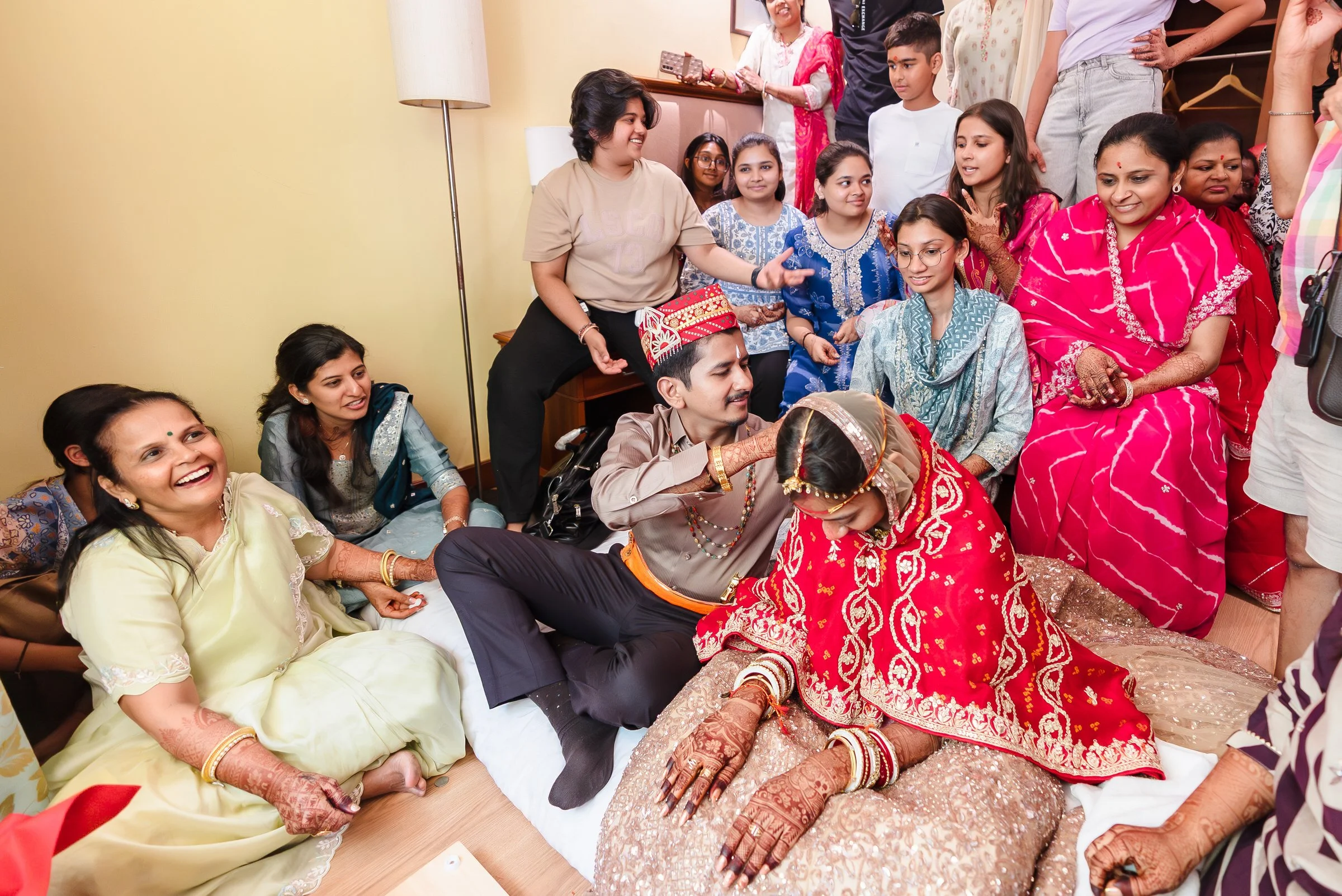
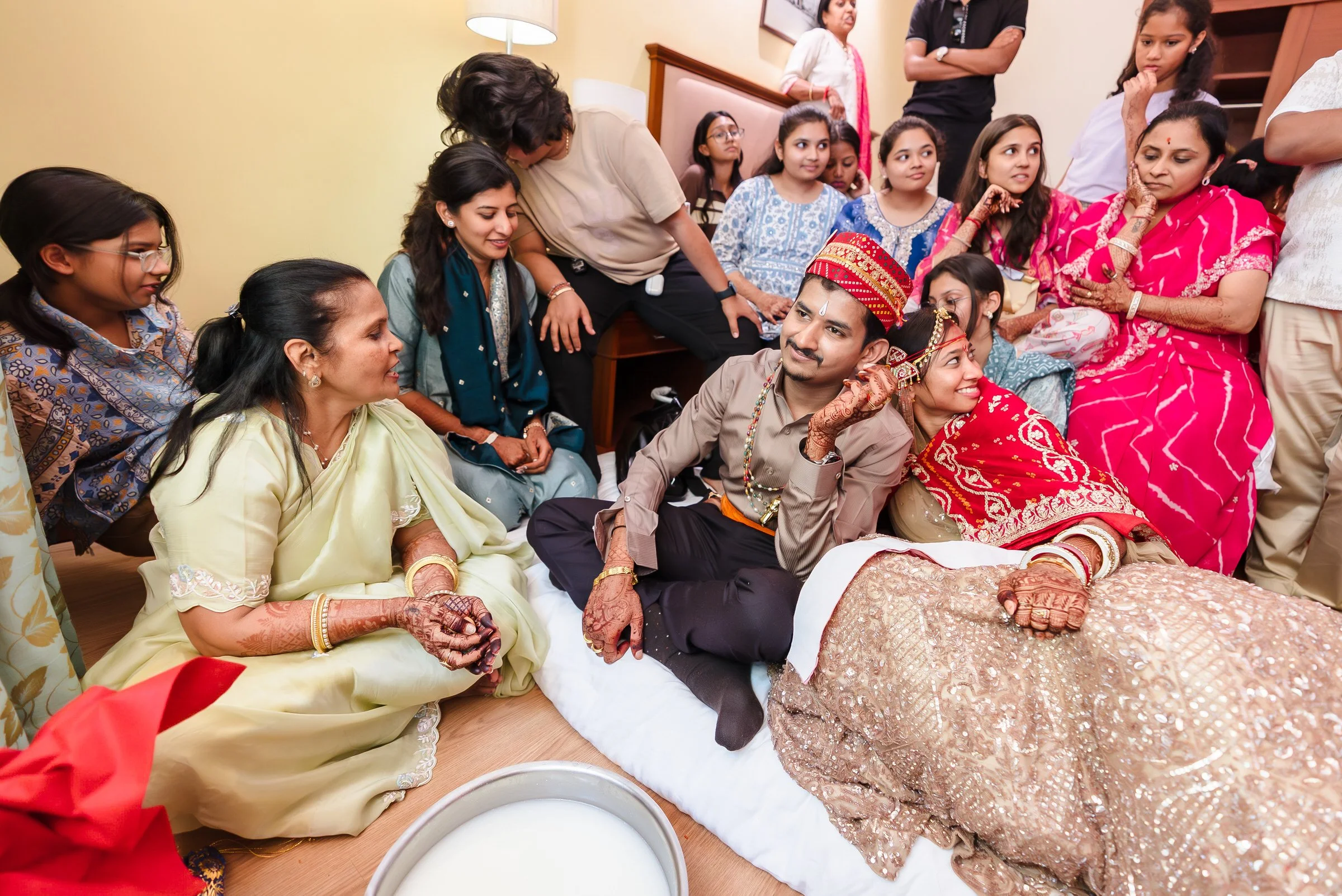
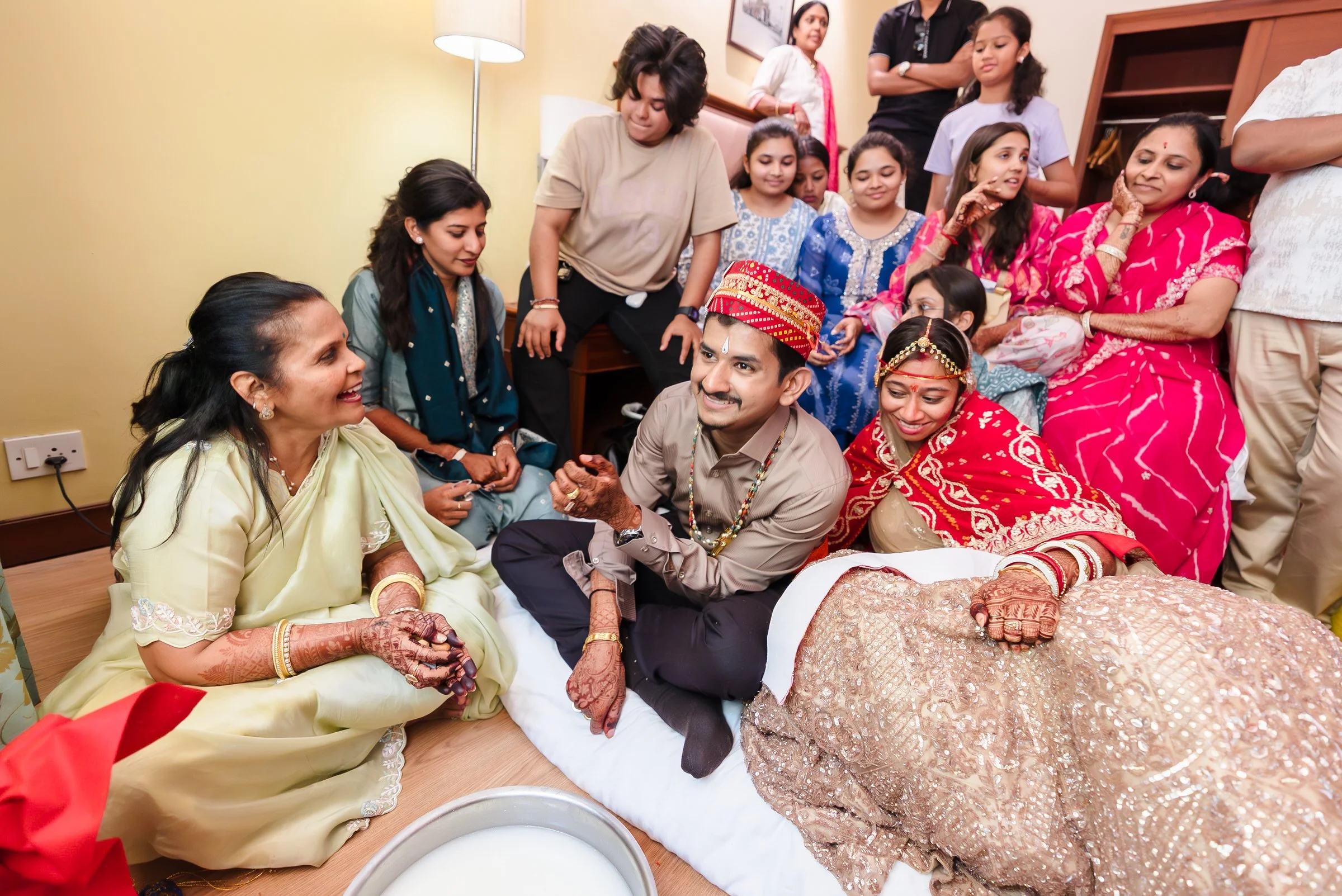
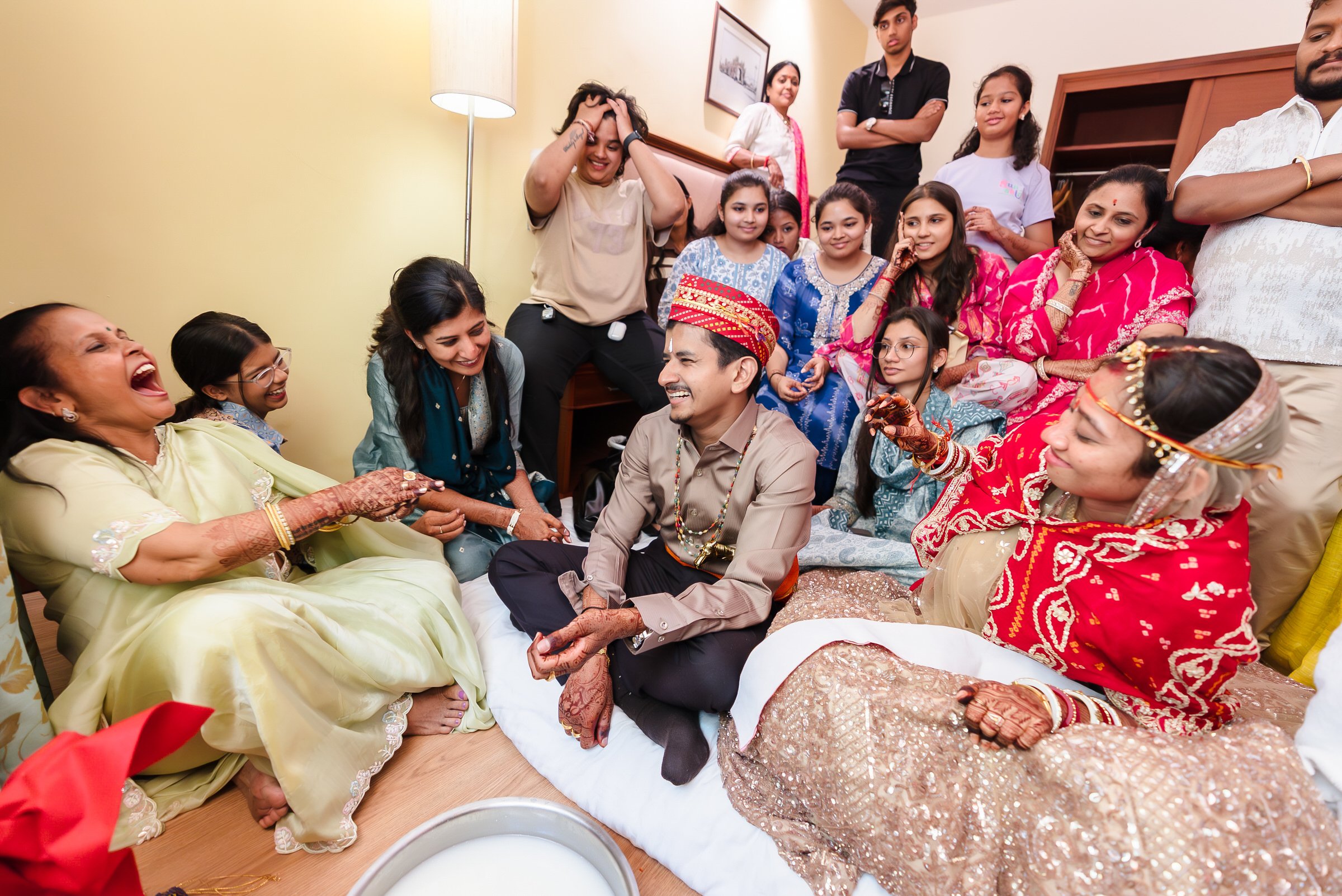
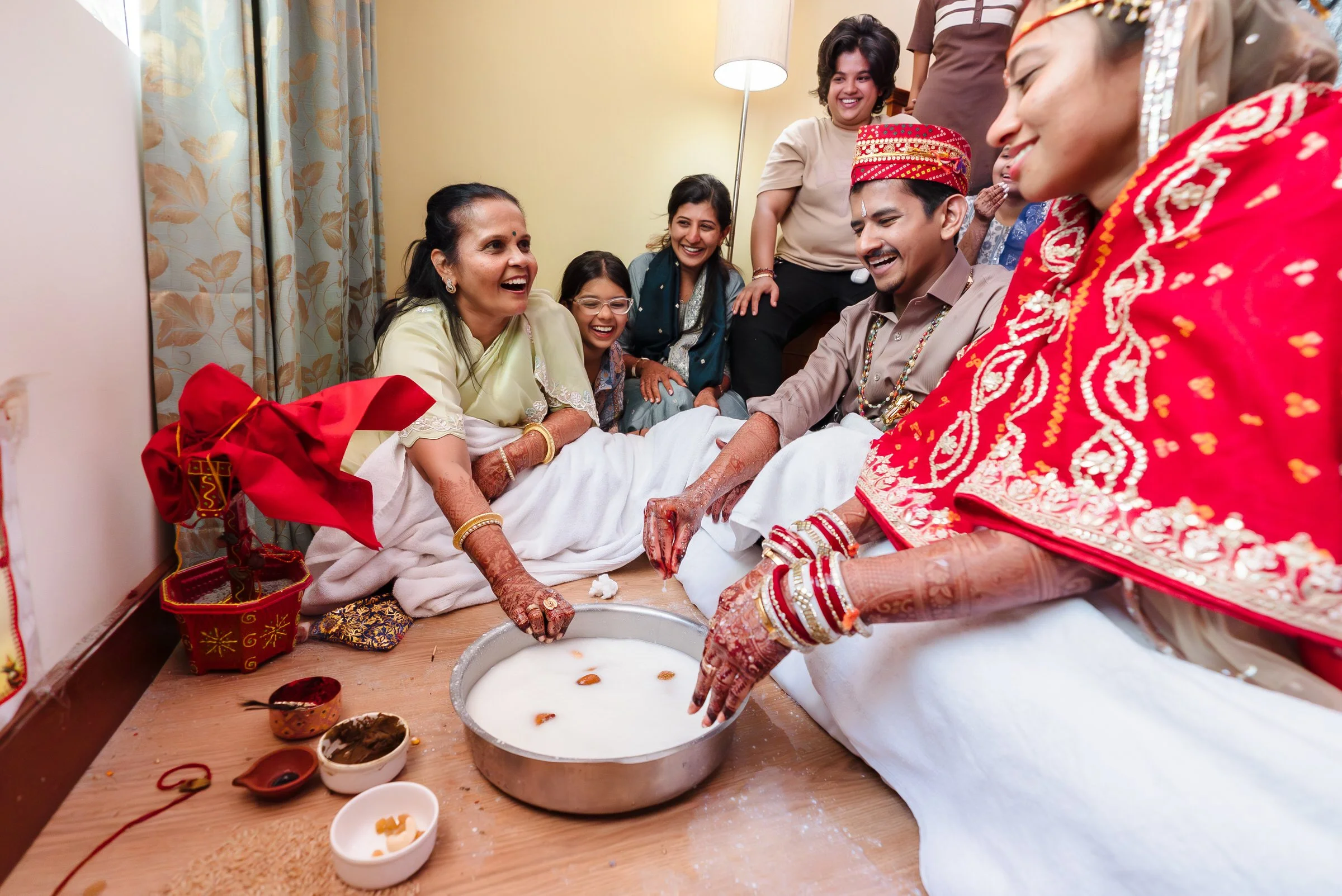
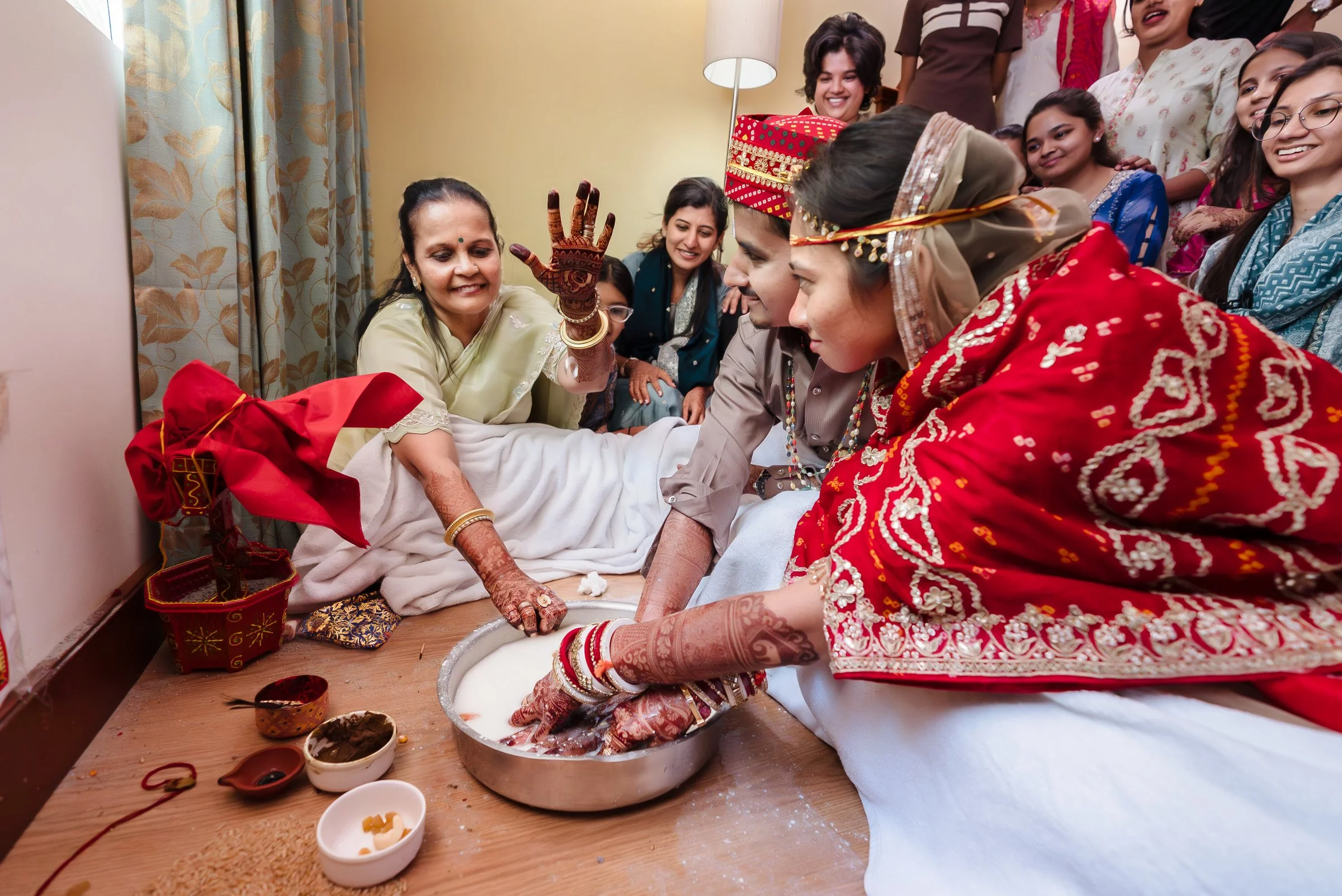
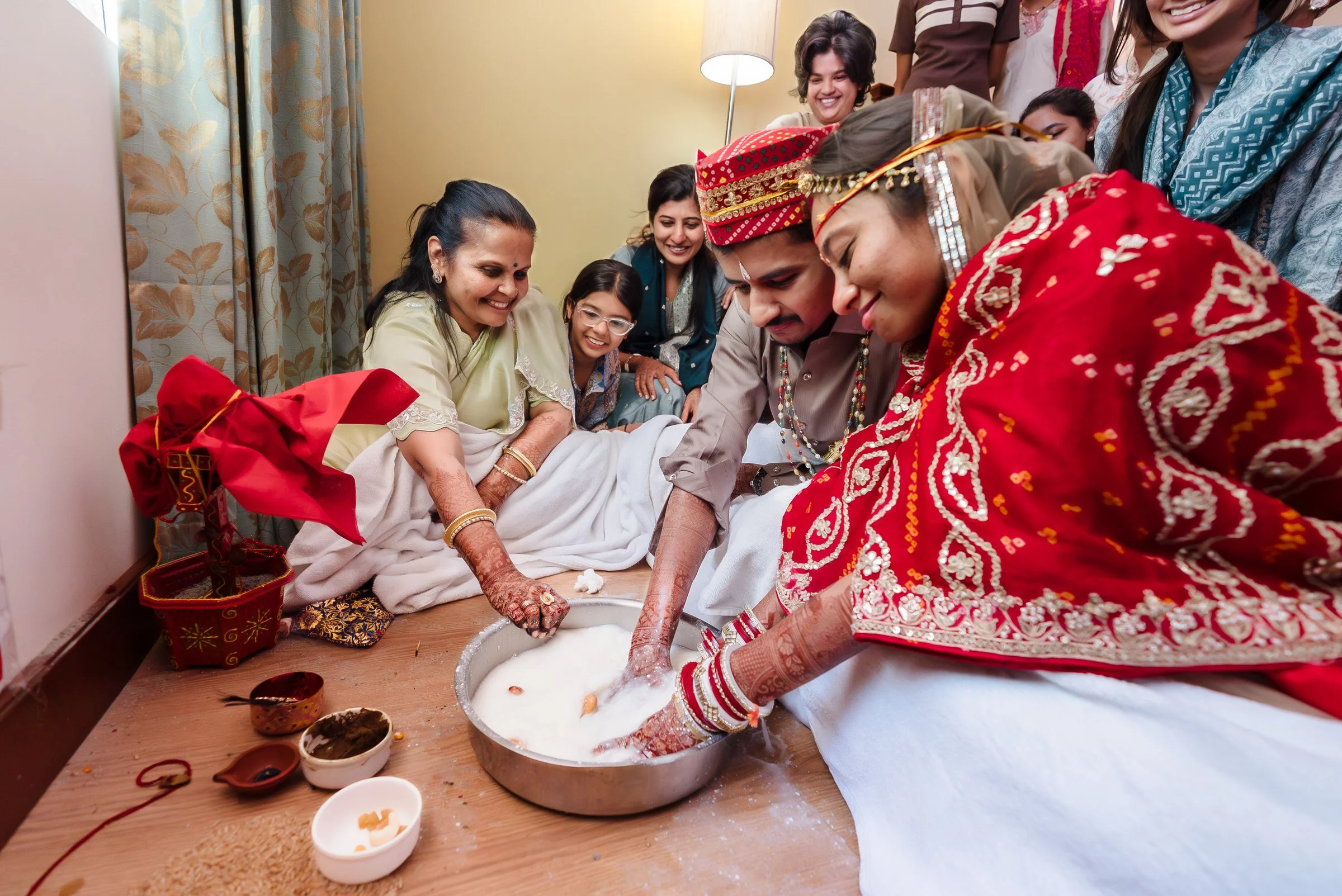
The ring-finding game came first. A ring is dropped into a vessel of milk or coloured water and the couple go in after it, best of several rounds, with both families crowding around calling cheats. It is played everywhere in a Marwari wedding and it is always worth photographing, because nobody is thinking about the camera. They are thinking about winning.
A few more fun rituals after that, and then the vidai.
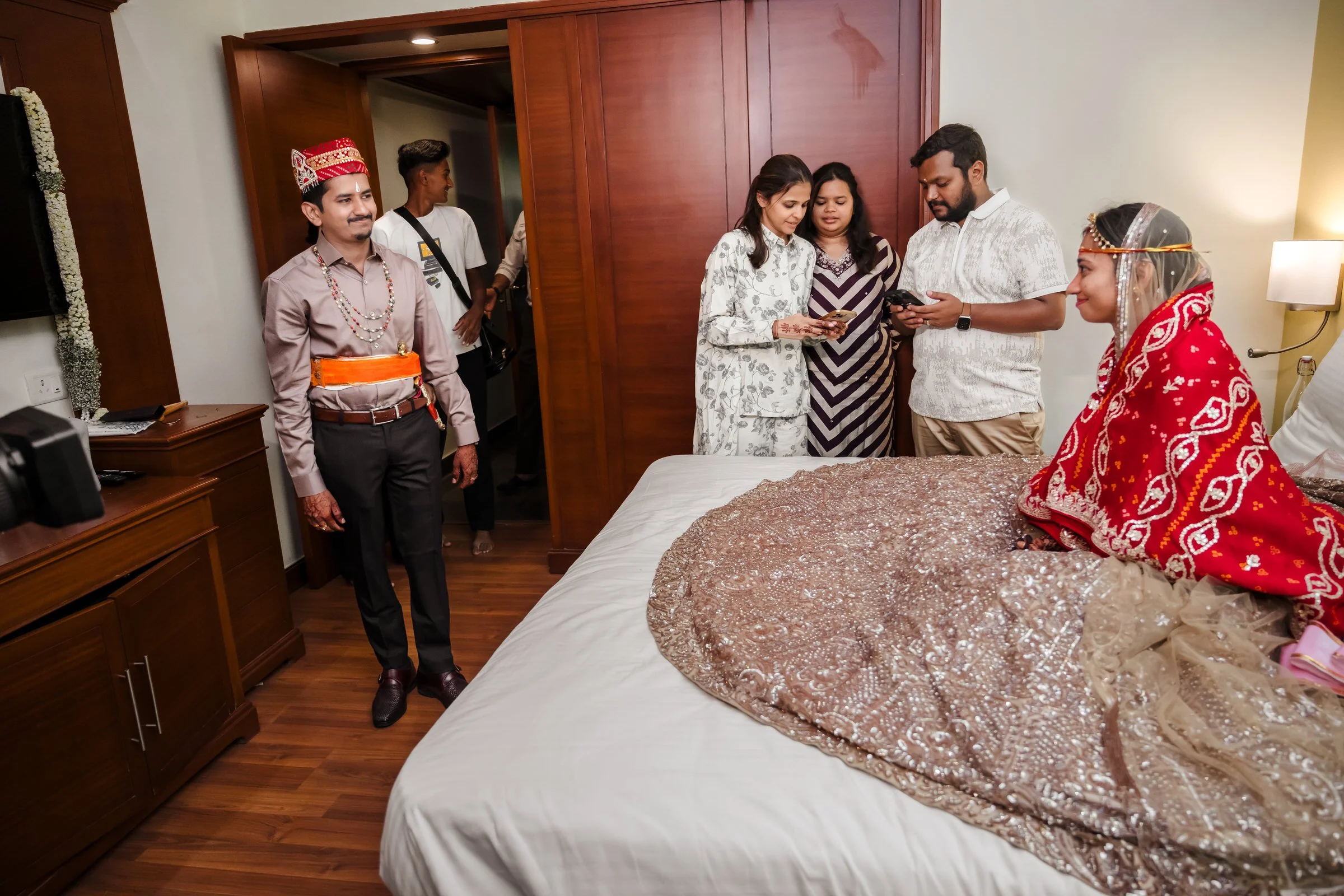
The vidai is the hardest thing to photograph at any Indian wedding and it is also the most important. It is the moment the bride leaves her family's side, and everyone in the room knows exactly what is happening. Nobody is composed. Nobody wants to be looked at.
The only way to photograph it properly is to be at a distance and to have been around long enough that nobody notices you are still there. That is not a technique, it is just three days of being present.
What we would tell a family planning a Marwari destination wedding
Four things, from this one.
Pick a venue where your guests sleep on site. It is the single biggest difference between a destination wedding that feels like one celebration and one that feels like five separate events.
Plan the haldi for a time of day that suits your decor. Phoolon ki Holi outdoors in good light is a completely different photograph to the same ritual under a tent at noon.
Build the sangeet running order before the day. Family performances always overrun, and when they do, the open dance floor gets cut short. That floor is usually where the best pictures of the whole wedding are.
And do not under-cover the last morning. People plan heavily for the wedding and the reception and treat the vidai day as a formality. It is not. It is the day with the most feeling in it.
If you are planning a destination wedding in Mysore
We travel for destination weddings and we photograph one wedding a day, which means if we are at your wedding in Mysore, we are not anywhere else that week. For a three day celebration like this one, that is the whole point. We are there for the quiet morning and the ring game, not just the muhurat.
If you are working out coverage for a Marwari wedding or any destination wedding in Mysore, Coorg or elsewhere in Karnataka, get in touch and tell us your dates. Happy to talk it through even if you are still comparing photographers.